


Baghdad, Manama Keen to ‘Unify Stances’ on Regional Issues

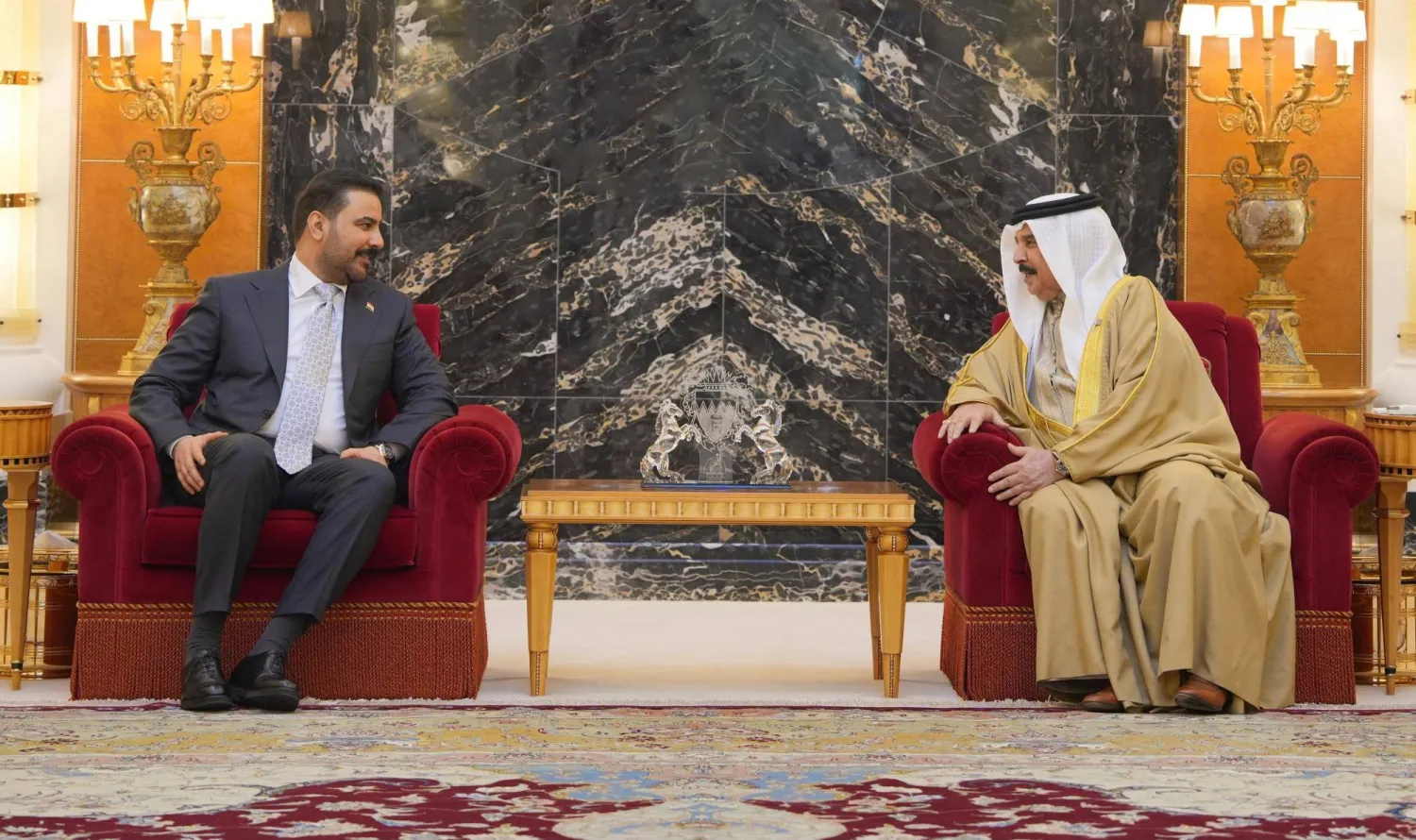
King Hamad bin Isa Al Khalifa and Prime Minister Ali Al-Zaidi meet in Manama on Wednesday. (BNA)
TT

Baghdad, Manama Keen to ‘Unify Stances’ on Regional Issues

King Hamad bin Isa Al Khalifa and Prime Minister Ali Al-Zaidi meet in Manama on Wednesday. (BNA)

Bahrain said on Wednesday that Iraqi Prime Minister Ali Al-Zaidi condemned "the Iranian aggression against the Kingdom" during his official visit to Manama, following meetings with King Hamad bin Isa Al Khalifa and Crown Prince Salman bin Hamad Al Khalifa.

The Prime Minister's office said that Al-Zaidi met the Bahraini monarch during his visit to the capital, extending an invitation for the King to visit Iraq, while stressing that the trip aims to revive historical ties between the two nations.

Al-Zaidi underscored efforts to strengthen bilateral cooperation across economic, investment, commercial, political, and social sectors, stressing that both countries share common security interests and must unify their stances on regional and international issues.

He stressed the importance of working to achieve regional stability and prioritizing dialogue to establish peace and end tensions.

For his part, the King of Bahrain said the PM’s visit is a step that will open new horizons for relations between the two countries.

He underlined his country's support for the Iraqi government, highlighting the importance of working to achieve security and stability, maintain mutual interests, and consolidate bilateral relations to boost joint Arab action.

The Bahrain News Agency reported that King Hamad bin Isa Al Khalifa expressed his appreciation for the Iraqi Prime Minister's efforts and commitment to strengthening bilateral cooperation and deepening solid ties with the Kingdom. The King also praised Iraq's supportive stance, solidarity with Bahrain, and condemnation of the Iranian aggression that targeted the Kingdom.

Prince Salman bin Hamad Al Khalifa, the Crown Prince and Prime Minister, underscored the deep-rooted historical ties connecting Bahrain and Iraq, noting their continuous progress.

He highlighted the importance of ongoing efforts to strengthen and develop joint cooperation and coordination across various fields, steering relations toward broader horizons to achieve mutual goals and aspirations.



Bahrain Intercepts Iranian Air Attacks

A general view of the skyline in downtown Manama, Bahrain, June 22, 2025. REUTERS/Hamad I Mohammed
TT

Bahrain Intercepts Iranian Air Attacks

A general view of the skyline in downtown Manama, Bahrain, June 22, 2025. REUTERS/Hamad I Mohammed

Bahrain said it intercepted on Tuesday Iranian air attacks.

Bahrain's armed forces intercepted "Iranian aerial attacks in the kingdom's skies,” according to state television.

Earlier, Bahrain warned of an unspecified threat and urged citizens and residents to head to the ⁠nearest ⁠safe location.

On Sunday, Bahrain said its air defenses had intercepted several Iranian aerial attacks.


Oman, Iran Discuss Safeguarding Maritime Corridors

Vessels at the Strait of Hormuz, as seen from Musandam, Oman, November 17, 2026. REUTERS/Stringer
TT

Oman, Iran Discuss Safeguarding Maritime Corridors

Vessels at the Strait of Hormuz, as seen from Musandam, Oman, November 17, 2026. REUTERS/Stringer

Oman and Iran discussed safeguarding maritime corridors and ensuring the smooth flow of global shipping and trade, the Omani foreign ministry said in a statement on Tuesday, as shipping through the Strait of Hormuz continued to be disrupted.

The talks took place during a visit by Iran's Foreign Minister Abbas Araghchi to Oman, which holds the southern coast of the Strait of Hormuz, a key shipping route for global energy, and has played a role as mediator in the crisis that broke out when the US and Israel attacked Iran on February 28.

Araghchi and Oman's Foreign Minister ⁠Badr Albusaidi talked about ⁠revitalizing channels for dialogue and negotiation to prevent escalations.

"These efforts aim to expand areas of mutual understanding among the concerned parties and prevent the widening of the crisis and its repercussions," the ministry said.

Attacks on tankers in the strait have increased as Tehran continues to disrupt shipping in the vital waterway while Washington maintains a ⁠naval blockade on Iran in response.

The Strait of Hormuz carried one-fifth of global energy supplies before the conflict and remains a sticking point in negotiations aimed at ending the nine-month-old war.


Bahrain Sentences 15 to Prison for Forming Terror Cell Linked to Iran’s IRGC

The court convicted all defendants, both those in custody and at large, handing down sentences ranging from 15 years to life in prison. (BNA)
TT

Bahrain Sentences 15 to Prison for Forming Terror Cell Linked to Iran’s IRGC

The court convicted all defendants, both those in custody and at large, handing down sentences ranging from 15 years to life in prison. (BNA)

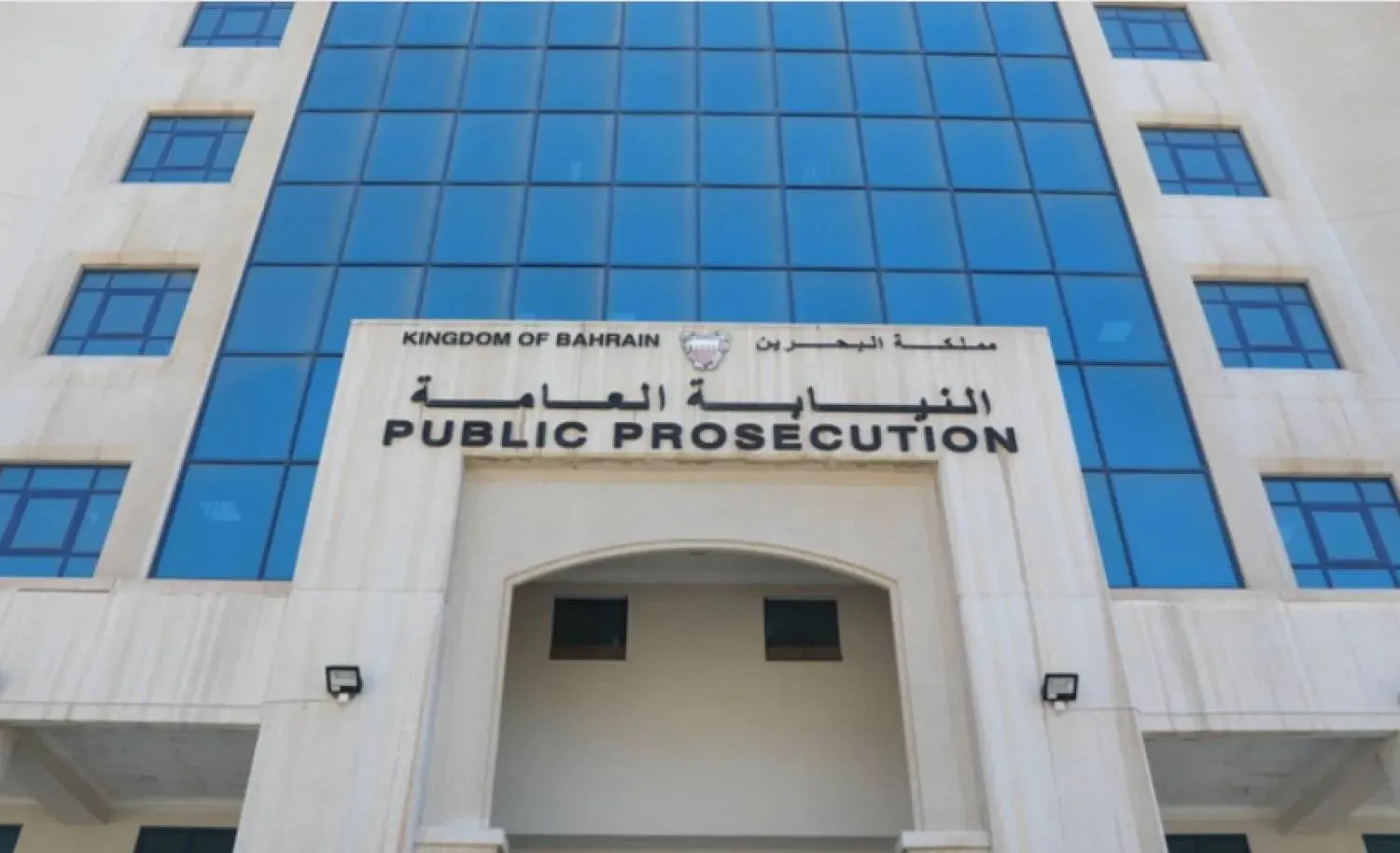
Bahrain’s High Criminal Court issued a verdict on Monday in a case involving the establishment of a terrorist group linked to Iran’s Revolutionary Guard Corps (IRGC) that sought to suspend the constitution and overthrow the government.

The court convicted all defendants, both those in custody and at large, handing down sentences ranging from 15 years to life in prison. It also imposed fines of 100,000 dinars, ordered the confiscation of more than eight million dinars for charitable purposes, and ordered the confiscation of other seized items.

The Advocate General, head of the Terrorist Crimes Prosecution, said the defendants were referred to trial after investigations revealed they had formed the group, used terrorism to achieve its goals, and raised funds to support its activities.

Several defendants were also found to have colluded with Iran and the IRGC to harm the kingdom's interests and overthrow the government by force and unlawful means.

The Advocate General, added that “they had sought to change the system of government by force and unlawful means through incitement to commit terrorist acts, riots and sabotage, and through efforts to spread and entrench the ideology of the so-called Wilayat al-Faqih, which seeks complete political subordination to the Iranian regime and calls for allegiance to it rather than to the homeland and its fundamental institutions.”

“This was done through domination of places of worship and what they claim to fall under their authority, and the exploitation of those places to disseminate that ideology and undermine national allegiance, as well as through infiltration of a number of social, charitable and educational institutions to spread the notion of allegiance to the Iranian regime,” he said.

“They worked to politicize the sermons of clerics and religious reciters (rawadid) in that direction, to incite against the system of government and call for rebellion against it, to entrench ideas hostile to it, and to support acts of sabotage aimed at destabilizing the country,” he continued.

The prosecution's case relied on evidence from security and financial inquiries, alongside seized publications, documents, and electronic devices. Additional evidence included roughly 935,000 dinars found in the defendants' possession, unauthorized fundraising used to finance the group, recorded speeches inciting the execution of its objectives, and confessions from some defendants during questioning.

He noted that the group was formed by members of the dissolved Ulema Council, which had been dissolved by court order, and that its leaders communicated with IRGC operatives and Iranian intelligence to receive assignments, directives, and funding.

The Advocate General stressed that the Public Prosecution acted with impartiality and objectivity, guaranteeing all legal rights for the defendants. The trial proceeded in the presence of defense lawyers for all detained defendants, with full fair-trial guarantees upheld.