


Netanyahu Heads to Moscow to ‘Free Syria from Iranians’

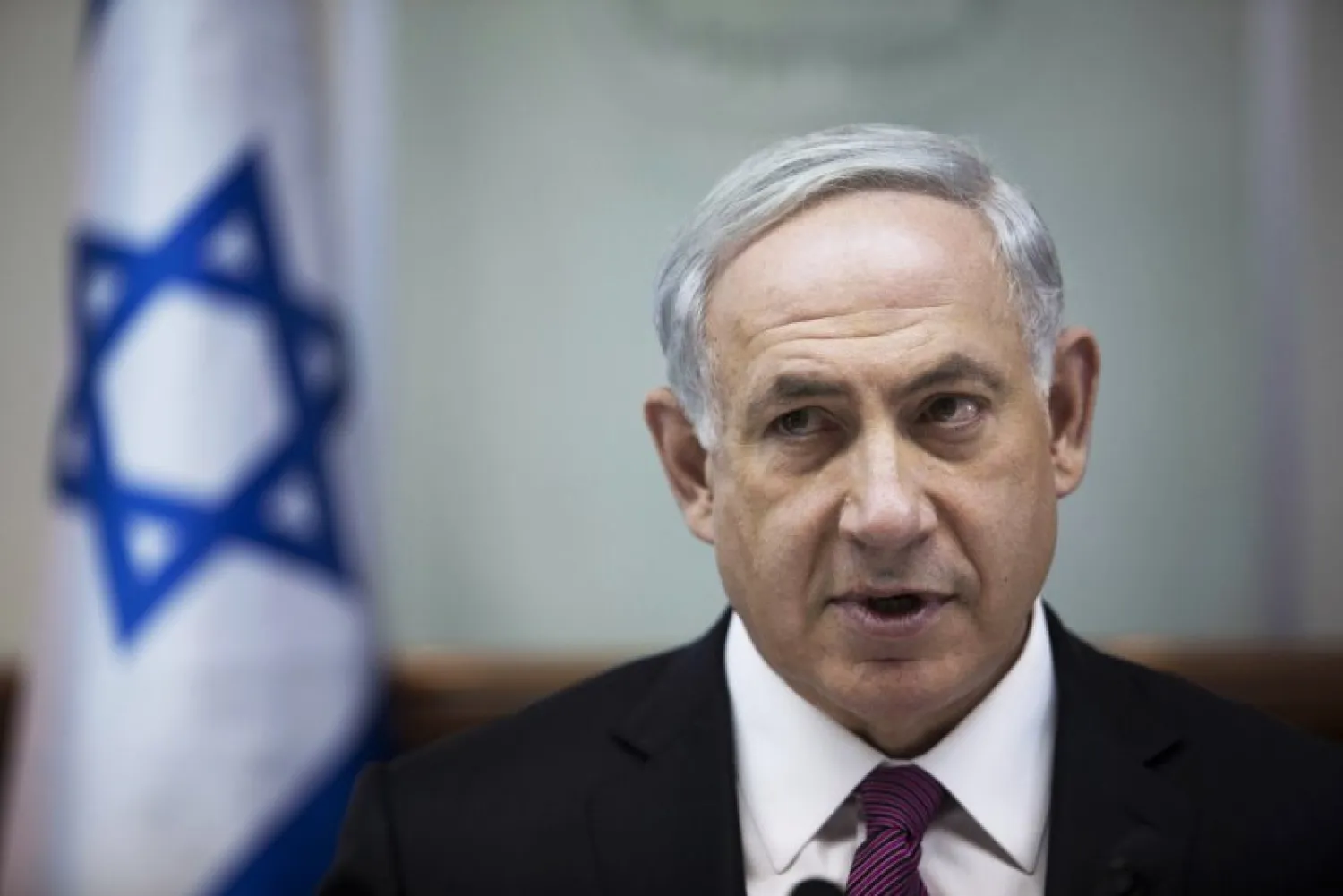
Israeli Prime Minister Benjamin Netanyahu. Reuters
TT

Netanyahu Heads to Moscow to ‘Free Syria from Iranians’

Israeli Prime Minister Benjamin Netanyahu. Reuters

Following the failure of talks held by an Israeli delegation in Washington last week, the Israeli Prime Minister’s office announced Sunday that Benjamin Netanyahu will travel to Sochi on Wednesday to meet with Russian President Vladimir Putin and discuss Israel’s demands regarding the latest arrangements in Syria.

Netanyahu believes that Russians are interested in finding a formula for cooperation with Israel in Syria and other countries and have more influence on Iran than the United States, "which threatens Tehran but does not leave the impression that it is involved in radical treatment to reduce its influence in the region,” said a political source in Tel Aviv.

A delegation of high-ranking Israeli defense officials returned from Washington empty-handed last week after it failed to secure a commitment from the Americans to ensure any agreement to end the war in Syria that would include the evacuation of Iranian military forces from the country.

Among the delegation's members were Mossad Director Yossi Cohen, Military Intelligence Directorate (MID) Chief Maj. Gen. Herzi Halevi, head of the Political-Military Affairs Bureau in the Defense Ministry Zohar Palti (former chief of intelligence for the Mossad), Israel's Ambassador to the US Ron Dermer and Deputy National Security Advisor Eitan Ben-David.

During its visit to the US capital, the Israeli delegation met with the heads of the US intelligence community, National Security Council officials and President Donald Trump's envoy to the Middle East Jason Greenblatt.

Israeli intelligence officials said the delegation "presented sensitive, credible and highly disturbing intelligence information," backed by documents and photographs, which showed the ever-growing spread of Iranian influence in Syria.

The US and Russia are currently working to formulate an agreement to bring an end to the fighting in Syria. Thanks to Russian and US understandings on military coordination between them, there has been a decline in the fighting in Syria since May.

The Israeli defense officials' talks with their US counterparts were described as detailed and professional while the atmosphere was described as friendly; Greenblatt tweeted a photo of the participants, without ties or jackets, eating dinner at the home of US National Security Advisor Herbert Raymond McMaster.

However, Israel is still concerned by the prospective agreement since the Americans did not commit to demanding the evacuation of Iranian and Hezbollah forces—allies of Bashar Assad—from the country.

Israel fears Iran and Hezbollah would exploit the situation to turn Syria into a protected state.

During their meetings, the members of the Israeli delegation stressed to their US counterparts, “We rushed here to warn of the deployment of Hezbollah, Iranian and Syrian forces; to explain exactly what's going on there … If you don't become more involved, tougher and more aggressive, you will leave the Middle East to the Iranians, under Russian auspices.”

Israeli officials are concerned that because of the domestic issues beleaguering President Donald Trump and the crisis with North Korea, the United States might decide not to flex its muscles too much in Syria, fold, and leave it at the mercy of Russia, the Assad regime, Iran and Hezbollah.

Israel plans to send a similar delegation to the Kremlin in an effort to convince Russian President Putin to stop the spread of Iranian influence in Syria as part of the upcoming agreement.

At present, the Iranian military forces deployed across Syria include some 500 Iranian soldiers, some 5,000 Hezbollah militants and several thousands fighters from Shi’ite militias from Afghanistan, Pakistan and Iraq.

These forces operate as part of a special corps of the Iranian Revolutionary Guards (IRGC), which was established to fight in Syria. This corps is under the command of the elite Quds Force, which is responsible for the IRGC's foreign operations.

Commander of the Quds Force Qasem Soleimani, who spends a lot of his time in Syria, is working on a special project: Building a separate terminal reserved for Iran and Hezbollah at the Tartus Port.

According to Israeli assessments, Iran and its Shi’ite allies' strength and influence in Syria would increase exponentially if the US and Russia fail to do anything to end Iranian presence in the country.

Hezbollah, meanwhile, has already started creating infrastructure for intelligence collection in the Golan.



Hezbollah Chief Accuses Lebanese Authorities of Working ‘in the Interest of What Israel Wants’

Hezbollah leader Naim Qassem
TT

Hezbollah Chief Accuses Lebanese Authorities of Working ‘in the Interest of What Israel Wants’

Hezbollah leader Naim Qassem

Hezbollah leader Naim Qassem on Sunday said moves to disarm the group in Lebanon are an "Israeli-American plan,” accusing Israel of failing to abide by a ceasefire agreement sealed last year.

Under heavy US pressure and fears of expanded Israeli strikes, the Lebanese military is expected to complete Hezbollah's disarmament south of the Litani River -- located about 30 kilometers from the border with Israel -- by the end of the year.

It will then tackle disarming the Iran-backed movement in the rest of the country.

"Disarmament is an Israeli-American plan," Qassem said.

"To demand exclusive arms control while Israel is committing aggression and America is imposing its will on Lebanon, stripping it of its power, means that you are not working in Lebanon's interest, but rather in the interest of what Israel wants."

Despite a November 2024 ceasefire that was supposed to end more than a year of hostilities between Israel and Hezbollah, Israel has kept up strikes on Lebanon and has maintained troops in five areas it deems strategic.

According to the agreement, Hezbollah was required to pull its forces north of the Litani River and have its military infrastructure in the vacated area dismantled.

Israel has questioned the Lebanese military's effectiveness and has accused Hezbollah of rearming, while the group itself has rejected calls to surrender its weapons.

"The deployment of the Lebanese army south of the Litani River was required only if Israel had adhered to its commitments... to halting the aggression, withdrawing, releasing prisoners, and having reconstruction commence," Qassem said in a televised address.

"With the Israeli enemy not implementing any of the steps of the agreement... Lebanon is no longer required to take any action on any level before the Israelis commit to what they are obligated to do."

Lebanese army chief Rodolphe Haykal told a military meeting on Tuesday "the army is in the process of finishing the first phase of its plan.”

He said the army is carefully planning "for the subsequent phases" of disarmament.


Israel Army Ends Crackdown on West Bank Town after Attack

Smoke rises following an explosion detonated by the Israeli army, which said it was destroying buildings used by Palestinian militants in the West Bank Jenin refugee camp, Sunday, February 2, 2025. © Majdi Mohammed, AP
TT

Israel Army Ends Crackdown on West Bank Town after Attack

Smoke rises following an explosion detonated by the Israeli army, which said it was destroying buildings used by Palestinian militants in the West Bank Jenin refugee camp, Sunday, February 2, 2025. © Majdi Mohammed, AP

The Israeli military said on Sunday it had ended its operation in a town in the occupied West Bank that it had sealed off after a Palestinian from the area killed two Israelis.

Around 50 residents of Qabatiya were briefly detained during the two-day operation, the official Palestinian news agency Wafa reported, quoting the town's mayor Ahmed Zakarneh.

The attacker's father and two brothers remained in custody, it added.

The military launched the operation on Friday, shortly after a 34-year-old Palestinian fatally stabbed an 18-year-old Israeli woman and ran over a man in his sixties with his vehicle.

When contacted by AFP on Sunday morning, the military confirmed the end of its operation in the area.

Defense Minister Israel Katz previously said the army had completely sealed off the town.

Wafa also reported that Israeli troops had withdrawn from Qabatiya, near the city of Jenin.

Zakarneh said the town had been in a state of "total paralysis" during the military activity.

Israeli army bulldozers tore up pavement on several streets and erected roadblocks to halt traffic, he said, adding that around 50 houses were searched.

Wafa reported that a school had been turned into a detention and interrogation center.

AFPTV footage filmed on Saturday showed Israeli soldiers carrying automatic rifles and patrolling the streets, where several armoured vehicles were deployed.

Shops were closed, though men and children were seen walking through the village.

On Sunday, the Israeli army said it had sealed off the assailant's home and was finalising "the procedures required for its demolition".

Israeli authorities argue that demolishing the homes of Palestinians who carry out attacks against Israelis has a deterrent effect.

Critics, however, condemn the practice as collective punishment that leaves families homeless.


Arab League Council Holds Extraordinary Session on Latest Developments in Somalia

A general view shows the opening session of the meeting of Arab foreign ministers at the Arab League Headquarters (Reuters)
TT

Arab League Council Holds Extraordinary Session on Latest Developments in Somalia

A general view shows the opening session of the meeting of Arab foreign ministers at the Arab League Headquarters (Reuters)

At the request of the Federal Republic of Somalia and with the support of Arab League member states, the Arab League Council on Sunday began its extraordinary session at the league’s General Secretariat, at the level of permanent representatives and under the chairmanship of the United Arab Emirates, to discuss developments regarding the Israeli occupation authorities’ declaration on mutual recognition with the Somaliland region.

The Kingdom’s delegation to the meeting was headed by its Permanent Representative to the Arab League Ambassador Abdulaziz bin Abdullah Al-Matar, SPA reported.

The meeting is discussing ways to strengthen the unified Arab position in addressing this step, to affirm full solidarity with Somalia, and to support its legitimate institutions in a manner that contributes to preserving security and stability in the region.

The meeting also aims to reaffirm the Arab League’s categorical rejection of any unilateral measures or decisions that could undermine Somalia’s sovereignty and territorial integrity, and to emphasize commitment to the principles of international law and the relevant resolutions of the Arab League and the African Union.