


Ashley Cole Still Burns: Forgotten Man Will not Forget His English Foes

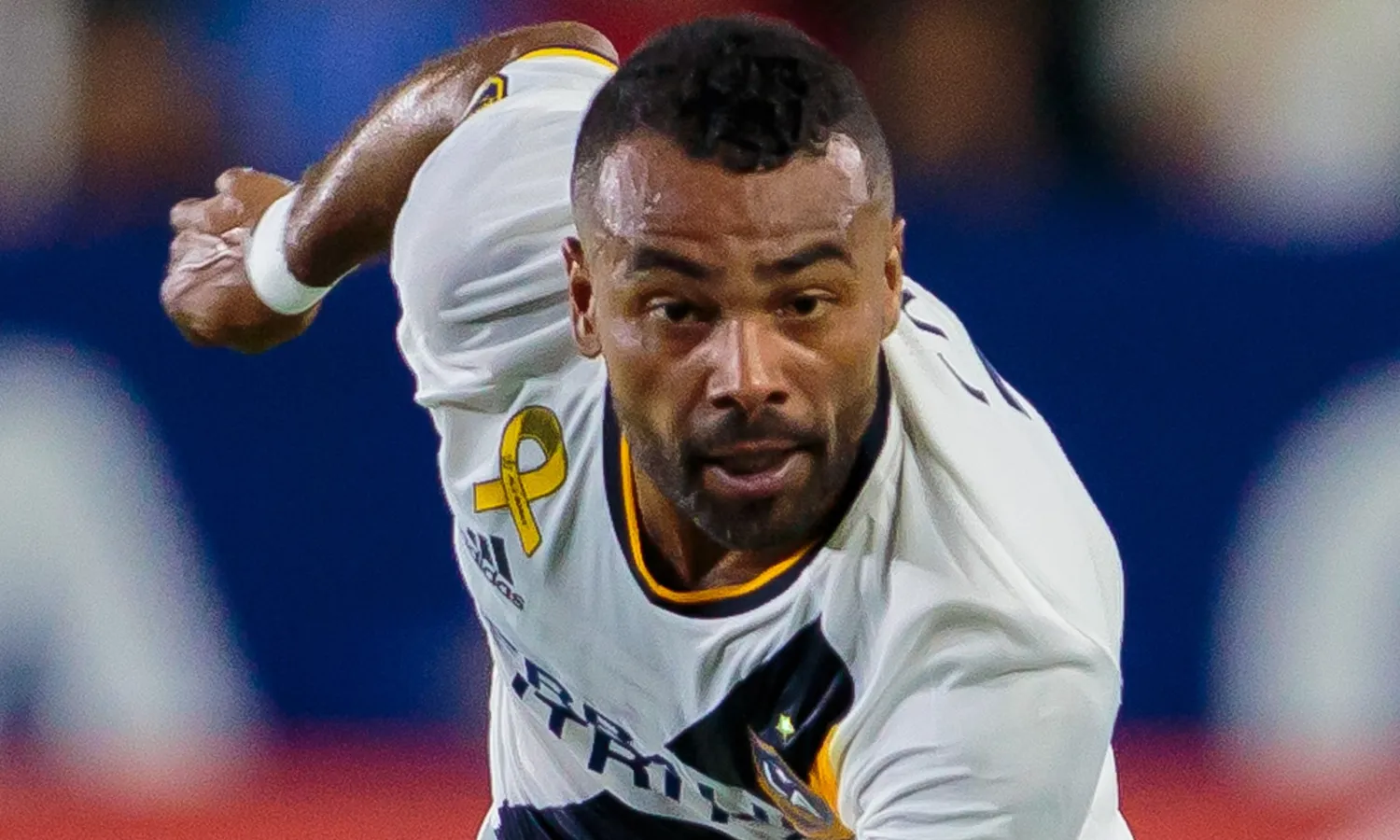
 Ashley Cole should be one of the most celebrated footballers in English history. Instead, he is isolated and forgotten at LA Galaxy. Photograph: Michael Janosz/ISI/Rex/Shutterstock
Ashley Cole should be one of the most celebrated footballers in English history. Instead, he is isolated and forgotten at LA Galaxy. Photograph: Michael Janosz/ISI/Rex/Shutterstock
TT

Ashley Cole Still Burns: Forgotten Man Will not Forget His English Foes

 Ashley Cole should be one of the most celebrated footballers in English history. Instead, he is isolated and forgotten at LA Galaxy. Photograph: Michael Janosz/ISI/Rex/Shutterstock
Ashley Cole should be one of the most celebrated footballers in English history. Instead, he is isolated and forgotten at LA Galaxy. Photograph: Michael Janosz/ISI/Rex/Shutterstock

Confirmation that LA Galaxy have failed in their quest to reach the MLS playoffs may arrive on Sunday. If not, such news will not have to wait much longer. Twenty-nine regular season games thus far have returned just 27 points. Galaxy are second bottom of the Western Conference, an embarrassing scenario for a club defined by celebrity and success, to the point where almost $4m per year is currently bestowed upon Giovani dos Santos as a base salary and five MLS Cups are housed at the StubHub Center, where David Beckham used to be their most celebrated playing star.

Galaxy’s latest capitulation took place here in Atlanta on Wednesday, where they were 4-0 – and a man – down by half-time. Atlanta United, such a success on and off the field in this, their debut MLS season, did not need to bother adding to the scoreline. Sigi Schmid, who has endured a fraught time since returning as Galaxy’s head coach in late July, bemoaned a “lack of focus” in a defense that was pulled apart by Atlanta’s menacing front four.

Included in that Galaxy back line was Ashley Cole. The 36-year-old was partly responsible for one of Atlanta’s goals as he followed ball rather than man but otherwise the veteran defender performed well. Cole’s distribution was exemplary, his bond with team-mates clear and fitness typical for a player built like the side of a £20 note. Monetary links have rather followed Cole around but he cannot be accused of using the MLS cynically as a pension top-up; his basic annual wage of $350,000 is not at all extravagant in relative terms.

If there were a hall of fame for left-backs, Cole would be an instant inductee. The Englishman possesses 107 caps, three Premier League winner’s medals – won with two different clubs – seven of the same from the FA Cup and one League Cup. Cole won the Champions League and Europa League, too, during a terrific spell at Chelsea. Earlier, Cole was part of Arsenal’s revered Invincibles side. All this after being brought up by a single mother in the East End of London.

Pieced together, Cole should be one of the most celebrated footballers in English history. Instead, he is isolated and forgotten. There should be deep sadness attached to that, regardless of circumstances and reasoning. Cole is portrayed by some as everything negative that modern football has spawned: financially and in terms of personal behavior. There were allegations of infidelity, brushes with the law and the accidental shooting of a work experience student with an air rifle. These are hardly matters for The Hague war crimes tribunal but, pieced together, shape opinion. That he is now a father and can admit the recklessness of his youth and lives a relatively quiet life in Hollywood does not widely register.

Crucially, Cole apparently harbors a grudge over the reasons why he is perceived so negatively. The fact he chose invisibility in Los Angeles after a short stint at Roma suggests he was perfectly happy to get away from it. There was no apparent interest at all in turning out for another English club despite the potential for a larger wage.

In the aftermath of that Champions League success, in Munich in 2012, Cole was requested for interview by English newspaper media as he left the Allianz Arena. “No. Fuck ’em,” was his reply. Such an approach meant an element of trepidation was natural as this reporter pondered a chat with Cole – an individual I have never met or written about – after the Atlanta defeat.

A rare interview with Sports Illustrated in June also raised doubts about how he would take an approach from a publication based in his homeland. In that interview, the defender said: “I’m never going to win. You can never win against [the press], especially in England. They’re so powerful. My friends, family, team-mates, they know who I am. It’s not good, the way they portray me. It’s not my personality. It’s not who I am.”

In a pretty desperate attempt to ingratiate himself with the subject, the Sports Illustrated writer gladly castigated an English press who will “strain, lunge and take another swipe at Ashley Cole”. The article added: “American sports culture, even in far more popular leagues, isn’t as venomous or destructive as what Cole experienced at home.” Instead, prime-time television debates surround the amount of air in an American football.

Hope was raised that Cole may be of a mind to share some of his LA experiences by the club’s media officer, who before a ball was kicked in Atlanta painted the picture of an amiable and relaxed professional. By the time post-match duties commenced – and clearly upon consultation with Cole – that stance had changed. “What precisely do you want to ask him about?” became: “He will be a long time in the shower,” in an unsubtle indication of the inevitable conclusion to an hour-long wait. “Ash has declined to speak.”

I waited to hear from the man himself, with Cole initially offering a broad smile as best wishes were passed on from a mutual friend in London. The formal refusal of a chat followed, even despite an offer to minimise time spent by asking some questions on the short walk to the team bus. “No.” A final plea, that the intention is to write a positive article about Cole’s time in the US, initiates the key reply: “What’s the point in being positive now? You didn’t do that years ago.” Cole didn’t break stride, made his annoyance perfectly plain by way of facial expression, and was off.

This was not very MLS, where media duties are almost entirely carried out with a smile. But certainly, they are carried out. The affair was far from the biggest shock of my career but it was among the most disappointing. I wanted to encounter a relaxed, content Cole, far removed from the individual widely depicted, and tell others that notions about his character were wrong.

The Galaxy media officer imparts his understanding that previous articles by this specific outlet are the cause of Cole’s stance. A quick check reveals nothing even remotely approaching extreme coverage and multitudes of praise towards that modern-day rarity of an English player who did fulfill his potential.

Cole is hardly a recluse. He utilizes social media to boost his profile and sponsorship value, as well he should. At base level, media exposure attached to the Premier League boom helped to catapult Cole and his contemporaries into a fresh financial stratosphere.

And yet, perhaps he has a point. Maybe if Cole feels his reputation was needlessly trashed by front-page news and sniping, he is well within his rights to refuse cooperation. Nobody can accuse him of not sticking to his guns just because home is on the other side of the Atlantic.

What has he to gain, really, from assisting us now, other than marginally boosting his reputation in the event – and this is unknown – that he has any plan for life in the front line of British football when he retires? Cole’s means of articulating his position on Wednesday should have been better, especially for one so seasoned, but heavy defeat could have added to his sense of unease.

With an overhaul at Galaxy almost certain at the conclusion of this dire season, Cole’s future is unclear. He has earned sufficient money and collected enough medals not to care at all about what happens next. For the rest of us, the reality of players without an ounce of Cole’s talent being loved far more than LA Galaxy’s No3 lingers. It is an absurd situation, if one Cole himself has no apparent interest in altering.

(The Guardian)


Sinner Sees off Popyrin to Reach Doha Quarters

 Italy's Jannik Sinner greets the fans after defeating Australia's Alexei Popyrin in their men's singles match at the Qatar Open tennis tournament in Doha on February 18, 2026. (AFP)
Italy's Jannik Sinner greets the fans after defeating Australia's Alexei Popyrin in their men's singles match at the Qatar Open tennis tournament in Doha on February 18, 2026. (AFP)
TT

Sinner Sees off Popyrin to Reach Doha Quarters

 Italy's Jannik Sinner greets the fans after defeating Australia's Alexei Popyrin in their men's singles match at the Qatar Open tennis tournament in Doha on February 18, 2026. (AFP)
Italy's Jannik Sinner greets the fans after defeating Australia's Alexei Popyrin in their men's singles match at the Qatar Open tennis tournament in Doha on February 18, 2026. (AFP)

Jannik Sinner powered past Alexei Popyrin in straight sets on Wednesday to reach the last eight of the Qatar Open and edge closer to a possible final meeting with Carlos Alcaraz.

The Italian, playing his first tournament since losing to Novak Djokovic in the Australian Open semi-finals last month, eased to a 6-3, 7-5 second-round win in Doha.

Sinner will play Jakub Mensik in Thursday's quarter-finals.

Australian world number 53 Popyrin battled gamely but failed to create a break-point opportunity against his clinical opponent.

Sinner dropped just three points on serve in an excellent first set which he took courtesy of a break in the sixth game.

Popyrin fought hard in the second but could not force a tie-break as Sinner broke to grab a 6-5 lead before confidently serving it out.

World number one Alcaraz takes on Frenchman Valentin Royer in his second-round match later.


Ukraine's Officials to Boycott Paralympics over Russian Flag Decision

Milano Cortina 2026 Winter Olympics - Skeleton - Interview with Ukraine Youth and Sports minister Matvii Bidnyi - N H Hotel, Milan, Italy - February 12, 2026 Ukraine Youth and Sports Minister Matvii Bidnyi speaks after the disqualification of Ukrainian skeleton racer Vladyslav Heraskevych from the Winter Games. REUTERS/Kevin Coombs
TT

Ukraine's Officials to Boycott Paralympics over Russian Flag Decision

Milano Cortina 2026 Winter Olympics - Skeleton - Interview with Ukraine Youth and Sports minister Matvii Bidnyi - N H Hotel, Milan, Italy - February 12, 2026 Ukraine Youth and Sports Minister Matvii Bidnyi speaks after the disqualification of Ukrainian skeleton racer Vladyslav Heraskevych from the Winter Games. REUTERS/Kevin Coombs

Ukrainian officials will boycott the Paralympic Winter Games, Kyiv said Wednesday, after the International Paralympic Committee allowed Russian athletes to compete under their national flag.

Ukraine also urged other countries to shun next month's Opening Ceremony in Verona on March 6, in part of a growing standoff between Kyiv and international sporting federations four years after Russia invaded.

Six Russians and four Belarusians will be allowed to take part under their own flags at the Milan-Cortina Paralympics rather than as neutral athletes, the Games' governing body confirmed to AFP on Tuesday.

Russia has been mostly banned from international sport since Moscow invaded Ukraine. The IPC's decision triggered fury in Ukraine.

Ukraine's sports minister Matviy Bidny called the decision "outrageous", and accused Russia and Belarus of turning "sport into a tool of war, lies, and contempt."

"Ukrainian public officials will not attend the Paralympic Games. We will not be present at the opening ceremony," he said on social media.

"We will not take part in any other official Paralympic events," he added.

Ukrainian Foreign Minister Andriy Sybiga said he had instructed Kyiv's ambassadors to urge other countries to also shun the opening ceremony.

"Allowing the flags of aggressor states to be raised at the Paralympic Games while Russia's war against Ukraine rages on is wrong -- morally and politically," Sybiga said on social media.

The EU's sports commissioner Glenn Micallef said he would also skip the opening ceremony.

- Kyiv demands apology -

The IPC's decision comes amid already heightened tensions between Ukraine and the International Olympic Committee, overseeing the Winter Olympics currently underway.

The IOC banned Ukrainian skeleton racer Vladyslav Heraskevych for refusing to ditch a helmet depicting victims of the war with Russia.

Ukraine was further angered that the woman chosen to carry the "Ukraine" name card and lead its team out during the Opening Ceremony of the Games was revealed to be Russian.

Media reports called the woman an anti-Kremlin Russian woman living in Milan for years.

"Picking a Russian person to carry the nameplate is despicable," Kyiv's foreign ministry spokesman Georgiy Tykhy said at a briefing in response to a question by AFP.

He called it a "severe violation of the Olympic Charter" and demanded an apology.

And Kyiv also riled earlier this month at FIFA boss Gianni Infantino saying he believed it was time to reinstate Russia in international football.

- 'War, lies and contempt' -

Valeriy Sushkevych, president of the Ukrainian Paralympic Committee told AFP on Tuesday that Kyiv's athletes would not boycott the Paralympics.

Ukraine traditionally performs strongly at the Winter Paralympics, coming second in the medals table four years ago in Beijing.

"If we do not go, it would mean allowing Putin to claim a victory over Ukrainian Paralympians and over Ukraine by excluding us from the Games," said the 71-year-old in an interview.

"That will not happen!"

Russia was awarded two slots in alpine skiing, two in cross-country skiing and two in snowboarding. The four Belarusian slots are all in cross-country skiing.

The International Paralympic Committee (IPC) said earlier those athletes would be "treated like (those from) any other country".

The IPC unexpectedly lifted its suspension on Russian and Belarusian athletes at the organisation's general assembly in September.


'Not Here for Medals', Nakai Says after Leading Japanese Charge at Olympics

Ami Nakai of Japan competes during the women's short program figure skating at the 2026 Winter Olympics, in Milan, Italy, Tuesday, Feb. 17, 2026. (AP Photo/Ashley Landis)
TT

'Not Here for Medals', Nakai Says after Leading Japanese Charge at Olympics

Ami Nakai of Japan competes during the women's short program figure skating at the 2026 Winter Olympics, in Milan, Italy, Tuesday, Feb. 17, 2026. (AP Photo/Ashley Landis)

Ami Nakai entered her first Olympics insisting she was not here for medals — but after the short program at the Milano Cortina Games, the 17-year-old figure skater found herself at the top, ahead of national icon Kaori Sakamoto and rising star Mone Chiba.

Japan finished first, second, and fourth on Tuesday, cementing a formidable presence heading into the free skate on Thursday. American Alysa Liu finished third.

Nakai's clean, confident skate was anchored by a soaring triple Axel. She approached the moment with an ease unusual for an Olympic debut.

"I'm not here at this Olympics with the goal of achieving a high result, I'm really looking forward to enjoying this Olympics as much as I can, till the very last moment," she said.

"Since this is my first Olympics, I had nothing to lose, and that mindset definitely translated into my results," she said.

Her carefree confidence has unexpectedly put her in medal contention, though she cannot imagine herself surpassing Sakamoto, the three-time world champion who is skating the final chapter of her competitive career. Nakai scored 78.71 points in the short program, ahead of Sakamoto's 77.23.

"There's no way I stand a chance against Kaori right now," Nakai said. "I'm just enjoying these Olympics and trying my best."

Sakamoto, 25, who has said she will retire after these Games, is chasing the one accolade missing from her resume: Olympic gold.

Having already secured a bronze in Beijing in 2022 and team silvers in both Beijing and Milan, she now aims to cap her career with an individual title.

She delivered a polished short program to "Time to Say Goodbye," earning a standing ovation.

Sakamoto later said she managed her nerves well and felt satisfied, adding that having three Japanese skaters in the top four spots "really proves that Japan is getting stronger". She did not feel unnerved about finishing behind Nakai, who also bested her at the Grand Prix de France in October.

"I expected to be surpassed after she landed a triple Axel ... but the most important thing is how much I can concentrate on my own performance, do my best, stay focused for the free skate," she said.

Chiba placed fourth and said she felt energised heading into the free skate, especially after choosing to perform to music from the soundtrack of "Romeo and Juliet" in Italy.

"The rankings are really decided in the free program, so I'll just try to stay calm and focused in the free program and perform my own style without any mistakes," said the 20-year-old, widely regarded as the rising all-rounder whose steady ascent has made her one of Japan's most promising skaters.

All three skaters mentioned how seeing Japanese pair Riku Miura and Ryuichi Kihara deliver a stunning comeback, storming from fifth place after a shaky short program to capture Japan's first Olympic figure skating pairs gold medal, inspired them.

"I was really moved by Riku and Ryuichi last night," Chiba said. "The three of us girls talked about trying to live up to that standard."
