


Amnesty International Exposes Illicit $46m South Sudan Arms Deal

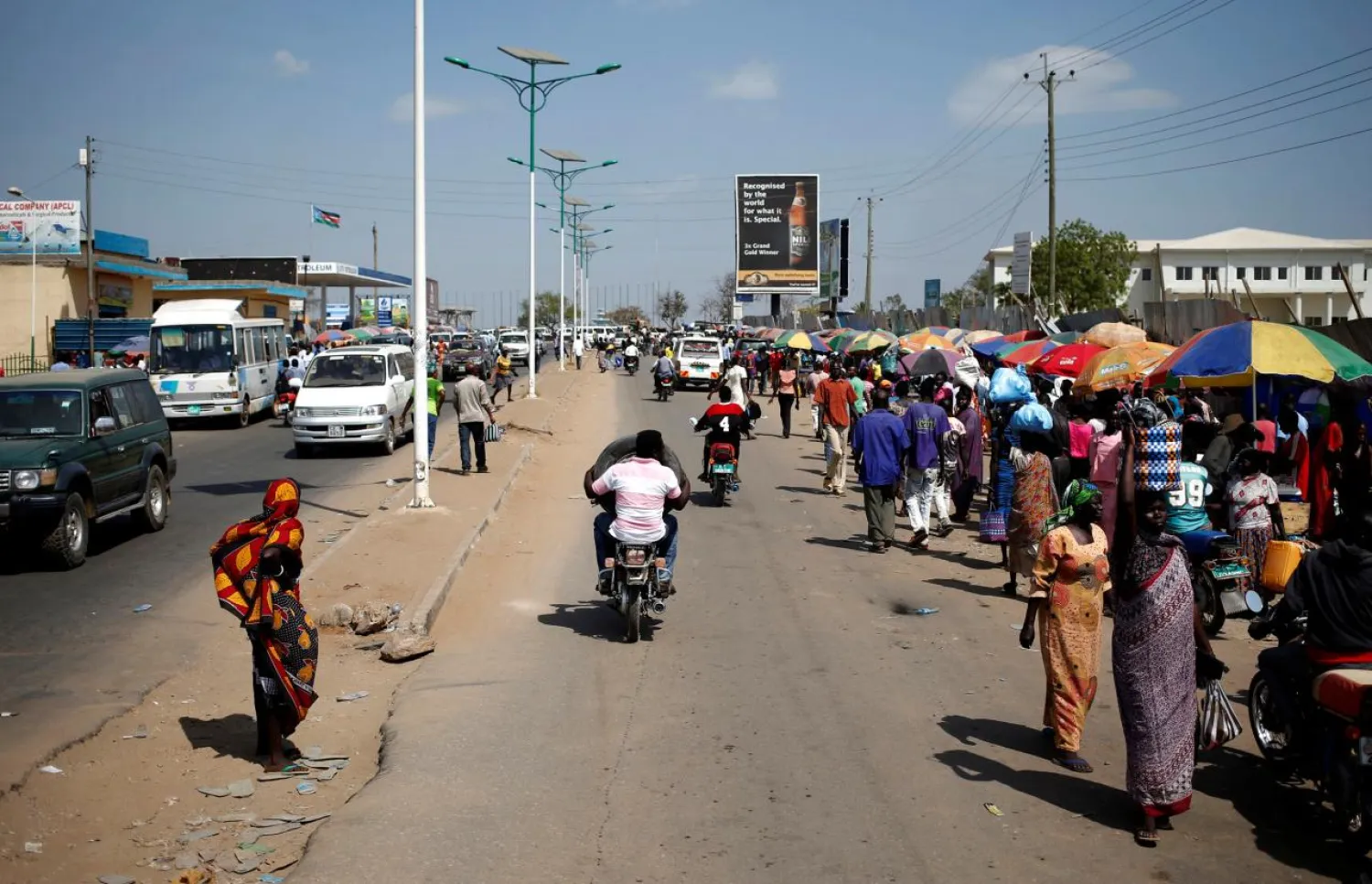
People walk along a street in Juba, South Sudan December 21, 2013. REUTERS/Goran Tomasevic/File Photo
TT

Amnesty International Exposes Illicit $46m South Sudan Arms Deal

People walk along a street in Juba, South Sudan December 21, 2013. REUTERS/Goran Tomasevic/File Photo

Amnesty International exposed in a recent research how a shell company in the heart of London’s West End acted as an intermediary in huge prospective arms deals to war-torn South Sudan and other countries, thanks to regulatory gaps which are making the UK a hotspot for companies involved in illicit arms transfers.

Commercial documents name S-Profit Ltd, a tiny UK-registered company, as the ‘supplier’ in a 2014 deal to provide at least US$46m worth of small arms, light weapons, and ammunition to the South Sudanese government. The report, From London to Juba: a UK-registered company’s role in one of the largest arms deals to South Sudan, also reveals that the UK government has been aware of similar practices taking place on British soil for more than eight years, without taking effective regulatory action.

“South Sudan is awash with weapons that have been used to kill and maim thousands of civilians, causing Africa’s biggest refugee crisis. The UK government has been a vocal proponent of a UN arms embargo on South Sudan, yet is turning a blind eye to illegal deals taking place right under its nose,” said James Lynch, Amnesty International’s Head of Arms Control and Human Rights.

“Glaring gaps in UK company regulation mean a dealer of illicit arms can go online and set up a UK company to front its activities with fewer checks than joining a gym or hiring a car. The UK must urgently review its company registration procedures – right now it provides the perfect conditions to become a hotspot for the kind of irresponsible arms transfers that have devastated South Sudan.”

The weapons in question form part of a previously undisclosed 2014 contract between a Ukrainian state arms company and a UAE-based company to procure US$169m of weapons on behalf of South Sudan. These include thousands of machine guns, mortars, RPGs and millions of rounds of ammunition.

If fulfilled, the total deal would constitute one of the largest publicly disclosed arms transfers to South Sudan since the outbreak of fighting in December 2013.

Amnesty International has not been able to determine whether some or all of the weapons listed in these documents have yet been delivered to South Sudan. However, a UK company may violate UK export control laws even by being involved in the negotiation of an arms deal to South Sudan. The involvement of the Ukrainian state-owned arms company and a UAE private company in weapons supplies to South Sudan also potentially contravenes the Ukraine and UAE’s obligations as signatories to the Arms Trade Treaty.

S-Profit’s director –a Ukrainian national based outside the UK – denied to Amnesty International that the firm had supplied military products to South Sudan, but has not responded to further questions, including whether it played an intermediary role.

Amnesty International affirmed that it has provided UK authorities with the documents and information it has obtained. The report also reveals that the UK government has, for more than eight years, been aware of UK shell companies being used unlawfully as contract vehicles for weapons dealers to supply arms to human rights violators and embargoed destinations including Syria, Eritrea and South Sudan. Yet, the UK has made no regulatory changes to address these gaps.

Meanwhile, South Sudanese President Salva Kiir Mayardit said he was not happy about the ongoing civil war and suffering of citizens in the country.

"I am not really happy. I can be seen to be happy but hurting inside. How can I be happy when I see my people suffering? People are starving and dying in criminal actions and battles.” Kiir said in an interview with SSBC on Friday.

“Being the leader I must put a brave face where I can be seen to be happy but I am not happy,” he added.

Kiir pointed out that the national dialogue is a hope that will reunite the people of South Sudan address grievances which were not tackled by the 2015 peace accord.

The world’s youngest nation has been embroiled in a violent conflict since 2013, when a split between President Salva Kiir and his former vice president, Riek Machar, escalated into outright civil war.

The devastating conflict has killed tens of thousands of people and displaced millions that have sought refuge in neighboring countries.



Minister Says US Can Access Minerals, Military Bases in Somaliland

Minister of the Presidency of the Republic of Somaliland, Khadar Hussein Abdi looks on during an interview in Hargeisa on February 21, 2026. (Photo by Tony KARUMBA / AFP)
TT

Minister Says US Can Access Minerals, Military Bases in Somaliland

Minister of the Presidency of the Republic of Somaliland, Khadar Hussein Abdi looks on during an interview in Hargeisa on February 21, 2026. (Photo by Tony KARUMBA / AFP)

Somaliland is willing to give the United States access to its minerals and military bases, a minister has told AFP, as the breakaway region of Somalia seeks international recognition.

Israel became the only country in the world to recognize Somaliland's independence in December -- something the territory has been seeking since declaring its autonomy from Somalia in 1991.

The government in Mogadishu still considers Somaliland an integral part of Somalia even though the territory has run its own affairs since 1991, with its own passports, currency, army and police force.

"We are willing to give exclusive (access to our minerals) to the United States. Also, we are open to offer military bases to the United States," Khadar Hussein Abdi, minister of the presidency, told AFP in an interview on Saturday.

"We believe that we will agree on something with the United States."

Somaliland president Abdirahman Mohamed Abdullahi already suggested in recent weeks granting Israel privileged access to its mineral resources.

And Khadar Hussein Abdi said he could not rule out the possibility of also allowing Israel to set up a military presence.

The African Union and most Arab countries have thrown their support behind Somalia and condemned the move.

The US, however, defended what it said was Israel's right to recognize Somaliland, although President Donald Trump said he was unlikely to follow suit, despite pressure from some within his Republican party.


Saudi Researcher: Women Played Pivotal Role in Historic Battles

A view of Diriyah, which witnessed numerous historic events during the First and Second Saudi States (Diriyah Gate Development Authority)
TT

Saudi Researcher: Women Played Pivotal Role in Historic Battles

A view of Diriyah, which witnessed numerous historic events during the First and Second Saudi States (Diriyah Gate Development Authority)

Women’s resistance during the Ottoman campaigns against Diriyah and other regions of the First Saudi State, and later the Second Saudi State, was a hard test of society’s capacity to endure.

The confrontation was not confined to the battlefield. It spread across the social fabric, where women played a decisive role in preserving cohesion and sustaining the community under siege and in the face of destruction.

Dr. Fatmah bint Hussein Al Fardan Alqhtani, professor of history at King Saud University, told Asharq Al-Awsat that recognizing women’s presence in the resistance does not mean casting them in stereotypical combat roles. It means acknowledging the practical responsibilities imposed by society and by the historical moment itself.

Daily resilience under siege

During the Ottoman siege, Diriyah was not merely a battlefield. It was a community under total pressure, and women stood at its center.

They ran households in the absence of men, shielded children and property, tended the wounded, secured what food they could and held the social fabric together at a decisive existential moment.

Ottoman reports, Alqhtani noted, treated Diriyah not as an isolated military force but as a full society. That helps explain the sweeping captivity and deportation measures imposed on women and children after the city’s fall, an implicit recognition that resistance was not only about weapons but about a community that believed in its cause and defended it to the end.

Foreign accounts add another layer. Harford Jones, tasked by the British Empire in the region, cited French historian Felix Mengin, who was then at the court of Muhammad Ali Pasha and had access to correspondence related to Ibrahim Pasha's campaign.

According to that account, when Imam Abdullah bin Saud learned Ibrahim Pasha was absent from his camp, he ordered attacks on all Turkish lines. The battle raged for hours in searing heat, with sustained gunfire and fierce exchanges.

Amid the clash, women of the Saudi state were seen carrying water jars, moving through live fire to supply defending fighters. The image is stark: women not as distant symbols of morale, but as active participants in danger, embodying sacrifice and solidarity in defense of their state and identity.

From trenches to vigilance

Alqhtani pointed to events in Shaqra in 1233 AH (1818) as a clear example of women’s direct engagement during Ibrahim Pasha’s march toward Diriyah.

The town was encircled by a trench whose construction had begun in the days of Tusun Pasha before stalling. As the threat intensified, the emir ordered the trench completed in anticipation of a prolonged siege.

Men and women mobilized together. Women took part in digging and in support tasks, enduring harsh conditions. Their role, Alqhtani said, went beyond moral backing. They were physically involved in fortifying the town and safeguarding the community.

Women were also part of the broader security awareness of war. During the siege of Al-Rass, Ottoman forces attempted to tunnel under the city wall to infiltrate it at night. A woman grinding grain late into the night heard unfamiliar sounds near her home and sensed the danger.

She reported it to Sheikh Qurnas bin Abdulrahman bin Qurnas, Emir of Al-Rass. The alert enabled defenders to act swiftly. The sheikh ordered a counter-trench to block the attempt.

The episode, Alqhtani said, underscores that women’s role in resistance was neither emotional nor symbolic. It was vigilant, responsible and operational, part of a collective defense effort spanning all segments of society.

When survival meant bearing arms

Women’s involvement was not limited to endurance and support. A contextual reading of Najdi and Ottoman sources suggests that in moments of extreme peril, particularly during sieges, some women took part in armed defense.

“In besieged societies, where survival itself becomes a battle, carrying weapons was not absolutely confined to men,” Alqhtani said. “It could become a direct act of defending self and place.”

Although sources do not record specific female names in these instances, references to fighting inside the city and to the participation of the “people of Diriyah” in its defense allow for a broader understanding of women as part of an armed home front when necessary.

Alqhtani cited Ghalia Al-Baqamiyya as one of the most prominent examples of direct female military leadership during the Ottoman campaigns against the First Saudi State.

Felix Mengin, then the French consul in Cairo, described the circumstances surrounding the Ottoman advance, including the arrival of forces in Turbah and the three-day siege it faced in a bid to subdue it.

The town held firm. Ghalia Al-Baqamiyya played a central role, raising the morale of fighters from her tribe, Al-Buqum. Some sources indicate she went out at the head of a group of her men to confront the attackers.

The standoff coincided with the arrival of Saudi reinforcements, leading to the Battle of Wadi Al-Sulaym. The fighting was fierce and ended with Ottoman forces defeated and withdrawing toward Taif, leaving behind casualties and substantial spoils in one of the most severe setbacks of those campaigns.

The episode, Alqhtani said, makes one point clear: women were not on the margins of resistance. At pivotal moments, they assumed leadership roles that directly shaped the course of battle, embedding their presence in the history of defending the state and society.


Israel Carries Out More Strikes in Lebanon amid Lack of Int’l Assurances on Wider Regional Escalation

People gather near a building damaged in an Israeli strike in the village of Bednayel in eastern Lebanon, 21 February 2026. EPA/WAEL HAMZEH
TT

Israel Carries Out More Strikes in Lebanon amid Lack of Int’l Assurances on Wider Regional Escalation

People gather near a building damaged in an Israeli strike in the village of Bednayel in eastern Lebanon, 21 February 2026. EPA/WAEL HAMZEH

Lebanese officials say the country has yet to obtain firm or decisive Western guarantees that it will be spared from a larger confrontation in the region as speculation grows over a potential US strike on Iran.

Chief concerns center on whether Hezbollah would be targeted as part of any large-scale strike, or whether the group might intervene militarily alongside Tehran.

Ministerial sources said Israeli airstrikes on Hamas in the Ain al-Hilweh Palestinian refugee camp in southern Lebanon, as well as overnight raids targeting Hezbollah in the eastern Bekaa Valley fall within the pattern of ongoing military operations Lebanon, particularly targeted assassinations against figures linked to both groups.

The sources told Asharq Al-Awsat Lebanon has not received explicit Western assurances that it would not be drawn into a wider confrontation if the conflict expands.

On Hezbollah’s position, the sources noted that the group has not offered a clear position on how it would respond to potential developments.

They pointed to behind-the-scenes efforts led primarily by Parliament Speaker Nabih Berri who believes “Hezbollah will not take any step if Iran is struck.”

Although Hezbollah has previously declared it “would stand idle” in case of escalation, the sources said the party has not announced any specific military plans.

Statements made by its officials have been vague, they added, citing remarks by head of Hezbollah’s parliamentary bloc Mohammad Raad, who stressed on Friday the party’s commitment to “the security and stability of the country and the continuation of normal life.”

In Lebanon’s official response, President Joseph Aoun strongly condemned the Israeli raids carried out overnight by land and sea, which targeted the Sidon area and towns in the Bekaa.

He described the continued attacks as “blatant aggression” aimed at sabotaging Lebanon’s diplomatic efforts with brotherly and friendly nations - foremost among them the United States - to consolidate stability and halt Israeli hostilities.

Aoun said the strikes were a renewed violation of Lebanon’s sovereignty and a clear breach of international obligations, particularly United Nations Security Council Resolution 1701, which calls for a cessation of hostilities and full implementation of its provisions.

The president renewed his appeal to countries supporting regional stability to assume their responsibilities by pressing for an immediate halt to the attacks and ensuring respect for international resolutions in a way that preserves Lebanon’s sovereignty, security, and territorial integrity, and prevents further escalation.