


Keep Politics out of Sport? Don’t Make me Laugh

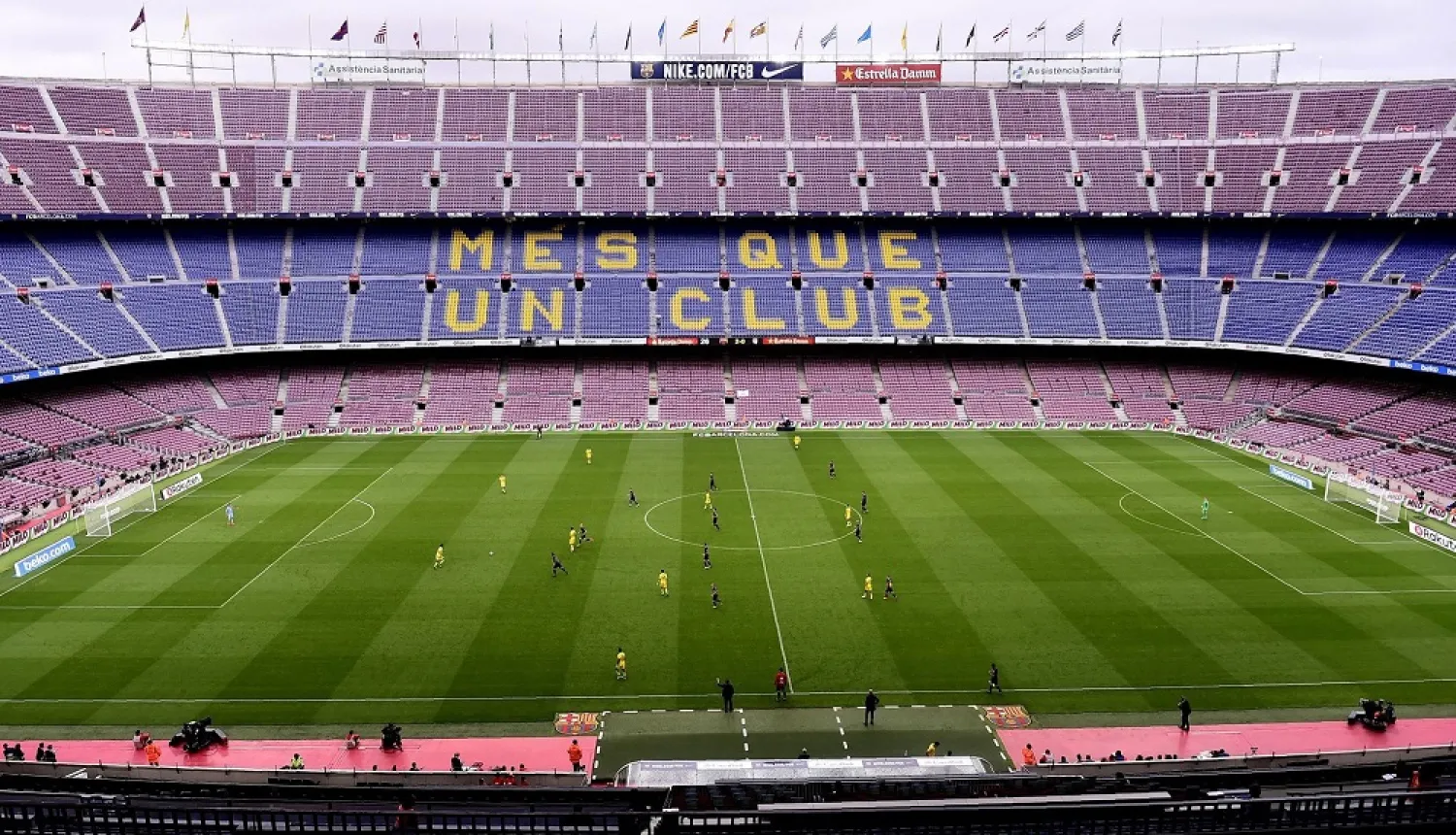
Spectator tribunes remain empty as the Spanish league football match FC Barcelona vs UD Las Palmas is played behind closed doors at the Camp Nou stadium in Barcelona on October 1, 2017. (AFP)
TT

Keep Politics out of Sport? Don’t Make me Laugh

Spectator tribunes remain empty as the Spanish league football match FC Barcelona vs UD Las Palmas is played behind closed doors at the Camp Nou stadium in Barcelona on October 1, 2017. (AFP)

Barcelona’s decision to play the October 1 match against Las Palmas in an empty stadium smacked of choosing points over principles, and overlooks the fact that sport has always found room for protest.

When it came down to it, FC Barcelona – mes que un club, remember – could not bring themselves to go all in. The threatened loss of six points – three for the defaulted match, three more as a penalty – was enough to persuade them to stage their match against Las Palmas behind locked doors in a deserted Camp Nou, while outside the streets of the city rang with the echoes of violent confrontations between police and voters in an independence referendum ruled illegal by the national government.

The club’s decision was an important one. Barça is a powerful international symbol of Catalan identity. A refusal to play Sunday’s match would have added tinder to the fire of the independence movement. But they compete in a league where their final standing against Real Madrid has been measured in the last three seasons by two points, one point and three points. So they took the safer option, leaving Gerard Piqué who has never made a secret of his Catalan pride, to join up with the Spain squad and face uncomfortable questions about divided loyalties.

Meanwhile, fans who had voted for independence pointed to the example of Welsh clubs competing in the English league as evidence that independence from Spain would not have to mean ejection from La Liga. Few would want an entirely autonomous Catalonia to incorporate a future of Barça competing in a domestic mini-league made up by FC Girona, Gimnàstic de Tarragona and Lleida Esportiu.

Keep politics out of sport? Don’t make me laugh. Politics infiltrates sport at all levels. Think about the decision to start next year’s Giro d’Italia in Israel. For one partner in the deal, that’s obviously a matter of money – €17m, apparently. For the other, it represents valuable image-polishing. This is not quite the same as launching the Tour de France in Yorkshire, which was not, the last time I looked, surrounded by walls aimed at keeping out people from Lancashire or County Durham. Or there’s Qatar, whose appalling treatment of migrant workers on the 2022 World Cup stadiums was exposed – not for the first time - by Human Rights Watch this week. Do we really think the Qataris are investing so heavily in football, at home and abroad, out of a sheer love of the game?

The coming days might tell us whether FC Barcelona has a further role to play in the dramatic reawakening of old regional tensions and whether the events of October 1 will join the line of football matches that played a part in shaping history, a phenomenon that could be said to have begun in 1969 with a conflict between El Salvador and Honduras that became known as the Football War.

Tensions between the two countries had been heightened by the migration to Honduras of hundreds of thousands of Salvadorans, leaving a country one-fifth the size of its neighbor but with a population 40 percent greater, prompting the Honduran government to enact reforms intended to keep land out of the hands of immigrant farmers while expelling Salvadoran laborers. The fuse for open conflict was lit when the two countries met in the qualifying tournament for the 1970 World Cup.

The first match was held in the Honduran capital, Tegucigalpa, where the visiting players were kept awake by crowds letting off firecrackers and breaking windows in their hotel. The home team won by a single goal, prompting an 18-year-old girl watching at home in El Salvador to take her father’s pistol from his desk and shoot herself dead. Amelia Bolianos was given a state funeral, her coffin accompanied by the president of the republic and the players of the football team.

When Honduras arrived in San Salvador for the return leg a week later, the welcome included rotten eggs and dead rats thrown through their hotel windows. They made their way to the Flor Blanca stadium in armored cars, passing through angry crowds holding portraits of the dead girl. El Salvador won this one 3-0, which meant that the tie progressed to a play-off on neutral ground in Mexico City. El Salvador won 3-2 with an extra-time goal from their right-winger, “Pipo” Rodríguez, a qualified civil engineer, a few hours after their government had dissolved diplomatic relationships with Honduras in protest against further mass expulsions.

Two weeks later the Salvadoran army and air force launched an invasion which drew a swift response. The war lasted 100 hours and killed 3,000 people, the majority of them civilians, before both sides obeyed a ceasefire call from the Organization of American States. Three months later El Salvador beat Haiti in a play-off to reach the 1970 finals in Mexico, where they lost all three of their group matches.

Twenty years later Red Star Belgrade traveled to meet Dinamo Zagreb in a Yugoslavian league fixture in the midst of rising fervor among Serb and Croat nationalists. Rioting between the home fans and 3,000 visiting supporters continued during the match itself and the game was on the verge of being abandoned, with several players having made it to the safety of the dressing rooms, when Zvonimir Boban, the Dinamo playmaker, kicked a police officer. Although criminal charges were brought and a suspension cost Boban his place in Yugoslavia’s team at the 1990 World Cup finals, his gesture made him a folk hero to his fellow Croats during the bloody war that raged from 1991 to 1995, by which time he was starring for Milan and sending part of his salary back home to help the fight against Serbia.

Back in Mexico City, the black-gloved fists of Tommie Smith and John Carlos in 1968 and the raised hand of Diego Maradona in 1986 were political statements, the first an explicit protest against racial injustice in the United States and the second an implicit response to England’s victory in the Falklands War. Two years ago the flag of a notional “Greater Albania” was flown from a drone into the Belgrade stadium where Serbia and Albania were playing in a Euro 2016 qualifying match, provoking fights among players and fans that led to the match being abandoned.

Like those examples, last weekend’s Barcelona affair and Donald Trump’s continuing assault on the take-a-knee movement in the NFL show that sport cannot seal itself off from the stresses and strains of the real world. From the anti-apartheid boycotts of the 1960s to the demonstrations against holding a grand prix in Bahrain, it offers a useful theater for protest. And those who complain about the temporary inconvenience are seldom on the side of the angels.

The Guardian Sport


PSG’s Mental Strength Hailed as they Come from Behind to Win at Monaco

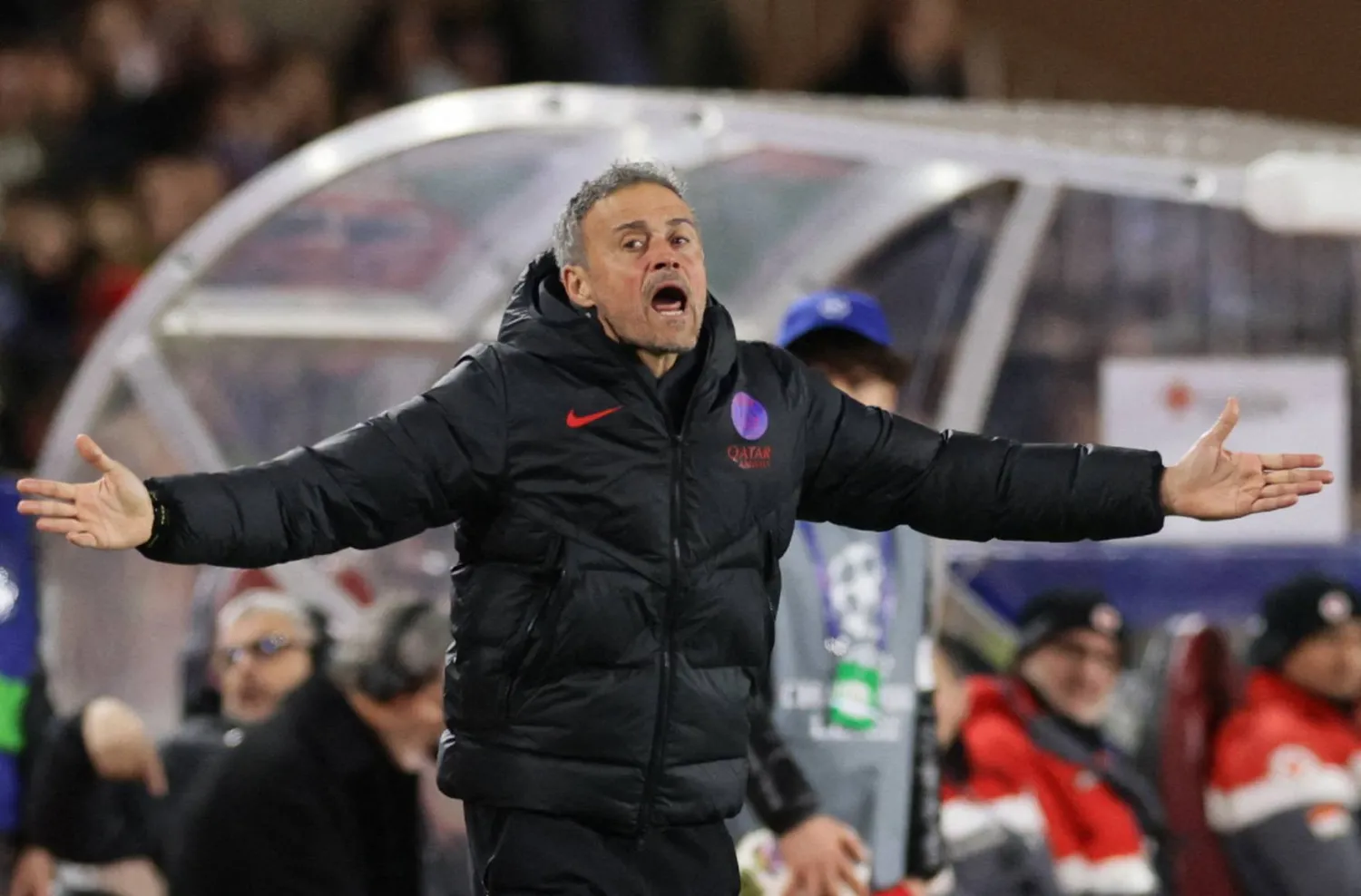
Soccer Football - UEFA Champions League - Play Off - First Leg - AS Monaco v Paris St Germain - Stade Louis II, Monaco - February 17, 2026 Paris St Germain coach Luis Enrique reacts REUTERS/Manon Cruz
TT

PSG’s Mental Strength Hailed as they Come from Behind to Win at Monaco

Soccer Football - UEFA Champions League - Play Off - First Leg - AS Monaco v Paris St Germain - Stade Louis II, Monaco - February 17, 2026 Paris St Germain coach Luis Enrique reacts REUTERS/Manon Cruz

Paris Saint-Germain coach Luis ‌Enrique hailed the mental strength of his side in coming from two goals down to win 3-2 away at Monaco in the Champions League on Tuesday, but warned the knockout round tie was far from finished.

The first leg clash between the two Ligue 1 clubs saw Folarin Balogun score twice for the hosts in the opening 18 minutes before Vitinha had his penalty saved to compound matters.

But after Desire Doue came on for injured Ousmane Dembele, the ‌match turned ‌and defending champions PSG went on to ‌secure ⁠a one-goal advantage ⁠for the return leg.

"Normally, when a team starts a match like that, the most likely outcome is a loss,” Reuters quoted Luis Enrique as saying.

“It was catastrophic. It's impossible to start a match like that. The first two times they overcame our pressure and entered our half, they scored. They ⁠made some very good plays.

“After that, it's difficult ‌to have confidence, but we ‌showed our mental strength. Plus, we missed a penalty, so ‌it was a chance to regain confidence. In the ‌last six times we've played here, this is only the second time we've won, which shows how difficult it is.”

The 20-year-old Doue scored twice and provided a third for Achraf Hakimi, just ‌days after he had turned in a poor performance against Stade Rennais last Friday ⁠and was ⁠dropped for the Monaco clash.

“I'm happy for him because this past week, everyone criticized and tore Doue apart, but he was sensational, he showed his character. He helped the team at the best possible time.”

Dembele’s injury would be assessed, the coach added. “He took a knock in the first 15 minutes, then he couldn't run.”

The return leg at the Parc des Princes will be next Wednesday. “Considering how the match started, I'm happy with the result. But the match in Paris will be difficult, it will be a different story,” Luis Enrique warned.


Mbappe Calls for Prestianni Ban over Alleged Racist Slur at Vinicius

TOPSHOT - Real Madrid's French forward #10 Kylian Mbappe talks with SL Benfica's Portuguese head coach Jose Mourinho during the UEFA Champions League knockout round play-off first leg football match between SL Benfica and Real Madrid CF at Estadio da Luz in Lisbon on February 17, 2026. (Photo by PATRICIA DE MELO MOREIRA / AFP)
TT

Mbappe Calls for Prestianni Ban over Alleged Racist Slur at Vinicius

TOPSHOT - Real Madrid's French forward #10 Kylian Mbappe talks with SL Benfica's Portuguese head coach Jose Mourinho during the UEFA Champions League knockout round play-off first leg football match between SL Benfica and Real Madrid CF at Estadio da Luz in Lisbon on February 17, 2026. (Photo by PATRICIA DE MELO MOREIRA / AFP)

Real Madrid forward Kylian Mbappe said Benfica's Gianluca Prestianni should be banned from the Champions League after the Argentine was accused of directing a racist slur at Vinicius Jr during the Spanish side's 1-0 playoff first-leg win on Tuesday.

Denying the accusation, Prestianni said the Brazilian misheard him.

The incident occurred shortly after Vinicius had curled Real into the lead five minutes into the second half in Lisbon.

Television footage showed the Argentine winger covering his mouth with his shirt before making a comment that Vinicius and nearby teammates interpreted as a racial ‌slur against ‌the 25-year-old, with referee Francois Letexier halting the match for ‌11 ⁠minutes after activating ⁠FIFA's anti-racism protocols.

The footage appeared to show an outraged Mbappe calling Prestianni "a bloody racist" to his face, Reuters reported.

The atmosphere grew hostile after play resumed, with Vinicius and Mbappe loudly booed by the home crowd whenever they touched the ball. Despite the rising tensions, the players were able to close out the game without further interruptions.

"I want to clarify that at no time did I direct racist insults to Vini Jr, ⁠who regrettably misunderstood what he thought he heard," Prestianni wrote ‌on his Instagram account.

"I was never racist with ‌anyone and I regret the threats I received from Real Madrid players."

Mbappe told reporters he ‌heard Prestianni direct the same racist remark at Vinicius several times, an allegation ‌also levelled by Real's French midfielder Aurelien Tchouamen.

Mbappe said he had been prepared to leave the pitch but was persuaded by Vinicius to continue playing.

"We cannot accept that there is a player in Europe's top football competition who behaves like this. This guy (Prestianni) doesn't ‌deserve to play in the Champions League anymore," Mbappe told reporters.

"We have to set an example for all the children ⁠watching us at ⁠home. What happened today is the kind of thing we cannot accept because the world is watching us.

When asked whether Prestianni had apologized, Mbappe laughed.

"Of course not," he said.

Vinicius later posted a statement on social media voicing his frustration.

"Racists are, above all, cowards. They need to cover their mouth with their shirt to show how weak they are. But they have the protection of others who, theoretically, have an obligation to punish them. Nothing that happened today is new in my life or my family's life," Vinicius wrote.

The Brazilian has faced repeated racist abuse in Spain, with 18 legal complaints filed against racist behavior targeting Vinicius since 2022.

Real Madrid and Benfica will meet again for the second leg next Wednesday at the Bernabeu.


Second Season of ‘Kings League–Middle East' to Kick off in March in Riyadh 

The second season of the Kings League-Middle East will kick off in Riyadh on March 27. (Kings League-Middle East on X)
TT

Second Season of ‘Kings League–Middle East' to Kick off in March in Riyadh 

The second season of the Kings League-Middle East will kick off in Riyadh on March 27. (Kings League-Middle East on X)

The Kings League-Middle East announced that its second season will kick off in Riyadh on March 27.

The season will feature 10 teams, compared to eight in the inaugural edition, under a format that combines sporting competition with digital engagement and includes the participation of several content creators from across the region.

The Kings League-Middle East is organized in partnership with SURJ Sports Investments, a subsidiary of the Public Investment Fund (PIF), as part of efforts to support the development of innovative sports models that integrate football with digital entertainment.

Seven teams will return for the second season: DR7, ABO FC, FWZ, Red Zone, Turbo, Ultra Chmicha, and 3BS. Three additional teams are set to be announced before the start of the competition.

Matches of the second season will be held at Cool Arena in Riyadh under a single round-robin format, with the top-ranked teams advancing to the knockout stages, culminating in the final match.

The inaugural edition recorded strong attendance and wide digital engagement, with approximately a million viewers following the live broadcasts on television and digital platforms.
