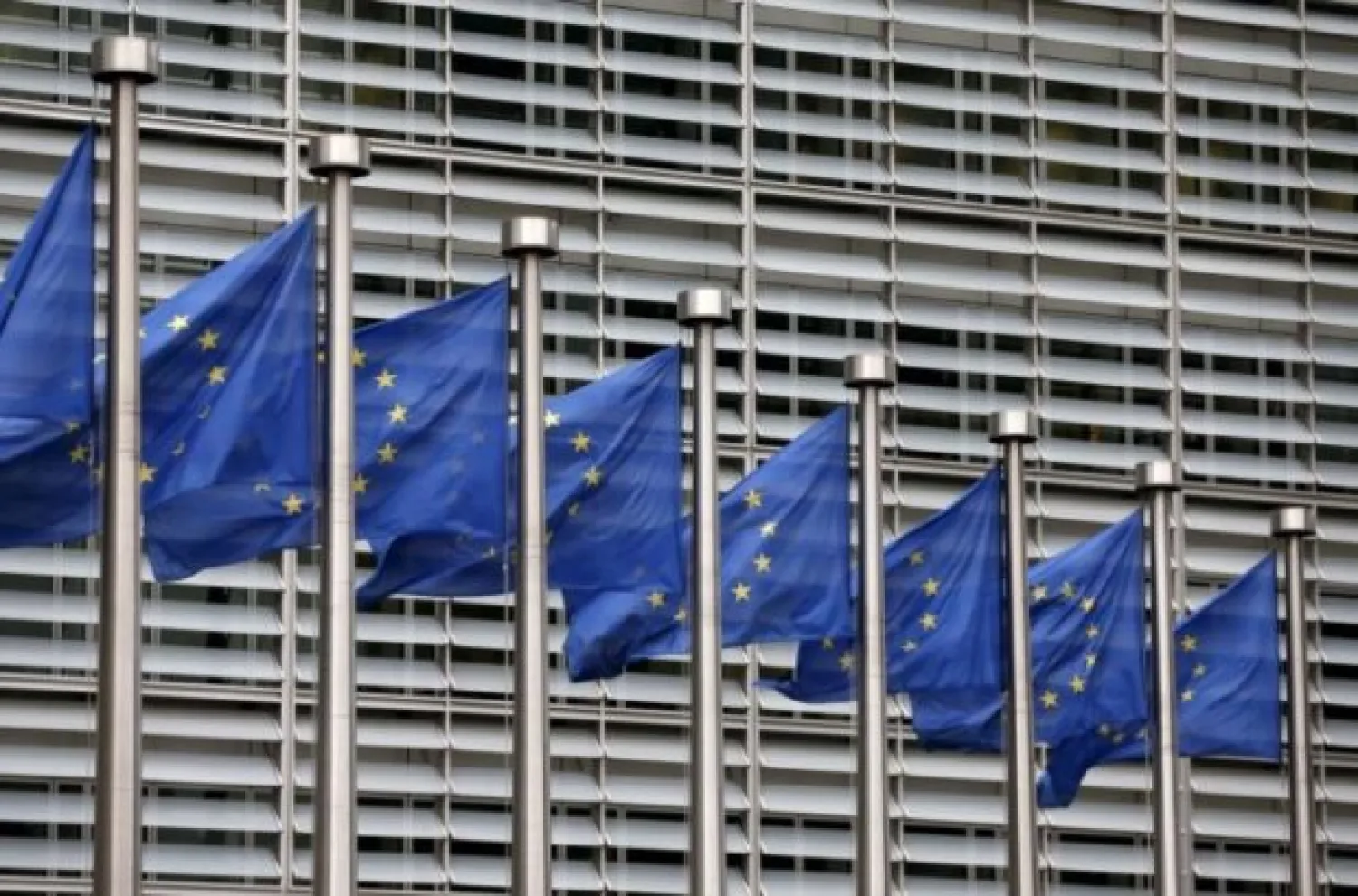
European Commission Approves €200m Loan for Tunisia

European Union flags flutter outside the EU Commission headquarters in Brussels, Belgium, October 28, 2015. REUTERS/Francois Lenoir
TT

European Commission Approves €200m Loan for Tunisia

European Union flags flutter outside the EU Commission headquarters in Brussels, Belgium, October 28, 2015. REUTERS/Francois Lenoir

The European Commission approved this week the disbursement of a €200 million loan to Tunisia as part of a total of €500 million to be disbursed in three installments in 2017 and 2018.

“The disbursement to Tunisia is proof of our strong commitment to support the successful economic recovery of one of our closest neighbors,” the Commission said.

This disbursement marks the launch of the second Macro-Financial Assistance (MFA-II) program to Tunisia.

The Commission proposed it in February last year and the European Parliament and the Council adopted it on July 6, 2016 in an attempt to help Tunisia overcome the repercussions of the terrorist attacks of 2015, which contributed to halting Tunisia's economic recovery.

The EU's strategy of assistance to Tunisia includes budget support programs and substantial loans from the European Investment Bank.

The EU calls for the implementation of a number of policy conditions targeting fiscal consolidation as well as the improvement of Tunisia's social assistance schemes and business climate.


Morocco's Inflation Rate Rises to 1.7% in April

A farmer works in his wheat field in the Sebt Meghchouch region of Morocco, on April 28, 2026. (Photo by Abdel Majid BZIOUAT / AFP)
TT

Morocco's Inflation Rate Rises to 1.7% in April

A farmer works in his wheat field in the Sebt Meghchouch region of Morocco, on April 28, 2026. (Photo by Abdel Majid BZIOUAT / AFP)

Morocco's annual inflation rate, measured by the consumer price index, rose to 1.7% in April from 0.9% a month earlier, the statistics agency said on Friday.

Food prices, the main driver of inflation in the country, rose 0.6% ⁠from a year ⁠earlier, while non-food prices increased 2.5%, the agency said in a statement.

Transport prices rose 8.4% following a ⁠surge in fuel prices due to the conflict in the Middle East.

Core inflation, which excludes more volatile goods and government-controlled prices, was down 0.3% year-on-year and up 0.1% month-on-month.

To cushion the impact of ⁠geopolitical ⁠tensions on the domestic market, the government plans to add 20 billion dirhams ($ 2.17 billion) to its 2026 budget, including increased subsidies to keep public transport, cooking gas and electricity prices stable.


UK Retail Sales Drop by Most in Nearly a Year as Drivers Buy Less Fuel

FILE PHOTO: An out of use sign hangs from a nozzle of an unleaded petrol pump on the forecourt of an Asda petrol station in Bethnal Green, London, Britain, March 27, 2026 REUTERS/Jaimi Joy/File Photo
TT

UK Retail Sales Drop by Most in Nearly a Year as Drivers Buy Less Fuel

FILE PHOTO: An out of use sign hangs from a nozzle of an unleaded petrol pump on the forecourt of an Asda petrol station in Bethnal Green, London, Britain, March 27, 2026 REUTERS/Jaimi Joy/File Photo

British retail sales fell by the most in nearly a year in April as fuel sales plummeted, according to official figures published on Friday that added to signs of waning consumer spending against the backdrop of the Iran war and rising energy costs.

Retail sales volumes slid by 1.3% in April from March, the biggest monthly decline since May 2025 and sharper than the 0.6% decline expected by economists.

Fuel volumes plunged by more than 10% as users ⁠saved fuel having stocked ⁠up in March, the Office for National Statistics said. April's drop in fuel sales was the largest monthly fall since the COVID-19 pandemic.

Excluding fuel, sales volumes were down a less severe 0.4%, close to the Reuters poll forecast for a drop of 0.3%, Reuters reported.

Sales fell across every category except food. Clothing sales fell to their lowest level since June last year, with retailers citing weak ⁠confidence and variable weather.

Sterling weakened briefly against the dollar after the data was published but soon recovered.

"Concerns around the impact of the Iran conflict on the cost of living, alongside higher mortgage costs and continued pressure on household finances, are weighing heavily on consumer confidence," said Samuel Edwards, head of client portfolio management at financial services firm Ebury.

Earlier on Friday, a survey showed low levels of consumer confidence rose only slightly in May with households the least willing to make big item purchases in nearly a year and a half.

Major British retailers say uncertainty over the impact of the Iran war ⁠is weighing on ⁠their businesses and customers. They also say higher tax and more regulation are holding them back.

Some firms are bucking the trend. Fashion retailer Next posted better-than-expected first quarter sales and electricals retailer Currys edged up its profit outlook.

Compared with a year earlier, overall sales were flat, the ONS said, against economists' expectations of a 1.3% rise.

Excluding fuel sales, volumes were up 1.1%, weaker than the Reuters poll forecast of a rise of 1.5%.

The Bank of England has held interest rates as it weighs up the risk of weakening growth in the economy and labor market against the impact of the energy price shock on inflation.

Separate ONS data showed higher-than-expected government borrowing last month, underscoring the scale of the challenge facing finance minister Rachel Reeves.


Saudi Oil Pipeline Boosts Exports 37.4%, Trade Surplus Hits Highest Since 2022

Naval vessels at Yanbu port on the Red Sea (SPA) 
TT

Saudi Oil Pipeline Boosts Exports 37.4%, Trade Surplus Hits Highest Since 2022

Naval vessels at Yanbu port on the Red Sea (SPA) 

Saudi Arabia’s merchandise trade surplus surged to its highest level since 2022 in March, driven by strong momentum in oil exports, which rose 37.4%, while the East-West pipeline played a central role in improving the flexibility of crude flows to Red Sea ports, according to official data and an industry expert.

Strategic energy infrastructure helped the Kingdom improve export efficiency and diversify access points to global markets, the General Authority for Statistics said in its international merchandise trade bulletin published on Thursday.

The authority reported that the merchandise trade surplus jumped 218.9% year-on-year in March, marking its highest level since 2022, supported by robust growth in oil exports.

Mohammad al-Sabban, a former senior adviser to the Saudi oil minister, told Asharq Al-Awsat that the rise in the Kingdom’s oil exports in March demonstrated the success of long-term planning through the construction and rehabilitation of the East-West pipeline, which transports crude and petroleum products to the Red Sea port of Yanbu.

He noted that the pipeline had helped Saudi Arabia bypass risks linked to the Strait of Hormuz after remaining closed for extended periods in the past.

Al-Sabban added that the government built the pipeline in the mid-1980s in what proved to be a sound strategic decision, explaining that its current capacity has reached 7 million barrels per day.

He said the infrastructure had contributed to the 37.4% rise in oil exports, equivalent to around SAR100 billion ($26.66 billion), increasing the share of oil in total merchandise exports.

“Many countries have seen their exports shrink after the recent crisis, but with the East-West pipeline in place, the Kingdom was able to raise total merchandise exports,” he stated.

According to the statistics authority, the total value of Saudi merchandise exports reached about SAR115 billion ($30.66 billion) in March, up 21.5% from the same month in 2025.

The increase was driven mainly by a sharp rise in oil exports, which climbed 37.4% to SAR92.5 billion, raising their share of total exports to 80.3% from 71.0% a year earlier.

Non-oil exports, including re-exports, fell 17.3%, while national non-oil exports excluding re-exports declined 27.0% to SAR14 billion ($3.73 billion).

Re-exported goods rose 2.5%, supported by a 51.1% jump in exports of “machinery, electrical equipment and parts thereof,” which accounted for 62.4% of total re-exported goods.

Imports fell 24.8% year-on-year in March to SAR58 billion ($15.46 billion), the report showed.

The sharp decline in imports, combined with higher exports, increased the ratio of non-oil exports to imports to 39.3%, compared with 35.8% a year earlier.

The report indicated that “machinery, electrical equipment and parts thereof” remained the most influential category in non-oil exports, accounting for 27.4% of the total after rising 46.2%. The same category also ranked first among imports at 30.4%, despite an 11.9% decline.

China remained Saudi Arabia’s top trading partner, accounting for 14.1% of Saudi exports, followed by India at 13.7% and Japan at 9.5%. Exports to the Kingdom’s top 10 destinations represented 69.8% of total exports.

China also remained the Kingdom’s largest source of imports, accounting for 26.7% of the total, followed by the United States at 8.4% and the United Arab Emirates at 7.1%.

Jeddah Islamic Port remained the main entry point for imports into the Kingdom, handling 29.8% of total imports.

For non-oil exports, King Abdulaziz International Airport in Jeddah ranked as the leading export gateway with a 23.4% share, followed by Jeddah Islamic Port at 21.2% and the Al-Batha land crossing at 8.2% of Saudi non-oil merchandise exports.