

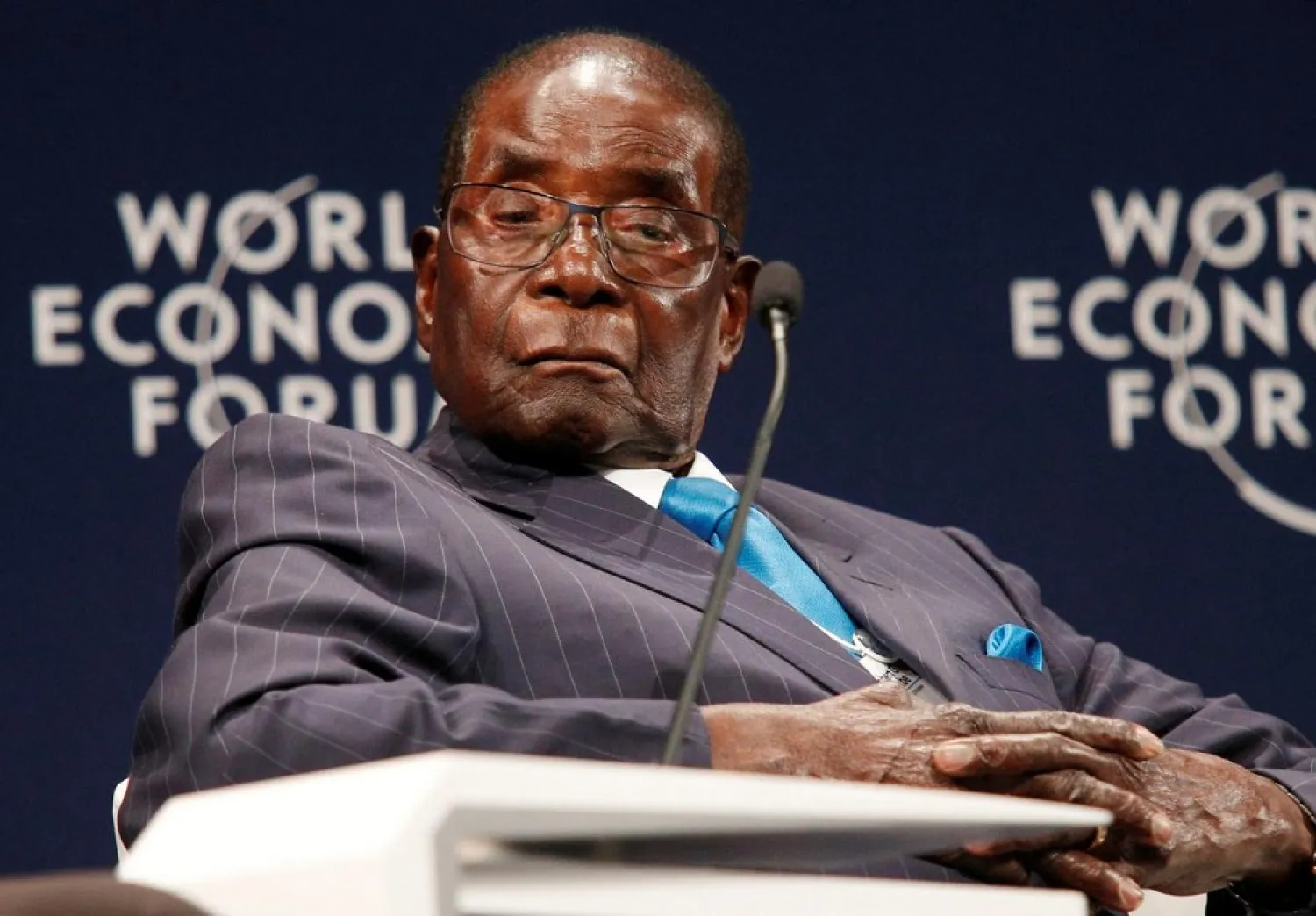

After Backlash, WHO Rescinds Mugabe’s Appointment as Goodwill Ambassador

Zimbabwean President Robert Mugabe. (Reuters)
TT

After Backlash, WHO Rescinds Mugabe’s Appointment as Goodwill Ambassador

Zimbabwean President Robert Mugabe. (Reuters)

After much outrage, the World Health Organization will rescinded its choice to appoint Zimbabwean President Robert Mugabe as a goodwill ambassador.

WHO Director General Tedros Adhanom Ghebreyesus said in statement: "I have decided to rescind the appointment" of Zimbabwean President Robert Mugabe as who goodwill ambassador.”

The appointment had sparked global outrage, while several former and current WHO staff said privately they were appalled at the "poor judgment" and "miscalculation" by Tedros.

Tedros was elected the first African head of WHO in May.

Mugabe was head of the African Union (AU) when the bloc endorsed Tedros - a former health and foreign minister of Ethiopia - over other African candidates for the top post, without any real regional contest or debate, they said.

Mugabe, 93, is blamed in the West for destroying Zimbabwe's economy and numerous human rights abuses during his 37 years leading the country as either president or prime minister.

WHO named Mugabe to the largely ceremonial post at a high-level WHO meeting on chronic diseases, attended by both men, in Uruguay on Wednesday.

Tedros praised Zimbabwe as "a country that places universal health coverage and health promotion at the center of its policies to provide health care to all".

The US, which has imposed sanctions on Mugabe for alleged human rights violations, said it was "disappointed."

"He (Tedros) has to remember where his funding comes from," said one health official who declined to be identified.

"This appointment clearly contradicts the United Nations ideals of respect for human rights and human dignity," the State Department said.

Britain said Mugabe's appointment as a goodwill ambassador for non-communicable diseases in Africa was "surprising and disappointing" and that it risked overshadowing the WHO's global work.

Health and human rights leaders chimed in. "The decision to appoint Robert Mugabe as a WHO goodwill ambassador is deeply disappointing and wrong," said Dr. Jeremy Farrar, director of the Wellcome Trust, a major British charitable foundation. "Robert Mugabe fails in every way to represent the values WHO should stand for."

Ireland's health minister, Simon Harris, called the appointment "offensive, bizarre." ''Mugabe corruption decimates Zimbabwe health care," tweeted the head of Human Rights Watch, Kenneth Roth.

Two dozen organizations — including the World Heart Federation and Cancer Research UK — released a statement slamming the appointment, saying health officials were "shocked and deeply concerned" and citing his "long track record of human rights violations."

The groups said they had raised their concerns with Tedros on the sidelines of the conference.

Zimbabwe's government has not commented on Mugabe's appointment, but a state-run Zimbabwe Herald newspaper headline called it a "new feather in president's cap."

The southern African nation once was known as the region's prosperous breadbasket. But in 2008, the charity Physicians for Human Rights released a report documenting failures in Zimbabwe's health system, saying Mugabe's policies had led to a man-made crisis.

"The government of Robert Mugabe presided over the dramatic reversal of its population's access to food, clean water, basic sanitation and health care," the group concluded. Mugabe's policies led directly to "the shuttering of hospitals and clinics, the closing of its medical school and the beatings of health workers."

The 93-year-old Mugabe, who has led Zimbabwe since independence in 1980, has come under criticism at home for his frequent overseas travels that have cost impoverished Zimbabwe millions of dollars. His repeated visits to Singapore have heightened concerns over his health, even as he pursues re-election next year.

The US in 2003 imposed targeted sanctions, a travel ban and an asset freeze against Mugabe and close associates, citing his government's rights abuses and evidence of electoral fraud.



Indonesia Flood Death Toll Passes 1,000

The deadly torrential rains are one of the worst recent disasters to strike Sumatra. (AFP)
TT

Indonesia Flood Death Toll Passes 1,000

The deadly torrential rains are one of the worst recent disasters to strike Sumatra. (AFP)

Devastating floods and landslides have killed 1,003 people in Indonesia, rescuers said Saturday as the Southeast Asian nation grapples with relief efforts.

The disaster, which has hit the northwestern island of Sumatra over the past fortnight, has also injured more than 5,400, the National Disaster Mitigation Agency said in its latest toll.

The deadly torrential rains are one of the worst recent disasters to strike Sumatra, where a tsunami wreaked havoc in 2004 in Aceh province, which lies at the northern tip of the island.

The final toll is expected to rise, with the disaster agency reporting 218 people are still missing.

With vast tracts of territory hit, 1.2 million residents have been forced to take refuge in temporary shelters.

Frustration has grown among flood victims, who have complained about the pace of relief efforts.

President Prabowo Subianto said Saturday the situation has improved, with several areas which had been cut off now accessible.

"Here and there, due to natural and physical conditions, there have been slight delays, but I checked all the evacuation sites: their conditions are good, services for them are adequate, and food supplies are sufficient," Prabowo said after visiting Langkat in North Sumatra province.

Costs to rebuild after the disaster could reach 51.82 trillion rupiah ($3.1 billion) and the Indonesian government has so far shrugged off suggestions that it call for international assistance.


Moscow, Tehran ‘Working Closely’ on Nuclear Program

Russian President Vladimir Putin and Iranian President Masoud Pezeshkian on the sidelines of the Peace Summit in Ashgabat, Turkmenistan, on Friday (Tasnim). 
TT

Moscow, Tehran ‘Working Closely’ on Nuclear Program

Russian President Vladimir Putin and Iranian President Masoud Pezeshkian on the sidelines of the Peace Summit in Ashgabat, Turkmenistan, on Friday (Tasnim). 

Russian President Vladimir Putin said on Friday that relations between Moscow and Tehran are “developing very positively,” stressing that the two countries are working in close coordination at the United Nations on Iran’s nuclear program.

He made the remarks during talks with Iranian President Masoud Pezeshkian on the sidelines of the International Peace and Trust Summit in Ashgabat.

According to Russian media, Putin said Russia is cooperating with Iran at the Bushehr nuclear power plant and on major infrastructure projects, including the North–South Transport Corridor.

He added that the two sides are also exploring cooperation in the gas and electricity sectors.

Pezeshkian, quoted by Iranian and Russian media, reaffirmed Tehran’s commitment to implementing the comprehensive strategic partnership agreement with Moscow.

He said Iran is “determined to activate the agreement” and expects Russia to accelerate implementation of joint understandings, particularly in energy, transport and strategic transit corridors.

The Iranian president said Iran would complete its share of the groundwork for the North–South Corridor by the end of the year, noting growing economic and trade cooperation between the two countries.

He also called for strengthening multilateral partnerships within frameworks such as the Shanghai Cooperation Organization and BRICS to counter what he described as “unilateralism.”

Russia and Iran aim to expand economic ties through projects such as the International North–South Transport Corridor, a multimodal route linking northern and southern Asia via sea, rail and road networks.

The corridor is intended to speed up cargo transport between Russia and India through Iran and other countries while reducing costs compared with traditional routes. The project is seen as part of Moscow’s efforts to deepen trade links with Central Asia and Europe and to lessen reliance on longer maritime routes.

Putin said bilateral trade between Russia and Iran increased by 13 percent last year and by 8 percent in the first nine months of the current year, underscoring continued cooperation in energy and infrastructure. He added that coordination between Moscow and Tehran on international issues remains “close and ongoing.”

On the sidelines of the summit, Pezeshkian also met Pakistani Prime Minister Shehbaz Sharif, with both sides agreeing on the need to accelerate implementation of bilateral agreements and enhance cooperation in transport, transit, energy and border infrastructure, according to Iran’s Mehr News Agency.


US Says Mexico Agrees to Water Treaty Obligations

FILE PHOTO: The sun sets over the Rio Grande River in Salineno, Texas, US, February 18, 2025. REUTERS/Cheney Orr/File Photo
TT

US Says Mexico Agrees to Water Treaty Obligations

FILE PHOTO: The sun sets over the Rio Grande River in Salineno, Texas, US, February 18, 2025. REUTERS/Cheney Orr/File Photo

The United States and Mexico reached an agreement on water-sharing on Friday, after President Donald Trump threatened new sanctions.

Trump said Mexico owed 800,000 acre-feet of water to the US and demanded it release a quarter of this amount by December 31 or be hit with a new five percent tariff, AFP said.

The Republican leader accused Mexico of violating a 1944 treaty under which the US shares water from the Colorado River in exchange for flows from the Rio Grande, which forms part of the border between the two countries.

"The United States and Mexico reached an understanding to meet the current water obligations of American farmers and ranchers," the US Department of Agriculture agency said in a statement.

It said the agreement includes both the current water cycle and the deficit from the previous cycle.

The two countries are expected to finalize the plan at the end of January.

The agreement as it stands would have Mexico releasing 202,000 acre-feet of water starting next week.

US Agriculture Secretary Brooke Rollins said in a statement on Friday that Mexico "has delivered more water in the last year than in the previous four years combined," but fallen short of their obligations.

"Farmers across South Texas have been reeling from the uncertainty caused by the lack of water. Now they can expect the resources promised to them," Rollins added.

Rollins echoed Trump's threat saying that if "Mexico continues to violate its commitments, the United States reserves the right and will impose five percent tariffs on Mexican products."

Mexican President Claudia Sheinbaum has not commented on the agreement, but on Tuesday expressed confidence in reaching a solution.

At the time, she also cautioned it would be physically impossible to meet the December 31 deadline because of limitations on the pumping equipment, but said: "We have the best will to deliver the amount of water that is owed."

Mexico acknowledged that it has been behind in its water deliveries to the US over the past five years, citing drought in 2022 and 2023.

Trump had previously threatened Mexico in April with economic repercussions over the water dispute, prompting Mexico at the time to immediately send water.

Mexican goods currently face a 25 percent tariff unless they fall under the United States-Mexico-Canada Agreement (USMCA), a free trade deal struck during Trump's first term and which Washington is aiming to renegotiate in 2026.