


Bahrain: Our Security and Stability Disputes with Doha Extend throughout History

A traditional wooden fishing Dhow is seen in port near modern glass and steel buildings on the Doha skyline, Qatar. (Reuters)
TT

Bahrain: Our Security and Stability Disputes with Doha Extend throughout History

A traditional wooden fishing Dhow is seen in port near modern glass and steel buildings on the Doha skyline, Qatar. (Reuters)

Bahrain announced Saturday the details of the Bahraini-Qatari dispute.

It issued a statement that started from historical differences on the borders to the Qatari support for groups targeting the security and stability of Bahrain. This culminated in the events of 2011 through the financial and media support provided to terrorist groups targeting the regime of the Kingdom of Bahrain.

Bahrain announced on October 30 that it will not attend any Gulf Cooperation Council (GCC) summit or meeting if Qatar is attending unless Doha corrects its approach, recovers its senses and responds to the demands of the countries that long suffered from its policies.

On November 1, Bahrain announced that it would impose entry visas on all Qatari nationals and residents in what it called a security measure.

In this context, and in the statement issued by Bahrain on Saturday through its official news agency, BNA, the Manama stressed that after the Kuwaiti mediation stalled and after Qatar continued to fail in its 2013 and 2014 commitments, brought in foreign forces to empower itself and opened its doors wide to terrorist groups, “Bahrain has taken new measures in addition to the previous ones taken by the boycotting countries in order to protect its security and stability.”

“Respect for the legitimacy between states is the safety valve in international relations, and it is one of the constants that we strongly uphold regardless of how profound our differences are in the Arab world or within the GCC,” the statement stressed.

“Within this spirit, Bahrain, as can be testified by living witnesses, has endured the intolerable and conceded many of its internationally documented historic rights in order to distance the GCC from bilateral differences,” BNA quoted the statement.

Assault on legitimacy, was one of the main sources of dispute between Bahrain and Qatar since Bahrain lost part of its sovereign entity when Doha cut its land borders.

“These borders are well-documented in contemporary history and were known by every single one in the early 1900s,” the statement read.

Later, and in the 1950s, “Bahrain lost another part of its sovereign existence when the northern territory was forcibly cut off by a foreign support force that set the new border according to the new oil border.”

The border expanded at the expense of the legitimate rights of Bahrain to the north and from Umm al-Shubram, 20 kilometers south of Doha to the area of "Salwa" in the south.

The island of "Halul" was included. The borders of the new Qatar were drawn according to the required oil border, which was defined in the agreements as the new concessions to the British Petroleum Company, the statement explained.

According to the statement, Manama having every right to claim what was cut off forcibly from its land and to dispute the legitimacy of the Qatari rule on the northern territory, chose not to do so. However, when the brothers from the Gulf States met to establish an entity that would bring them together, everybody agreed to postpone all discussions regarding border issues to avoid controversial cases and instead moved ahead with strengthening the new Council.

“Bahrain honored the request by the brothers, agreed to postpone the claim of its rights, accepted the losses and gave up what it is rightfully hers in order to ensure the unity of the Gulf.”

On the other part of the statement, Manama mentioned Doha’s support for terrorism.

“Qatar has not only usurped Bahrain’s legitimate rights but has also worked for years on undermining the security of the Kingdom, offering support to every saboteur and terrorist for two decades.”

Qatar also supported terrorist groups during the unrest in Bahrain in 2011 that attempted to overthrow the legitimacy in the kingdom, and it did the same thing in all the countries that slid into chaos and saw their regimes fall in what was called “Arab Spring,” the statement added.

It included forms of Doha’s targeting of counter-terrorism states, including Bahrain, as it gave more than 59 terrorists wanted by affected countries its citizenship, thus preventing their extradition.

On the part related to Qatar’s relations with countries that support terrorism, the statement said that Qatar has announced the strengthening of the Iranian-Qatari alliance, which poses a direct threat to regional security and territorial integrity and jeopardizes international attempts to stop the arming of Iranian-backed groups, such as the Houthis, al-Qaeda, Saraya al-Ashtar and other groups on terrorist lists.

Finally, the statement was concluded with confirming that the history bears witness that Bahrain has always been a peace-loving nation that has never infringed on anyone or gone beyond its limits.

“It has confined itself to defending the safety and security of its citizens. Its martyrs have sacrificed their lives for the sake of their nation while they confronted the terrorist groups trained by Iran and backed by Qatar.”

It stressed that these are not gratuitous charges, but they are well documented accusations supported by irrefutable evidence, backed by undeniable proof and confirmed by telephone recordings.



Makkah Deputy Governor Carries Out Field Inspection of Grand Mosque Readiness for Ramadan 

Deputy Governor of the Makkah Region Prince Saud bin Mishaal bin Abdulaziz is seen during his inspection tour at the Grand Mosque in the holy city of Makkah. (SPA)
TT

Makkah Deputy Governor Carries Out Field Inspection of Grand Mosque Readiness for Ramadan 

Deputy Governor of the Makkah Region Prince Saud bin Mishaal bin Abdulaziz is seen during his inspection tour at the Grand Mosque in the holy city of Makkah. (SPA)

Deputy Governor of the Makkah Region Prince Saud bin Mishaal bin Abdulaziz inspected the readiness of the Grand Mosque and its facilities, conducting a field tour to review operational and service preparations for receiving worshippers and Umrah performers during the holy month of Ramadan, reported the Saudi Press Agency on Tuesday.

Prince Saud was briefed on the operational plans implemented by the relevant authorities, including crowd management mechanisms, service enhancements, and facility preparations aimed at ensuring smooth movement and enhancing comfort and safety levels for visitors to the Grand Mosque, particularly during peak times.

He reviewed developmental initiatives and smart services supporting the operational system, notably electric mobility carts for transporting the elderly, persons with disabilities, and those in need of assistance within the Grand Mosque.

The tour also included an overview of the efforts of guidance teams deployed across the corridors and courtyards of the Grand Mosque, providing multilingual assistance and direction.

Prince Saud reviewed the interactive map and digital mobility platform, which allows visitors to plan their routes in advance and identify service locations, entrances and exits, and less crowded pathways.

He was briefed on crowd management systems, including the visitor density sensor platform that measures human density in real time, and the Tawaf and Sa’i crowd status display service, which allows worshippers to select appropriate times to perform rituals with ease. Models of the modern multilingual guidance system were also reviewed.

Prince Saud also visited the Smart Engineering Command and Control Center, which serves as an advanced central platform linking operational systems and monitoring performance in real time, boosting operational efficiency and raising readiness levels during Ramadan.


Saudi Leadership Provides Two Donations Worth SAR150 Mln Through Jood Eskan Platform

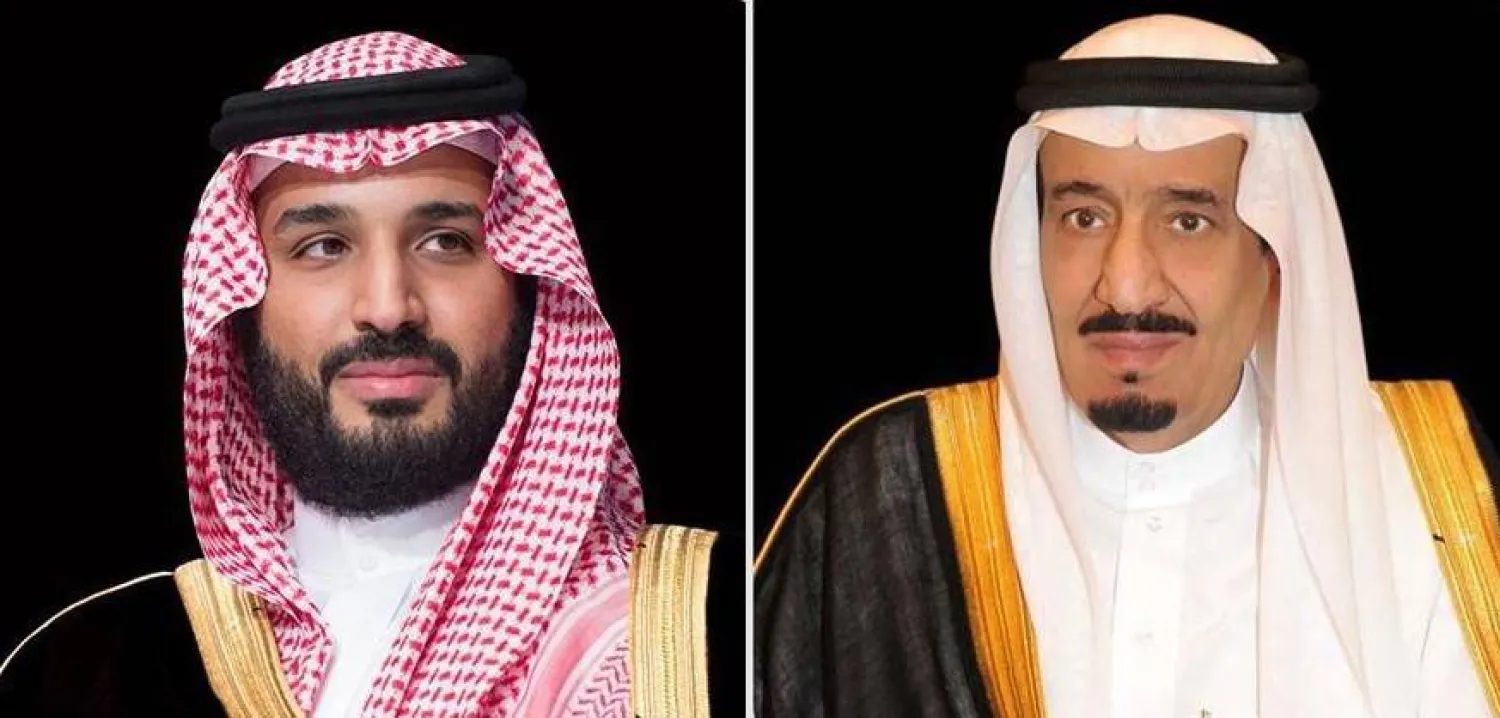
Custodian of the Two Holy Mosques King Salman bin Abdulaziz Al Saud and Prince Mohammed bin Salman bin Abdulaziz Al Saud, Crown Prince and Prime Minister. (SPA)
TT

Saudi Leadership Provides Two Donations Worth SAR150 Mln Through Jood Eskan Platform

Custodian of the Two Holy Mosques King Salman bin Abdulaziz Al Saud and Prince Mohammed bin Salman bin Abdulaziz Al Saud, Crown Prince and Prime Minister. (SPA)

Custodian of the Two Holy Mosques King Salman bin Abdulaziz Al Saud and Prince Mohammed bin Salman bin Abdulaziz Al Saud, Crown Prince and Prime Minister, have provided two generous donations amounting to SAR150 million through the Jood Eskan platform.

The move aligns with the leadership's commitment to supporting all national efforts and initiatives to provide suitable housing for deserving families.

Minister of Municipalities and Housing and Chairman of the Board of Trustees of the Developmental Housing Foundation (Sakan) Majed Al-Hogail expressed his deep gratitude to the leadership for its unwavering support to all national efforts and initiatives aimed at providing suitable housing for eligible families across the Kingdom.

He noted the effective impact of previous generous donations in achieving the goals of housing development, and motivating individuals and institutions to donate through the Jood Eskan platform that is based on community giving that helps provide decent housing and boosts stability and quality of life for deserving families.


Saudi Crown Prince Receives Message on Bilateral Ties from President of Kazakhstan

Prince Mohammed bin Salman bin Abdulaziz Al Saud, Saudi Crown Prince and Prime Minister. (SPA file)
TT

Saudi Crown Prince Receives Message on Bilateral Ties from President of Kazakhstan

Prince Mohammed bin Salman bin Abdulaziz Al Saud, Saudi Crown Prince and Prime Minister. (SPA file)

Prince Mohammed bin Salman bin Abdulaziz Al Saud, Saudi Crown Prince and Prime Minister, received on Tuesday a written message from President of Kazakhstan Kassym-Jomart Tokayev on bilateral relations between their two countries.

The message was received by Minister of Foreign Affairs Prince Faisal bin Farhan bin Abdullah during a meeting with his Kazakh counterpart Yermek Kosherbayev in Riyadh.