


Football Clubs Splash out for Players, so why not for Managers?

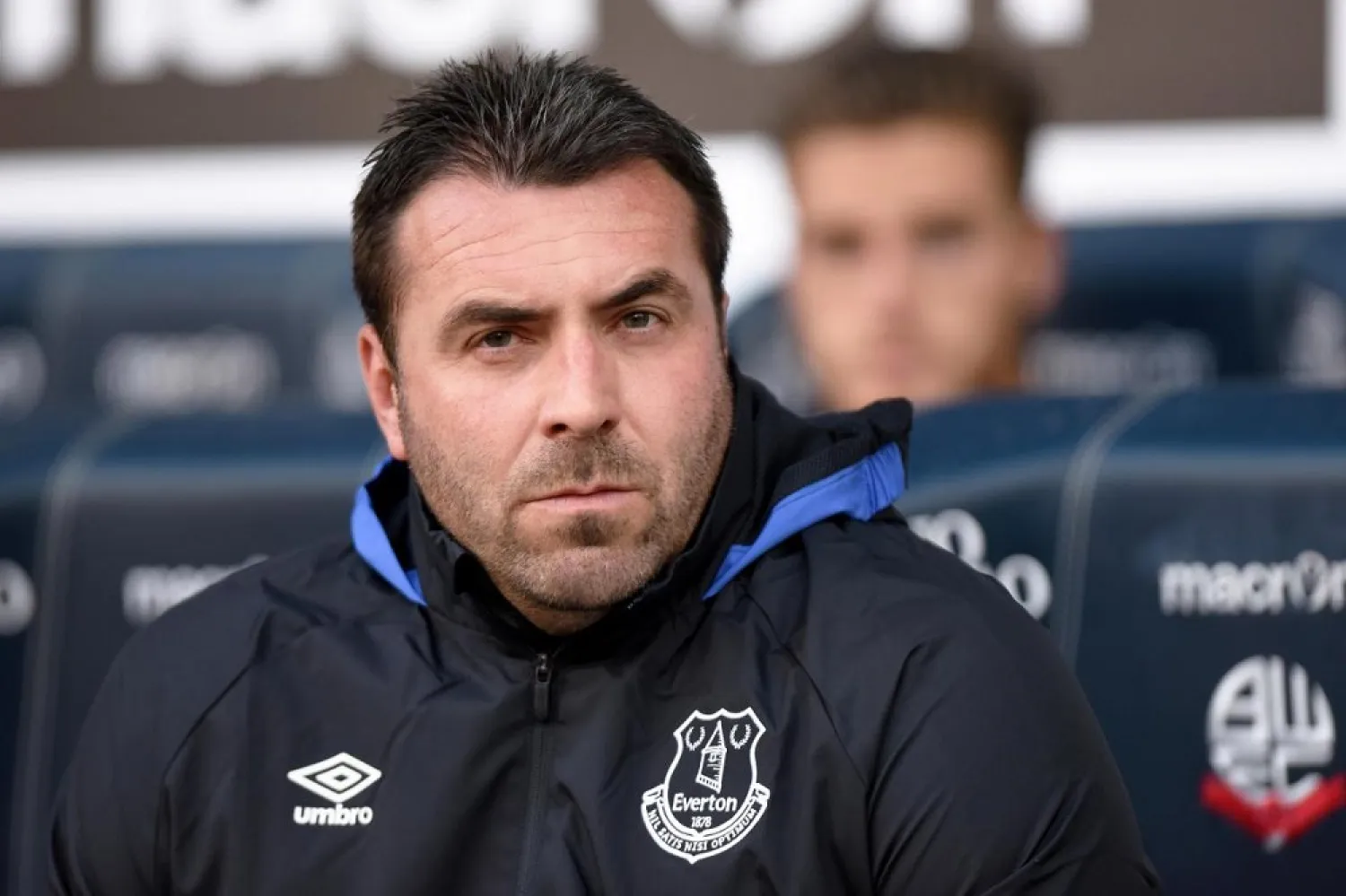
Everton caretaker manager David Unsworth. (Getty Images)
TT

Football Clubs Splash out for Players, so why not for Managers?

Everton caretaker manager David Unsworth. (Getty Images)

No sooner had Ronald Koeman been sacked by Everton than a predictable troupe of has-beens, hopefuls and cast-offs were plonked among the favorites to replace him. Inevitably David Moyes was high on the bookies’ list, despite a triad of failures at Manchester United, Real Sociedad and Sunderland. So was Sam Allardyce, a roast-beef-and-potatoes option for a club striving for cordon bleu. Before Sunday’s defeat at Leicester, the academy and under-23 coach, David Unsworth, even became the frontrunner, despite a handful of games on his managerial CV. Moyes was appointed on Tuesday as West Ham manager.

Whatever happens at Goodison Park it is a cast-iron bet that some of these men will be in the frame the next time a Premier League job comes up – and the one after. That is how the system goes. Rinse. Recycle. Repeat. These days managers, like Buddhists, accept that death and rebirth is a fundamental part of existence.

Yet while clubs increasingly spend crazy money on decent but not exceptional players – Everton, after all, threw £45m at Swansea for Gylfi Sigurdsson – there is a curious reluctance to adopt a similar approach to prise away a proven manager. We are not talking a million here or there, as is occasionally seen, but proper money, crazy money even.

According to Omar Chaudhuri – the head of football intelligence at 21st Club, a consultancy that works with many leading sides in Europe – the data suggests such an approach makes sense.

His starting point is that even a star player is worth only about five points a season to his team over an average one in the same position. That might sound absurdly low. But, he explains, imagine replacing every player in a Premier League team at the bottom of the table, who get around 30 points a season, with one from near the top, who will earn closer to 85 points – that averages out at five points a player.

For managers this is trickier, Chaudhuri concedes. “But when we’ve looked at the immediate impact of new coaches on performance – at the change in results accounting for difficulty of fixtures and luck that the old manager might not have enjoyed – the maximum increase is usually up to 10-12 points per season.”

It is often less than that, of course. But the trade-offs are worth considering: if one can spend £10m to bring in someone such as Marco Silva or Marcelino, the coach who has worked miracles at Villarreal and now Valencia, or twice that on an average player, why would one go for the latter?

Incidentally Chaudhuri finds that the majority of improvement occurs in defence, which is to be expected given a manager is often sacked when the team are losing, usually after conceding too many goals.

Meanwhile Ted Knutson, who worked as an analyst at Brentford and FC Midtjylland before setting up Statsbomb Services, which works with clubs across the globe, describes the range of managerial talent as being like a U-curve, with the best and worst coaches having a bigger impact on results than is widely thought – and those in the middle tier relying on the quality of their players, their club’s recruitment strategy and luck to succeed or fail.

Most, of course, fall by the wayside. It seems almost quaint to recall that in the early 90s the average spell of a manager in English football was more than three years. Last season 60 managers left their jobs between September and June – with only a third in situ more than a year.

If insanity really is doing the same thing over and over again while expecting a different outcome.

So how does one identify a decent manager given that Avram Grant took Chelsea to the Champions League final and Roberto Di Matteo went one better? As Chaudhuri and Knutson concede, it is not necessarily straightforward to distinguish managerial skill from the talent of the players a club has. Yet both believe that by looking at a team’s underlying metrics, budget and results, it is not difficult to identify managers who have outperformed their resources consistently over a number of seasons.

There is more to it than that, of course. When organizations such as 21st Club work with clubs they ask what attributes of a potential manager are most important to them. Is it performing on a tight budget? A certain playing style? Improving young players? They will then scour their database, weighting the various metrics and produce a shortlist.

Knutson, who provides a similar service, explains: “We are not making the choice for clubs; we are just presenting better options. And compared to what they pay if they get rid of a bad manager too quickly, it is the tiniest drop in the bucket. But time and again clubs don’t spend enough money to find the best candidate – and then end up paying a spectacular amount to get rid of them.”

This cycle of perpetual failure continues. Yet, as the transfer market for players approaches Weimar Republic levels of hyperinflation, more clubs should ask whether it makes sense to settle for what they have always done in terms of recruiting managers – or flash the cash for proven quality.

The Guardian Sport


Chelsea Injuries up 44% After Club World Cup but Report Says Event Has Had ‘Minimal’ Impact

Chelsea's Reece James, center, lifts the trophy following the Club World Cup final soccer match between Chelsea and PSG at MetLife Stadium in East Rutherford, N.J., Sunday, July 13, 2025. (AP)
TT

Chelsea Injuries up 44% After Club World Cup but Report Says Event Has Had ‘Minimal’ Impact

Chelsea's Reece James, center, lifts the trophy following the Club World Cup final soccer match between Chelsea and PSG at MetLife Stadium in East Rutherford, N.J., Sunday, July 13, 2025. (AP)

Chelsea suffered a 44% spike in injuries after competing in the supersized Club World Cup this year, according to findings published on Tuesday.

But the newly expanded tournament has so far had a “minimal impact” on injuries overall, the latest edition of the Men’s European Football Injury Index found.

There was fierce opposition to FIFA's new flagship club event when it was confirmed in 2023 that it would increase from seven to 32 teams, with players' unions warning of physical and mental burnout of players due to an ever expanding match schedule. But FIFA pressed ahead and staged the tournament in the United States in June-July.

Chelsea went on to win the inaugural competition, receiving the trophy from US President Donald Trump at MetLife Stadium and taking home prize money of around $125 million. But, according to the Index, from June-October, Chelsea picked up more injuries — 23 — than any of the nine clubs from Europe's top leagues that participated in the Club World Cup.

They included star player Cole Palmer, and was a 44% increase on the same period last year.

While Chelsea, which played 64 games over the entire 2024-25 season, saw an increase in injuries, the Index, produced by global insurance firm Howden, found that overall there was a decrease.

“In principle you would expect this increased workload to lead to an increase in the number of injuries sustained, as a possible rise in overall injury severity,” the Index report said, but added: “The data would suggest a minimal impact on overall injury figures.”

Despite the figures, the authors of the report accept it was too early to assess the full impact of the Club World Cup, with the findings only going up to October.

“We would expect to see the impact to spike in that sort of November to February period,” said James Burrows, Head of Sport at Howden. “What we’ve seen previously is that’s where the impact is seen from summer tournaments."

Manchester City has sustained 22 since the tournament, which is the highest among the nine teams from Europe's top leagues — England, Spain, Italy, Germany and France.

Those teams have recorded 146 injuries from June-October, which is down on the previous year's figure of 174.

From August-October that number is 121, the lowest for that three-month period in the previous six years of the Index.


Sunderland Worst Hit by Losing Players to African Cup of Nations 

14 December 2025, United Kingdom, London: Sunderland's Habib Diarra (L) and Leeds United's Gabriel Gudmundsson battle for the ball during the English Premier League soccer match between Brentford and Leeds United at the Gtech Community Stadium. (dpa)
TT

Sunderland Worst Hit by Losing Players to African Cup of Nations 

14 December 2025, United Kingdom, London: Sunderland's Habib Diarra (L) and Leeds United's Gabriel Gudmundsson battle for the ball during the English Premier League soccer match between Brentford and Leeds United at the Gtech Community Stadium. (dpa)

Premier League Sunderland will have to do without six players over the next few weeks and are the club worst hit as the Africa Cup of Nations takes its toll on European clubs competing over the holiday season.

Sunderland, eighth in the standings, had four of their African internationals in action when they beat Newcastle United on Sunday, but like 14 other English top-flight clubs will now lose those players to international duty.

The timing of the African championship, kicking off in Morocco on Sunday and running through to January 18, has long been an irritant for coaches, with leagues in Belgium, France, Germany, Italy, Netherlands, Portugal, and Spain also affected.

Hosting the tournament in the middle of the season impacts around 58% of the players at the Cup of Nations, though the Confederation of African Football did try to mitigate the impact by moving the start to before Christmas, so it is completed before the next round of Champions League matches.

The impact on European clubs was also lessened by allowing them to release players seven days, rather than the mandatory 14 days, before the tournament, meaning they could play for their clubs last weekend.

Sunderland's Congolese Arthur Masuaku and Noah Sadiki, plus full back Reinildo (Mozambique), midfielder Habib Diarra (Mali), and attackers Chemsdine Talbi (Morocco) and Bertrand Traore (Burkina Faso) have now departed for Morocco.

Ironically, Mohamed Salah’s absence from Liverpool to play for Egypt should lower the temperature at the club after his recent outburst against manager Arne Slot, but Manchester United will lose three players in Noussair Mazraoui, Bryan Mbeumo and Amad Diallo, who scored in Monday’s 4-4 draw with Bournemouth.

France is again the country with the most players heading to the Cup of Nations, and with 51 from Ligue 1 clubs. But their absence is much less impactful than previously as Ligue 1 broke after the weekend’s fixtures and does not resume until January 2, by which time the Cup of Nations will be into its knockout stage.

There are 21 players from Serie A clubs, 18 from the Bundesliga, and 15 from LaLiga teams among the 24 squads at the tournament in Morocco.


Rodgers Takes Charge of Saudi Team Al-Qadsiah After Departure from Celtic 

Then-Celtic head coach Brendan Rodgers greets supporters after a Europa League soccer match between Red Star and Celtic at Rajko Mitic Stadium in Belgrade, Serbia, Sept. 24, 2025. (AP)
TT

Rodgers Takes Charge of Saudi Team Al-Qadsiah After Departure from Celtic 

Then-Celtic head coach Brendan Rodgers greets supporters after a Europa League soccer match between Red Star and Celtic at Rajko Mitic Stadium in Belgrade, Serbia, Sept. 24, 2025. (AP)

Brendan Rodgers has returned to football as the coach of Saudi Arabian club Al-Qadsiah, six weeks after resigning from Scottish champion Celtic.

Al-Qadsiah, whose squad includes Italian striker Mateo Retegui and former Real Madrid defender Fernandez Nacho, is in fifth place in the Saudi Pro League in its first season after promotion.

Rodgers departed Celtic on Oct. 27 and has opted to continue his managerial career outside Britain for the first time, having previously coached Liverpool, Leicester and Swansea.

In its statement announcing the hiring of Rodgers on Tuesday, Al-Qadsiah described him as a “world-renowned coach” and said his arrival “reflects the club’s ambitious vision and its rapidly growing sporting project.”

Aramco, the state-owned Saudi oil giant, bought Al-Qadsiah in 2023 in a move that has helped to transform the club’s status.

“This is a landmark moment for the club,” Al-Qadsiah chief executive James Bisgrove said. “The caliber of his experience and track record of winning reflects our ambition and long-term vision to establish Al-Qadsiah as one of Asia’s leading clubs.”

Rodgers is coming off winning back-to-back Scottish league titles with Celtic, where he won 11 major trophies across his two spells. He also won the FA Cup with Leicester.

Al-Qadsiah's last two coaches were former Liverpool striker Robbie Fowler and former Spain midfielder Michel.
