


Sven Mislintat, the Scout Arsenal Hope will Revive their Talent-Spotting Fortunes

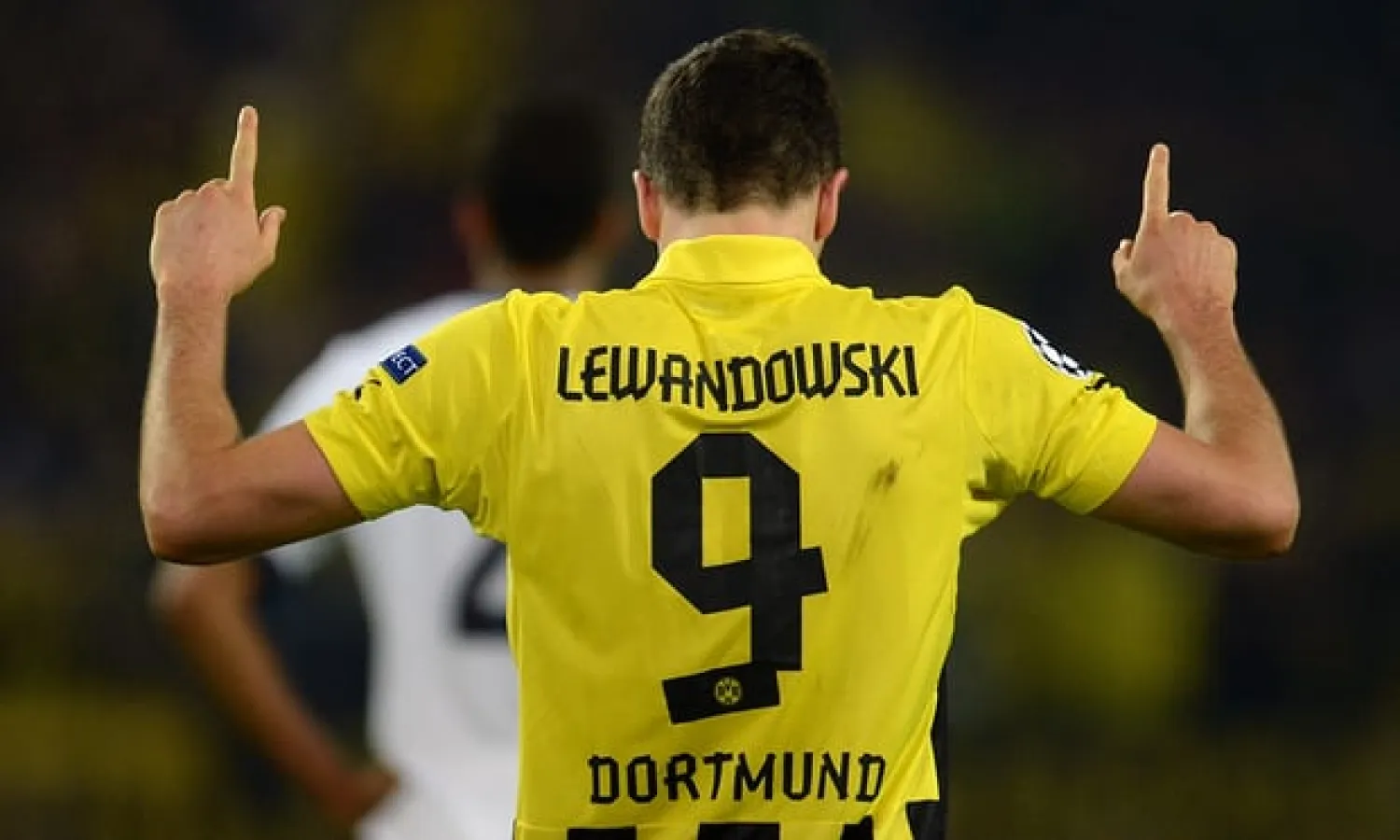
 In his years at Borussia Dortmund Sven Mislintat used a combination of modern and traditional methods to build a recruitment reputation respected throughout the country. Photograph: Patrik Stollarz/AFP/Getty Images
In his years at Borussia Dortmund Sven Mislintat used a combination of modern and traditional methods to build a recruitment reputation respected throughout the country. Photograph: Patrik Stollarz/AFP/Getty Images
TT

Sven Mislintat, the Scout Arsenal Hope will Revive their Talent-Spotting Fortunes

 In his years at Borussia Dortmund Sven Mislintat used a combination of modern and traditional methods to build a recruitment reputation respected throughout the country. Photograph: Patrik Stollarz/AFP/Getty Images
In his years at Borussia Dortmund Sven Mislintat used a combination of modern and traditional methods to build a recruitment reputation respected throughout the country. Photograph: Patrik Stollarz/AFP/Getty Images

The decision to leave Borussia Dortmund to join Arsenal was not one Sven Mislintat made in a hurry. This sounds typical of a thoughtful, down-to-earth man who has made his reputation by looking, listening and trying to get a full picture rather than acting on rash instinct.

Structural change has been needed behind the scenes at Arsenal for some time – even since Ivan Gazidis’s call for a “catalyst for change” it has been a slow burn – but the latest person chosen to refresh the setup brings qualities the club hope will make a real difference. Mislintat, described in Arsenal’s official announcement as “one of Europe’s most respected player recruitment experts” and ostensibly coming in to cast a fresh pair of eyes over the scouting philosophy, has a track record in the Bundesliga that was admired across Germany.

Christoph Biermann, a writer with 11 Freunde, who got to know Mislintat during conversations for a book he is writing about the use of data in football, values the way Mislintat brings together current and traditional modes of assessing football. “He is very interested in modern ideas generated with stats and data but he is also strong when it comes to scouting with the human eye,” Biermann says. “At Borussia Dortmund he worked with a wide range of scouts with different backgrounds. He would listen to the modern guys, and the older guys with more traditional values, to get the complete picture.”

Mislintat’s background, as an amateur player who studied sports science in Bochum, led to his interest in analysing matches and he started off at Dortmund in that department. He happened to be at the right place in the right time, when the club were facing bankruptcy in 2005 and so much was up in the air, to be asked to organise the scouting. So he began by learning. He asked the scouts what they looked for, how and why, educating himself about the role.

“It was a strange way into this but Borussia Dortmund at that time was a perfect place to learn,” Biermann says. “They had limited resources. They had to be very clever and careful in their choices.

“If you look at the incredible turnaround, from when the club was almost bankrupt to reaching the Champions League final against Bayern Munich in 2013, four pillars were vital to this. Hans-Joachim Watzke was the organisational force who led the financial reconstruction; Jürgen Klopp transformed the way they played; Michael Zorc as technical director; and the fourth factor was Sven Mislintat, who was so strong in scouting. He possessed a quality for evaluating how well a player would develop in future.”

The best examples include Shinji Kagawa (Mislintat saw his potential when others found it hard to assess in the Japanese second tier), Robert Lewandowski, Pierre-Emerick Aubameyang and Ousmane Dembélé. As Biermann points out, it is not as if the latter group were unknown but predicting those who can evolve into elite players is something Mislintat has a nose for. “We are not talking about unveiling someone nobody has ever heard of,” Biermann says. “But to identify someone as becoming world-class, to forecast a career, is a difficult task. He is really good at that.”

In Mislintat Arsenal have found someone whose qualities echo those Arsène Wenger had when he arrived in England. Wenger’s reputation in 1996 was enhanced by what was a golden era in recruitment. He sent Patrick Vieira as a taster – the midfielder arrived a few weeks before the manager sorted his exit strategy from Grampus Eight in Japan and everybody in the ground for Vieira’s Highbury debut was stunned by the instant impact of a special and very different calibre of midfield player. During the three title-winning sides between 1998 and 2004 there was an extraordinary conveyor belt of talent: Nicolas Anelka, Emmanuel Petit, Marc Overmars, Freddie Ljungberg, Kanu, Thierry Henry, Robert Pires, Gilberto Silva, Kolo Touré, Cesc Fàbregas. Contacts in the French market gave Wenger a fantastic advantage but he added from Sweden, Brazil, Ivory Coast and more, slotting seemingly perfect players into the squad.

Wenger had what David Dein, Arsenal’s vice-chairman at the time and the manager’s close ally, described as “encyclopaedic knowledge” of the markets in the late 1990s and early 2000s. But two major things happened to make it more difficult for Wenger to continue striking gold as he did in that period. First, international scouting and injections of multimillions allowed other clubs to not just catch up but overtake. Second, Dein left Arsenal in abrupt circumstances just over a decade ago, when boardroom manoeuvrings over the potential sale of the old board’s shares to overseas investors led to a fracture. Signing players had been a relatively simple operation – Wenger told Dein he liked a player and Dein made it his business to cut the deal.

Arsenal were left with a vacuum in a critical position at the club. It was not resolved easily. Player recruitment was helped along by Ken Friar, the veteran administrator. A couple of years later Dick Law, an American known to the club from when he assisted negotiations in the transfer of Gilberto Silva, joined the club full time to oversee transfers until he stepped down in September. Meanwhile the scouting department grew in numbers, and Arsenal invested in a data analytics business to try out a sort of Moneyball approach, but making headway in a complicated marketplace brought mixed results. Signings such as André Santos, Yaya Sanogo, Gabriel Paulista and Lucas Pérez never really worked out.

There have been coups – the purchases of Mesut Özil and Alexis Sánchez, no matter what happens in the next few months as their contracts run down, will go down as influential in this era of the club. Wenger’s eye for a class act like Santi Cazorla, an unpolished gem like Laurent Koscielny, or a youngster with potential like Héctor Bellerín, has produced some fine goods.

But there have also been duds, dithering and disappointing transfer windows. Some of the finger-pointing for that goes to the manager himself, for indecision on certain targets or not prioritising some physicality in the heart of defence or midfield. Some goes to the scouting department, and the data analytics gurus, whose recommendations do not always fit the bill. Some is directed at the negotiators, with winding down contracts a related problem. Recruitment has been one of the departments that felt in need of an upgrade for a while.

Persuading Mislintat to join took time. He thought long and hard about it, given his family’s needs and his emotional ties to Borussia Dortmund, the club he supported as a boy from the region he grew up in. Despite conflict with Thomas Tuchel during the latter’s spell as Dortmund manager he remained wedded to the club until now.

Mislintat, along together with the contracts expert recruited from Team Sky, Huss Fahmy, is tasked with reviving Arsenal’s dormant gift for spotting talent.

The Guardian Sport


Man City Go Top With 2-1 Win at Forest After Cherki Heroics

 27 December 2025, United Kingdom, Nottingham: Manchester City's Rayan Cherki (L) celebrates scoring his side's second goal with teammate Erling Haaland during the English Premier League soccer match between Nottingham Forest and Manchester City at the City Ground. (Barrington Coombs/PA Wire/dpa_
27 December 2025, United Kingdom, Nottingham: Manchester City's Rayan Cherki (L) celebrates scoring his side's second goal with teammate Erling Haaland during the English Premier League soccer match between Nottingham Forest and Manchester City at the City Ground. (Barrington Coombs/PA Wire/dpa_
TT

Man City Go Top With 2-1 Win at Forest After Cherki Heroics

 27 December 2025, United Kingdom, Nottingham: Manchester City's Rayan Cherki (L) celebrates scoring his side's second goal with teammate Erling Haaland during the English Premier League soccer match between Nottingham Forest and Manchester City at the City Ground. (Barrington Coombs/PA Wire/dpa_
27 December 2025, United Kingdom, Nottingham: Manchester City's Rayan Cherki (L) celebrates scoring his side's second goal with teammate Erling Haaland during the English Premier League soccer match between Nottingham Forest and Manchester City at the City Ground. (Barrington Coombs/PA Wire/dpa_

Manchester City beat Nottingham Forest 2-1 to move provisionally to the top of the Premier League table after Rayan Cherki grabbed a goal and assist away at The City Ground on Saturday.

The French midfielder first threaded the pass for City's opener before striking an 83rd-minute winner from a set-piece to secure their eighth straight victory across all competitions.

The result moved City to 40 points, one ahead of Arsenal who face Brighton & Hove Albion later on Saturday. Forest remain in 17th place, nervously looking over their shoulder at a five-point gap between them and the relegation zone.

"When the games come we need just one thing: to win. We take the points because the championship is so long and so hard, so today is a big win," Cherki told TNT Sports.

"It's good for the team because the game was not simple."

City dominated ‌possession in a ‌goalless first half but struggled to break down Forest's compact defensive ‌shape, ⁠with striker Erling ‌Haaland largely isolated up front.

Forest's best chance fell to Morgan Gibbs-White, who failed to convert Callum Hudson-Odoi's cross in behind the defense early in the game.

CHERKI AND REIJNDERS FIND CITY BREAKTHROUGH

The breakthrough came within three minutes of the restart when Cherki slipped the ball through for Tijjani Reijnders and the Dutchman fired home from an angle to make it 1-0.

"Cherki knows how to find those passes and I could finish that one. He is very good, he finds spaces and when he gets the ball ⁠you have to be ready and in position," Reijnders said.

But City's lead lasted only six minutes as Forest launched a swift counter-attack ‌that ended with Igor Jesus crossing for Omari Hutchinson, who ‍took his shot first-time and beat Gianluigi ‍Donnarumma to score his first goal for the club.

Forest sensed victory but squandered chances when Jesus ‍and Nicolo Savona both shot over, while at the other end Phil Foden's effort was well saved by goalkeeper John Victor.

City's sustained pressure finally paid off when Josko Gvardiol headed down a corner kick for Cherki, who took it on the half-volley and sent a low drive from the edge of the box into the back of the net to restore their lead.

"All the kilos I won (gained) over Christmas time in weight, today I lost it. I am fit again. ⁠What a team Sean Dyche has made again. That's a really, really big three points," Guardiola said.

Forest's loss also extended Sean Dyche's winless record against Pep Guardiola to 17 Premier League games, the longest winless streak for a manager against another in the league.

DYCHE UNHAPPY WITH MATCH OFFICIALS

But Dyche blamed the match officials for the defeat, describing their performance as "unacceptable" after he felt decisions did not go their way.

Dyche complained that Gibbs-White was pushed to the ground for the second goal and could not get back up in time to block Cherki's shot.

"Unfortunately, the officials had a huge part of the game today and that's very unfortunate," Dyche said.

"We don't want that, but scratching my head now, I can't believe it. Just look back at some of the incidents, I just can't believe what I'm watching.

"There's ‌plenty of people here, there's TV cameras here, but everyone can see the performance today. But it's unacceptable, in my opinion, because it affects the game massively."


Salah Steers Egypt into Africa Cup Knockout Stages After VAR Denies South Africa Late Penalty

 Egypt's forward #10 Mohamed Salah shoots from the penalty spot to score the team's first goal during the Africa Cup of Nations (CAN) Group B football match between Egypt and South Africa at Adrar Stadium in Agadir on December 26, 2025. (AFP)
Egypt's forward #10 Mohamed Salah shoots from the penalty spot to score the team's first goal during the Africa Cup of Nations (CAN) Group B football match between Egypt and South Africa at Adrar Stadium in Agadir on December 26, 2025. (AFP)
TT

Salah Steers Egypt into Africa Cup Knockout Stages After VAR Denies South Africa Late Penalty

 Egypt's forward #10 Mohamed Salah shoots from the penalty spot to score the team's first goal during the Africa Cup of Nations (CAN) Group B football match between Egypt and South Africa at Adrar Stadium in Agadir on December 26, 2025. (AFP)
Egypt's forward #10 Mohamed Salah shoots from the penalty spot to score the team's first goal during the Africa Cup of Nations (CAN) Group B football match between Egypt and South Africa at Adrar Stadium in Agadir on December 26, 2025. (AFP)

Mohamed Salah scored again on Friday as Egypt's 10 men held on to beat South Africa 1-0 to reach the knockout stages of the Africa Cup of Nations.

Salah, who secured the Pharaohs’ opening win with a stoppage-time strike against Zimbabwe on Monday, did it again in Agadir and his penalty before the break secured progression from Group B.

But South Africa should arguably have been given a penalty in stoppage time when Yasser Ibrahim blocked a shot with his arm. After a long delay, the referee decided against awarding the spot kick after consulting video replays and Ibrahim sank to the ground in relief.

“We didn’t have much luck. We also had several refereeing decisions go against us,” South Africa coach Hugo Broos said.

Salah converted his penalty after he was struck in the face by the hand of the retreating South Africa forward Lyle Foster. Salah showed no ill effects from the blow and sent his shot straight down the middle while goalkeeper Ronwen Williams dived to his right.

There was still time before the break for Egypt defender Mohamed Hany to get sent off, after receiving a second yellow card for a foul on Teboho Mokoena.

Goalkeeper Mohamed El Shenawy was Egypt’s key player in the second half.

“We gave our all in this match right until the end, and we also hope for the best for what comes next,” the 37-year-old El Shenawy said.

Earlier, Angola and Zimbabwe drew 1-1 in the other group game, a result that suited neither side after opening losses.

Egypt leads with 6 points from two games followed by South Africa on 3. Angola and Zimbabwe have a point each. The top two progress from each group, along with the best third-place finishers.

Zambia drew 1-1 with Comoros in the early Group A fixture after both lost their opening games, meaning the winner of the late match could be sure of progressing.


Draper to Miss Australian Open Due to Injury

 Jack Draper, of Great Britain, reacts after defeating Federico Agustin Gomez, of Argentina, during the first round of the US Open tennis championships, Aug. 25, 2025, in New York. (AP)
Jack Draper, of Great Britain, reacts after defeating Federico Agustin Gomez, of Argentina, during the first round of the US Open tennis championships, Aug. 25, 2025, in New York. (AP)
TT

Draper to Miss Australian Open Due to Injury

 Jack Draper, of Great Britain, reacts after defeating Federico Agustin Gomez, of Argentina, during the first round of the US Open tennis championships, Aug. 25, 2025, in New York. (AP)
Jack Draper, of Great Britain, reacts after defeating Federico Agustin Gomez, of Argentina, during the first round of the US Open tennis championships, Aug. 25, 2025, in New York. (AP)

Briton Jack Draper said on Friday he will not compete in next month's Australian Open, citing ongoing recovery from an injury.

Draper, 10th in the world rankings, was forced to withdraw from the second round of ‌the US Open ‌in August ‌due ⁠to bone ‌bruising in his left arm.

"Unfortunately, me and my team have decided not to head out to Australia this year. It's a really, ⁠really tough decision," the British ‌number one said in ‍a video ‍posted on X.

The 24-year-old ‍is targeting a February return alongside preparation for the defense of his Indian Wells title in March.

"This injury has been the most difficult ⁠and complex of my career," Draper added. "It's weird, it always seems to make me more resilient. I'm looking forward to getting back out there in 2026 and competing."

The Australian Open begins on January 18 in ‌Melbourne.
