



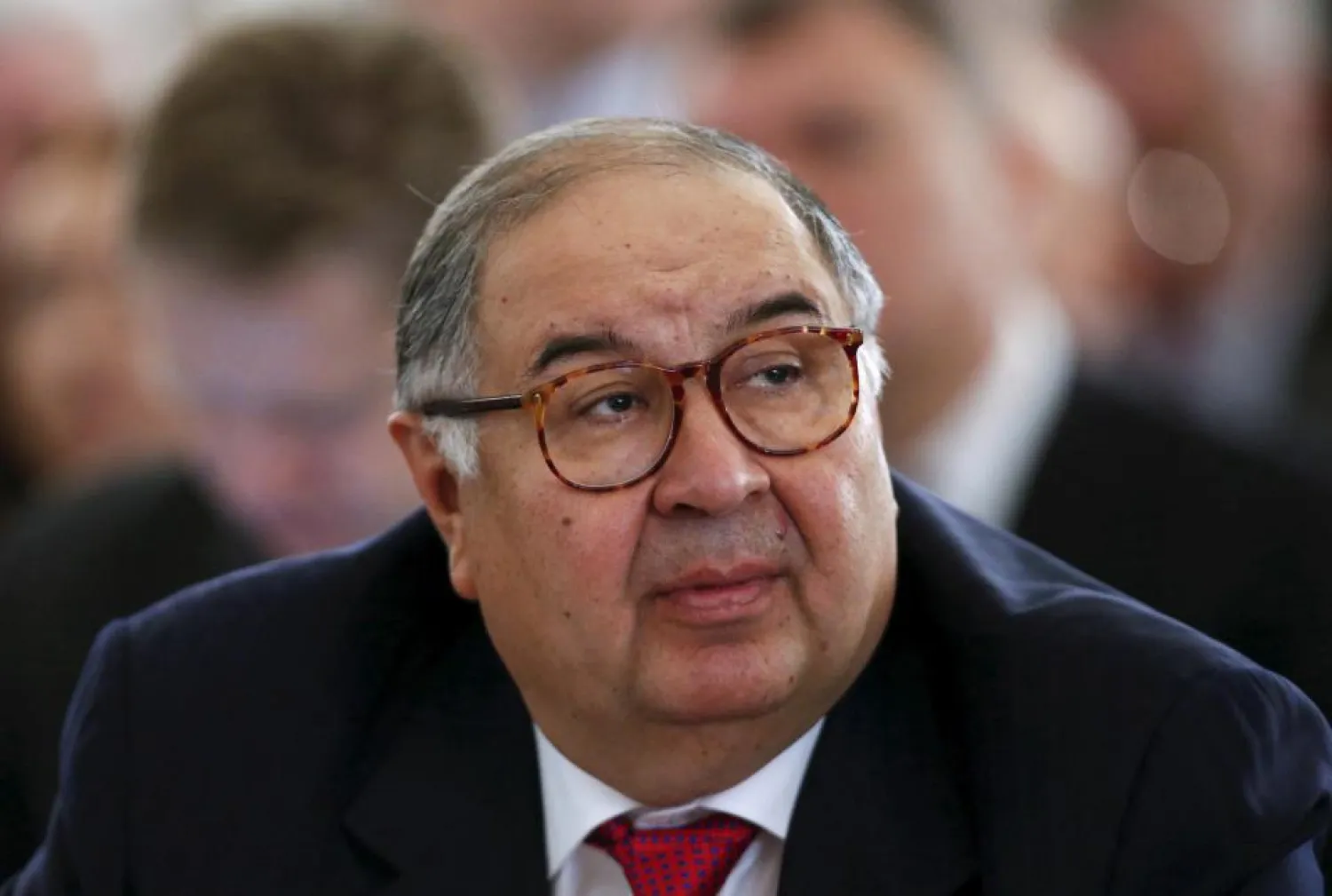

It is a tale of two major Premier League football clubs. And two billionaires. And how their close relationship and the opaqueness and secrecy of the companies they own in offshore tax havens has led to questions over who owns what. As a result, campaigners are calling for changes to the rules intended to safeguard the independent ownership of Premier League teams.
The story begins with Arsenal and a very rich supporter, the Uzbek-Russian oligarch Alisher Usmanov. Ten years ago, Usmanov decided to buy a stake in the London Premier League giant whose home is the 60,000-seat Emirates Stadium, and he turned to the Isle of Man law firm Appleby to get it done.
Documents seen by the Guardian show Appleby being instructed by Usmanov to handle his accumulation of a 30 percent stake in Arsenal over 10 years from August 2007.
Nine years later, Appleby – the firm at the center of the Paradise Papers leak – also administered the acquisition of a major stake in the Liverpool-based Premier League club Everton for another businessman, the Monaco-resident Farhad Moshiri. Moshiri is a long-term business partner and employee of Usmanov, and until he bought into Everton he co-owned shares with him at Arsenal.
But this arrangement was far from straightforward.
The Appleby files illuminate the close relationship between the two billionaires, which continues today, Moshiri being the chairman of USM, the mega-wealthy holding company substantially owned by Usmanov. That has prompted campaign groups to question whether Premier League rules prohibiting “dual ownership” of clubs are drawn broadly enough. The rules prevent one person owning stakes in two clubs, but do not apply the same prohibition to close business associates.
The papers also shine light on the elaborate ownership vehicles that the public does not see, and the offshore structures through which very many British companies, including two such traditional football names as Arsenal and Everton, are owned.
Usmanov, whose fortune grew out of the privatization of Russia’s state-owned industries after the collapse of communism, still harbors a long-term ambition of owning the club.
He has always declared publicly that he owned the initial stake in August 2007, and subsequent multiple smaller shareholdings adding up to 30 percent, equally with Moshiri.
Having trained first as an accountant with top firms in London, since 1993 Moshiri has worked principally with and for Usmanov, managing the investment of his fortune: first the metals and industrial assets Usmanov owns, and then also digital and telecommunications stakes worth billions of pounds.
Usmanov is by far the largest shareholder of USM, since 2012 the overall holding company, owning 48 percent. Moshiri, following a process by which Usmanov allowed executives to acquire their own shareholdings in USM, has a 10 percent stake, as well as being the company’s chairman.
In March 2016, Moshiri made his sudden move to buy into Everton. He sold his Arsenal shares back to Usmanov, raising the cash to buy an £87.5m, 49.9 percent stake and invest further in the Merseyside club.
It was important that he sold the shares also to comply with Premier League rules. They prohibit a person who owns more than 10 percent of one club, as Usmanov does of Arsenal and Moshiri would in Everton, from owning a single share in another club.
This is essentially to protect against a risk to sporting integrity: that two teams owned by the same person might not play independently with proper rivalry against each other, and could instead manufacture or appear to manufacture results more favorable to one of them.
Moshiri and Usmanov have been emphatic that despite their very close business partnership for more than 25 years, Moshiri’s investment in Everton is entirely separate and Usmanov has no interest in it, directly or indirectly.
This assurance had to be given again in January this year, when Everton announced that its training ground at Finch Farm was to be lucratively sponsored by USM, principally owned by Usmanov, a 30 percent shareholder in Arsenal.
The Premier League was assured by Moshiri and his lawyers that the takeover of Everton was his alone, independent of Usmanov, and the league approved the deal.
Appleby was the firm, the offshore “fiduciary”, appointed to administer both the buying of Arsenal shares by Usmanov and Moshiri via their holding company, Red and White Securities, and Moshiri’s purchase of the stake in Everton.
Appleby seems to have found some confusion surrounding how separate Moshiri’s money was from Usmanov’s. The files record the firm’s compliance department, explaining the source of Moshiri’s wealth in 2007, saying he would be receiving a “gift” from Usmanov: “Dividend from Gallagher Holdings [at the time Usmanov’s principal holding company, registered in Cyprus] to Alisher Usmanov who will then gift the monies to Moshiri, who will in turn invest in the company.”
That explanation appears to have been queried internally at Appleby, and no clear account or further details about this “gift” appear in the files the Guardian has seen. A year later, in 2008, Usmanov was reported to have granted Moshiri a hugely valuable 10 percent stake in Gallagher Holdings. Moshiri’s representatives say this was not done as a straight gift; it was structured as a share incentive scheme, rewarding Moshiri for having been the senior executive making huge profits for Gallagher’s investments.
When the two men first bought the Arsenal shares, there is no evidence in the Appleby ledgers of Moshiri putting any money in himself. The only company that can be seen putting any money in, initially with a loan totaling £118m, came from Epion Holdings, which is wholly owned by Usmanov.
The records show Epion money flowing into Red and White Securities to purchase the Arsenal shares for both men. The files record: “Funding for Red and White has come from Epion Holdings Limited.”
On the face of it, that appears to raise the possibility that the 30 percent stake in Arsenal, currently worth £494m, was bought wholly by Usmanov’s company, and Moshiri was allocated his 50 percent as a gift, having put no money in of his own.
Given that Moshiri then sold his half of the Arsenal stake back to Usmanov, and used the money received to invest in Everton, this produces an impression that Usmanov may in reality have an interest in the Everton stake, because all the money to buy it originated with him.
Two executives tasked with administering Moshiri’s Everton investment are linked to Usmanov, which reinforces the impression that Usmanov might sit behind Moshiri’s Everton stake.
A spokesman for Moshiri confirmed to the Guardian that Usmanov’s Epion, a British Virgin Islands company, paid for the whole Arsenal stake. However, the spokesman said this did not show the whole picture of the relations between them, and Moshiri had paid Usmanov for his half-share of the initial Arsenal stake using money Moshiri had in his own separate investment company.
“This cash payment [for the Arsenal shares] was funded by a 2007 dividend that Mr. Moshiri received from an investment company which was 100 percent beneficially owned by Mr. Moshiri. All of this is meticulously laid out in contractual agreements between the two parties,” the spokesman said.
“It is clear that Mr. Moshiri’s participation in Red and White originated from his own funds and that Mr. Moshiri is a person of very significant independent wealth, and this was already true in 2007.”
The Guardian has been shown a document in which Epion did acknowledge receiving payment from a company owned by Moshiri for his half of the Arsenal stake, in full.
In August 2008, the two men entered into a new agreement, by which their Arsenal stake would not be shared 50/50, but divided partly according to how much more money each of the businessmen put in. Usmanov is said to have put more money in after that to buy Arsenal shares, so when Moshiri sold his share back to Usmanov last year, he was paid less than 50 percent of the value of the 30 percent stake.
The Premier League had to approve Moshiri’s takeover at Everton, establishing that it had been satisfied that Usmanov did not have any interest in the Everton stake, directly or indirectly. Premier League officials are understood to have been taken through the initial investment in Arsenal by Usmanov and Moshiri, to be shown that Moshiri did put his own money in.
“The Premier League required the submission of a material amount of information, documents and confirmations at the time of Mr. Moshiri’s investment in Everton to ensure all elements of the owners’ and directors’ test were complied with,” Moshiri’s spokesman said.
The very close relationship between the two business partners, however, leads some campaigners to argue that the Premier League’s rule prohibiting “dual ownership” of clubs is not realistic enough. Malcolm Clarke, the chairman of the Football Supporters’ Federation, told the Guardian it was important not only to guard against actual conflicts of interest, but the appearance of conflicts of interest.
“Given the closeness between these two businessmen, who have worked together for many years and have extensive common financial interests, it does give rise to a concern about whether the rules should be drawn more widely to prevent close business associates or partners owning different clubs which have to play each other,” Clarke said.
The Premier League has no policies to prevent or restrict its clubs being owned via offshore structures; in fact, a majority are owned ultimately overseas, including in tax havens such as the Cayman Islands, Luxembourg, the low-tax US state of Delaware, and, as with Moshiri’s holding in Everton, the Isle of Man. The league has a set of rules requiring owners and directors to be “fit and proper” people with no unspent convictions, and it employs corporate investigation firms to check investors’ sources of cash, aiming to be clear that the money is real and clean.
George Turner of the Tax Justice Network, author of the Offshore Game report on football club ownership, says such structures are employed by the global super-rich to avoid UK tax and transparency requirements.
“Tax havens exist to grant tax advantages, and also to provide financial secrecy,” Turner said. “If ownership is via an offshore structure it is often difficult to know where the money is coming from, and the financial relationships which might occur offshore, which could be a potential risk for sporting integrity.
“It would be much simpler if the football authorities would implement a rule saying that two people who are involved in a joint-venture business relationship together should not both be able to own significant shares in different football clubs.”
The Premier League said it regarded as confidential the information it considered relating to a club takeover or individual owners. In a statement, the league outlined its policies and processes: “The Premier League has wide-ranging rules in the areas of club ownership and finance that go beyond what is required under company law.
“These include prospective new owners having to meet the Premier League board and provide extensive detail on the sources and sufficiency of funding they have in place.”
The league did not respond directly to the argument that the dual ownership rule should be drawn more broadly to include business partners.
The Guardian Sport


