


France Rejects 'Tehran-Mediterranean' Axis

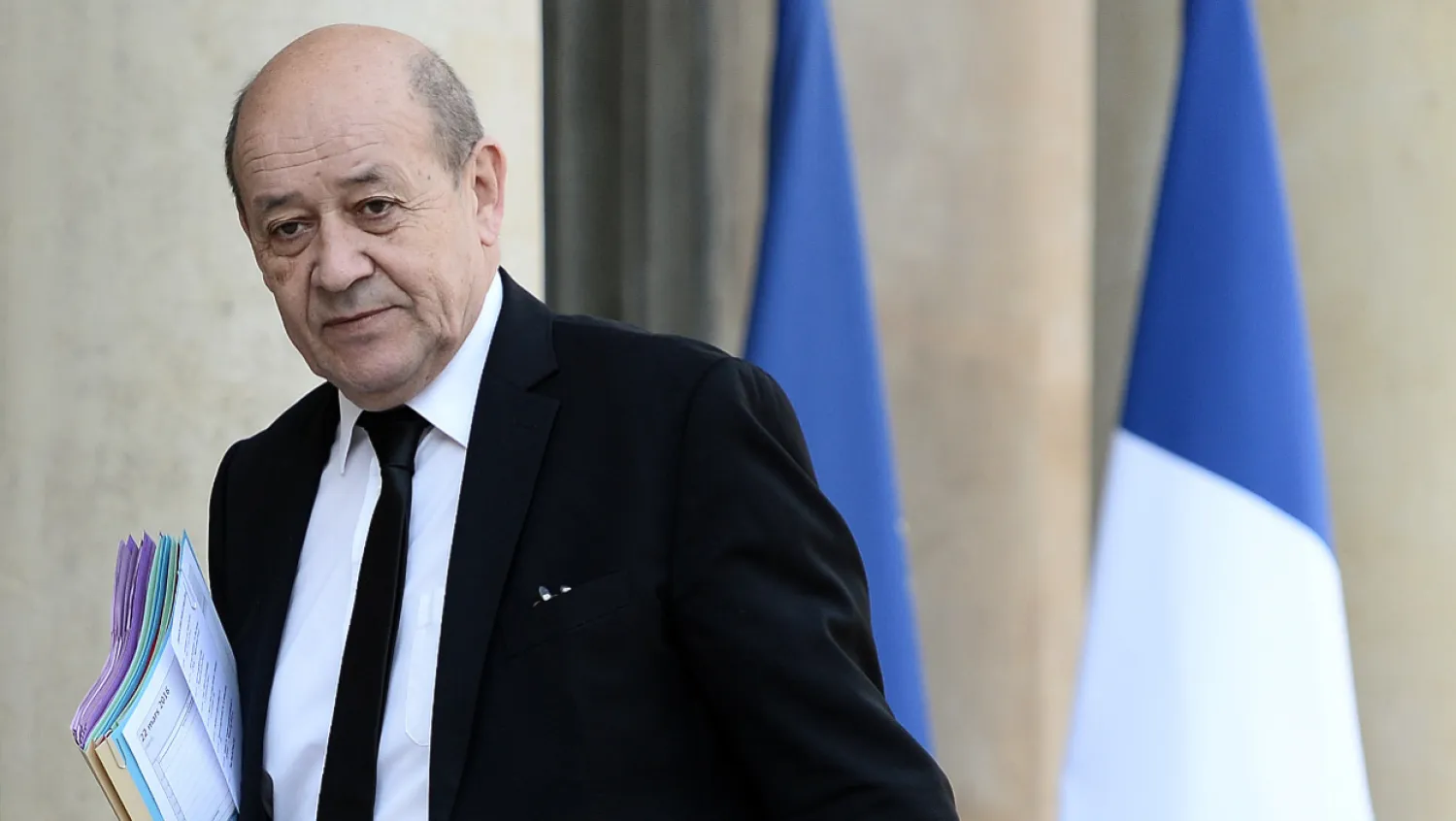
Le Drian, 22 March, 2016. Stéphane de Sakutin - AFP
TT

France Rejects 'Tehran-Mediterranean' Axis

Le Drian, 22 March, 2016. Stéphane de Sakutin - AFP

French Foreign Minister Jean-Yves Le Drian rejected on Tuesday any Iranian “axis” stretching from the Mediterranean Sea to Tehran, and demanded the departure of Iranian fighters from Syria.

In an interview with France 2 television broadcasted on Tuesday, Le Drian said: “The Iranian presence and the desire to make an axis from the Mediterranean to Tehran, (I say) no! There is a Syria that needs to exist.”

The French foreign minister said despite the amendments introduced to the French positions that followed the election of President Emmanuel Macron, and the new policy saying that Assad’s departure from power should not be a pre-condition for negotiations, Paris still considers that “Assad is not the solution” for Syria.

At the battlefield, and in line with Russian President Vladimir Putin’s decision to pull out “a large section” of his forces from Syria, Moscow begun on Tuesday to partially withdraw its forces deployed in the country for the past two years.

However, the Pentagon said on Tuesday that the US had not observed any significant withdrawal following Putin’s announcement.

“There have been no meaningful reductions in combat troops following Russia’s previous announcements planned departures from Syria,” spokesperson Marine Major Adrian Rankine-Galloway said.

At the political level, the Syrian opposition responded on Tuesday to the regime’s attempts to disrupt the “Geneva path” by announcing it was attached to the peace talks.

The opposition also insisted on having direct talks with the regime delegation to end the crisis in the country, although the Syrian regime delegation had left a meeting with UN Special Envoy Staffan de Mistura without any comments.

The opposition delegation also met with de Mistura on Tuesday afternoon to continue negotiations, which both sides kicked off on Monday.

After the meeting the opposition spokesman Yahya Aridi told reporters: "It is agreed that Geneva is the place for discussing any political matter and any other contribution should be pouring into the Geneva talks.

The place for a political solution is Geneva. The regime is not interested in getting involved in the political process, our priority is making Syria a safe place to come home to.”



Under Israeli Cover, Gaza Gangs Kill and Abduct Palestinians in Hamas-Controlled Areas 

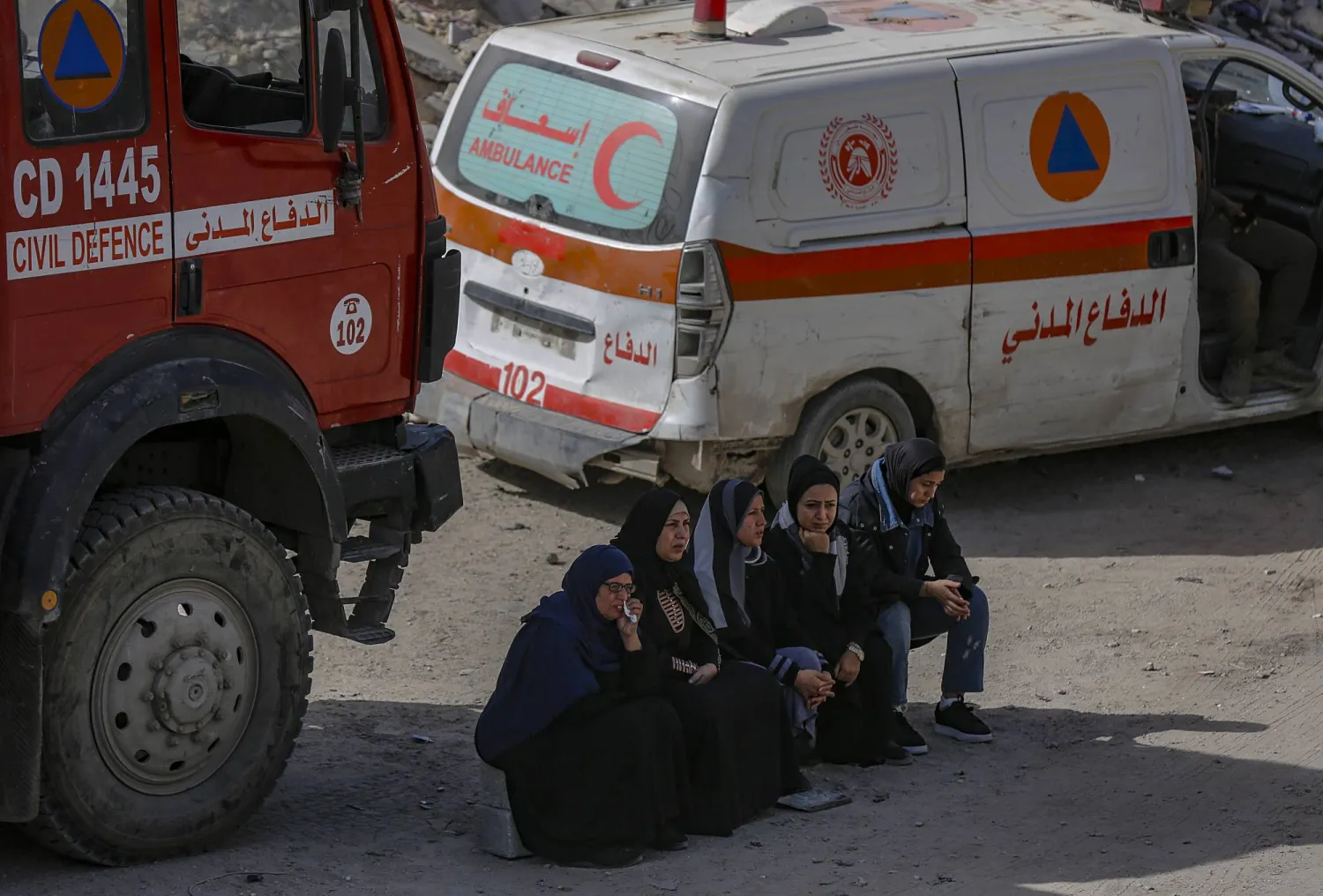
A group of women wait for news as Palestinian civil defense teams work to recover the remains of 67 members of the Abu Nasr family from beneath the rubble of their home after it was destroyed in an Israeli airstrike in Beit Lahiya, north of Gaza City, 15 February 2026. (EPA)
TT

Under Israeli Cover, Gaza Gangs Kill and Abduct Palestinians in Hamas-Controlled Areas 

A group of women wait for news as Palestinian civil defense teams work to recover the remains of 67 members of the Abu Nasr family from beneath the rubble of their home after it was destroyed in an Israeli airstrike in Beit Lahiya, north of Gaza City, 15 February 2026. (EPA)

Amid heavy Israeli airstrikes across Gaza, armed gangs carried out kidnappings and executions of Palestinians on Monday in areas controlled by Hamas, west of the so-called “yellow line” separating Israeli forces from the Palestinian movement.

According to local sources, Sunday’s strikes against Hamas and other armed factions deployed along the separating line resulted in security breaches that allowed armed gangs operating in Israeli-controlled zones to infiltrate areas west of the yellow line.

In response, Palestinian factions expanded their deployment, under what they termed “Operation Ribat”, to prevent the infiltration of collaborators with Israel into their areas. However, the Israeli strikes hit those fighters, killing several.

Before dawn on Monday, gunmen affiliated with the Rami Helles gang, which is active in eastern Gaza City, raided homes on the western outskirts of the Shujaiya neighborhood, just meters from Salah al-Din Road and more than 150 meters from the yellow line.

Field sources and affected families told Asharq Al-Awsat that the gunmen abducted several residents from their homes and interrogated them on the spot amid intense Israeli drone activity. Quad-copter drones were reportedly providing “security cover” for the attackers and opening fire in the surrounding area.

The sources said the gunmen shot and killed Hussam al-Jaabari, 31, after he refused to answer their questions. His body was left at the scene before the attackers withdrew, releasing others who had been detained. Al-Jaabari was later pronounced dead at Al-Maamadani (Al-Ahli Arab) Hospital.

In a separate incident, gunmen linked to the Ashraf al-Mansi gang, which is active in Jabalia and Beit Lahiya in northern Gaza, stormed Abu Tammam School in Beit Lahiya that shelters dozens of displaced families, also under Israeli drone surveillance.

Several young men were abducted and taken to a gang-controlled location, and they haven’t been heard of since. Three families of women and children were briefly detained and later released.

Sources in the Palestinian armed factions denied that any of the abducted individuals or the victim of the killing were members of their groups.

Meanwhile, Hamas’ Ezzedine al-Qassam Brigades froze deployments near the yellow line after Israeli airstrikes killed 10 of its members in two raids in Khan Younis and Jabalia on Sunday.

A Hamas source said the move was temporary and could be reversed once Israeli strikes subside.

Israel said it targeted Qassam fighters after gunmen emerged from a tunnel in Beit Hanoun, a claim it has used to justify strikes on faction targets and the assassination of senior operatives.

On Monday, the army announced it had killed a group of gunmen in Rafah, raising fears of further escalation.

Separately, dozens of families of missing Palestinians held a protest in Khan Younis, demanding information about relatives who disappeared during the war. UN estimates put the number of missing in Gaza at between 8,000 and 11,000, with their fate still unknown.


Lawyers in Sanaa Under Houthi Repression

Part of previous consultative meetings for Yemeni lawyers in Sanaa (Facebook)
TT

Lawyers in Sanaa Under Houthi Repression

Part of previous consultative meetings for Yemeni lawyers in Sanaa (Facebook)

In areas controlled by the Houthi group in Yemen, there is an increasing number of violations targeting lawyers, raising widespread concerns about the future of justice and the rule of law.

Recent reports from local human rights organizations have revealed a recurring pattern of systematic restrictions on the practice of law profession, including arbitrary arrests, prolonged detentions, and direct threats.

The legal environment in Sanaa and other Houthi-controlled cities no longer provides professional environment for lawyers who themselves are now subject to questioning or targeted for defending their clients, especially in cases of a political or human rights nature.

Observers believe that this reality not only affects lawyers but also threatens the foundation of the judicial system as a whole.

Widespread Violations

The Daoo Yemen Rights and Development organization documented in its report more than 382 Houthi violations against lawyers in Sanaa from January 2023 to December 2025.

These included arbitrary arrests, prolonged detention without legal justification, threats of murder and assault, prevention from practicing the profession, and restrictions on the right to defense in cases of a political or human rights nature.

The report monitored more than 159 Houthi violations against lawyers during 2025, compared to 135 violations in 2023, and 88 violations in 2024, describing this targeting as a “systematic pattern” that affects human rights defenders and undermines what remains of the justice system and the rule of law.

Human Rights Calls

Calls from local and international human rights organizations have escalated for urgent steps to be taken to protect lawyers and ensure the independence of their profession, stressing the need to release lawyers detained for their professional activities and to stop all forms of intimidation or restrictions targeting them.

Human rights activists believe that protecting lawyers is a prerequisite for maintaining any future reform or political path because the absence of an independent defense means the absence of justice itself.


Australia Won’t Repatriate 34 Women and Children from Syria 

Australia's Prime Minister Anthony Albanese stands outside the entrance to his office at Parliament House in Canberra on February 11, 2026. (AFP)
TT

Australia Won’t Repatriate 34 Women and Children from Syria 

Australia's Prime Minister Anthony Albanese stands outside the entrance to his office at Parliament House in Canberra on February 11, 2026. (AFP)

The Australian government will not repatriate from Syria a group of 34 women and children with alleged ties to the ISIS group, Prime Minister Anthony Albanese said Tuesday.

The women and children from 11 families were supposed to fly from the Syrian capital Damascus to Australia but Syrian authorities on Monday turned them back to Roj camp in northeast Syria because of procedural problems, officials said.

Only two groups of Australians have been repatriated with government help from Syrian camps since the fall of the ISIS group in 2019. Other Australians have also returned without government assistance.

Albanese would not comment on a report that the latest women and children had Australian passports.

“We’re providing absolutely no support and we are not repatriating people,” Albanese told Australian Broadcasting Corp. in Melbourne.

“We have no sympathy, frankly, for people who traveled overseas in order to participate in what was an attempt to establish a ‘caliphate’ to undermine, destroy, our way of life. And so, as my mother would say, ‘You make your bed, you lie in it,’” Albanese added.

Albanese noted that the child welfare-focused international charity Save the Children had failed to establish in Australia’s courts that the Australian government had a responsibility to repatriate citizens from Syrian camps.

After the federal court ruled in the government's favor in 2024, Save the Children Australia chief executive Mat Tinkler argued the government had a moral, if not legal, obligation to repatriate families.

Albanese said if the latest group made their way to Australia without government help, they could be charged.

It was an offense under Australian law to travel to the former ISIS stronghold of al-Raqqa province without a legitimate reason from 2014 to 2017. The maximum penalty was 10 years in prison.

“It’s unfortunate that children are impacted by this as well, but we are not providing any support. And if anyone does manage to find their way back to Australia, then they’ll face the full force of the law, if any laws have been broken,” Albanese added.

The last group of Australians to be repatriated from Syrian camps arrived in Sydney in October 2022.

They were four mothers, former partners of ISIS supporters, and 13 children.

Australian officials had assessed the group as the most vulnerable among 60 Australian women and children held in Roj camp, the government said at the time.

Eight offspring of two slain Australian ISIS fighters were repatriated from Syria in 2019 by the conservative government that preceded Albanese’s center-left Labor Party administration.

The issue of ISIS supporters resurfaced in Australia after the killings of 15 people at a Jewish festival at Bondi Beach on Dec. 14. The attackers were allegedly inspired by ISIS.