Trabzonspor Challenge Puts Gianni Infantino’s Stint at Uefa under Scrutiny

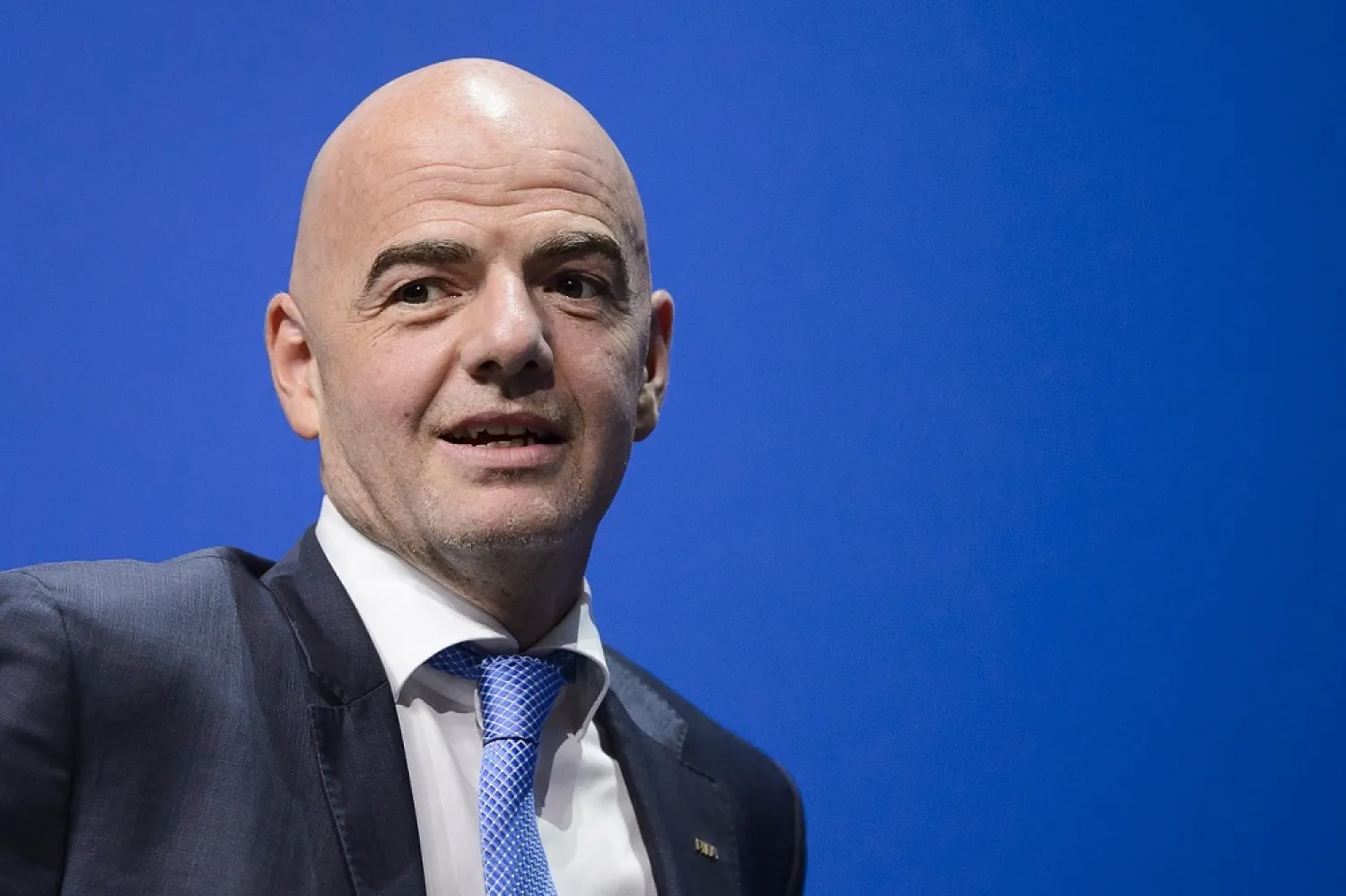
Fifa President Gianni Infantino. (AFP)
TT

Trabzonspor Challenge Puts Gianni Infantino’s Stint at Uefa under Scrutiny

Fifa President Gianni Infantino. (AFP)

The Fifa president, Gianni Infantino, has been accused of permitting a lax approach towards match-fixing when he was Uefa general secretary during the 2010‑11 scandals within Turkish football, which still reverberate years later.

Fenerbahce won the 2011 Turkish Super League on goal difference from Trabzonspor but 36 officials and players were later convicted of match-fixing in criminal proceedings in Turkey, including the president, Aziz Yildirim, who was sentenced to six years and three months in prison. In 2015, after Turkey under its President Recep Tayyip Erdogan abolished the special courts that heard the Fenerbahce cases, Yildirim and the other defendants were acquitted of the charges in retrials.

Uefa enforced its own sanctions against Fenerbahce after 2011, banning the club from competing in the Europa League or Champions League for two seasons, a decision upheld in 2013 by the court of arbitration for sport. European football’s governing body, Infantino and the then Uefa president, Michel Platini, have always emphasized that match-fixing constitutes a fundamental attack on football’s integrity, calling for zero tolerance and harsh punishment. That stance is maintained by Platini’s successor, Aleksander Ceferin, who has described match-fixing as “a disease that attacks football’s very core”.

The firmness of Infantino’s stance is under scrutiny, however, because of the approval he gave in January 2012 to the Turkish Football Federation to apply lesser sanctions than those in the TFF’s own disciplinary regulations, which would have relegated Fenerbahce. The club were vehemently opposing that sanction and a fear was also circulating in Turkish football that TV income could be reduced if Fenerbahce were not playing in the top division.

On January 19, 2012 the TFF general secretary, Ebru Koksal, wrote to Infantino, asking if it was permitted under Uefa’s rules for the TFF to “amend” the sanctions in its own disciplinary regulations. The TFF proposed that instead of relegating Fenerbahce, the club would be stripped of the 2011 championship, have 12 points deducted, be fined and withdrawn from European competition.

Infantino replied to Koksal the next day, 20 January 2012, reassuring her that it would not break Uefa rules for those lesser penalties to be applied. Infantino advised: “The task of dealing with this matter is primarily the responsibility of the TFF.”

But Infantino went further than stating that regulatory position and advised Koksal that Uefa approved of these lesser sanctions for match-fixing: “We can say, on behalf of Uefa, that taking all circumstances into account, your proposal appears to constitute a reasonable, proportionate and appropriate response to address this matter.”

The TFF chairman at the time, Mehmet Ali Aydinlar, has said publicly that this agreement from Uefa was reached to avoid the Turkish clubs losing huge money and was the result of “bargaining” with Uefa officials. Uefa held its annual congress two months later, in Istanbul.

Trabzonspor, who have pursued their grievances at Uefa and Cas, are now mounting a challenge under Fifa rules, more than six years after losing the title to Fenerbahce, who in fact were never stripped of it as envisaged by the rule changes. Erdem Egemen, a lawyer acting for Trabzonspor, told the Guardian: “We are still disputing the TFF decision not to apply its own disciplinary rules and we are calling for Fenerbahce to be stripped of the championship, which should be awarded to Trabzonspor. TFF violated its own regulations and the Uefa principles of fair play and zero tolerance. We cannot explain or justify Infantino’s approach or the cooperation of Uefa with this.”

A spokesman for Platini said he was unaware of the letters or that this approval had been given because Infantino “was in charge of all legal and disciplinary issues.”

In a statement, Infantino, who was elected Fifa president last year, did not directly explain why he approved the lesser sanctions or described them as “reasonable, proportionate and appropriate”. He emphasized that he has a strong track record on combating match-fixing, which included the banning of Fenerbahce and three other Turkish clubs from European competitions.

“At the time, Uefa was at the forefront in eradicating match-fixing with pioneering measures being put in place,” Infantino said. “Close cooperation with police and judicial authorities were initiated and implemented throughout Europe. Finally, strong disciplinary decisions were taken … These are the facts and they are clear.”

Uefa also underlined its commitment to harsh punishments for match-fixing and threats to football’s integrity but explained that there are no standard sanctions and national football associations have their own responsibilities. Of the exchange of letters in 2012, Uefa said: “The list of sanctions outlined by the TFF in their letter to Uefa on 19 January 2012 are in line with Uefa’s disciplinary measures relating to match-fixing. Our disciplinary measures include the deduction of points and/or relegation and/or exclusion from competition for clubs, depending on the respective facts and circumstances of each case.”

The current general secretary of the TFF, Kadir Kardas, said the actions taken following the match-fixing scandals were decided by its disciplinary committee, “which is an impartial and independent judicial body”. Kardas said the current TFF’s view of the January 2012 exchange of letters can only be “assumption” because the acting president, Yildirim Demiroren, was elected a month afterwards.

“However, for your information, correspondence regarding any changes in a national association regulations between the general secretaries of the national associations, Uefa and Fifa, are routine and part of the consultation process that exists.”

The Guardian Sport


Irish Boxer Lee Reeves Dies at Age 31, Three Months after Dublin Title Fight Injury

Irish boxer Lee Reeves. Reuters
TT

Irish Boxer Lee Reeves Dies at Age 31, Three Months after Dublin Title Fight Injury

Irish boxer Lee Reeves. Reuters

Irish boxer Lee Reeves has died more than three months after being injured during a fight in Dublin, promoter Queensberry said Tuesday. He was 31.

"Everyone at Queensberry is devastated to learn of the passing of Lee Reeves," Queensberry Promotions said in a statement.

Reeves was hospitalized after being knocked out by compatriot Gary Cully in the 10th and final round of their Boxing Union of Ireland Celtic super-lightweight title fight on Aug. 1.

Reeves was carried from the ring on a stretcher after receiving initial treatment.

Queensberry had said after the fight that his condition was critical but stable.

“Lee was an immensely talented boxer, as well as a true role model and inspiration to his community,” the statement added Tuesday, according to The Associated Press. “Our deepest condolences go to Lee’s family, friends and all those who loved him. We ask that their privacy be respected at this incredibly difficult time. Rest in peace, Lee.”


Alonso to Enter Dakar Rally with Loeb and Aston Martin Team

November 5, 2026 Aston Martin's Fernando Alonso during a press conference ahead of the F1 Sao Paulo Grand Prix. (Reuters)
TT

Alonso to Enter Dakar Rally with Loeb and Aston Martin Team

November 5, 2026 Aston Martin's Fernando Alonso during a press conference ahead of the F1 Sao Paulo Grand Prix. (Reuters)

Double Formula One champion Fernando Alonso will compete in next January's Dakar Rally in an Aston Martin Dreadnought entry run by engineering partner Prodrive.

The 45-year-old Spaniard, a 32-time Grand Prix winner and two-time Le Mans 24 Hours winner, will be racing in the annual event for the second time after competing with Toyota in 2020, finishing 13th.

France's nine-time world rally champion Sebastien Loeb and Brazil's reigning world rally-raid champion Lucas Moraes will be his teammates in a three-car entry.

The 49th edition of the Dakar Rally will ‌be held in ‌Morocco from January 9 to 23, with a prologue and first ‌stage ⁠in Portugal, after ⁠being moved from Saudi Arabia due to security concerns.

The 24-round Formula One season is due to start in Bahrain in March after testing in late February.

Alonso, who will again have compatriot and five-time motorcycle Dakar winner Marc Coma as co-driver, is racing in the Las Vegas Grand Prix this weekend. He said he had turned his thoughts to Dakar after deciding to continue in Formula One with Aston Martin.

“In the end, the decision became simple. I wanted to embrace ⁠the challenge completely and take on both Formula One and the ‌Dakar Rally in the same year," he explained in ‌a statement.

"In 2020, Dakar was one of the most challenging and enjoyable experiences of my career. ‌I have enormous respect for this race and the specialists who have mastered it.

"Formula One ‌remains my priority. But I am a racing driver, and challenges like this are why I love competing. I’m looking forward to seeing what we can achieve."

LOEB CHASES FIRST DAKAR WIN

In October, Alonso told reporters at the Singapore Grand Prix that he felt the desert endurance race would be physically ‌incompatible with his Formula One commitments.

Loeb, 52, will also be chasing a first Dakar win after 10 previous attempts that have brought ⁠him 28 stage ⁠wins to date.

“Winning the Dakar is very important to me,” said the Frenchman, who will be partnered by Belgian Fabian Lurquin. “We have come close several times, and the motivation is there to keep working until we achieve it."

The Dreadnought is a digital-only tactical SUV created exclusively for gamers playing "Call of Duty: Modern Warfare 4" that will now be brought into the real world by Prodrive, Aston Martin's partners in endurance GT racing.

The Dakar will be Aston Martin Racing’s debut in the world rally-raid championship.

"Aston Martin's ambition for this program has been clear from the outset: to create a car capable of competing at the front of the world's toughest motorsport event," said Prodrive Chairman David Richards.

"By combining Aston Martin's vision with Prodrive's experience in rallying, endurance racing and Dakar competition, we have built a strong foundation. With an exceptional driver line-up and a highly capable engineering team, we look forward to seeing Dreadnought take on this remarkable challenge."


Owono Does Not Deserve 12-Match Ban Over De Miguel Death, Says Andorra Owner Pique

Equatorial Guinea's goalkeeper #01 Jesus Owono leaves the pitch at half time during the Africa Cup of Nations (CAN) Group E football match between Equatorial Guinea and Algeria at Moulay Hassan Stadium in Rabat on December 31, 2025. (AFP)
TT

Owono Does Not Deserve 12-Match Ban Over De Miguel Death, Says Andorra Owner Pique

Equatorial Guinea's goalkeeper #01 Jesus Owono leaves the pitch at half time during the Africa Cup of Nations (CAN) Group E football match between Equatorial Guinea and Algeria at Moulay Hassan Stadium in Rabat on December 31, 2025. (AFP)

FC Andorra owner Gerard ‌Pique said goalkeeper Jesus Owono did not deserve the 12-match suspension he received following the challenge that led to the death of Tenerife forward Jesus de Miguel.

Owono and De Miguel collided during a Spanish second-tier match on November 2. De Miguel was taken to intensive care and died the following day.

The disciplinary committee of the Spanish football federation (RFEF) banned Owono for violent conduct which resulted in serious ‌injury last week.

"Players, ‌former players, coaches, goalkeepers, everyone has ‌called ⁠it an accident," ⁠Pique said in a video posted on social media late on Monday.

"I truly believe that imposing the maximum sanction on Jesus for this action puts him in a situation he does not deserve, because he is not to blame for all of ⁠this having happened."

Former Barcelona player Pique ‌pointed to the three-match ‌ban handed to Albacete's Jose Corpas for accidentally kicking Sabadell ‌player Quadri Liameed in the head during a ‌recent match in Spain.

"Fortunately Quadri is fine, the consequences in this case were not fatal, and the committee decided to sanction Corpas with three matches," Pique added.

"With ‌all this, my reflection is: what is being sanctioned, the action or the ⁠consequences?"

The RFEF ⁠did not immediately respond to a request for comment outside regular business hours in Spain.

Owono, 25, has withdrawn from Equatorial Guinea's squad for Africa Cup of Nations qualifiers against Zimbabwe this month and Pique said it was unlikely the goalkeeper would return to action as soon as his suspension is up.

"Jesus is going to need far more than 12 matches before he is available and able to compete," he added. "No sanction is going to bring Demi (De Miguel) back to us."