Houthis Sets up Conditions to Try Pro-Saleh Officials in Sanaa

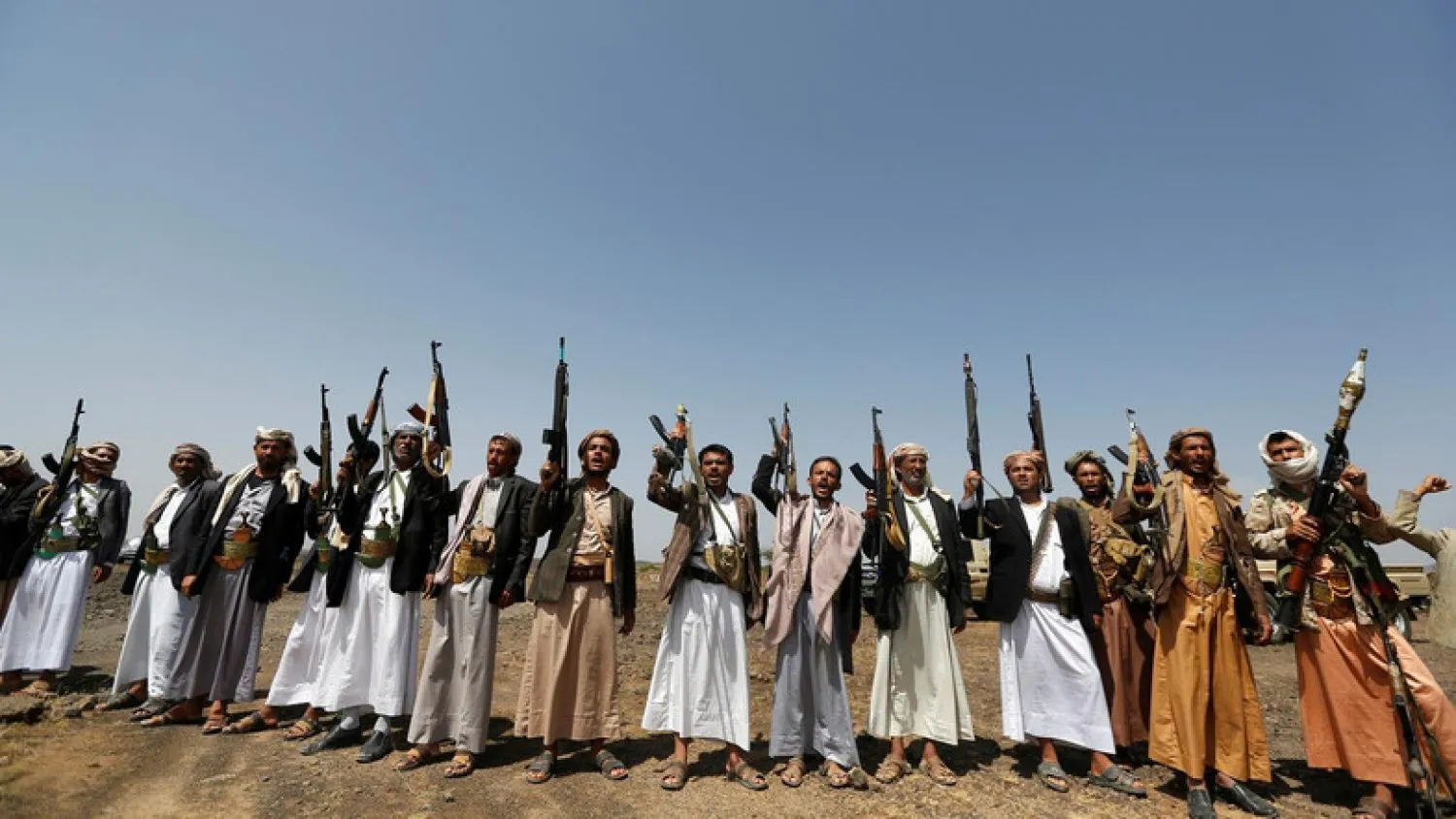
Tribesmen loyal to the Houthi movement hold up their rifles as they shout slogans during a pro-Houthi tribal gathering in a rural area near Sanaa. (Reuters)
TT

Houthis Sets up Conditions to Try Pro-Saleh Officials in Sanaa

Tribesmen loyal to the Houthi movement hold up their rifles as they shout slogans during a pro-Houthi tribal gathering in a rural area near Sanaa. (Reuters)

Party representatives inside the Houthi-run Yemeni capital Sanaa warned that recent steps taken by the Iran-backed militia, whether on its security or justice levels, aim at legitimizing crimes committed and to set the premise of trying hundreds of detainees.

The Houthi political move to eradicate inner surging opposition within coup ranks comes as news emerged on former President Ali Abdullah Saleh’s son, who is detained by the militias and suffering rapidly deteriorating health.

Saleh, a former ally to the Houthi-led insurgency, was killed earlier in December shortly after announcing that he would switch sides to join Yemenis backing the internationally-backed government—a move that isolated the Houthis.

Saleh had helped the Houthis win control of much of the country’s north, including Sanaa, and his decision to switch allegiances and abandon the Houthis was the most dramatic change on the battlefield in years. But the Houthis swiftly crushed a pro-Saleh uprising in the capital and shot him dead in an attack on his convoy.

Houthi militias stormed the houses of Colonel Mujahid al-Dulali, the accompanying bodyguard of Saleh’s nephew Brigadier Tareq Saleh.

Dulali’s house was looted and he was taken to an unknown location, sources in the General People's Congress based in Sanaa told Asharq Al-Awsat.

Party leaders detained along with Saleh’s son are subjected to torture during Houthi interrogations, sources said. It is also likely that the militias transferred a number of senior military detainees to their main stronghold in Saada.

Congress members also received information leaks on Houthi detention camps, saying that Saleh’s son, after being tortured, had gone on a hunger strike.

Sources add that militiamen broke into and looted the home of pro-Saleh Colonel Essam Dweid.

Dweid, who is related to Saleh, and other members of his family were arrested.

The militias were able to suppress the armed uprising of Saleh supporters, which ended with the elimination of dozens of his civilian aides and house guards, confiscation of their funds and property and the arrest of hundreds of loyalists.

Most who were not taken are put on compulsory house arrest, in a move to foster fear and subdue the party into siding with the Houthis.


Israeli Raid in the West Bank Leaves 1 Palestinian Dead and 4 Wounded

Israeli soldiers take positions during clashes with Palestinians in the West Bank city of Nablus, Sunday, May 3, 2026. (AP Photo/Majdi Mohammed)
TT

Israeli Raid in the West Bank Leaves 1 Palestinian Dead and 4 Wounded

Israeli soldiers take positions during clashes with Palestinians in the West Bank city of Nablus, Sunday, May 3, 2026. (AP Photo/Majdi Mohammed)

One Palestinian man was killed and four others seriously wounded during an Israeli military raid in the Israeli-occupied West Bank city of Nablus on Sunday, the Palestinian Red Crescent said.

The Palestinian Health Ministry said the man’s wife was in labor at a local hospital when she was informed of his death.

The Red Crescent said five people were hit by gunfire during an Israeli military operation. Nayef Firas Ziad Samaro, 26, was killed, according to the Health Ministry, and his body was brought to the hospital where his wife was giving birth. Additionally, a 12-year-old was shot in the shoulder, according to the Red Crescent, The AP news reported.

The raid took place as schools were letting out for the day, in an area crowded with civilians, witnesses said.

Israel's military in a statement said it responded to a confrontation in the Nablus area in which several “terrorists” threw rocks toward soldiers. Soldiers fired and “several hits were identified.”

Palestinians, rights groups and international observers are warning about the worsening violence, where young Palestinian men are being killed with increasing regularity amid a broader climate of arson, vandalism and the displacement of farming communities near Jewish settlements and outposts in the West Bank.

At least 42 Palestinians have been killed since the start of the year, according to the United Nations humanitarian office. Armed settlers were responsible for at least 11 of those fatalities.


Yemen’s Workers Face Harsh Unemployment and Unrelenting Hardship

A person (L) buys snacks from a mobile cart in Sanaa, Yemen, 27 April 2026.  EPA/YAHYA ARHAB
A person (L) buys snacks from a mobile cart in Sanaa, Yemen, 27 April 2026. EPA/YAHYA ARHAB
TT

Yemen’s Workers Face Harsh Unemployment and Unrelenting Hardship

A person (L) buys snacks from a mobile cart in Sanaa, Yemen, 27 April 2026.  EPA/YAHYA ARHAB
A person (L) buys snacks from a mobile cart in Sanaa, Yemen, 27 April 2026. EPA/YAHYA ARHAB

As the world marks International Workers’ Day on May 1 each year, workers in Yemen have, for years following the Houthi coup and ensuing war, faced a starkly different reality marked by daily hardship and a struggle for survival amid economic and humanitarian conditions among the worst globally.

Workers in Sanaa and other cities told Asharq Al-Awsat that the day is no longer an occasion to celebrate professional achievements or press for improved rights. Instead, it has become a moment to reflect on the scale of the challenges they face, from widespread unemployment to declining wages and the absence of social protection.

Some said their conditions, and those of their families, have continued to deteriorate for a twelfth consecutive year, as they struggle daily to secure basic needs amid rising prices, scarce job opportunities, and a lack of even minimal services. They noted that wages in remaining sectors such as construction, transport, and other freelance work no longer match the effort required or the cost of basic living.

As workers called on relevant authorities and international organizations to intervene to ease their suffering, sources within the labor union federation under Houthi control in Sanaa said the occasion comes this year as more than one million Yemeni public sector employees, supporting hundreds of thousands of families, continue to endure harsh conditions, alongside 8 million daily wage workers now living below the poverty line as a result of the coup and ongoing conflict.

The sources told Asharq Al-Awsat that the Houthi group continues to deepen the suffering of millions of daily wage workers in areas under its control through policies of systematic corruption targeting what remains of the economic sector.

Struggle for Survival

“Mahmoud,” a construction worker in Sanaa, said: “We do not celebrate Workers’ Day like people in other countries. We live it as just another day of struggling to earn a living.” Mahmoud, a father of three, works long hours for meager pay that does not cover even his children’s basic needs. “We go out every day looking for work and may return with nothing. Life has become very harsh,” he said.

“Essam N.,” a pseudonym for a taxi driver, described his situation: “Fuel prices keep rising while our income is declining. I work long hours and still cannot cover expenses. Sometimes I think about leaving the job, but there is no alternative.”

He said he has worked in the profession for more than 10 years but has never experienced conditions as severe as those today.

Abdullah, 39, a street vendor in the Bab al-Yemen area of Sanaa, said: “We used to sell and earn reasonably well years ago, but now people can barely buy anything. Everyone is suffering, not just us.”

These accounts reflect a grim reality facing thousands of workers in Yemen, where daily hardship intersects with a lack of prospects amid a deepening crisis that has exhausted all, alongside ongoing calls to improve workers’ conditions and guarantee their basic rights.

Deep Crisis

Economic specialists say the crisis facing workers in Yemen is no longer a temporary reflection of war, but has become a deep structural crisis. They say the continued decline in economic activity, weak investment, and the division of financial institutions are all factors exacerbating unemployment and limiting the market’s ability to recover.

According to data from ESCWA, Yemen is classified among low-income countries with a fragile economy, directly affecting job creation and widening poverty.

Economists say the continuation of the war and the decline in economic activity have worsened workers’ suffering, with many projects halted, job opportunities shrinking, and unemployment rising, particularly among youth. They warn that the persistence of this situation could expand poverty and deepen reliance on the informal economy.

In parallel, unofficial estimates indicate unemployment rates have risen to unprecedented levels, especially among young people, with thousands finding themselves outside the labor market without real opportunities. With many productive and service sectors halted due to years of conflict, employment opportunities have sharply contracted, pushing many toward temporary or unstable work.

The World Bank said in its reports on Yemen that about one in six working-age individuals is unemployed. The outlook is bleaker for youth unemployment, which the International Labour Organization estimates exceeds 25 percent across the Arab region, and is expected to be higher in Yemen given the ongoing conflict and the contraction in economic activity.



Israel Attacks Southern Lebanon after New Evacuation Warning

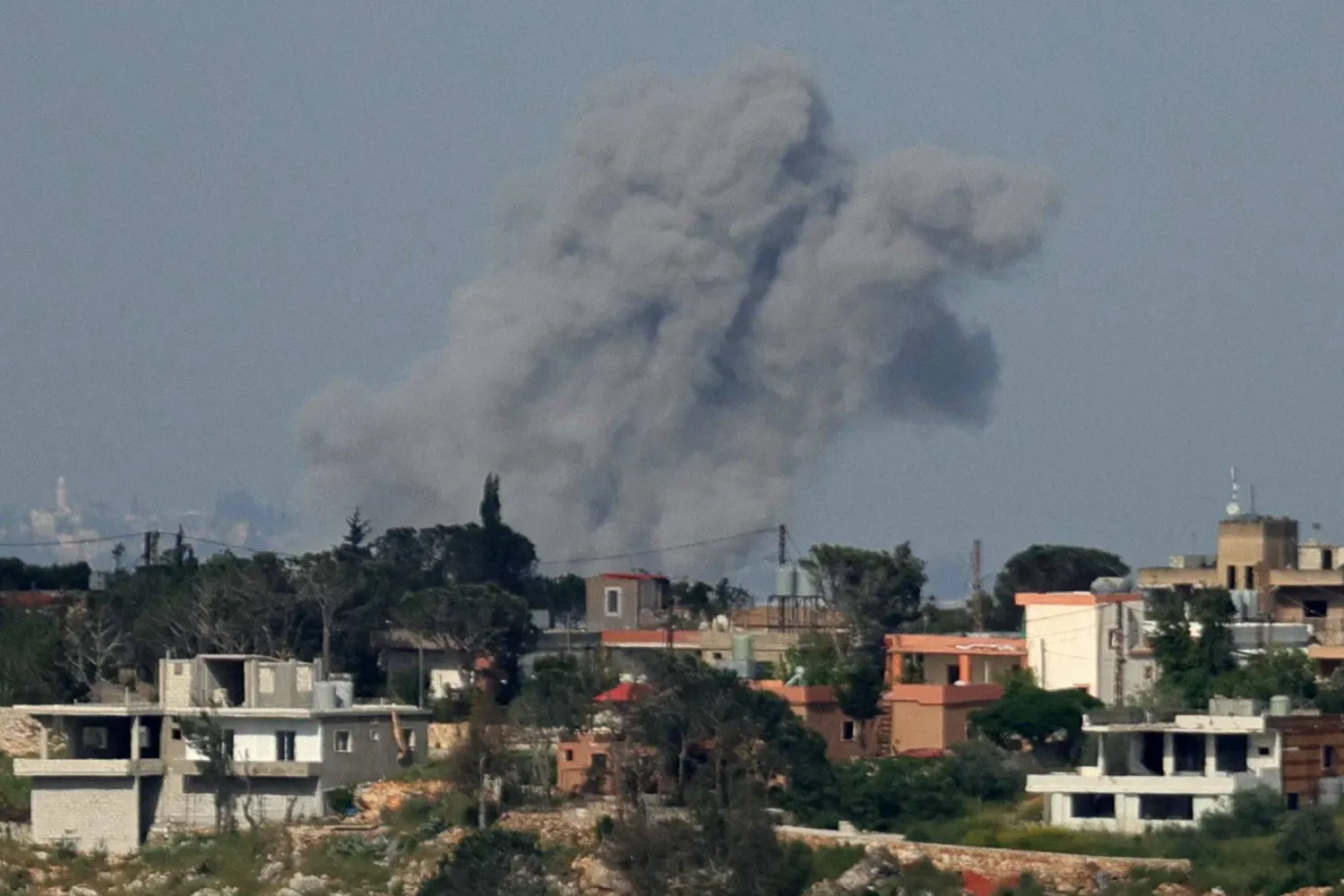
This photograph taken from the southern Lebanese area of Marjayoun shows smoke rising from the site of Israeli airstrikes that targeted the village of Zawtar al-Sharqiyah, on May 3, 2026. I(Photo by AFP)
TT

Israel Attacks Southern Lebanon after New Evacuation Warning

This photograph taken from the southern Lebanese area of Marjayoun shows smoke rising from the site of Israeli airstrikes that targeted the village of Zawtar al-Sharqiyah, on May 3, 2026. I(Photo by AFP)

Israel carried out heavy airstrikes in south Lebanon on Sunday after issuing new evacuation warnings for villages beyond the area it occupies, despite a truce with Lebanon intended to halt fighting with Hezbollah.

"For your safety, you must evacuate your homes immediately and move away from the villages and towns by at least 1,000 meters into open areas," the military's Arabic-language spokesman Avichay Adraee posted on X.

The warning covers more than 10 villages and towns including several in the district of Nabatieh, which lies north of the Litani River, south of which Israel has stationed troops.

Israeli military chief of staff Eyal Zamir has threatened to strike Hezbollah "beyond the yellow line.”

"Any threat, anywhere, against our communities or our forces -- including beyond the yellow line and north of the Litani -- will be eliminated," he said during a visit to Israeli troops this week.

The Israeli military said Sunday it was conducting operations against Hezbollah following what it described ⁠as a violation of their April 17 ceasefire agreement, warning that anyone near Hezbollah fighters or facilities could be at risk.

Lebanon's state-run National News Agency later reported a series of Israeli strikes across southern Lebanon, including on towns not mentioned in the evacuation warning.

Hezbollah, has kept up its drone and rocket attacks against Israeli troops in Lebanon and on northern Israel.

It has recently begun using cheap drones controlled by fiber-optic cable, making them largely immune to electronic jamming, to conduct daily attacks.

These drones have a range of several dozen kilometers, which puts Israeli troops in Lebanon and communities in northern Israel under threat.