
House Hunting in…Bordeaux, France

via New York
via New York
TT

House Hunting in…Bordeaux, France

via New York
via New York

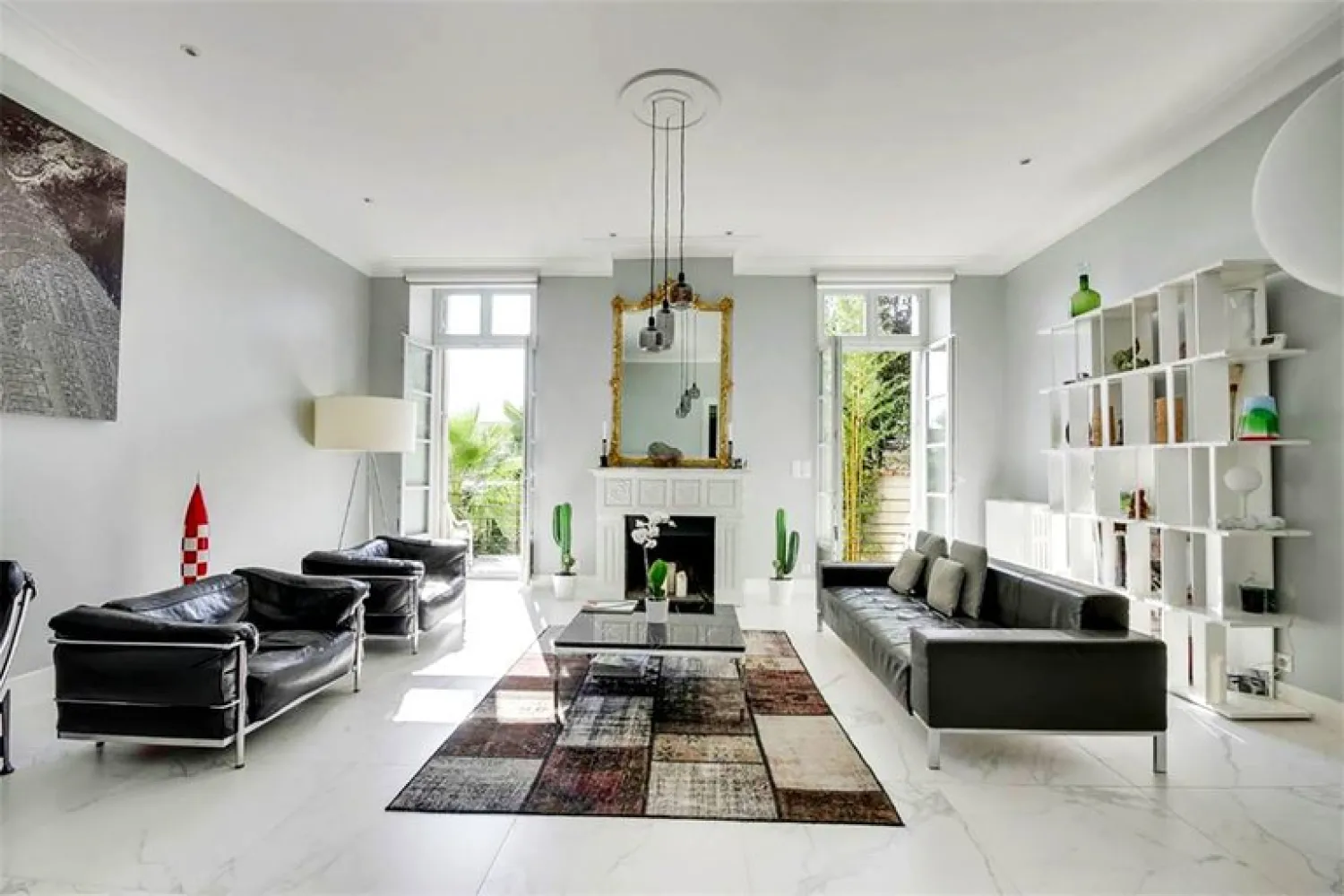
This six-bedroom, late 19th-century house, just west of the center of Bordeaux, was renovated by its current owner, preserving original elements like the marble staircase, fireplaces and hardwood floors.

Past the front door, glass-and-wood double doors open to an entrance hall with a half-bath, a translucent glass ceiling and stairs leading down to the garden level and up to the main floor. The garden level has a large bedroom with a shower, a laundry room, storage and a half-bath. The main floor has an open kitchen-and-dining area and a living room with dove-gray walls, a fireplace and French doors to a terrace and the garden below.

The second-floor landing serves as an office; a half-bath is adjacent. (The landing’s glass floor is the entrance hall’s ceiling.) The second floor has three bedrooms, including the master suite, and the third floor has two more bedrooms, both air-conditioned. In all, there are four half-baths, one on each floor; five bedrooms have en-suite showers, and the master suite has a bathtub and shower.

The 3,500-square-foot house sits on an approximately 7,000-square-foot lot. The owner, Jérôme Nivaux, said he saved as much of the original detail as possible during the renovation, although the layout was reconfigured and the paint, plumbing, electricity and double-paned windows are all new.

The house is a few steps from a boulangerie, cheesemonger and market; tram stops and a supermarket are about 400 yards away. A new high-speed train makes the trip to Paris in two hours from the Bordeaux-Saint-Jean station about three miles from the house. Bordeaux’s international airport is a 20-minute drive.

MARKET OVERVIEW

Bordeaux, which has a population of about 250,000, has “exploded with optimism and enthusiasm” in the last five years, said Michael Baynes, an executive partner of Maxwell-Baynes, the affiliate of Christie’s International Real Estate in southwestern France. He credited Bordeaux’s restaurants and its proximity to the beach and wine country, as well as the high-speed train.

Thanks to limited supply and increased demand, especially from French buyers outside Bordeaux, properties tend to sell quickly and prices have been rising, agents said. Parisians, in particular, have been moving to Bordeaux and working remotely, said Aymeric Sabatié-Garat, associate director of the Bordeaux branch of Barnes, a luxury real estate agency.

This year, there are about half as many luxury properties — homes priced at 1 million euros or more — on the market as there were in 2015, Mr. Sabatié-Garat said. And since 2014, luxury prices have gone up between 50 and 60 percent, he estimated, while in the general market, where there is more supply, prices increased by only about 20 percent during the same period.

Etienne Delpech, a broker with Bordeaux Sotheby’s International Realty, which has the listing for this house, said the first half of 2017 was busy for his agency, with homes selling quickly and usually at asking price. Since the end of the summer, though, some properties have been discounted during negotiations or lingered on the market, he said, many of them in the city center, where prices have increased the most.

Desirable areas include Le Triangle d’Or, the blocks around the Public Garden and the fashionable Chartrons neighborhood, agents said. In the most coveted places, prices of luxury properties start at 7,000 euros a square meter (or about $770 a square foot), Mr. Delpech and Mr. Sabatié-Garat said. Luxury prices throughout the city center average about 3,500 to 4,500 euros a square meter (or $380 to $490 a square foot), Mr. Baynes said.

Chateau vineyards constitute a separate market in the Bordeaux region. A small winery can be bought for 500,000 euros (or about $590,000), Mr. Baynes said, but the “vast majority” sell for between 3 million and 5 million euros (about $3.5 million to $5.9 million), while some 20 percent fetch upward of 5 million euros.

WHO BUYS IN BORDEAUX

Most home buyers in Bordeaux are French; those who buy vineyards are more likely to be foreign.

Mr. Delpech said that fewer than 10 percent of his buyers this year were from foreign countries, including Germany, Belgium, Switzerland, the United States, China and Lebanon. About half of his French buyers were local, he said, and the other half were mostly from Paris.

Mr. Baynes said that only 10 percent of his vineyard buyers were from France; 40 percent were from the United States, with the rest from other parts of Europe and Asia.

BUYING BASICS

Real estate transactions in France require a notary, and sometimes a lawyer as well — when a transaction is particularly complex, for example, or for tax optimization, or when a sale involves a residence and a business, as in the case of a working vineyard, said Vianney Rivière, managing partner of Rivière Avocats Associés, a Bordeaux firm that specializes in real estate and tax law.

For a home valued around 2 million euros, like this one, closing costs paid by the buyer — including the notary’s fees, a value-added tax on that service, stamp duty and a mortgage registration fee, if applicable — would total around 7 to 8 percent of the purchase price, Mr. Rivière said.

LANGUAGES AND CURRENCY

French; euro (1 euro = $1.18)

TAXES AND FEES

The annual property taxes on this house are 1,850 euros (about $2,200), Mr. Nivaux said.

The New York Times


Third ‘Mirkaz AlBalad AlAmeen Platform’ to Open in Makkah on Sunday 

A street in the holy city of Makkah is decorated with Ramadan lights. (SPA)
TT

Third ‘Mirkaz AlBalad AlAmeen Platform’ to Open in Makkah on Sunday 

A street in the holy city of Makkah is decorated with Ramadan lights. (SPA)

The third edition of the “Mirkaz ABalad AlAmeen”, a leading platform for exchanging opportunities in Makkah, will kick off on Sunday, under the theme “Makkah Inspires the World.”

The platform, organized by the Holy Makkah Municipality, will feature 15 exceptional Ramadan evenings focused on dialogue, knowledge exchange, and cross-sector engagement.

Makkah Mayor Musad Aldaood said the platform redefines development from Makkah, where faith meets inspiration and values are transformed into a comprehensive civilizational experience.

He noted that the initiative reflects the ambitions of Saudi Vision 2030 and showcases Makkah to the world as a living model of creativity, leadership, and innovation.

The upcoming edition will host more than 65 speakers, including executive leaders and decision-makers from across all three sectors, alongside futurists, entrepreneurs, and leading voices in culture and inspiration from artists, writers, media professionals, and innovators.

The program targets 12 key sectors: technology and digital transformation, financial investment, communications and media, real estate development, transport and logistics, banking services, youth and sports, tourism and culture, hospitality and catering, Hajj and Umrah, the third sector, and healthcare.


Saudi Arabia’s Mawani Grants Unified License to Global Shipping Line 

The initiative is part of Mawani's ongoing efforts to develop the maritime business environment, enable international companies to invest in the Saudi market, and increase competitiveness within the maritime sector. (Mawani)
TT

Saudi Arabia’s Mawani Grants Unified License to Global Shipping Line 

The initiative is part of Mawani's ongoing efforts to develop the maritime business environment, enable international companies to invest in the Saudi market, and increase competitiveness within the maritime sector. (Mawani)

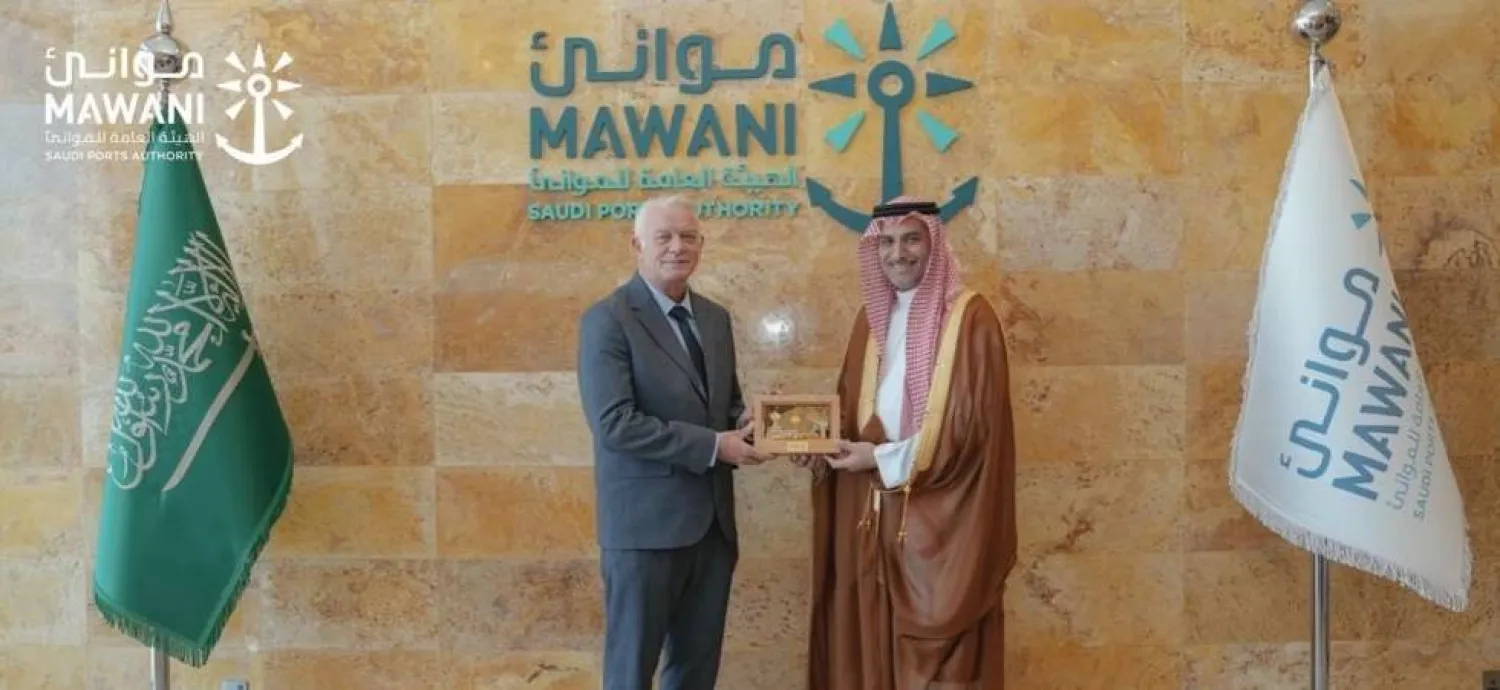
The Saudi Ports Authority (Mawani) granted on Thursday a unified license to international shipping line Global Shipping Line (PIL), officially recognizing it as an authorized foreign investor to operate maritime agencies in the Kingdom's ports, reported the Saudi Press Agency.

The license is issued in accordance with the regulations outlined in the Maritime Agency Services, reflecting Mawani's commitment to boosting the efficiency of the maritime sector and improving the quality of operational services provided at ports.

It aims to attract global expertise and facilitate knowledge transfer within the Kingdom, aligning with international best practices in the maritime transport industry.

The initiative is part of Mawani's ongoing efforts to develop the maritime business environment, enable international companies to invest in the Saudi market, and increase competitiveness within the maritime sector.

PIL, which operates from its regional headquarters in Riyadh, manages operations in 29 countries.

The move strengthens the Kingdom's position as a crucial logistics hub, in line with the National Transport and Logistics Strategy, while attracting more international shipping lines. It reinforces Saudi Arabia's role as a key link among three continents.


IMF: Restoring Lebanon's Economic Growth Will Require Comprehensive Reforms

FILE PHOTO: A view of the International Monetary Fund (IMF) logo at its headquarters in Washington, D.C., US, November 24, 2024. REUTERS/Benoit Tessier//File Photo
TT

IMF: Restoring Lebanon's Economic Growth Will Require Comprehensive Reforms

FILE PHOTO: A view of the International Monetary Fund (IMF) logo at its headquarters in Washington, D.C., US, November 24, 2024. REUTERS/Benoit Tessier//File Photo

Lebanon's economy has shown resilience despite conflicts in the region, with tourism fueling a bit of a rebound, but restoring growth will require comprehensive reforms, the International Monetary Fund said on Thursday.

IMF spokeswoman Julie Kozack said the global lender remains engaged in complex discussions with Lebanese ‌authorities following their ‌request for an IMF-supported ‌program ⁠in March 2025. The ⁠IMF sent a staff mission to Beirut earlier this month, said Reuters.

The talks have been focused on two big issues, she said, citing the need for banking sector restructuring and a medium-term fiscal ⁠strategy. "The economy has shown resilience ‌despite the impact ‌of conflicts in the region. It has had ‌a bit of a rebound ‌on the back of tourism from the strong diaspora," Kozack said.

"But at the same time, really restoring strong and sustainable growth will ‌require a comprehensive set of reforms to tackle some of the ⁠structural ⁠weaknesses that have really hampered Lebanon's economic performance for many years," she said. Reforms also are needed to attract international support to help Lebanon address its substantial reconstruction needs.

Kozack said Lebanon needs an updated medium-term fiscal framework that includes concrete measures to mobilize additional revenues for much-needed capital spending, as well as a sovereign debt restructuring to restore debt sustainability.