


Saudi Arabia: Consumer Protection Standing Committee Holds First Meeting with Introduction of VAT

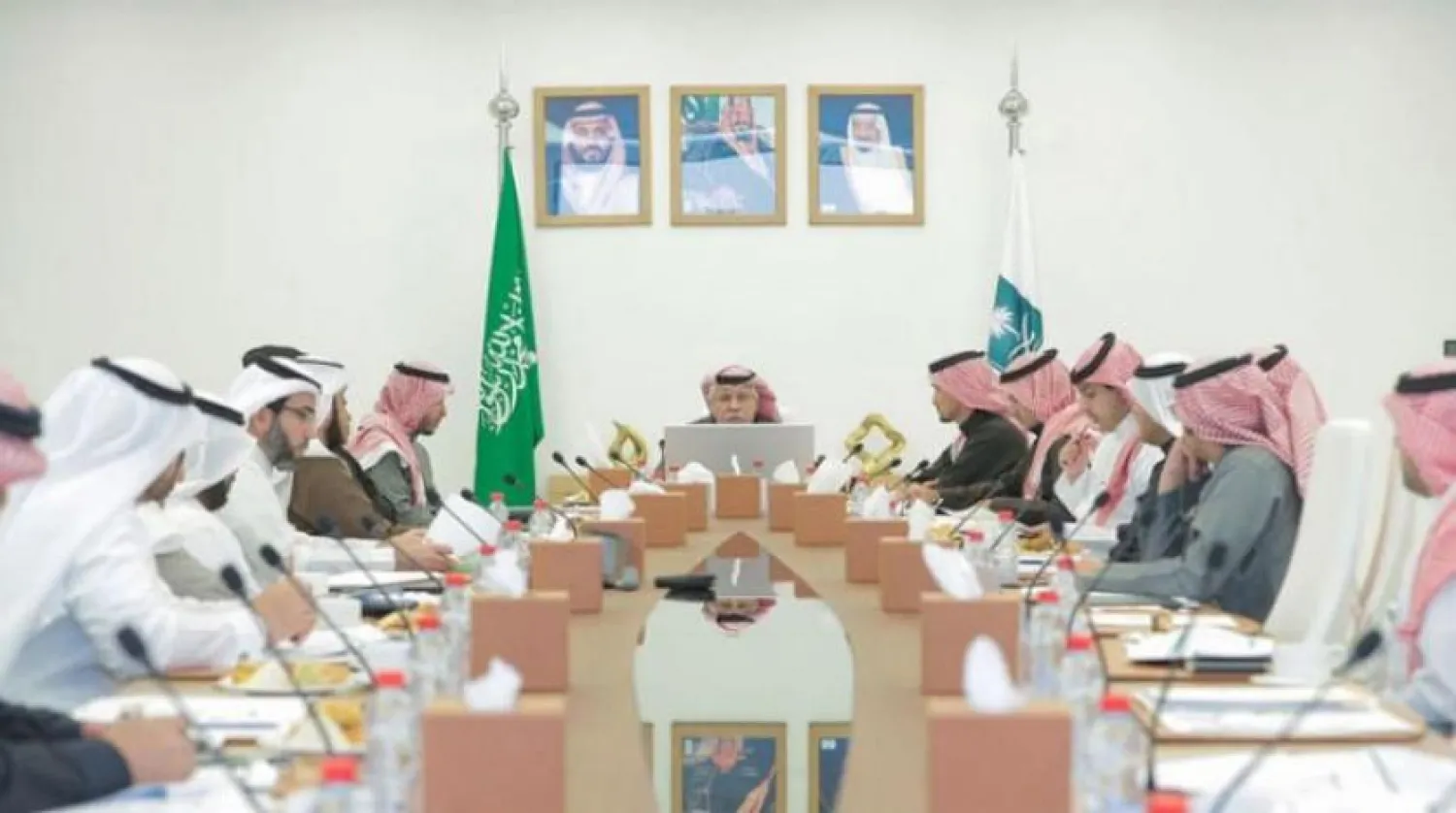
 The Consumer Protection Standing Committee meeting in Riyadh on Thursday. Asharq Al-Awsat Arabic
The Consumer Protection Standing Committee meeting in Riyadh on Thursday. Asharq Al-Awsat Arabic
TT

Saudi Arabia: Consumer Protection Standing Committee Holds First Meeting with Introduction of VAT

 The Consumer Protection Standing Committee meeting in Riyadh on Thursday. Asharq Al-Awsat Arabic
The Consumer Protection Standing Committee meeting in Riyadh on Thursday. Asharq Al-Awsat Arabic

As Saudi Arabia begins next Monday to apply the Value Added Tax (VAT), regulators in the trade and consumer protection sectors have prepared to counter any price manipulation or inflate of purchase bills under the pretext of VAT.

The kingdom is willing to apply the lowest value VAT, five percent, and General Authority of Zakat and Tax will be in charge of managing and applying VAT in the country, in cooperation with relevant parties.

In this regards, Consumers Protection Association (CPA) held on Thursday its first meeting, chaired by Commerce and Investment Minister and Chairman of Consumer Protection Standing Committee Majid al-Qasabi.

Qasabi stressed the importance of joining efforts to reinforce consumer protection, coordinating, and conducting preliminary field plans to maintain consumer rights.

The Consumer Protection Standing Committee includes: Ministry of Municipal and Rural Affairs, Ministry of Health, General Authority for Tourism and National Heritage, Ministry of Interior, Ministry of Commerce and Investment, Ministry of Education, Ministry of Transport, Minister of Energy, Industry and Natural Resources, Ministry of Finance, Ministry of Environment, Water and Agriculture, Ministry of Labor and Social Development, General Authority of Zakat and Tax, Electricity & Co-Generation Regulatory Authority, Consumers Protection Association, General Authority for Competition, General Authority for Statistics and Communications and Information Technology Commission.

General Authority of Zakat and Tax underscored that tax-registered establishments should abide by the VAT in their bills in order to increase levels of compliance with the tax. It warned that any un-registered establishment that issues a tax invoice will be fined a maximum of USD26.600.

The authority called on establishments to adopt a clear bill that determines the goods and services excluded from VAT.



Airbus Planning Record Commercial Aircraft Deliveries in 2026

An Airbus A350-1000 at the Singapore Airshow on February 4. The company said Thursday it aims to deliver a record number of aircraft this year. Roslan RAHMAN / AFP/File
TT

Airbus Planning Record Commercial Aircraft Deliveries in 2026

An Airbus A350-1000 at the Singapore Airshow on February 4. The company said Thursday it aims to deliver a record number of aircraft this year. Roslan RAHMAN / AFP/File

Plane maker Airbus aims to deliver a record number of commercial aircraft this year, the company said Thursday, capitalizing on "strong demand" and a jump in profit in 2025.

"2025 was a landmark year, characterized by very strong demand for our products and services across all businesses," CEO Guillaume Faury said in a press release announcing annual results.

The European manufacturer said it received 1,000 orders for commercial planes in 2025, with net orders of 889 after taking cancellations into account, and 793 delivered.

Last year, its overall profit jumped 23 percent to 5.2 billion euros ($6.1 billion).

The company said it is targeting "around 870 commercial aircraft deliveries" this year.

"As the basis for its 2026 guidance, the Company assumes no additional disruptions to global trade or the world economy, air traffic, the supply chain, its internal operations, and its ability to deliver products and services," it said in its outlook.

Both Airbus and its rival Boeing have struggled to return to pre-pandemic production levels after their entire network of suppliers was disrupted, even as airlines are eager to modernize their fleets with more fuel-efficient aircraft and expand to meet an expected increase in passenger numbers over the coming decades.


Saudi Arabia's Humain Invests $3 Bn in Musk's xAI

The logo of the Saudi company Humain. Asharq Al-Awsat
TT

Saudi Arabia's Humain Invests $3 Bn in Musk's xAI

The logo of the Saudi company Humain. Asharq Al-Awsat

Saudi Arabia's artificial intelligence firm Humain said Wednesday it had invested $3 billion in US billionaire Elon Musk's xAI.

The investment made Humain a "significant minority shareholder,” the company said in a statement.

It added that its xAI holdings would be "converted into SpaceX shares" after the rocket company announced it was taking over the AI start-up earlier this month as Musk pushes to unify his many business interests.

CEO Tareq Amin said the latest investment “reflects Humain’s conviction in transformational AI and our ability to deploy meaningful capital behind exceptional opportunities where long-term vision, technical excellence, and execution converge, xAI’s trajectory, further strengthened by its acquisition by SpaceX, one of the largest technology mergers on record, represents the kind of high-impact platform we seek to support with significant capital.”

Musk's xAI had previously announced in November it was teaming up with Humain to build a 500-megawatt data center in Saudi Arabia.

The Saudi firm also inked a new deal with Nvidia.


Microsoft Arabia: Saudi Arabia Accelerates AI Adoption, Turns It Into Competitive Edge

A Microsoft logo is seen a day after Microsoft Corp's $26.2 billion purchase of LinkedIn Corp, in Los Angeles, California, US, June 14, 2016. REUTERS/Lucy Nicholson
TT

Microsoft Arabia: Saudi Arabia Accelerates AI Adoption, Turns It Into Competitive Edge

A Microsoft logo is seen a day after Microsoft Corp's $26.2 billion purchase of LinkedIn Corp, in Los Angeles, California, US, June 14, 2016. REUTERS/Lucy Nicholson

Saudi Arabia has cemented its global standing in artificial intelligence after pouring significant investments into the sector in 2025, accelerating digital transformation and expanding real-world applications across government and the wider economy.

From education and manufacturing to energy and public services, AI is being deployed to advance the diversification goals of Saudi Vision 2030.

Turki Badhris, president of Microsoft Arabia, said the kingdom is experiencing unprecedented momentum in adopting AI as a strategic lever to raise competitiveness and improve performance across vital sectors.

Artificial intelligence has become central to the national transformation journey, he told Asharq Al-Awsat.

Linking transformation

Saudi Arabia’s overhaul spans digital government modernization, the construction of megacities and large-scale projects, industrial development, and the creation of new economic sectors, Badhris said.

AI, he added, is the connective tissue binding these efforts together by enabling smarter infrastructure and more efficient public services.

In 2025, Microsoft expanded cooperation with government and regulatory bodies, as well as major companies, to accelerate the adoption of AI and cloud computing across education, industry, financial services, and government operations.

Turning point year

Badhris described 2025 as a watershed for AI in the kingdom, marked by a shift to broad, sector-wide deployment.

In digital government, training programs implemented with the Digital Government Authority aim to equip more than 100,000 public sector employees with cloud and AI skills, enhancing service delivery and user experience.

In education, AI literacy initiatives have been scaled up in partnership with the Ministry of Education and the Ministry of Communications and Information Technology, alongside the rollout of generative AI tools and digital learning technologies in schools.

Manufacturers have adopted AI-driven predictive maintenance and real-time operational data analysis, cutting downtime and improving efficiency and reliability.

In energy and sustainability, AI solutions are being used to optimize water and energy asset management, including predictive maintenance and intelligent process control, delivering operational savings while supporting emissions reduction and sustainability targets.

Sovereign cloud push

Badhris said the launch of Microsoft’s cloud region in Saudi Arabia, planned for 2026, will mark a qualitative leap by allowing government entities and regulated sectors to run critical workloads in a secure local environment, ensuring data sovereignty and enabling low-latency innovation.

He added that regulatory frameworks developed by relevant authorities have bolstered trust in AI adoption by balancing individual protection with incentives for innovation.

From tools to partners

Looking ahead, Badhris said 2026 will see AI evolve from support tools into “work partners” capable of collaboration and initiative in complex tasks.

The shift will be felt across government services, industry, megaprojects such as Qiddiya and The Red Sea Project, and healthcare.

Advanced AI systems, he said, will sharpen operational efficiency, lift productivity, and enhance service quality, while moving from reactive oversight to proactive governance frameworks that ensure safe and responsible use.

Saudi Arabia, Badhris said, is not simply adopting AI but helping shape its future, investing in sovereign infrastructure, building national capabilities, and embedding responsible-use principles to drive sustainable economic growth and entrench its position as a global technology power.