


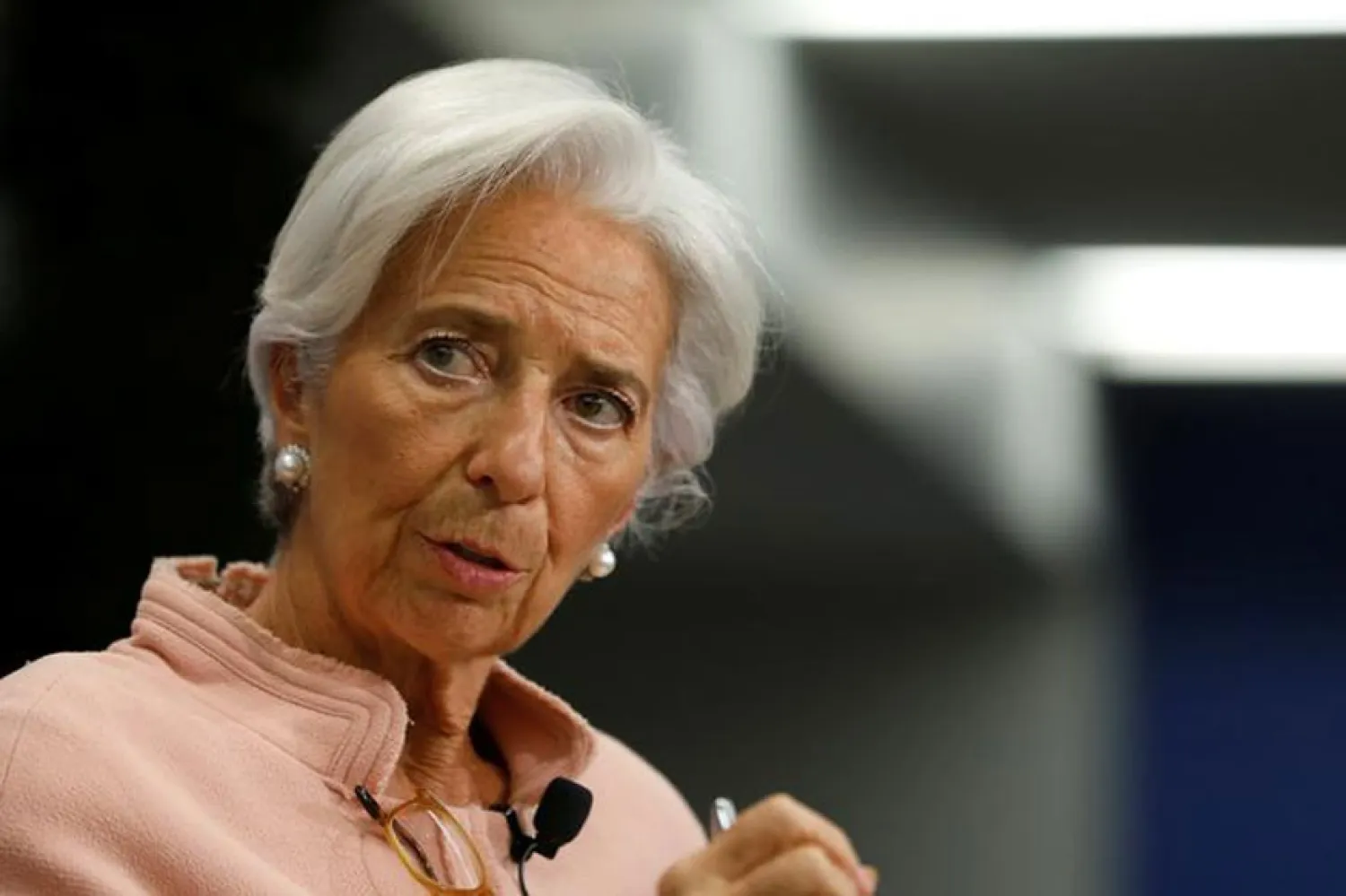

Arab countries must reduce public wages and subsidies in order to rein in spending, achieve sustainable growth and create jobs, IMF chief Christine Lagarde urged on Saturday.
Speaking at the one-day Arab Fiscal Forum in Dubai, UAE, International Monetary Fund's (IMF) chief welcomed "promising" reforms adopted by some Arab countries, but insisted much more was needed to overcome economic and social problems.
According to Lagarde, low oil prices are affecting the finances of Arab oil exporters, while importers are battling with rising debt, unemployment, conflicts, terrorism and refugee inflows.
Arab Monetary Fund (AMF), which co-organised the event with the IMF, indicated that almost all Arab countries have posted budget deficits over the past few years and Arab economies grew at just 1.9 percent last year, which is half the global rate.
Arab public spending remains very high, especially in oil-rich Gulf states, where government expenditures exceed 55 percent of gross domestic product, Lagarde stated. She added many Arab governments had taken steps to contain spending, but the measures have often been temporary and conditional.
Lagarde advised that public spending reforms should focus on cutting costly subsidies and public wage bills while boosting efficiency in areas like health, education and public investment.
"There is really no excuse for the continued use of energy subsidies," Lagarde said, adding that: "they are extremely costly, averaging 4.5 percent of GDP among oil exporters and three percent of GDP among oil importers."
All Gulf Cooperation Council (GCC) states and many other Arab countries have reduced energy subsidies in recent years, but their cost is still high.
AMF chairman Abdulrahman al-Hamidy said the value of Arab energy subsidies dropped from $117 billion in 2015 to $98 billion last year, according to a study by the fund.
Lagarde warned that higher growth and stringent reforms were needed to create jobs for young Arabs, as she stated that Arab youth unemployment is the highest in the world, averaging 25 percent, and exceeding 30 percent in nine countries
"Moreover, over 27 million hopeful young people will join the workplace over the next five years," she confirmed.
In an interview with Asharq Al-Awsat earlier in January, Lagarde pointed that countries in the region have some of the highest debt ratios in the world. However, governments have recently made an effort to reduce deficits, but a legacy of high levels of public spending and weak revenue mobilization has resulted in levels of debt averaging around 80 percent of GDP in oil-importing Arab countries.
"Servicing these debts sucks resources that would otherwise have gone to fund vital social programs and much needed infrastructure investment," according to the IMF director.
Underlining the need to reduce the debts, Lagarde noted that the current challenge was to accomplish this task in a “balanced, fair and equitable” way that supports growth. She also highlighted the importance of reforms in bolstering economic development.
"Jobs will come with economic growth. Growth will come with improved business and investor confidence, which in turn will come once countries achieve economic stability. And for that, reforms are essential," she concluded.


