


Inside the Sporting Lisbon Academy, where Ballon d'Or Winners are Made

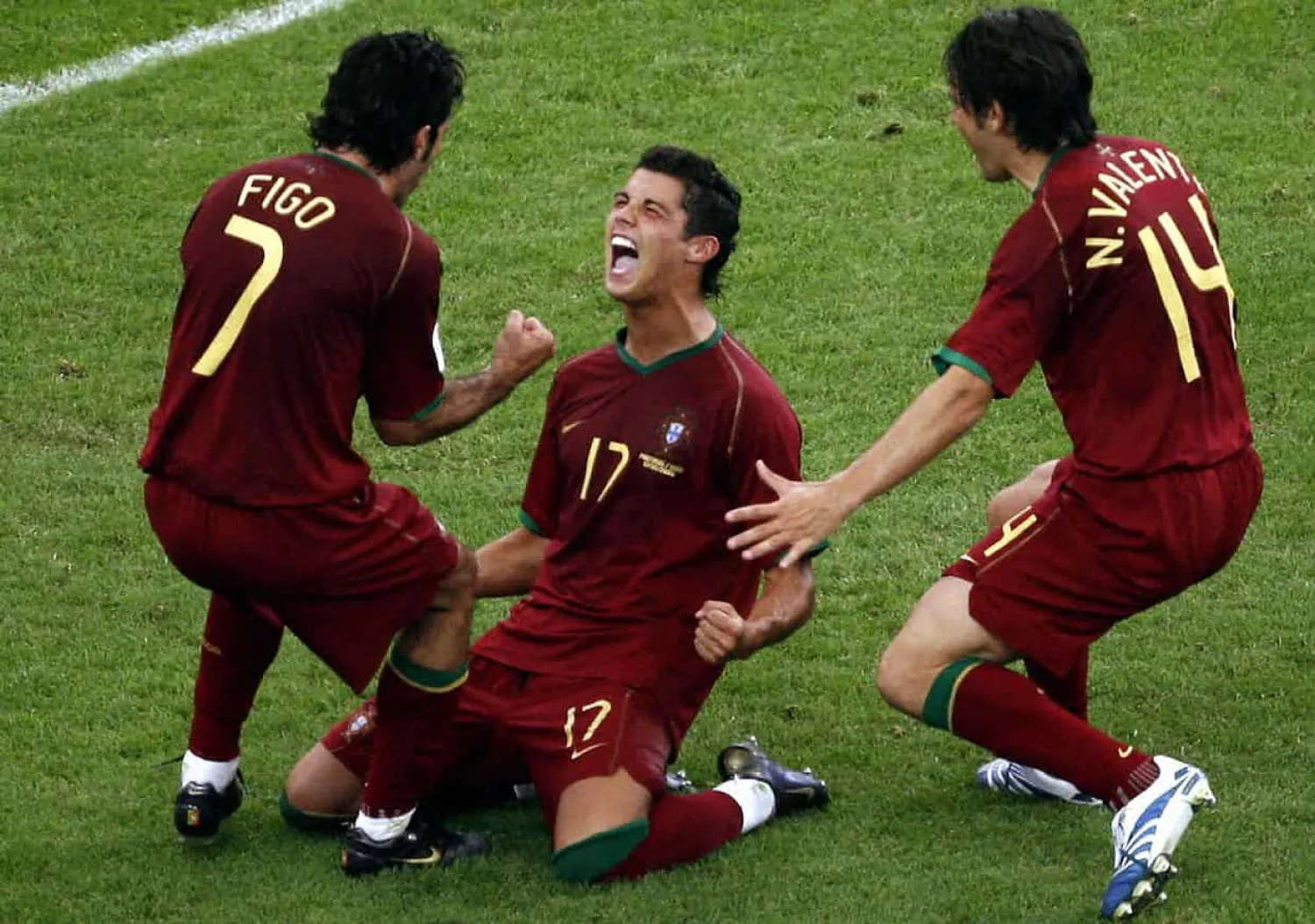
Cristiano Ronaldo, Luís Figo and Nuno Valente all passed through the Sporting academy. (AFP)
TT

Inside the Sporting Lisbon Academy, where Ballon d'Or Winners are Made

Cristiano Ronaldo, Luís Figo and Nuno Valente all passed through the Sporting academy. (AFP)

“Effort, Dedication, Devotion, Glory.” Those are the first and last words the young hopefuls see as they enter and leave the Sporting Clube de Portugal academy. I had visited Benfica’s €15m complex the night before and was immediately struck by the contrasting values at this rural complex in Alcochete. Perhaps it was the €0.40 coffee served to me in the clubhouse by a bronzed pensioner who was wearing a permanent scowl. Without extravagances, this is a place for football.

As coaches gathered around a portable TV to watch Primeira Liga highlights and plan what the evening would have in store, I couldn’t help but daydream about the players who had walked these corridors and slept in the rooms next door, back when they owned nothing more than a pocketful of ambition. Sporting have produced Portugal’s two most capped players, Cristiano Ronaldo and Luís Figo, both of whom have won the Ballon d’Or, the Champions League and a shed-load of leagues and cups. There are signed pictures and murals of the pair plastered all around the facilities.

“Listen to me,” says Miguel Miranda, the goalkeeping coordinator at the academy. “Messi is a freak, a one-off and clearly the best ever, but what Cristiano has done to be anywhere near his levels speak volumes about the man. He came here from an island with nothing: a skinny boy with many bad habits who liked to run at defenders. Now he is a complete player: a beast. We use him as an example in every room here: from the gymnasium, to the psychology classrooms and the dressing rooms. He sacrificed himself to get everything he has now.”

While wandering around the six training pitches and talking to Miranda, I notice a theme: the ball is continuously zipped out to wingers who are encouraged to drive at isolated full-backs. “Cristiano, Figo, Nani, Quaresma – we’ve always specialized in wingers here,” he says. “Coaches limit touches for central players, who are encouraged to spread the ball wide into wingers, who have unlimited touches to create chances from wide.” Miranda says the country’s top wingers make their way to Alcochete as the academy has a history of producing “free-range players, not battery-caged ones”.

“Ten of our boys were in Portugal’s 23-man squad that won Euro 2016. Of the eight from here who started in the final, five are attackers. The other two came on as wingers! We like the boys to be free to express themselves on the pitch. We love creative kids.”

Sporting became the first Portuguese club to open an academy in 2002. Like both Benfica and Porto, a 4-3-3 template runs through the veins of the youth system. Yet, all of their coaches take “field trips” to different football cultures, such as Barcelona’s La Masia, Ajax’s De Toekomst and various hotbeds of youth talent in South America, to see how things are done elsewhere and absorb knowledge from other philosophies.

After witnessing an Under-16 player fail to control three 20-yard passes in a row just minutes after he had beaten three opponents and finished from 25 yards, I joke with Miranda that I cannot work out if he is the best or worst player I have ever seen. “He’s gone,” says Miranda with a cutting frown. “Look at his skin. Look at his legs. He’s finished. I’m serious. We do physical examinations on the boys every three months. This boy isn’t at the levels he needs to be and he’s finished maturing. We check players’ skin for acne, knees and other joints for growth.”

“If a player isn’t performing at the standard we require for their age and their body has stopped developing, then we will release them. We prefer skinny, awkward teens to the finished product at 15. Again, here, Cristiano is the perfect example. We don’t want them to be professional at 14. We want them to be professional at 20.”

Aurélio Pereira, the club’s long-serving director of youth recruitment, has overseen the discovery of Figo, Paulo Futre, Simão Sabrosa, João Moutinho, Cedric, Ricardo Quaresma and Nani, among others, but Ronaldo is the real darling for the club. The 70-year-old’s eyes light up when he reminisces about Ronaldo tying weights to his legs and racing past traffic in the streets outside the academy to gain strength and speed.

“As soon as we make contact with a player coming from far away, our objective is to bring them over to the Sporting Academy,” says Pereira. “We are responsible for a massive change in the lives of young players who could become greats one day. We find the strong and weak points of each individual and change their training to reflect that.”

Sporting insist they are interested in developing people, not just players. Eric Dier, who spent eight years with the club before signing for Tottenham, has testified to that. “They pride themselves on bringing you up as a polite and respectful person. They would never get angry with you if you missed a pass but they would do if you were disrespectful to someone. There was no shouting. A good player for them was someone who could understand when they made a mistake and correct it for themselves.

“When I first came to England to play I saw coaches having a go at players when they made mistakes. They would literally be talking them through the game. In Portugal, the coach would sit on the bench and not say a word. We’d just play. It was a matter of us making mistakes and learning from them by ourselves. You understand the game a lot better that way. For me, the sign of a bad player is someone who makes the same mistake twice.”

Miranda is adamant that making each player happy in his day-to-day life matters to the club. “Correct diets and sleeping patterns are of high importance here and having the correct lifestyle has an enormous effect on performance. When players perform well on the pitch, they find everything else easier, eventually becoming content with life’s challenges. The development of humans is of great importance.”

Ronaldo’s success tells its own story and so too does that of Figo, who has gone on to prosper in multiple avenues. He is fluent in five languages, runs bars and restaurants around Portugal, works for the Stop TB Partnership to serve people affected by tuberculosis, is on the board of a charity run by Internazionale, and even ran to be Fifa president.

As I said “boa noite” to the still scowling waiter at the end of the night and made my way out of the academy, I walked past a shirt signed by Ronaldo and the other youth graduates who helped Portugal win Euro 2016. The Ballon d’Or winners, European champions and professionals spread around the world are all a testament to the “effort, dedication, devotion, glory” motto that was instilled in them here.

The Guardian Sport


PSG’s Mental Strength Hailed as they Come from Behind to Win at Monaco

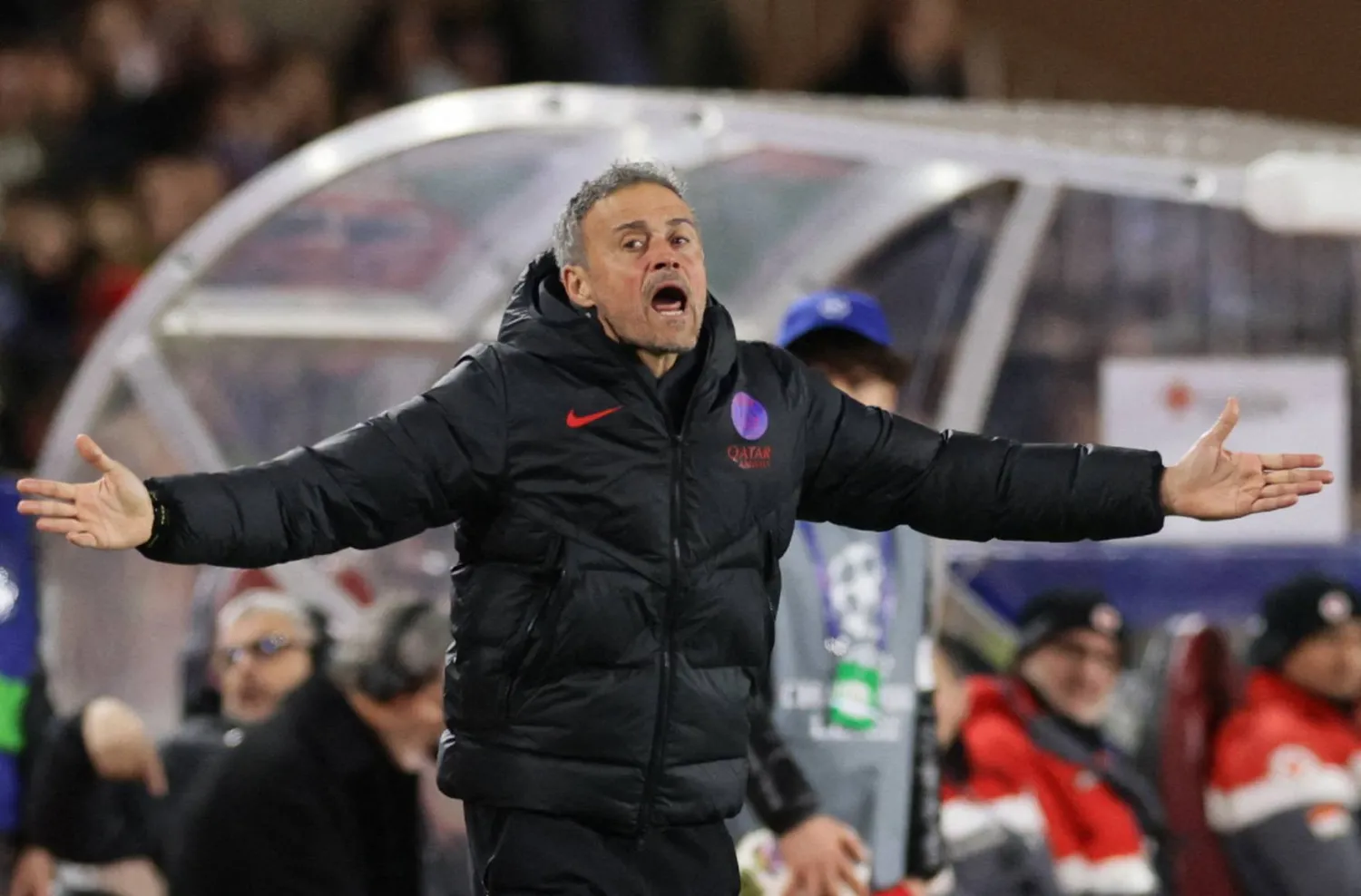
Soccer Football - UEFA Champions League - Play Off - First Leg - AS Monaco v Paris St Germain - Stade Louis II, Monaco - February 17, 2026 Paris St Germain coach Luis Enrique reacts REUTERS/Manon Cruz
TT

PSG’s Mental Strength Hailed as they Come from Behind to Win at Monaco

Soccer Football - UEFA Champions League - Play Off - First Leg - AS Monaco v Paris St Germain - Stade Louis II, Monaco - February 17, 2026 Paris St Germain coach Luis Enrique reacts REUTERS/Manon Cruz

Paris Saint-Germain coach Luis ‌Enrique hailed the mental strength of his side in coming from two goals down to win 3-2 away at Monaco in the Champions League on Tuesday, but warned the knockout round tie was far from finished.

The first leg clash between the two Ligue 1 clubs saw Folarin Balogun score twice for the hosts in the opening 18 minutes before Vitinha had his penalty saved to compound matters.

But after Desire Doue came on for injured Ousmane Dembele, the ‌match turned ‌and defending champions PSG went on to ‌secure ⁠a one-goal advantage ⁠for the return leg.

"Normally, when a team starts a match like that, the most likely outcome is a loss,” Reuters quoted Luis Enrique as saying.

“It was catastrophic. It's impossible to start a match like that. The first two times they overcame our pressure and entered our half, they scored. They ⁠made some very good plays.

“After that, it's difficult ‌to have confidence, but we ‌showed our mental strength. Plus, we missed a penalty, so ‌it was a chance to regain confidence. In the ‌last six times we've played here, this is only the second time we've won, which shows how difficult it is.”

The 20-year-old Doue scored twice and provided a third for Achraf Hakimi, just ‌days after he had turned in a poor performance against Stade Rennais last Friday ⁠and was ⁠dropped for the Monaco clash.

“I'm happy for him because this past week, everyone criticized and tore Doue apart, but he was sensational, he showed his character. He helped the team at the best possible time.”

Dembele’s injury would be assessed, the coach added. “He took a knock in the first 15 minutes, then he couldn't run.”

The return leg at the Parc des Princes will be next Wednesday. “Considering how the match started, I'm happy with the result. But the match in Paris will be difficult, it will be a different story,” Luis Enrique warned.


Mbappe Calls for Prestianni Ban over Alleged Racist Slur at Vinicius

TOPSHOT - Real Madrid's French forward #10 Kylian Mbappe talks with SL Benfica's Portuguese head coach Jose Mourinho during the UEFA Champions League knockout round play-off first leg football match between SL Benfica and Real Madrid CF at Estadio da Luz in Lisbon on February 17, 2026. (Photo by PATRICIA DE MELO MOREIRA / AFP)
TT

Mbappe Calls for Prestianni Ban over Alleged Racist Slur at Vinicius

TOPSHOT - Real Madrid's French forward #10 Kylian Mbappe talks with SL Benfica's Portuguese head coach Jose Mourinho during the UEFA Champions League knockout round play-off first leg football match between SL Benfica and Real Madrid CF at Estadio da Luz in Lisbon on February 17, 2026. (Photo by PATRICIA DE MELO MOREIRA / AFP)

Real Madrid forward Kylian Mbappe said Benfica's Gianluca Prestianni should be banned from the Champions League after the Argentine was accused of directing a racist slur at Vinicius Jr during the Spanish side's 1-0 playoff first-leg win on Tuesday.

Denying the accusation, Prestianni said the Brazilian misheard him.

The incident occurred shortly after Vinicius had curled Real into the lead five minutes into the second half in Lisbon.

Television footage showed the Argentine winger covering his mouth with his shirt before making a comment that Vinicius and nearby teammates interpreted as a racial ‌slur against ‌the 25-year-old, with referee Francois Letexier halting the match for ‌11 ⁠minutes after activating ⁠FIFA's anti-racism protocols.

The footage appeared to show an outraged Mbappe calling Prestianni "a bloody racist" to his face, Reuters reported.

The atmosphere grew hostile after play resumed, with Vinicius and Mbappe loudly booed by the home crowd whenever they touched the ball. Despite the rising tensions, the players were able to close out the game without further interruptions.

"I want to clarify that at no time did I direct racist insults to Vini Jr, ⁠who regrettably misunderstood what he thought he heard," Prestianni wrote ‌on his Instagram account.

"I was never racist with ‌anyone and I regret the threats I received from Real Madrid players."

Mbappe told reporters he ‌heard Prestianni direct the same racist remark at Vinicius several times, an allegation ‌also levelled by Real's French midfielder Aurelien Tchouamen.

Mbappe said he had been prepared to leave the pitch but was persuaded by Vinicius to continue playing.

"We cannot accept that there is a player in Europe's top football competition who behaves like this. This guy (Prestianni) doesn't ‌deserve to play in the Champions League anymore," Mbappe told reporters.

"We have to set an example for all the children ⁠watching us at ⁠home. What happened today is the kind of thing we cannot accept because the world is watching us.

When asked whether Prestianni had apologized, Mbappe laughed.

"Of course not," he said.

Vinicius later posted a statement on social media voicing his frustration.

"Racists are, above all, cowards. They need to cover their mouth with their shirt to show how weak they are. But they have the protection of others who, theoretically, have an obligation to punish them. Nothing that happened today is new in my life or my family's life," Vinicius wrote.

The Brazilian has faced repeated racist abuse in Spain, with 18 legal complaints filed against racist behavior targeting Vinicius since 2022.

Real Madrid and Benfica will meet again for the second leg next Wednesday at the Bernabeu.


Second Season of ‘Kings League–Middle East' to Kick off in March in Riyadh 

The second season of the Kings League-Middle East will kick off in Riyadh on March 27. (Kings League-Middle East on X)
TT

Second Season of ‘Kings League–Middle East' to Kick off in March in Riyadh 

The second season of the Kings League-Middle East will kick off in Riyadh on March 27. (Kings League-Middle East on X)

The Kings League-Middle East announced that its second season will kick off in Riyadh on March 27.

The season will feature 10 teams, compared to eight in the inaugural edition, under a format that combines sporting competition with digital engagement and includes the participation of several content creators from across the region.

The Kings League-Middle East is organized in partnership with SURJ Sports Investments, a subsidiary of the Public Investment Fund (PIF), as part of efforts to support the development of innovative sports models that integrate football with digital entertainment.

Seven teams will return for the second season: DR7, ABO FC, FWZ, Red Zone, Turbo, Ultra Chmicha, and 3BS. Three additional teams are set to be announced before the start of the competition.

Matches of the second season will be held at Cool Arena in Riyadh under a single round-robin format, with the top-ranked teams advancing to the knockout stages, culminating in the final match.

The inaugural edition recorded strong attendance and wide digital engagement, with approximately a million viewers following the live broadcasts on television and digital platforms.
