Why Won’t TV Rights Company Pouring Millions Into English Football Reveal Its Owners?

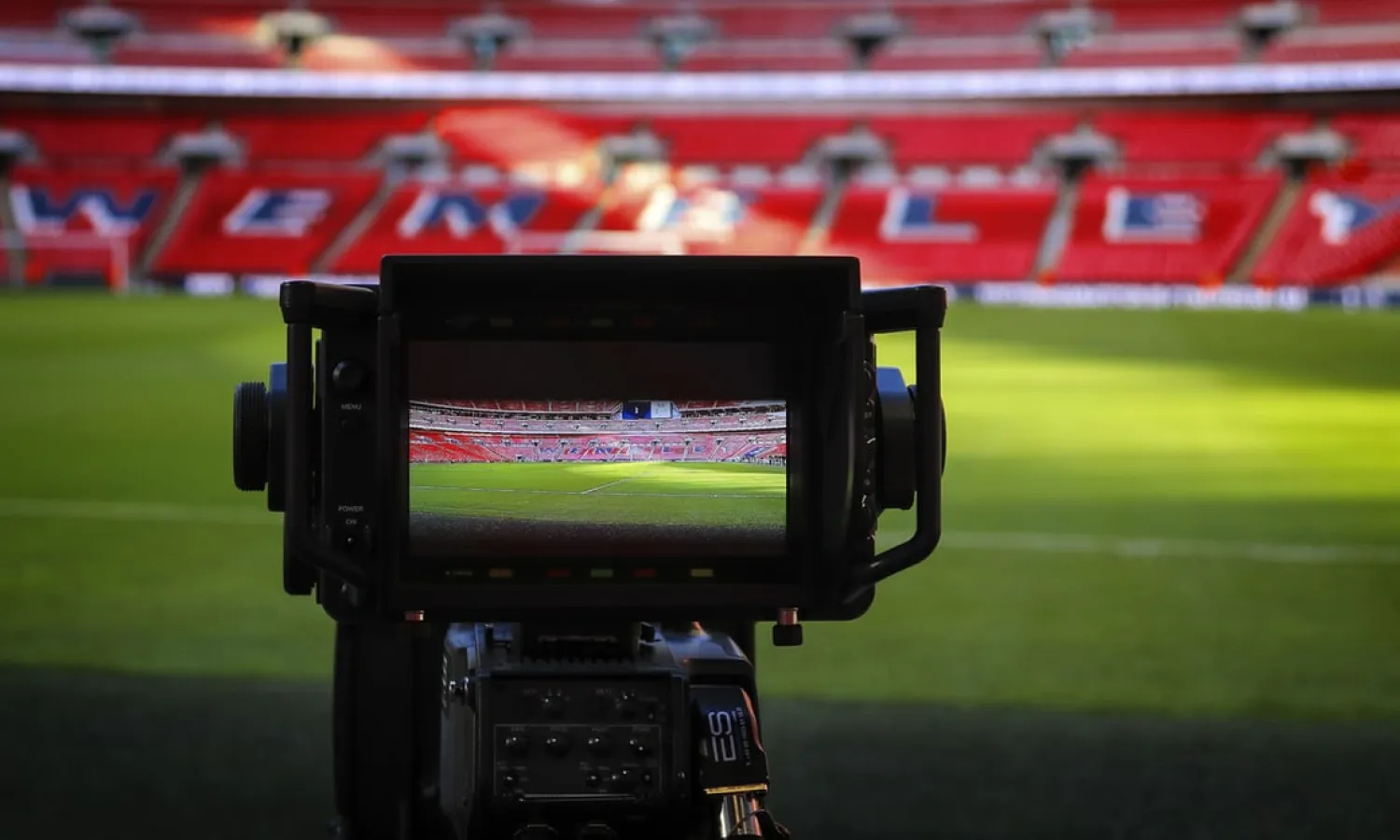
A TV camera at Wembley before a recent Tottenham game in the Premier League. Photograph: Mark Rourke/Rex/Shutterstock
TT

Why Won’t TV Rights Company Pouring Millions Into English Football Reveal Its Owners?

A TV camera at Wembley before a recent Tottenham game in the Premier League. Photograph: Mark Rourke/Rex/Shutterstock

The Football Association unveiled its plans last month for a menu of multimillion-pound investment into grassroots facilities and projects, and wiping out the debt on Wembley, largely from the sale of greatly increased TV deals for FA Cup and England matches. Announcing the international sales last year, the FA’s chief executive, Martin Glenn, said the money would have “a transformational impact” on football across the country.

One of the major buyers in those international deals, reported to have paid £210m from next season to 2023-24 for the exclusive rights to broadcast in the Middle East, North Africa and western Europe, is an agency based in London, Pitch International. Pitch has also bought the English Football League’s international media rights, reported to be £120m over five seasons until 2021-22.

Formed in 2004 with two principal directors and a chairman, Trevor East, who is a former BSkyB executive – then taken over in 2009 by an investor who has never been publicly identified – Pitch has rapidly risen to become a significant agency in English football TV rights.

Pitch sells the rights around the world. For the Middle East and North Africa region, where the Gulf is the richest territory, it has consistently sold its English football rights to beIN Sports, the Qatari broadcaster. Formerly the sports arm of Al Jazeera, beIN has become the dominant broadcaster in the region having had huge, sustained investment from Qatar state funds. In the new “transformational” deal for FA rights, Pitch is understood to have again sold on the rights for the Middle East and North Africa to beIN.

A spokesman for Pitch told the Guardian it has an “arm’s length” commercial relationship and not an exclusive arrangement with beIN or any other broadcaster. “Many rights holders and agencies across numerous sports deal with beIN, which is a major broadcaster in the Middle East and elsewhere,” he said.

Famously beIN’s most prominent move in Europe has been the huge money paid to broadcast Ligue 1 in France jointly with Canal+, a deal first done after the state fund, Qatar Sports Investments, bought Paris Saint‑Germain in 2011.

Less well-known has been the huge money the Qatari broadcaster is paying into English football, both directly and by buying the rights to FA and EFL matches from Pitch. In the current 2016-19 round of Premier League deals, beIN is paying a reported £429m to broadcast matches in the Middle East and North Africa, following £315m paid over the previous three years. beIN also bought the Premier League TV rights for Thailand, paying £187m for three years, according to industry reports, and holds the rights for Indonesia and New Zealand.

This huge money has been pouring into English football from Qatar throughout the period in which the integrity of the country’s bid to host the 2022 World Cup has been repeatedly attacked, particularly by the former FA chairman Greg Dyke. He told the Guardian he did not see any contradiction between his publicly stated suspicions over Qatar’s bid and cashing in the millions from beIN: “The TV rights just tend to get sold to the highest bidder,” he said.

In a climate of increasing demands for transparency in financial flows and in football club ownership Pitch has never, through its rapid rise, said who its ultimate owner is, although East is a well-known, gregarious character, and Paul McGrath, one of the company’s founders, has been involved in media rights for years. Public documents filed in the UK at Companies House state that in December 2009, 75% of Pitch was bought for £52m. Yet nobody involved has ever explained who bought this stake. East repeatedly declined to answer the Guardian’s questions about Pitch’s ownership or the 2009 takeover, citing confidentiality.

The immediate owner which took over the 75% stake in Pitch was a London-based company formed that year, Homer Newco Limited. In turn its owner, the controlling shareholder of Pitch until December 2015, was a company registered in Amsterdam, Homere Holding BV. Dutch companies are not required to have the same level of transparency as in England where shareholders are identified; in Holland only a 100% owner must be disclosed. The ownership of Homere Holding is declared in Dutch company filings to be 97.34% held by a party recorded only as “Shareholder 1”.

The Pitch accounts, which show rising income every year, most recently £28m from the Middle East and Africa, £33m from America and £60m from the UK and Europe, have stated since 2010: “The members consider Homer Newco Limited to be the controlling party. The ultimate controlling party is considered to be Homere Holding BV, a company incorporated in the Netherlands.”

The founding documents of Homer Newco, which state the Dutch entity as the sole owner, record that an original director was Hervé de Kervasdoué, who had an address in the Paris suburb of Bougival. De Kervasdoué is a French lawyer, who acted for Qatar Sports Investments on the acquisition of PSG in 2011.

That deal was listed on the website of his firm, RedLink, as one of its notable achievements. Also listed was: “Acquisition of a prominent English company in the sports rights industry.”

Contacted by the Guardian, De Kervasdoué said he had a lawyer’s duty of client confidentiality and declined to say which English sports rights company had been acquired, or why he was an original director of Homer Newco, which took over Pitch in 2009.

beIN Sports also declined to answer questions about the relationship with Pitch or the anonymity of its ownership.

Pitch’s chairman, East, declined to answer questions about the Dutch company which was the agency’s controlling party, the 2009 takeover, why De Kervasdoué, QSI’s lawyer, was an original director of Pitch’s new owner, and why anonymity and confidentiality are drawn over it all. He said that Pitch’s majority owners now are the two main directors, McGrath and Jon Owen, who from 2015 have been noted on Companies House documents as owning 75% of Homer Newco, with Homere Holding reduced to owning 25 shares. East said the statement in Pitch’s 2015‑16 accounts, that Homere Holding remains the ultimate controlling party, is “incorrect” and will be corrected in this year’s accounts.

The spokesman for Pitch said of its ownership arrangements: “Due to confidentiality Pitch is unable to comment on ownership or contract valuation questions beyond the information previously provided.”

The EFL has strong regulations on transparency for its own clubs, requiring them to state and publish who owns them and that the individuals are “fit and proper” people to be owners but the league does not have similar requirements for its commercial partners and did not register any concerns about Pitch’s anonymous ownership:

“As our chosen sales partner, Pitch International negotiate the sale of the broadcasting rights of all five EFL competitions, internationally, with local broadcasters to secure maximum value for the EFL on behalf of our 72 Clubs,” the league said in a statement.

“The EFL has a growing global appeal and is currently broadcast in over 190 territories worldwide. Each individual proposal brought forward by Pitch is separately considered and where appropriate, approved by the EFL.”

The FA, asked about the anonymity of ownership at one of the companies paying hundreds of millions of pounds in the “transformational” deal for English football, and the amount of money coming into the game from Qatar, with whose association the English FA signed a cooperation agreement last week, declined to comment.

(The Guardian)


Irish Boxer Lee Reeves Dies at Age 31, Three Months after Dublin Title Fight Injury

Irish boxer Lee Reeves. Reuters
TT

Irish Boxer Lee Reeves Dies at Age 31, Three Months after Dublin Title Fight Injury

Irish boxer Lee Reeves. Reuters

Irish boxer Lee Reeves has died more than three months after being injured during a fight in Dublin, promoter Queensberry said Tuesday. He was 31.

"Everyone at Queensberry is devastated to learn of the passing of Lee Reeves," Queensberry Promotions said in a statement.

Reeves was hospitalized after being knocked out by compatriot Gary Cully in the 10th and final round of their Boxing Union of Ireland Celtic super-lightweight title fight on Aug. 1.

Reeves was carried from the ring on a stretcher after receiving initial treatment.

Queensberry had said after the fight that his condition was critical but stable.

“Lee was an immensely talented boxer, as well as a true role model and inspiration to his community,” the statement added Tuesday, according to The Associated Press. “Our deepest condolences go to Lee’s family, friends and all those who loved him. We ask that their privacy be respected at this incredibly difficult time. Rest in peace, Lee.”


Alonso to Enter Dakar Rally with Loeb and Aston Martin Team

November 5, 2026 Aston Martin's Fernando Alonso during a press conference ahead of the F1 Sao Paulo Grand Prix. (Reuters)
TT

Alonso to Enter Dakar Rally with Loeb and Aston Martin Team

November 5, 2026 Aston Martin's Fernando Alonso during a press conference ahead of the F1 Sao Paulo Grand Prix. (Reuters)

Double Formula One champion Fernando Alonso will compete in next January's Dakar Rally in an Aston Martin Dreadnought entry run by engineering partner Prodrive.

The 45-year-old Spaniard, a 32-time Grand Prix winner and two-time Le Mans 24 Hours winner, will be racing in the annual event for the second time after competing with Toyota in 2020, finishing 13th.

France's nine-time world rally champion Sebastien Loeb and Brazil's reigning world rally-raid champion Lucas Moraes will be his teammates in a three-car entry.

The 49th edition of the Dakar Rally will ‌be held in ‌Morocco from January 9 to 23, with a prologue and first ‌stage ⁠in Portugal, after ⁠being moved from Saudi Arabia due to security concerns.

The 24-round Formula One season is due to start in Bahrain in March after testing in late February.

Alonso, who will again have compatriot and five-time motorcycle Dakar winner Marc Coma as co-driver, is racing in the Las Vegas Grand Prix this weekend. He said he had turned his thoughts to Dakar after deciding to continue in Formula One with Aston Martin.

“In the end, the decision became simple. I wanted to embrace ⁠the challenge completely and take on both Formula One and the ‌Dakar Rally in the same year," he explained in ‌a statement.

"In 2020, Dakar was one of the most challenging and enjoyable experiences of my career. ‌I have enormous respect for this race and the specialists who have mastered it.

"Formula One ‌remains my priority. But I am a racing driver, and challenges like this are why I love competing. I’m looking forward to seeing what we can achieve."

LOEB CHASES FIRST DAKAR WIN

In October, Alonso told reporters at the Singapore Grand Prix that he felt the desert endurance race would be physically ‌incompatible with his Formula One commitments.

Loeb, 52, will also be chasing a first Dakar win after 10 previous attempts that have brought ⁠him 28 stage ⁠wins to date.

“Winning the Dakar is very important to me,” said the Frenchman, who will be partnered by Belgian Fabian Lurquin. “We have come close several times, and the motivation is there to keep working until we achieve it."

The Dreadnought is a digital-only tactical SUV created exclusively for gamers playing "Call of Duty: Modern Warfare 4" that will now be brought into the real world by Prodrive, Aston Martin's partners in endurance GT racing.

The Dakar will be Aston Martin Racing’s debut in the world rally-raid championship.

"Aston Martin's ambition for this program has been clear from the outset: to create a car capable of competing at the front of the world's toughest motorsport event," said Prodrive Chairman David Richards.

"By combining Aston Martin's vision with Prodrive's experience in rallying, endurance racing and Dakar competition, we have built a strong foundation. With an exceptional driver line-up and a highly capable engineering team, we look forward to seeing Dreadnought take on this remarkable challenge."


Owono Does Not Deserve 12-Match Ban Over De Miguel Death, Says Andorra Owner Pique

Equatorial Guinea's goalkeeper #01 Jesus Owono leaves the pitch at half time during the Africa Cup of Nations (CAN) Group E football match between Equatorial Guinea and Algeria at Moulay Hassan Stadium in Rabat on December 31, 2025. (AFP)
TT

Owono Does Not Deserve 12-Match Ban Over De Miguel Death, Says Andorra Owner Pique

Equatorial Guinea's goalkeeper #01 Jesus Owono leaves the pitch at half time during the Africa Cup of Nations (CAN) Group E football match between Equatorial Guinea and Algeria at Moulay Hassan Stadium in Rabat on December 31, 2025. (AFP)

FC Andorra owner Gerard ‌Pique said goalkeeper Jesus Owono did not deserve the 12-match suspension he received following the challenge that led to the death of Tenerife forward Jesus de Miguel.

Owono and De Miguel collided during a Spanish second-tier match on November 2. De Miguel was taken to intensive care and died the following day.

The disciplinary committee of the Spanish football federation (RFEF) banned Owono for violent conduct which resulted in serious ‌injury last week.

"Players, ‌former players, coaches, goalkeepers, everyone has ‌called ⁠it an accident," ⁠Pique said in a video posted on social media late on Monday.

"I truly believe that imposing the maximum sanction on Jesus for this action puts him in a situation he does not deserve, because he is not to blame for all of ⁠this having happened."

Former Barcelona player Pique ‌pointed to the three-match ‌ban handed to Albacete's Jose Corpas for accidentally kicking Sabadell ‌player Quadri Liameed in the head during a ‌recent match in Spain.

"Fortunately Quadri is fine, the consequences in this case were not fatal, and the committee decided to sanction Corpas with three matches," Pique added.

"With ‌all this, my reflection is: what is being sanctioned, the action or the ⁠consequences?"

The RFEF ⁠did not immediately respond to a request for comment outside regular business hours in Spain.

Owono, 25, has withdrawn from Equatorial Guinea's squad for Africa Cup of Nations qualifiers against Zimbabwe this month and Pique said it was unlikely the goalkeeper would return to action as soon as his suspension is up.

"Jesus is going to need far more than 12 matches before he is available and able to compete," he added. "No sanction is going to bring Demi (De Miguel) back to us."