




"There are three fugitive slaves here and they want liberty" was the message delivered to William Still, directing him to a Philadelphia hotel on a moment's notice. The letter was undated, the signature illegible. But Still understood.
It was 1855, and Still, the son of freed slaves, had become one of Philadelphia's most prominent abolitionists and a leader of the Underground Railroad, a network of secret locations where slaves could find shelter on the journey north. The slaves at Bloodgood's Hotel were Jane Johnson and her two boys. They were with their master, who had taken them on a trip through Philadelphia to New York. Momentarily out of the watchful eye of the slave-holder, Johnson whispered to a black waiter that she was a slave - and she wanted her freedom.
Still was on his way to give it to her.
Still and a fellow abolitionist, a white man named Passmore Williamson, arrived just in time to see Johnson and the children leaving the hotel and boarding a steamboat bound for New York at a nearby dock. Still and Williamson rushed the deck, telling Johnson in the presence of the slaver that in this state, she was a free woman. To break the bonds of slavery, all she had to do was come with them.
"Remember," the abolitionists told her, as Still recounted in his self-published book, "if you lose this chance you may never get such another."
Johnson took it. While Williamson engaged the slaveholder in an escalating argument, Still hurried Johnson and the children off the boat and into a waiting carriage, actions that would soon get Still arrested and make him a nationally known hero in newspapers across the country.
As he had done for hundreds of slaves seeking freedom, he provided Johnson and her boys refuge at his home, a place that, as one biographer later described it, "had become known as a safe and convenient station on the line of the northward march": The Underground Railroad.
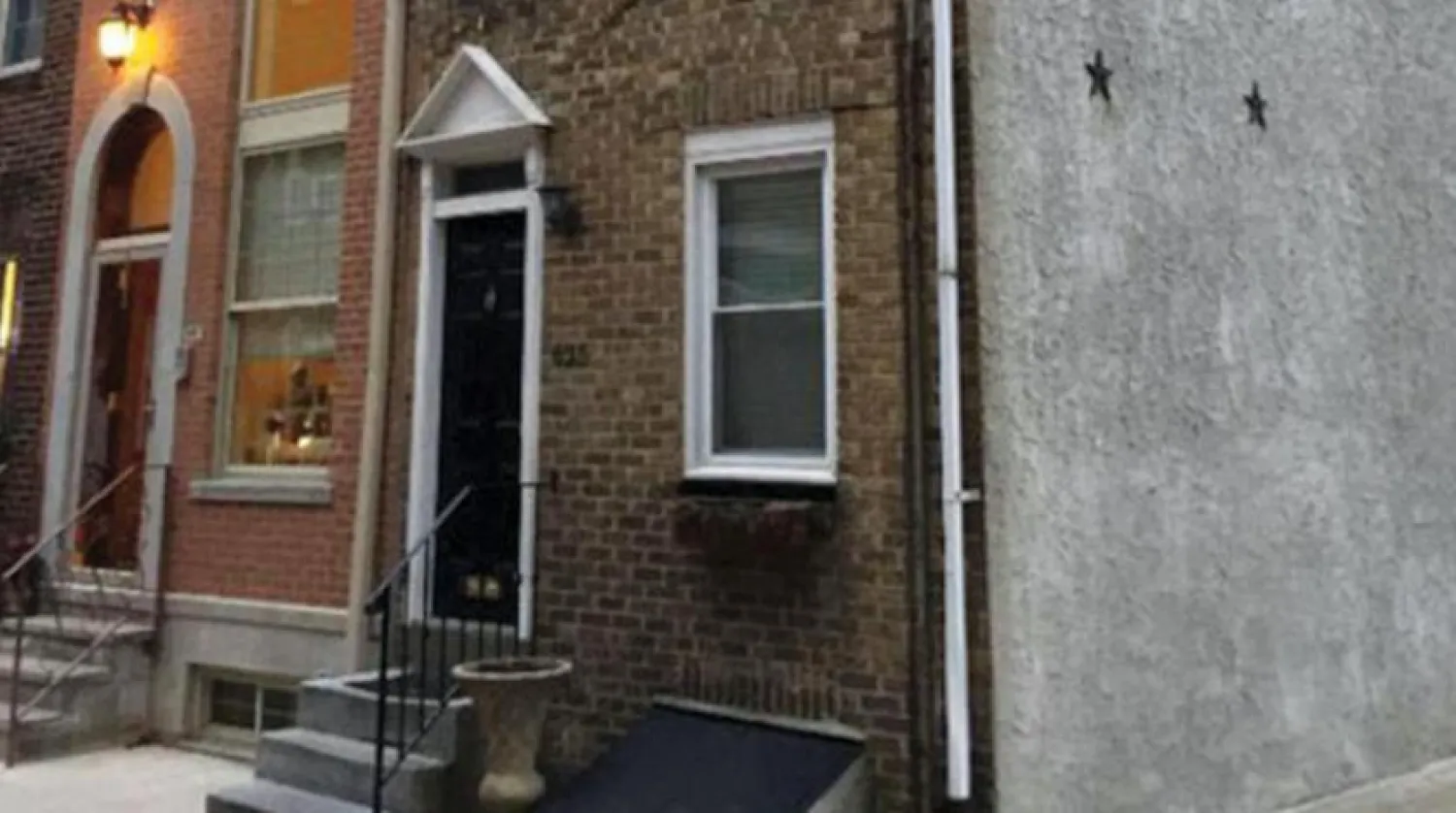
Now, more than 150 years later, Philadelphia preservationists believe they have finally discovered exactly where that home stands.
This month, the Philadelphia Historical Commission unanimously voted to designate the 19th century row house where Still lived and where he harbored hundreds of slaves from 1850 to 1855 as a site on the Philadelphia Register of Historic Places, protecting it from demolition or serious alteration. The protection, the preservationists said, is important in a city whose limited African American historic markers are more akin to "tombstones," left at sites where the original buildings no longer exist. One such marker exists for Still, in fact, outside a home the preservationists claim is not the original structure.
"From my perspective, it's a huge discovery," Jim Duffin, one of the preservationists, told The Washington Post. "The hardest problem of trying to retrieve the story of the Underground Railroad is finding documentation that the sites existed. This is one of the incredibly rare opportunities where we absolutely know that this site had a connection to the Underground Railroad because of its connection to Still."
An 1850s dressmaking advertisement is what led Duffin to the location of Still's home.
The problem with mid-19th century property records, he said, was that they identified the street on which Still lived - but didn't give an exact house number.
"I was ready to give up," Duffin said, having scoured 19th-century maps and city records. "Then I came across a newspaper ad from his wife."
Still's wife, Letitia, was a dressmaker. In an 1851 advertisement for dresses "done in the best manner by Letitia Still," she described exactly where on Ronaldson Street customers - and ultimately Duffin - could find her.
Despite remodeling of the house over the years, "the powerful sense of connection with the past that comes from a specific historic site such as this is of vital importance," Lonnie G. Bunch, director of the Smithsonian National Museum of African American History and Culture, said in a letter of support for the site's nomination.
Today, the house stands three stories with a tan-colored brick facade and a drab, windowless roughcast brick on its side, the first rowhouse in a sequence of three along a narrow street. A Whole Foods, Starbucks and a couple of art galleries adorn the block and surrounding area where Still once lived, a neighborhood he described in the 1850s as predominantly African American, instead with furniture stores and stove stores and "one confectionary." Still's house on Ronaldson Street - now South Delhi Street - was last remodeled in 1920, according to records, when the tan-colored bricks replaced red ones.
But the front marble steps, said Oscar Beisert, the preservationist who first organized the team to track down Still's home, appear to be original.
"When people look at those steps," Beisert told The Post, "they see the steps where those fugitives stood when they knocked on that door."
In 1872, Still published hundreds of stories of those fugitives in a book aptly titled "The Underground Railroad," among the most comprehensive first-person accounts of the Underground Railroad ever written.
It includes the story of Jane Johnson and how, at Still's and Williamson's trial for kidnapping her, Johnson showed up to testify - considered extremely rare at the time - that she desired to escape and seek freedom, allowing Still to be acquitted. It includes stories of slaves who escaped their masters by packing themselves into a small box or a wooden chest, then being shipped on a steamboat up the coast to the Philadelphia. He writes of slaves who hid in a cave for months after escaping from jail and being shot by slave-catchers while running through the woods and of a slave who had come to Still at Harriet Tubman's urging after he was imprisoned for 10 years for possessing a copy of "Uncle Tom's Cabin."
And he writes of a slave who, Still would discover, was his own long-lost brother.
Although Still grew up free on a New Jersey farm as the youngest of 18 children, he had two brothers he only knew of through stories. While Still's father had toiled for years to pay for his freedom, Still's mother had to escape - twice. The second time, she faced a Sophie's choice: She had four children - two baby daughters and two older sons, Peter and Levin - and she would not be able to take all of them with her.
"The sorrowful night came," Still's biographer wrote of his mother's escape in 1872. "Nerved for the hour and the solemn occasion, she rushed to the little straw bed on which her four were sleeping, kissed her boys farewell without waking them, clasped the two little girls in her strong, true arms, bade her mother good-bye, and trusting in God, began again the perilous march for freedom."
Before Still was even 18, he would help a runaway slave he found in the woods do the same, escorting him down an untraveled path for 20 miles and delivering him to safety, away from his master.
A decade later, after moving to Philadelphia, Still had worked his way up from a clerk at the Pennsylvania Anti-Slavery Society to overseeing its Underground Railroad operations. Not even a year on the job, he would finally meet his brother Peter for the first time.
One day while Still was busy mailing out the weekly abolitionist newspaper, Philadelphia Freeman, an acquaintance came in and introduced Still to a stranger who said he had escaped slavery, and now was trying to find his parents. He gave their names, and told the same story Still's mother had been telling for the past 40 years.
"By this time I was simply thunderstruck, so to speak," Still wrote in his own account. "I had to summon all my powers of control in the presence of the stranger, so fully was I convinced by this time that he was one of my long-lost brothers."
The "marvelous coincidence," Still wrote in "The Underground Railroad," is what ultimately convinced him to begin keeping meticulous records of every fugitive slave who arrived at his door, in hopes that perhaps the records may one day help other long-lost family members to find each other.
The risk of keeping the records in the age of the Fugitive Slave Act, he reasoned, paled in comparison to the importance of keeping them for history's sake.
"While the grand little army of abolitionists was waging its untiring warfare for freedom, prior to the rebellion, no agency encouraged them like the heroism of fugitives," he wrote. "The pulse of the four millions of slaves and their desire for freedom were better felt through 'The Underground Railroad' than through any other channel.
"These facts must never be lost sight of."
The Washington Post


