



In February, Tesla said 2018 would be “a transformative year for us.” But the transformation so far is probably not the kind the company had in mind.
The company’s stock tumbled after a person died in a Tesla Model X that crashed and caught fire on March 23. Then on Tuesday, Moody’s downgraded the company’s credit rating, noting that Tesla was burning through $2 billion of cash a year and would have to raise more.
On Thursday morning, Nomura Instinet analyst Romit J. Shah, the most optimistic of those following Tesla, reduced his robust target price to $420 a share, an $80 cut. “As long as they can avoid a recall that would damage the brand, then I think they’re going to persevere,” he said in an interview Thursday.
Five hours later, Tesla recalled 123,000 of its Model S sedans built before April 2016 after discovering that corroding bolts in cold-weather climates could lead to a power-steering failure.
The recall covers nearly half the cars Tesla has sold. The company said it acted proactively and that the defect had not caused any accidents or injuries.
After two days of sharp downturns, Tesla stock closed at $266.13 a share on Thursday, up 3.3 percent. The recall erased that gain in after-hours trading.
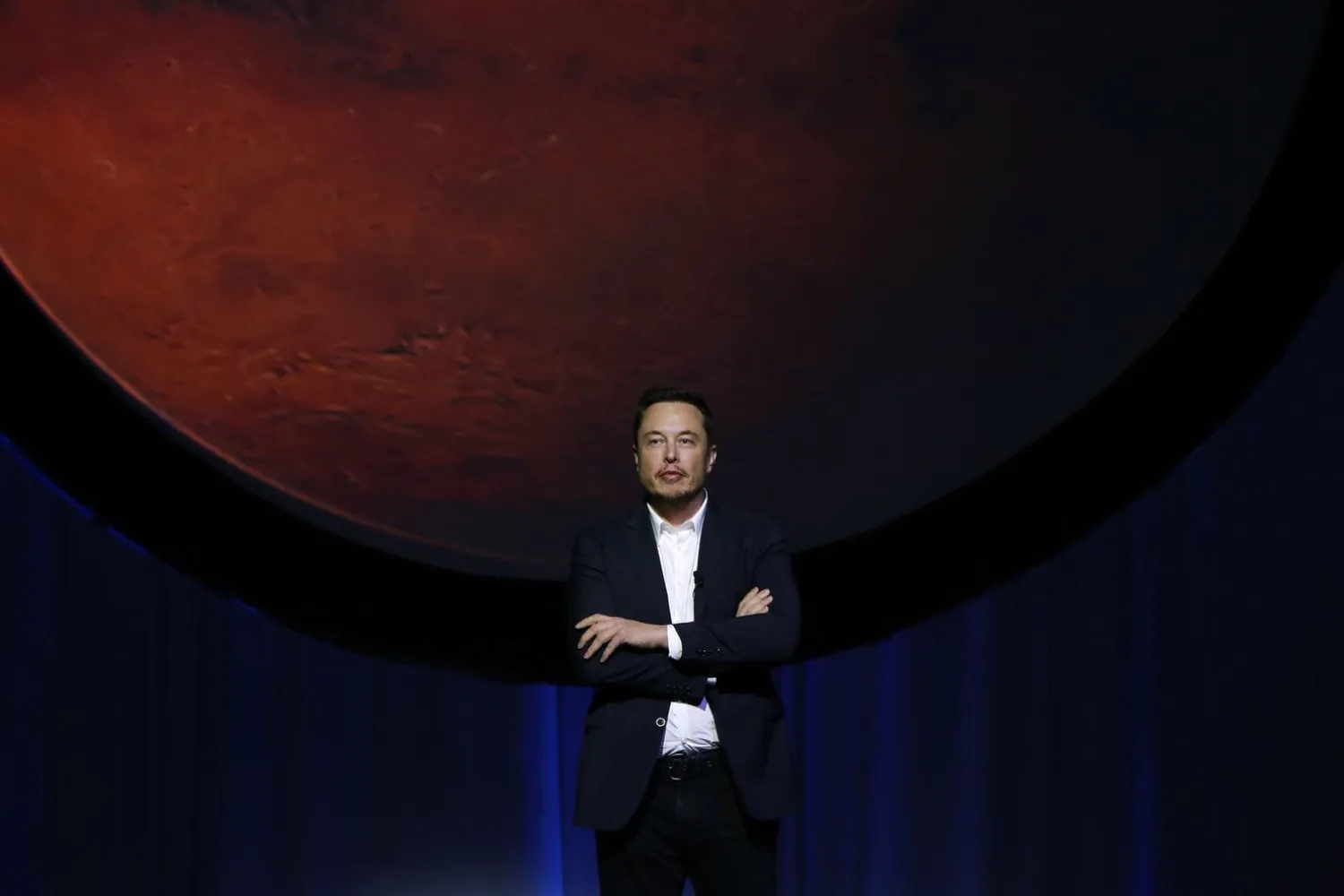
Behind it all stands Elon Musk, the tireless salesman and visionary who has captured the imagination of investors for everything from a super-fast underground hyperloop to space voyages to Mars.
But Musk is struggling with the more prosaic mission of assembling a passenger car here on Earth. And in explaining a series of production misses over the past two years, some analysts say Musk has undermined his own credibility by repeatedly overpromising.
In May 2016, for example, he said in an earnings call that “as a rough guess,” Tesla would “aim to produce 100,000 to 200,000 Model 3s in the second half” of 2017. Model 3 sales in that period totaled just 1,770.
Then in August 2017, Musk said, “We remain, we believe, on track to achieve a 5,000-unit week by the end of this year.” He added that “what people should absolutely have zero concern about is that Tesla will achieve a 10,000-unit production week by the end of next year.” By October, Musk said that ramping up was “manufacturing hell” and that the company’s current forecast is for 5,000 Model 3s vehicles a week by the end of June. Investors are waiting to see the actual results.
“The company’s continued production delays since the launch of the Model 3 represent significant variance from original expectations,” Moody’s said in its downgrade on Thursday. “Tesla’s ability to meet updated weekly production targets of 2,500 by the end of March and 5,000 by the end of June will be a critical factor in assessing the company’s manufacturing capabilities and credibility in achieving production forecasts.”
In October 2016 and March 2017, Musk played down the likelihood that Tesla would need to raise money to finance its expansion. Tesla ended up raising $3 billion in 2017, more than half of it in bonds now rated as junk.
To some investors, Tesla is a classic case of hype. Founded in 2003, it has not turned a profit. It has relied heavily on a California zero-emissions scheme that in 2017 amounted to a $280 million subsidy. For all the hoopla surrounding Musk, Tesla sold just 103,000 cars last year, amounting to 0.29 percent of the US auto market. Yet its market capitalization, even after a rotten week of trading, still falls just short of General Motors’, which last year sold 3 million cars in the United States — and earned $12.8 billion excluding one-time items.
Tesla’s rapidly growing revenue — $11.7 billion last year — has been propelled by generous tax breaks on federal and state levels. But investors who believe the company is overvalued note that when tax subsidies are lifted, as they have been in Georgia, Hong Kong and Denmark, then Tesla sales drop.
Although the tax bill signed by President Trump preserved the $7,500 federal tax credit for purchases of electric vehicles, the tax credit begins to phase out after a company sells 200,000 electric vehicles — a threshold both Tesla and GM expect to reach this year. That will not only reduce incentives to buy a Tesla or GM, but it will also put Tesla and GM at a competitive disadvantage with manufacturers such as BMW, Volkswagen and Volvo that are well below that threshold.
While Tesla will, even if tardy, ramp up its capacity, Moody’s warns of looming competition in the electric vehicle market. At least 36 new electric vehicles will be launched by traditional carmakers by 2021. Moody’s said that Tesla holds “no sustainable technological advantage; essentially all of the technologies incorporated in Tesla vehicles (or some similarly effective alternative technologies) will likely be available to competitors.”
Yet to others, Tesla is the tech giant of the future. Shah, who follows Tesla for Nomura Instinet, is a tech analyst, not an auto industry analyst. He compares Tesla to Intel in the 1990s, when there was a bottleneck in microprocessors that Intel resolved. And he says that the consumer appetite for a new Tesla car model — with thousands lined up for hours to put down advance deposits — rivals consumers’ interest in early iPhones.
And so Shah compares Tesla to Apple, Intel, Nvidia and Google, not to Ford Motor or GM. He measures the stock price as a multiple of revenue, and he says no car company has revenue growing like Tesla’s.
“I would bet on Elon,” Shah said in an interview. “This is the guy who launched two early stage industrial manufacturing companies in 2008 and made it out alive with a combined market capitalization of over $60 billion.” Now, he said, Musk employs 37,000 people, many of whom are willing to take half their compensation in stock.
“Part of our enthusiasm for Tesla is due to the brand,” Shah said. “It’s a phenomenal brand.”
Moreover, he thinks Tesla does hold a technological advantage, despite Moody’s assessment. He says Tesla’s batteries made in its Gigafactory in Nevada are far more advanced than the industry average, giving Tesla’s cars greater range and, someday, possibly lower prices. “This lead they have is only going to expand,” he said.
However, widespread doubt persists. The number of short-sellers — investors who make money when a stock price falls — is unusually high, with positions equal to 22.53 percent of outstanding shares.
Musk owns 19.9 percent of the company, but in recent months, some other big shareholders sold out. Toyota sold all of its shares last summer, and late last year, Wellington Management, a private investment firm, sold almost its entire stake. Others have trimmed their positions.
One buyer: Goldman Sachs, which has been an underwriter for Tesla stock and debt offerings.
Tesla has also lost some top executives, including the chief financial officer and the head of human resources. In March, one of the departing executives was the chief accounting officer, who left after 18 months on the job and gave up millions of dollars of stock grants that had not yet vested. A few days later, the treasurer left.
It also saw departures of senior executives in battery technology and the two co-founders of SolarCity, the ailing solar-installation company that Tesla spent $2.6 billion to buy in 2016.
The SolarCity co-founders are cousins of Musk. Minority shareholders opposed to that purchase have filed a lawsuit against Tesla’s chief executive and its board. On Wednesday, the Court of Chancery in Delaware said the case could move ahead.
Although car reviewers generally give high marks to Tesla, the company’s financial engineering remains an area of concern. In addition to using up $2 billion a year in cash, the company has $230 million of debt maturing in late 2018 and $920 million maturing in late 2019, Moody’s said.
Tesla has $3.4 billion in cash, but its resources “will not be sufficient to address these cash needs going forward,” Moody’s said. “We anticipate that the company will likely need to access the capital markets to raise considerable capital in the near term.”
One worrying indicator: Tesla’s accounts payable to suppliers have climbed from about $1 billion two years ago to nearly $2.5 billion in the third quarter of 2017, far outstripping the money owed to Tesla.
If the company maintains its expected pace of expansion, it will probably need to raise additional capital during 2019 to finance the growth of the Model 3 and development of two new vehicles Musk has announced, the electric semi-truck and new Model Y.
But for now, the focus is on the Model 3, which some have called the Camry killer, a car priced as low as $35,000 (though most of the car reviewers have driven the $59,000 version with additional bells and whistles).
Roughly 400,000 people have put down $1,000 deposits for the car, but whether Tesla can stake out a bigger portion of the middle-income car market remains unclear. It certainly won’t be able to without ironing out production glitches. Moody’s expects Tesla to manufacture no more than half the Model 3s it originally promised to make in 2018.
One potential rival is Chevrolet’s Bolt EV. GM sold 23,000 of the Bolt in 2017, even though it went on sale in all 50 states only halfway through the year. It’s the only car other than Tesla’s to break the 200-mile-range barrier. And it does it at a much more affordable price.
Among other luxury carmakers, Jaguar has introduced its new I-PACE electric SUV, which will be available in showrooms this summer. It’s initially priced nearly $10,000 less than the Tesla Model X. Audi has a rival car coming, too, that would be $14,000 cheaper.
But the people who have driven up the value of the company into the league of Ford and GM expect much more from Tesla and Musk.
“I think he and what he’s created is amazing,” Shah said, “and I just don’t think you can bet against them.”
Asked whether Tesla might simply turn out to be a profitable niche carmaker, Shah disagreed.
As he put it: “Something tells me they’re either going to go to the stratosphere, or they’re going to go to the basement. The outcomes are going to be binary.”
(The Washington Post)


