


Hariri: Lebanon Not a Mailbox for Regional Messages

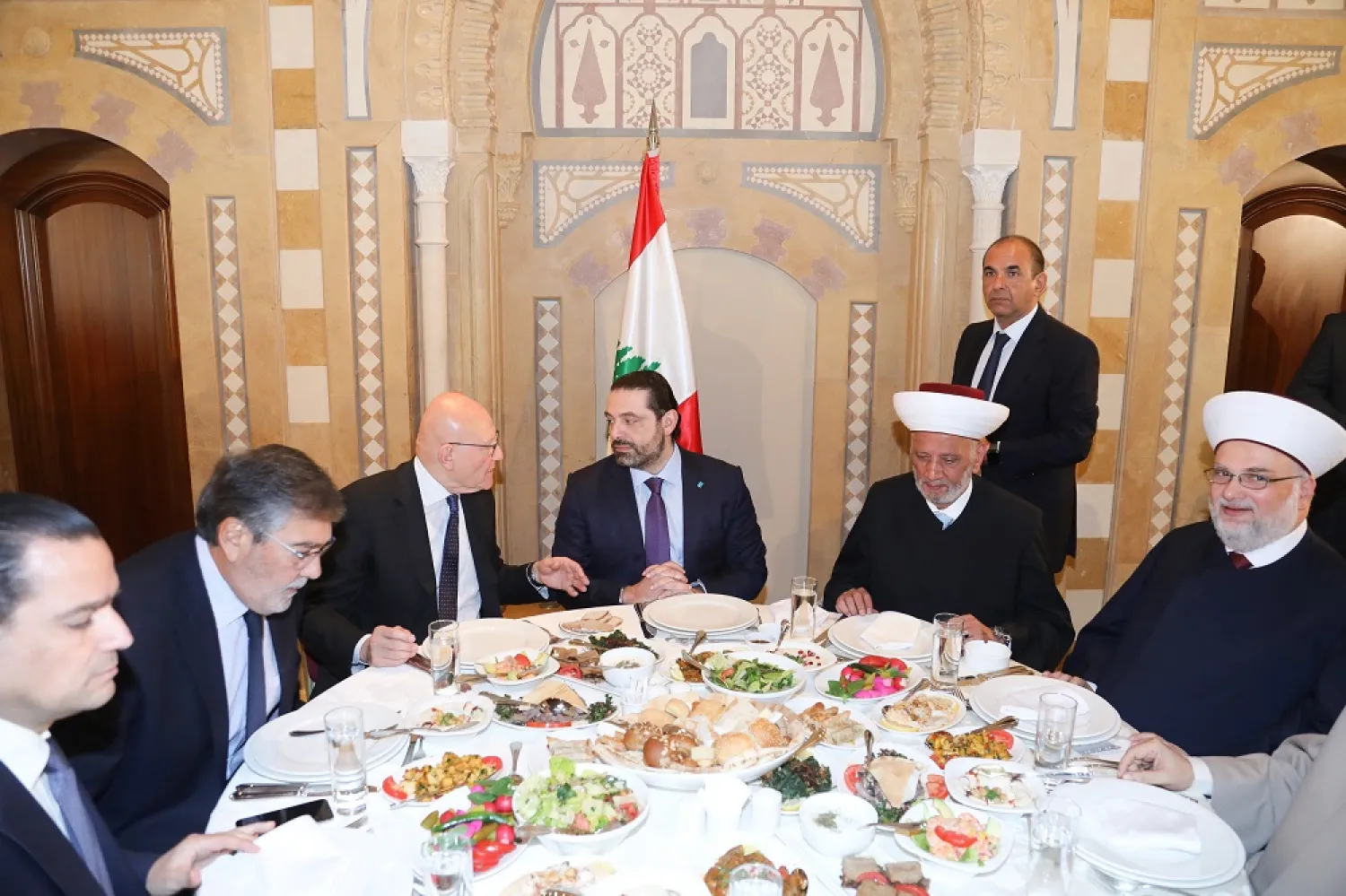
Lebanese PM Saad Hariri holds a luncheon banquet Tuesday in Beirut in honor of the Grand Mufti Sheikh Abdul Latif Darian. (Dalati & Nohra)
TT

Hariri: Lebanon Not a Mailbox for Regional Messages

Lebanese PM Saad Hariri holds a luncheon banquet Tuesday in Beirut in honor of the Grand Mufti Sheikh Abdul Latif Darian. (Dalati & Nohra)

Prime Minister Saad Hariri stressed Tuesday on the need for Lebanon to commit to the policy of disassociation from regional conflicts in wake of the ongoing crises in the region, especially the military developments that resulted from the chemical attacks in Syria’s Douma.

“Some are trying to circumvent the rules of disassociation and are using electoral and media platforms to attack Arab brothers,” Hariri said during a luncheon banquet held at Beirut’s Center House.

The event was held in honor of Grand Mufti Sheikh Abdul Latif Darian and a number of scholars and clerics.

The PM refused for some parties to transform Lebanon into a “mailbox” to send political and military messages on behalf of the regional powers.

He made his remarks in an indirect reference to “Hezbollah” chief Hassan Nasrallah.

Meanwhile, the families of Islamist prisoners threatened on Tuesday to prevent the May 6 parliamentary elections by blocking roads across the country in case parliament does not approve a proposed general amnesty law.

The families said they would also boycott the elections, to exert pressure on Hariri’s Mustaqbal Movement.

A meeting is expected between those families and the Prime Minister soon to discuss the new developments that halted an amnesty law ahead of the parliamentary elections.

Two days ago, Justice Minister Salim Jreissati said following a meeting with Speaker Nabih Berri that the amnesty law “is a political decision taken by political consensus, and now there are no ongoing projects related to the pardon.”

The minister’s comments created shock among the families of Islamist prisoners, who had expected an amnesty before the end of this month.

On Tuesday, they started taking escalatory measures by blocking off roads in northern Lebanon.
The families will determine their next move after holding talks with the premier.

“We plan to ask for a meeting with the Prime Minister to learn what happened. We do not want to misjudge any party. Hariri is in contact with all politicians and therefore he knows what prompted the surprising change in their position,” Sheikh Salem al-Rifai, head of the Muslim Clerics' League told Asharq Al-Awsat on Tuesday.

The cleric asserted that the families of Islamist prisoners would not take any escalatory measures before inquiring about what happened.



Israeli Far-Right Minister to Push for ‘Migration’ of West Bank, Gaza Palestinians 

A Palestinian man checks leather belts as people prepare for Ramadan, in the old city of Hebron in the Israeli-occupied West Bank, February 17,2026. (Reuters)
TT

Israeli Far-Right Minister to Push for ‘Migration’ of West Bank, Gaza Palestinians 

A Palestinian man checks leather belts as people prepare for Ramadan, in the old city of Hebron in the Israeli-occupied West Bank, February 17,2026. (Reuters)

Israel's far-right Finance Minister Bezalel Smotrich said he would pursue a policy of "encouraging the migration" of Palestinians from the occupied West Bank and Gaza Strip, Israeli media reported Wednesday.

"We will eliminate the idea of an Arab terror state," said Smotrich, speaking at an event organized by his Religious Zionism Party late on Tuesday.

"We will finally, formally, and in practical terms nullify the cursed Oslo Accords and embark on a path toward sovereignty, while encouraging emigration from both Gaza and Judea and Samaria.

"There is no other long-term solution," added Smotrich, who himself lives in a settlement in the West Bank.

Since last week, Israel has approved a series of measures backed by far-right ministers to tighten control over the West Bank, including in areas administered by the Palestinian Authority under the Oslo Accords, in place since the 1990s.

The measures include a process to register land in the West Bank as "state property" and facilitate direct purchases of land by Jewish Israelis.

The measures have triggered widespread international outrage.

On Tuesday, the UN missions of 85 countries condemned the measures, which critics say amount to de facto annexation of the Palestinian territory.

"We strongly condemn unilateral Israeli decisions and measures aimed at expanding Israel's unlawful presence in the West Bank," they said in a statement.

"Such decisions are contrary to Israel's obligations under international law and must be immediately reversed.

"We underline in this regard our strong opposition to any form of annexation."

UN Secretary-General Antonio Guterres on Monday called on Israel to reverse its land registration policy, calling it "destabilizing" and "unlawful".

The West Bank would form the largest part of any future Palestinian state. Many on Israel's religious right view it as Israeli land.

Israeli NGOs have also raised the alarm over a settlement plan signed by the government which they say would mark the first expansion of Jerusalem's borders into the occupied West Bank since 1967.

The planned development, announced by Israel's Ministry of Construction and Housing, is formally a westward expansion of the Geva Binyamin, or Adam, settlement situated northeast of Jerusalem in the West Bank.

The current Israeli government has fast-tracked settlement expansion, approving a record 52 settlements in 2025.

Excluding Israeli-annexed east Jerusalem, more than 500,000 Israelis live in West Bank settlements and outposts, which are illegal under international law.


Maliki Can Withdraw as Candidacy as Iraq PM the Easy or Hard Way

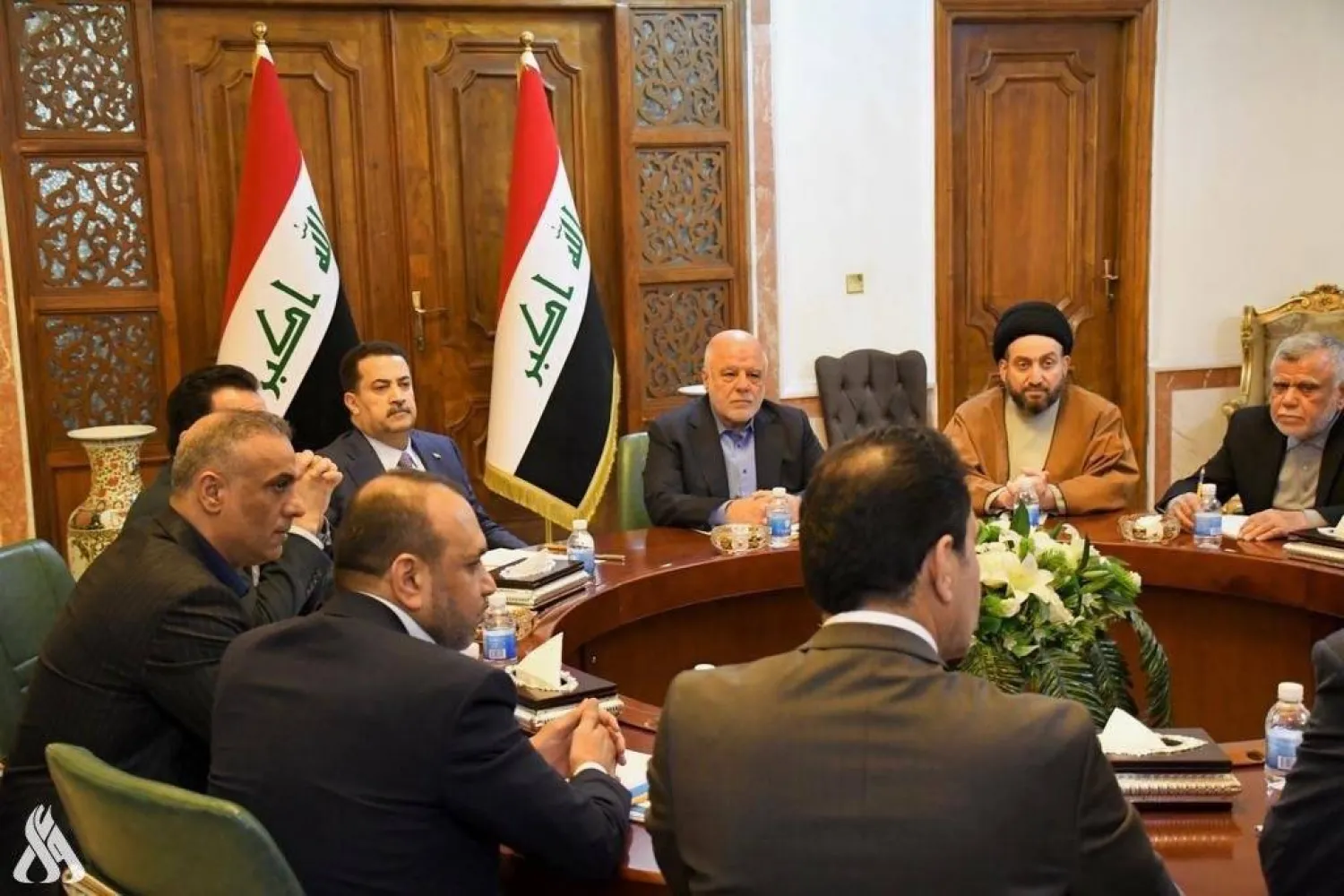
Members of the Coordination Framework hold a meeting. (Iraqi News Agency)
TT

Maliki Can Withdraw as Candidacy as Iraq PM the Easy or Hard Way

Members of the Coordination Framework hold a meeting. (Iraqi News Agency)

Iraqi Former Prime Minister Nouri al-Maliki declined at the last minute to attend a meeting of the pro-Iran Coordination Framework on Monday night that was aimed at settling the crisis over his nomination as prime minister.

Instead of declaring that he was pulling out as candidate, as had been expected, Maliki informed his close circle that he is “following through with his nomination to the end,” trusted sources told Asharq Al-Awsat.

Iraq has come under intense pressure from the US to withdraw the nomination. In January, President Donald Trump warned Baghdad against picking Maliki as its PM, saying the United States would no longer help the country.

“Last time Maliki was in power, the Country descended into poverty and total chaos. That should not be allowed to happen again. Because of his insane policies and ideologies, if elected, the United States of America will no longer help Iraq,” Trump wrote on Truth Social.

Maliki also dismissed as “extortion and intimidation” talks of renewed US sanctions on Iraq, added the sources.

However, circles within the Coordination Framework have started to “despair” with the impasse over naming a new prime minister and are weighing the possibility of taking “difficult” choices, they revealed. Maliki has become a prisoner of his own nomination.

The Sunni Progress Party (Takadum) had voiced its reservations over Maliki’s nomination before Trump made his position clear and which has since weighed heavily on Iraq.

‘Indefinitely’

Maliki’s decision to skip the Framework’s meeting on Monday forced the coalition to postpone it “indefinitely”, exposing more differences inside the alliance that have been festering for months. The dispute over the post of prime minister is threatening to evolve into one that threatens the unity of the coalition itself.

Several sources told Asharq Al-Awsat that Maliki had sent the Framework a written message on Monday night informing them that he will not attend the meeting because “he was aware that discussions will seek to pressure him to withdraw his candidacy.”

Maliki was the one to call for the meeting to convene in the first place, they revealed.

Reports have been rife in Iraq that Shiite, Sunni and Kurdish political leaderships have all received warnings that the US would take measure against Iraq if Maliki continued to insist on his nomination.

Former Foreign Minister Hoshyar Zebari told Dijlah TV that “Shiite parties” had received two new American messages reiterating the rejection of Maliki’s nomination.

Necessary choice

Maliki and the Framework are now at an impasse, with the latter hoping the former PM would take it upon himself to withdraw his candidacy in what a leading Shiite figure said would help protect the unity of the coalition.

Leading members of the coalition were hoping to give Maliki enough time to decide himself to withdraw, but as time stretches on, the coalition may take matters into its own hands and take “necessary” choices, said the figure.

Other sources revealed, however, that Maliki refuses to voluntarily withdraw from the race believing that this is a responsibility that should be shouldered by the Framework. This has effectively left the alliance with complex and limited choices to end the crisis.

Sources close to Maliki said he has made light of US threats to impose sanctions, saying that if they were to happen, Iraq will emerge on the other side stronger, citing other countries that came out stronger after enduring years of pressure.

Moreover, he is banking on an American change in position, saying mediators have volunteered to “polish his image before Trump and his team.” Members of Maliki’s State of Law coalition declined to comment on this information.

Sources inside the Framework said the coalition may “ultimately withdraw Maliki’s nomination if he becomes too much of a burden on an already weary alliance.”

Doing so may cost them a strong ally in Maliki and force the Framework to yield to Washington’s will, said the Shiite figure. “Maliki may come off as stubborn and strong, but he is wasting his realistic options at this critical political juncture,” it added.

The Framework is divided between a team that is banking on waiting to see how the US-Iran tensions will play out to resolve the crisis and on Maliki voluntarily withdrawing his nomination. The other team is calling for the coalition to resolve the crisis through an internal vote.

Leading Shiite figures told Asharq Al-Awsat that opponents of Maliki’s nomination in the coalition have no choice but to apply internal pressure inside the Framework, which is on the verge of collapse.


Australia Bars Citizen Held in Syria’s Roj Camp from Returning Home

Members of Australian families believed to be linked to ISIS leave Roj camp near Derik, Syria February 16, 2026. REUTERS/Orhan Qereman
TT

Australia Bars Citizen Held in Syria’s Roj Camp from Returning Home

Members of Australian families believed to be linked to ISIS leave Roj camp near Derik, Syria February 16, 2026. REUTERS/Orhan Qereman

Australia has barred one of its citizens from returning home from a Syrian detention camp because of security concerns, the government said Wednesday.

The unidentified person is among a group of 34 Australian women and children at the Roj camp related to suspected members of ISIS.

"I can confirm that one individual in this cohort has been issued a temporary exclusion order, which was made on advice from security agencies," Home Affairs Minister Tony Burke said in a statement sent to AFP.

"At this stage security agencies have not provided advice that other members of the cohort meet the required legal thresholds for temporary exclusion orders."

The minister can make temporary exclusion orders lasting up to two years to prevent terrorist activities or politically motivated violence.

The Australians were released from the camp on Monday but failed to reach the capital Damascus on their way home, a Kurdish official told AFP in Syria.

The official said they were turned back to the detention camp, citing "poor coordination" with the Syrian authorities.

Prime Minister Anthony Albanese underscored his government's refusal to help repatriate the women and children.

"You make your bed, you lie in it," he said, accusing the group of aligning with an ideology that seeks to "undermine and destroy our way of life".

"We are doing nothing to repatriate or to assist these people," he told reporters Wednesday.

"I think it's unfortunate that children are caught up in this. That's not their decision but it's the decision of their parents or their mother."

The humanitarian organization Save the Children Australia filed a lawsuit in 2023 on behalf of 11 women and 20 children in Syria, seeking their repatriation.

But the Federal Court ruled against Save the Children, saying the Australian government did not control their detention in Syria.