When Women Were Forced to Choose between Faith and Football

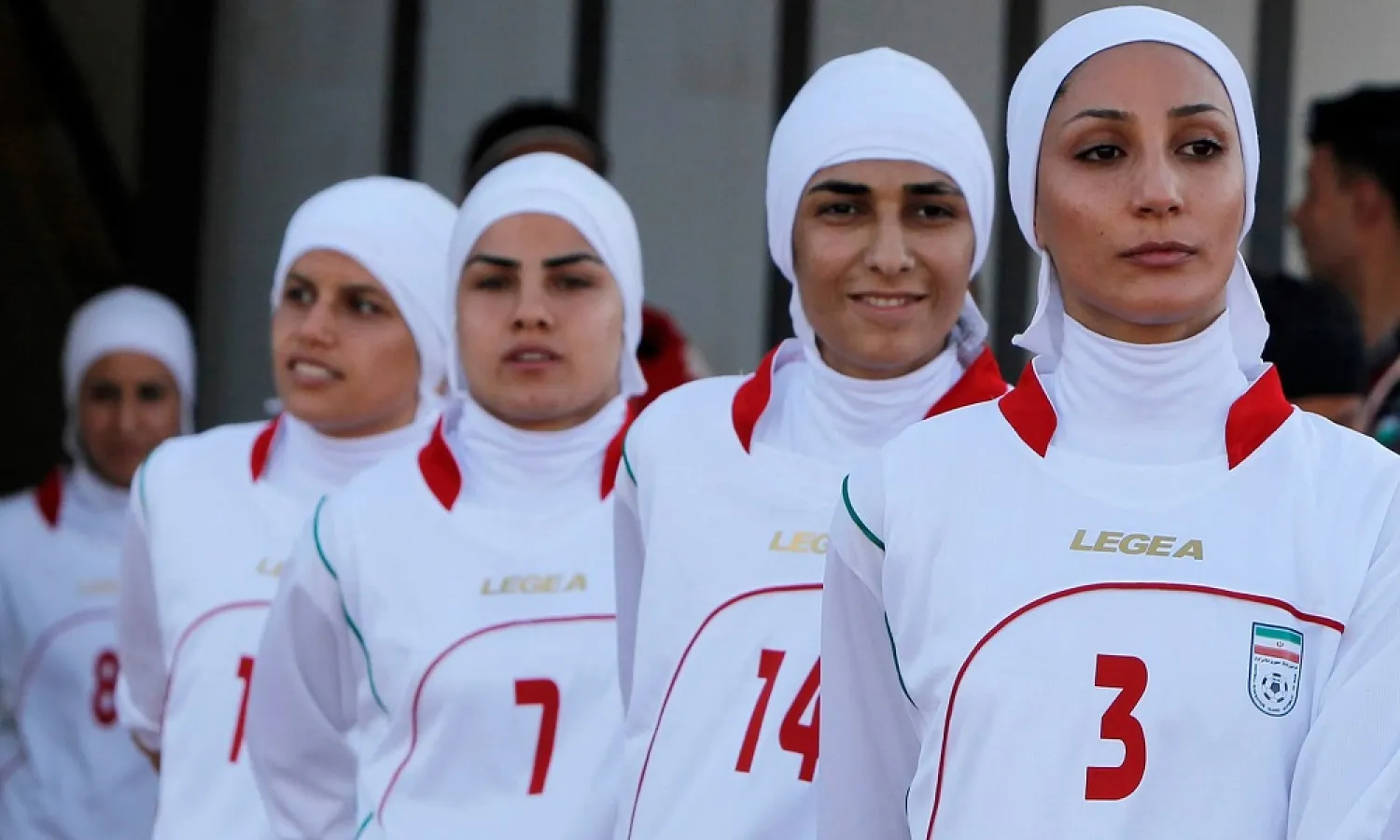
Iran were prevented from playing a 2011 Olympic qualifying match against Jordan because of their hijabs. (Reuters)
TT

When Women Were Forced to Choose between Faith and Football

Iran were prevented from playing a 2011 Olympic qualifying match against Jordan because of their hijabs. (Reuters)

Football is full of incredible histories, many that remain undocumented and unknown. In particular, women’s football history gets left aside. There are efforts by historians and football lovers to educate the public on the incredible contributions of women in football. On International Women’s Day, I was at the National Football Museum in Manchester for a women’s football conference to present on football and the hijab to a room of academics and researchers. Although there is much to be celebrated, there is still a sordid past that, as footballers, supporters and writers, we must understand in order to do justice to the beautiful game. There are stories that are hard to tell but must be told.

Asmahan Mansour. That name has stayed with me for more than 10 years. Mansour was the Canadian girl at the center of what would become an exclusionary ruling by Fifa to ban the hijab from the pitch. In 2007, the young footballer from Ontario attempted to wear a headscarf at a tournament and was not permitted to play by the referee. She was told she could remove it and play but her hijab would not be permitted on the pitch. Her team, from the capital, Ottawa, withdrew from the event in the Québécois city of Laval in response.

The issue with Mansour went to the Canadian Soccer Association and then to Fifa, which decided to uphold the ban and create a policy around it but exempted head coverings that exposed the neck. Despite the fact there was no empirical data or evidence on file that a hijab could strangle a player or injure an opponent, the equipment regulation concluded it was dangerous. This was the basis under which the referee ejected Mansour.

The net result was Mansour did not play. Nor did thousands of girls and women for almost seven years afterwards.

Initially Fifa cited “religious symbolism” as a reason for not permitting head coverings. But that was too difficult to enforce considering the multitude of tattoos, signing of the cross and goal celebrations by prominent male footballers that would have had to be monitored and enforced. So it stuck with “health and safety” as a weak shield for its policy.

In a 2011 Olympic qualifying match against Jordan, Iran’s women’s team were banned from playing because of their hijabs. They wore hijabs that were supposed to meet Fifa standards. Heartbroken and frustrated, the women left the pitch. Their dreams of Olympic football lay in tatters. Photographs of the sobbing players were plastered over the media. This was not a case of Muslim women being oppressed by their faith, it was a serious case of women being excluded by draconian rules, steeped in gendered Islamophobia and ignorance, that were created by men.

Even the young Mansour felt the pain of exclusion when she told CBC News: “I thought it was disappointing because I thought I would actually make a difference but I didn’t.”

But football dreams were not over. In came supporters, including Moya Dodd of the Asian Football Confederation, Assmaah Helal, a player and activist, and Prince Ali bin al-Hussein of Jordan, the then vice-president of Fifa and head of the Jordanian Football Association. They spearheaded campaigns and partnered with Right 2 Wear, the United Nations and Fifpro to put pressure on Fifa to approve the hijab.

Women came to the rescue with designs and practical solutions for problems created by men; problems that kept thousands of people away from the sport they love.

Companies such as Capsters and ResportOn designed sports hijabs with safety recommendations from the International Football Association Board, the decision-making body for the laws of the game.

As the research and work continued, Muslim women were effectively sidelined. They were not encouraged to join regional or national teams because their status was unknown. Would they have to choose between faith and football? Why was this a choice that had to be made in the first place?

On March 1, 2014, after much discussion, testing and clarification, Jérôme Valcke, Fifa’s then secretary general, announced that religious head coverings (including hijabs, turbans for Sikh men and kippahs for Jewish men) would be permitted on the pitch. The understanding was the head-coverings would meet Ifab medical regulations.

Muslim women footballers all over the world – and the respective federations – heaved collective sighs of relief. But only after countless budding footballers lost out.

In October 2016, less than two years after the hijab ban was overturned, the Under-17 Women’s World Cup was held in Amman, Jordan. It was the first time the hijab would be permitted, and more importantly welcomed, at a major Fifa tournament. It was also the first Fifa tournament to be hosted in the Middle East.

It was an important – yet largely overlooked – moment in football. This victory came after much blood, sweat and toil of advocates and players who refused to give up and believed strongly in their connection and right to play. I tell tales about racialized women who might have been made to stay away from football but persevered with help from allies and guardians of the game.

Football is for all of us. Sometimes it just takes women to prove it.

The Guardian Sport


Irish Boxer Lee Reeves Dies at Age 31, Three Months after Dublin Title Fight Injury

Irish boxer Lee Reeves. Reuters
TT

Irish Boxer Lee Reeves Dies at Age 31, Three Months after Dublin Title Fight Injury

Irish boxer Lee Reeves. Reuters

Irish boxer Lee Reeves has died more than three months after being injured during a fight in Dublin, promoter Queensberry said Tuesday. He was 31.

"Everyone at Queensberry is devastated to learn of the passing of Lee Reeves," Queensberry Promotions said in a statement.

Reeves was hospitalized after being knocked out by compatriot Gary Cully in the 10th and final round of their Boxing Union of Ireland Celtic super-lightweight title fight on Aug. 1.

Reeves was carried from the ring on a stretcher after receiving initial treatment.

Queensberry had said after the fight that his condition was critical but stable.

“Lee was an immensely talented boxer, as well as a true role model and inspiration to his community,” the statement added Tuesday, according to The Associated Press. “Our deepest condolences go to Lee’s family, friends and all those who loved him. We ask that their privacy be respected at this incredibly difficult time. Rest in peace, Lee.”


Alonso to Enter Dakar Rally with Loeb and Aston Martin Team

November 5, 2026 Aston Martin's Fernando Alonso during a press conference ahead of the F1 Sao Paulo Grand Prix. (Reuters)
TT

Alonso to Enter Dakar Rally with Loeb and Aston Martin Team

November 5, 2026 Aston Martin's Fernando Alonso during a press conference ahead of the F1 Sao Paulo Grand Prix. (Reuters)

Double Formula One champion Fernando Alonso will compete in next January's Dakar Rally in an Aston Martin Dreadnought entry run by engineering partner Prodrive.

The 45-year-old Spaniard, a 32-time Grand Prix winner and two-time Le Mans 24 Hours winner, will be racing in the annual event for the second time after competing with Toyota in 2020, finishing 13th.

France's nine-time world rally champion Sebastien Loeb and Brazil's reigning world rally-raid champion Lucas Moraes will be his teammates in a three-car entry.

The 49th edition of the Dakar Rally will ‌be held in ‌Morocco from January 9 to 23, with a prologue and first ‌stage ⁠in Portugal, after ⁠being moved from Saudi Arabia due to security concerns.

The 24-round Formula One season is due to start in Bahrain in March after testing in late February.

Alonso, who will again have compatriot and five-time motorcycle Dakar winner Marc Coma as co-driver, is racing in the Las Vegas Grand Prix this weekend. He said he had turned his thoughts to Dakar after deciding to continue in Formula One with Aston Martin.

“In the end, the decision became simple. I wanted to embrace ⁠the challenge completely and take on both Formula One and the ‌Dakar Rally in the same year," he explained in ‌a statement.

"In 2020, Dakar was one of the most challenging and enjoyable experiences of my career. ‌I have enormous respect for this race and the specialists who have mastered it.

"Formula One ‌remains my priority. But I am a racing driver, and challenges like this are why I love competing. I’m looking forward to seeing what we can achieve."

LOEB CHASES FIRST DAKAR WIN

In October, Alonso told reporters at the Singapore Grand Prix that he felt the desert endurance race would be physically ‌incompatible with his Formula One commitments.

Loeb, 52, will also be chasing a first Dakar win after 10 previous attempts that have brought ⁠him 28 stage ⁠wins to date.

“Winning the Dakar is very important to me,” said the Frenchman, who will be partnered by Belgian Fabian Lurquin. “We have come close several times, and the motivation is there to keep working until we achieve it."

The Dreadnought is a digital-only tactical SUV created exclusively for gamers playing "Call of Duty: Modern Warfare 4" that will now be brought into the real world by Prodrive, Aston Martin's partners in endurance GT racing.

The Dakar will be Aston Martin Racing’s debut in the world rally-raid championship.

"Aston Martin's ambition for this program has been clear from the outset: to create a car capable of competing at the front of the world's toughest motorsport event," said Prodrive Chairman David Richards.

"By combining Aston Martin's vision with Prodrive's experience in rallying, endurance racing and Dakar competition, we have built a strong foundation. With an exceptional driver line-up and a highly capable engineering team, we look forward to seeing Dreadnought take on this remarkable challenge."


Owono Does Not Deserve 12-Match Ban Over De Miguel Death, Says Andorra Owner Pique

Equatorial Guinea's goalkeeper #01 Jesus Owono leaves the pitch at half time during the Africa Cup of Nations (CAN) Group E football match between Equatorial Guinea and Algeria at Moulay Hassan Stadium in Rabat on December 31, 2025. (AFP)
TT

Owono Does Not Deserve 12-Match Ban Over De Miguel Death, Says Andorra Owner Pique

Equatorial Guinea's goalkeeper #01 Jesus Owono leaves the pitch at half time during the Africa Cup of Nations (CAN) Group E football match between Equatorial Guinea and Algeria at Moulay Hassan Stadium in Rabat on December 31, 2025. (AFP)

FC Andorra owner Gerard ‌Pique said goalkeeper Jesus Owono did not deserve the 12-match suspension he received following the challenge that led to the death of Tenerife forward Jesus de Miguel.

Owono and De Miguel collided during a Spanish second-tier match on November 2. De Miguel was taken to intensive care and died the following day.

The disciplinary committee of the Spanish football federation (RFEF) banned Owono for violent conduct which resulted in serious ‌injury last week.

"Players, ‌former players, coaches, goalkeepers, everyone has ‌called ⁠it an accident," ⁠Pique said in a video posted on social media late on Monday.

"I truly believe that imposing the maximum sanction on Jesus for this action puts him in a situation he does not deserve, because he is not to blame for all of ⁠this having happened."

Former Barcelona player Pique ‌pointed to the three-match ‌ban handed to Albacete's Jose Corpas for accidentally kicking Sabadell ‌player Quadri Liameed in the head during a ‌recent match in Spain.

"Fortunately Quadri is fine, the consequences in this case were not fatal, and the committee decided to sanction Corpas with three matches," Pique added.

"With ‌all this, my reflection is: what is being sanctioned, the action or the ⁠consequences?"

The RFEF ⁠did not immediately respond to a request for comment outside regular business hours in Spain.

Owono, 25, has withdrawn from Equatorial Guinea's squad for Africa Cup of Nations qualifiers against Zimbabwe this month and Pique said it was unlikely the goalkeeper would return to action as soon as his suspension is up.

"Jesus is going to need far more than 12 matches before he is available and able to compete," he added. "No sanction is going to bring Demi (De Miguel) back to us."