


When it is Urgent Not to Learn from History

When it is Urgent Not to Learn from History
TT

When it is Urgent Not to Learn from History

When it is Urgent Not to Learn from History

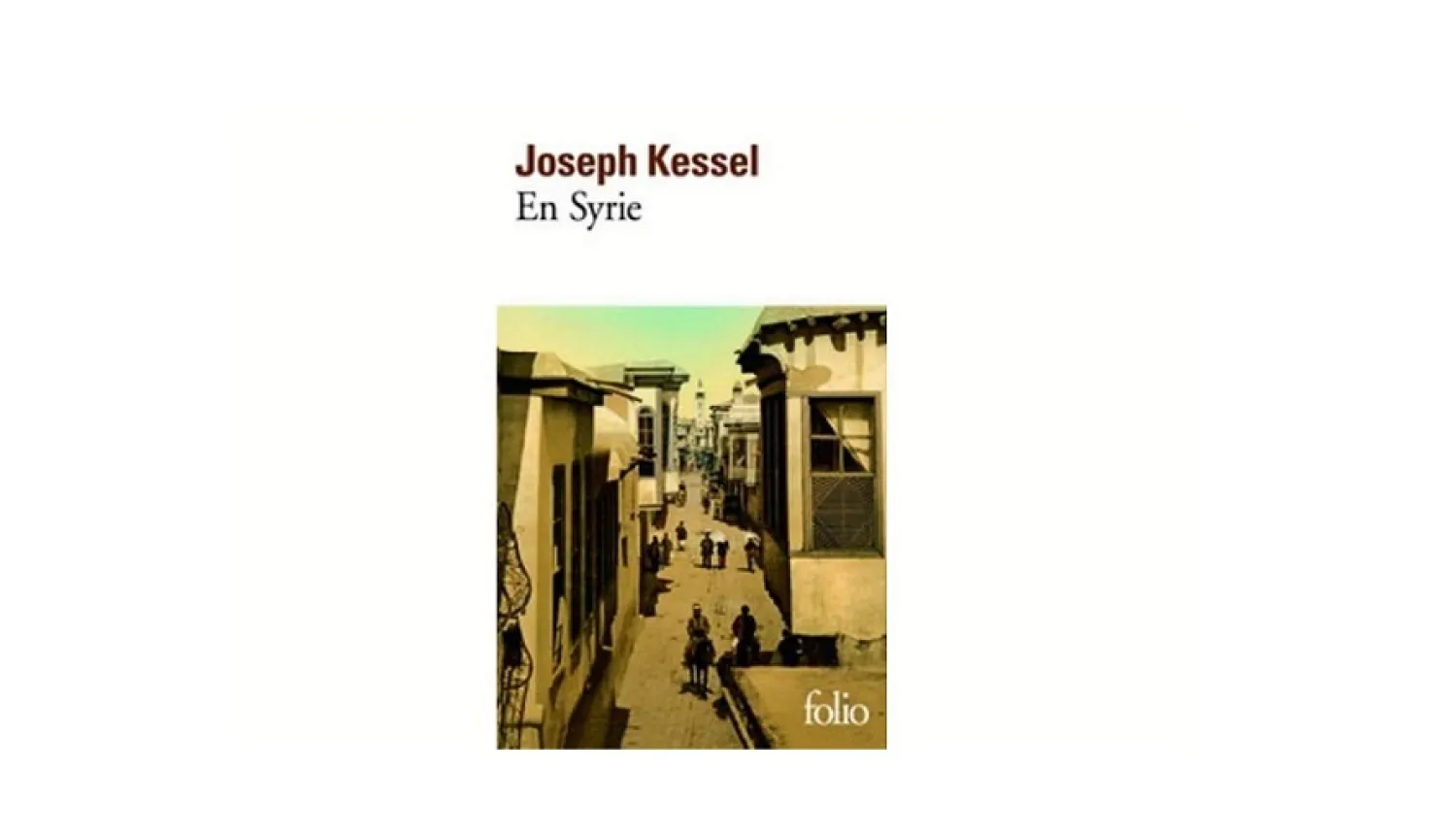
IN SYRIA
By: Joseph Kessel
Published by: Folio, Paris, 2018

“What to do about Syria?” For almost seven years that question has provided the theme of countless conferences, seminars and diplomatic negotiations across the globe without the ghost of an answer taking shape on the horizon.

Surprised? You shouldn’t be.

For the question isn’t new; it was first posed in the aftermath of the First World War with the disintegration of the Ottoman Empire which Syria was part of.

It was to find an answer to that question that in 1925 Joseph Kessel, then a rising star of French journalism, visited the newly-created French “mandate” for reportage on a revolt against foreign rule.

Kessel’s reportage was published in 10 installments and subsequently re-issued as a book that became a classic of French journalism. Kessel himself went on to morph into a novelist and ultimately a member of the French Academy. A new edition of “In Syria” has just been published in Paris in response to widening public interest in what has become the defining international issue of our generation.

During his stay in Syria, spanning several weeks, Kessel tried to meet and interview as many people as possible. We see the reporter talking to tribal chiefs, business leaders, religious personalities, French military commanders and the proverbial “man-in-the-street”.

A good part of Kessel’s series of reportages consists of mini-travelogues that portray Syria as a beautiful land endowed with incredible natural variety and human diversity. Ghouta on the outskirts of Damascus, recently the scene of deadly chemical attacks by Bashar al-Assad’s forces, is depicted as “a lake of greenery” with breathtakingly beautiful gardens and orchards.

A dinner with chiefs from the Shammar tribe, just relocating from Iraq because they didn’t like “English intervention” in their lives, provides a brief but poignant lesson in ethnography and the “dialogue of civilizations.”
“The English want us to stop fighting ghazwa, and send our boys, and even girls, to school,” one tribal chief complains. “If we do that, what would be left of our traditions?”

The chief prefers the French because, as Kessel puts it only half-jokingly, they have no clue as what to do in Syria.

Very early on in his travels, Kessel finds out that the French have simply no idea how to deal with a restive land that effuses to submit to their rule. Their response to the popular uprising has three aspects.

The first is to mobilize the minorities, that is to say the Christians, then numbering 500,000, the Alawites, around 100,000 and the Druze some 50,000 against the Muslim majority of more than 4.5 million. Even then, it is among the smaller minorities, especially the Circassian (Charkess) and the Turcoman that French military commanders find their most loyal and ardent fighters.

An elite Charkess unit is led by one Captain Collet, whom Kessel builds up as the French version of the English adventurer nicknamed “Lawrence of Arabia”.

The next aspect of the French strategy is to divide the land-mass they have inherited from the Ottomans into “useful Syria” and “the vast expanses of wasteland” not worth fighting for.

Just as Russia is currently trying to carve Syria into five units as “de-escalation zones” the French believed toyed with their own version of salami politics. They had already carved up an enclave for Maronite Christians in Lebanon and had ceded another portion to Turkey to secure their northeastern flank and were toying with the idea of rewarding the Alawites, wrongly seen as loyal collaborators, with a mini-state of their own on the Mediterranean.

At the time Kessel was on reportage, the French “salami” policy in Syria was presented as a scheme for the creation of a federal state, an idea that found few enthusiasts among the “natives”.

All along Paris knew that military force alone won’t do the trick. Having just emerged from the First World War with more than a million dead, France simply didn’t have the manpower to commit to an endless colonial war. Moreover, crushing the Syrian revolt was costly at a time French finances had not recovered from the shock of the nation’s 1914-1918 life-and-death struggle against Germany.

In one of those interesting quirks of history France in Syria in the 1920s was in a position similar to what Russia finds itself in Syria today; shortage of manpower and lack of money to stay engaged in a deadly marathon.

Keeping his tongue in his cheek, Kessel reports on the many “miracle solutions” offered by all sorts of pundits and self-styled strategists to solve “the Syrian problem.” He concludes by dismissing all of them, ending up with a note of almost desperation about the possibility of ever finding a way out of the Syrian tragedy.

“At the end of my time in Syria, it seems to me that all systems there would be useless, as all could be defended or rejected for good and bad reasons” he writes. “There is the method of separatism, of confederation and of unity. There is {the method} of liberalism or authoritarianism. One could as much desire a king as a parliament, and support either option in a page. But none of those alternatives would work because no country is more complex, more difficult more rebellious by nature than Syria.”

Despite his sharp observations as a reporter, Kessel ends up with what looks like a bureaucratic solution for the “Syrian problem”. He calls for an end to the fast rotation of colonial officials from Paris and the commitment of more troops to the campaign against the various strands of rebellion shaking the country. Above all he calls for serious commitment by France.

“Is France capable of {making} the effort?” he demands. “If the answer is negative, the mandate is ultimately doomed to a fatal failure.”

We know that the mandate did fail in the end but not for the reason cited by Kessel. No amount of French “commitment” and “making the effort” could have succeeded for as long as the leaders in Paris, and Kessel with them, scripted the Syrian people out of their many conflicting scenarios. Worse still, they explicitly denied the very existence of such a thing as “the Syrian people.”

The ethnic, religious, sectarian and linguistic diversity of the Syrian population was seen as “irreparable division.” The possibility of unity in diversity was overlooked.

This is exactly the same mistake that the powers, above all Russia, involved in the Syrian conflict today, are making, especially by playing the sectarian card.

Much of the discussion about Syria in the chancelleries of major power, today echoes Kessel’s graphic account of what the French colonial leaders thought in those days: There is no such thing as the Syrian people and we are forced to depend on minorities to protect our strategic interests!

It is always important to learn from history. Sometimes, however, it is equally or, perhaps more, important NOT to learn from history.


Greece’s Oldest Modern-Era Museum Reopens on the Acropolis After a Major Restoration

Visitors tour the Acropolis, with the old Acropolis Museum on the left and the Parthenon on the right, as Greece's Culture Ministry presents the museum's reopening following renovation and conversion to new uses, in Athens, Greece, Monday, Nov. 23, 2026. (AP)
TT

Greece’s Oldest Modern-Era Museum Reopens on the Acropolis After a Major Restoration

Visitors tour the Acropolis, with the old Acropolis Museum on the left and the Parthenon on the right, as Greece's Culture Ministry presents the museum's reopening following renovation and conversion to new uses, in Athens, Greece, Monday, Nov. 23, 2026. (AP)

A museum that has stood on the Acropolis since 1874, making it the oldest in modern Greece, reopened Monday after a high-tech makeover.

The squat stone building often goes unnoticed by visitors. It had been closed to the public since 2007, three years before the country was plunged into a massive financial crisis.

The seven-year restoration cost 6.2 million euros ($6.8 million), raised through public funds and private donations, Culture Minister Lina Mendoni said.

The site will host ancient artifacts never before exhibited, digital displays tracing the monuments’ 2,500-year history and a viewing gallery where Culture Ministry technicians will carry out restoration work on ancient objects.

The museum opened in 1874, making it the first museum purpose-built since modern Greece gained independence several decades earlier.

It closed in 2007, becoming an administrative building after cranes carefully lowered its renowned sculptures and other masterpieces to the new Acropolis Museum at the foot of the hill.

“For us, it was inconceivable, almost an affront, that this historic building, with its uniquely privileged location, should be converted into offices and storerooms,” Mendoni said.

“We therefore decided that the museum should reopen in accordance with its original purpose,” she said.

The Parthenon and other temples on the Acropolis remain Greece’s most visited ancient site, with more than 4.6 million admissions recorded last year.

Restoration work continues even during the peak summer months. The Parthenon recently shed its heavy scaffolding for the first time in years.

Prime Minister Kyriakos Mitsotakis attended Monday’s inauguration and described the reopening as another milestone for Greece’s cultural heritage.

He used the occasion to restate Greece’s long-running demand for the return of the Parthenon Sculptures held by the British Museum in London.

“The rightful home of these priceless masterpieces is here, beneath the Attic light and in direct proximity to the temple to which they belong,” he said, adding that Greece would not accept the return of the sculptures as a loan.

“No solution and no agreement can be based on the recognition of foreign ownership over our national treasures,” Mitsotakis said.

“I reaffirm my commitment that we will continue this effort with responsibility, seriousness and determination,” he added. “And in the end, we will succeed.”


Saudi Arabia's History, National Heritage Showcased at 'Bridge of Civilizations' Art Exhibition in Cairo

The exhibition features more than 60 visual artists from Saudi Arabia, Egypt, and Russia. (SPA)
TT

Saudi Arabia's History, National Heritage Showcased at 'Bridge of Civilizations' Art Exhibition in Cairo

The exhibition features more than 60 visual artists from Saudi Arabia, Egypt, and Russia. (SPA)

The "Bridge of Civilizations" art exhibition opened in Cairo, highlighting the power of art to foster closer ties between civilizations and peoples, reported the Saudi Press Agency on Monday.

The exhibition features more than 60 visual artists from Saudi Arabia, Egypt, and Russia, with prominent artists and art enthusiasts in attendance.

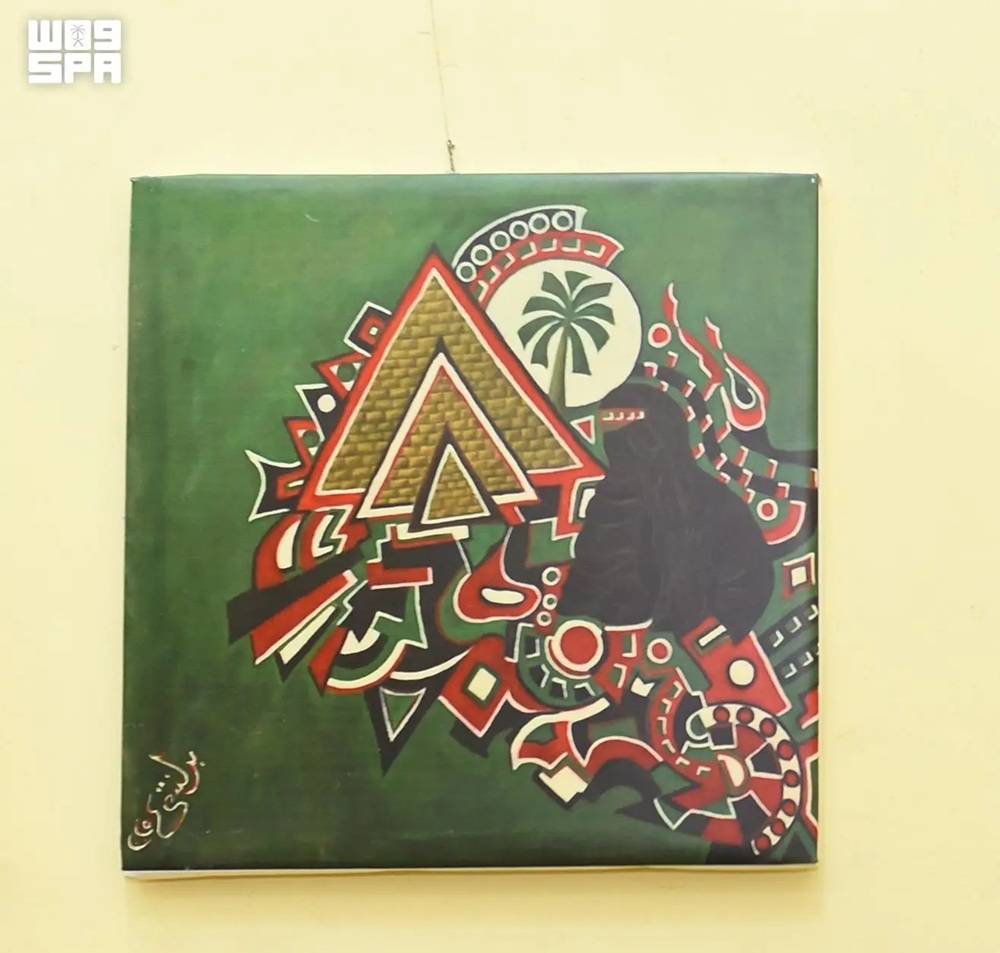
At the three-day exhibition, around 30 Saudi visual artists will present a diverse collection of works highlighting the Kingdom's history, national symbols, and heritage passed down through generations.

An artwork featured at the exhibition in Cairo. (SPA)

The Saudi artists' paintings document Islamic heritage, the Prophet Muhammad's biography, and historical sites associated with the Two Holy Mosques. They also highlight the Kingdom's development achievements, including the Haramain High Speed Railway, as well as its cultural and architectural heritage, such as Najdi Sadu weaving and Al-Masmak Palace.

Participating Saudi artists told SPA that they aim to introduce audiences to the Kingdom's history, identity, and heritage through contemporary artistic approaches while highlighting the development of visual arts in Saudi Arabia.


Red Sea Museum Showcases Jeddah's Black Coral Prayer-Bead Making Heritage

The gallery also features a wall displaying shells, molluscs and pieces of coral from the Red Sea - SPA
TT

Red Sea Museum Showcases Jeddah's Black Coral Prayer-Bead Making Heritage

The gallery also features a wall displaying shells, molluscs and pieces of coral from the Red Sea - SPA

The Red Sea Museum represents a valuable addition to Jeddah's cultural and tourism landscape, offering an educational experience that brings the history of the Red Sea to life and highlights Saudi Arabia’s rich civilization and cultural heritage associated with navigation, trade and Hajj.

As one of Saudi Arabia’s prominent cultural and educational destinations, the museum presents art exhibitions and cultural and educational programs that explore the history and civilization heritage of the Red Sea and document its connection with navigation, trade and human life through experiences that bring together visual arts, architecture, cinema and storytelling, SPA reported.

The Red Sea Museum showcases the craft of prayer-bead making. An identification label accompanying a set of prayer beads made from black coral on display at the museum bears the name of craftsman Ahmed Al-Halabi, who made the beads in Jeddah. The beads tell part of his family's history, as it is one of the oldest families known for this craft in the city.

The gallery also features a wall displaying shells, molluscs and pieces of coral from the Red Sea.

Visitors can observe coral in its natural form before seeing how the craftsman shaped black coral into beads, threaded them together to make a string of prayer beads, and designed them to pass smoothly between the fingers.
