Why are Tens of Thousands of Americans Still Driving Around with Explosive Devices in Their Cars?

via AAWSAT Ar.
via AAWSAT Ar.
TT

Why are Tens of Thousands of Americans Still Driving Around with Explosive Devices in Their Cars?

via AAWSAT Ar.
via AAWSAT Ar.

Alexander Brangman finds comfort in remembering how long his daughter lived — 26 years, 11 months, 9 hours and 15 minutes — rather than the horrible and needless way she died.

Jewel Brangman, an academic all-American in high school, about to pursue a PhD at Stanford, had no need to know much about the rental car she drove north toward Los Angeles on a sunny September Sunday almost four years ago.

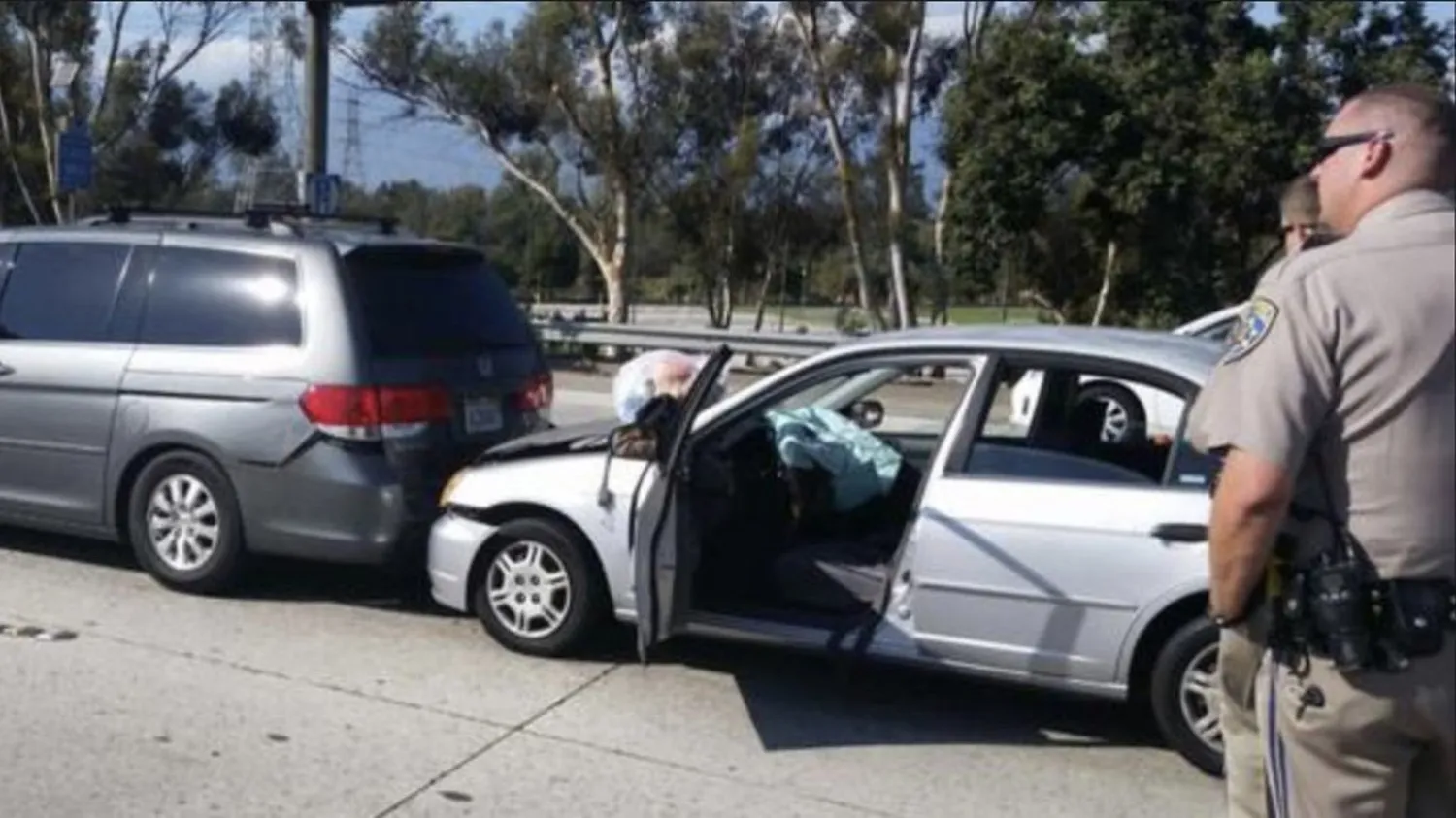
Then came a relatively minor crash — she rear-ended a minivan — and her air bag exploded with a spray of razor-sharp metal shards that severed her carotid artery.

Ten years after the biggest safety recall in U.S. history began, Honda says there are more than 60,000 vehicles on the nation’s roads equipped with what experts have called a “ticking time bomb” — defective air bags like the one that killed Brangman. The air bags, which sit about a foot from a driver’s chest, have a 50-50 chance of exploding in a fender bender.

They are the most deadly airbags remaining in the recall involving more than 37 million vehicles built by 19 automakers. At least 22 people worldwide have been killed and hundreds more permanently disfigured when the airbags that deployed to protect them instead exploded and sprayed shrapnel.

The worst among the bad bags are known as Alphas, driver-side air bags installed in Hondas that have up to a 50 percent chance they will explode on impact. The 62,307 people still driving with them, many in older-model cars that may have changed hands several times, either have ignored the recall warnings or never received them, Honda said.

With the number of deaths and disfigurements continuing to climb — the last fatality was in January — automakers and federal regulators have rewritten the rule book in their outreach efforts, including deploying teams to knock on doors of Honda owners who have not responded to recall notices.

“We’re good at repairing vehicles,” said Rick Schostek, executive vice president of Honda North America, “but finding and convincing customers of older model vehicles to complete recalls, now that has proved a difficult challenge.”

The 2001 Honda Civic that Brangman was driving came from Sunset Car Rentals, a small agency that had bought the vehicle at auction almost three years earlier, after it had been involved in a crash and was issued a salvage title. Though it had been under recall since 2009, Honda said it had mailed four recall notices without getting any response.

Brangman’s crash was the epitome of a fender bender: She struck a minivan from behind, damaging its bumper and that of the car she was driving, and buckling the hood of her car.

“There was minimal damage,” her father said. “It was highly questionable if the air bag should have deployed at all. It was something Jewel should have walked away from.”

Instead, “I walked in the USC trauma unit and what I saw was horrific: Here’s the beautiful, angelic human being that was my daughter hooked up to this monstrous life support system,” Brangman said.

The doctors told him she was brain dead.

Brangman later learned that for three weeks his daughter had been driving a rental car with a factory-equipped air bag that during the recall would come to be known as the Alpha model. A quirk in the manufacturing process caused the Alpha inflaters to be the most deadly of the lot.

The massive recall of airbag inflators made by Takata — which allegedly suppressed tests revealing the flaw and where three key executives are under federal indictment — is well known to Congress and millions of Americans who have been touched by it. But tens of thousands of drivers most at risk remain oblivious to the efforts of automakers and the National Highway Traffic Safety Administration.

“Our last hearing on the ongoing Takata fiasco is just further evidence that NHTSA is just rudderless,” said Sen. Bill Nelson (Fla.), ranking Democrat on the Committee on Commerce, Science and Transportation. “The latest data the committee has received from the automakers shows that individual automaker recall completion rates are all over the place — and millions are still waiting for replacement air bags.”

NHTSA has been without an administrator in the 15 months since Donald Trump entered the White House. The president recently proposed elevating acting director Heidi King to lead the agency. King, whose nomination will require Senate confirmation, told the Commerce Committee last month that car companies have “made progress” on the Takata recall.

“But the progress is uneven,” she said. “Overall completion rates are not where we want them to be.”

Takata airbag inflators degrade over time as they are exposed to humidity and repeated wide fluctuation in the daily temperature. That a car may change hands three or four times during a 10-year period has made the recall more difficult, with notices from the car dealer or automaker discarded by people who sold the vehicle years earlier.

While most Takata inflaters go bad over time when exposed to temperature changes and humidity, the Alpha inflaters experienced high humidity at a Takata factory in Monclova, Mexico, before they were installed.

In a 2015 response to Congress marked “confidential,” Takata acknowledged that the propellant that triggers the air bags had “been left in work stations during a prolonged shutdown of the assembly line, exposing them to humidity inside the plant.”

The Alpha bags were installed in more than 1 million Honda and Acura cars between 2001 and 2003. They caused 11 of the 15 U.S. fatalities when their Takata inflaters ruptured.

Although there had been inklings that Takata air bags could be deadly — with fatal explosions in 2003 and 2004 — the first U.S. recall was initiated by Honda in 2008.

The 10 years that followed have been replete with allegations that Takata cut corners in a rush to fill orders and that the company sought to cover up tests that revealed the severity of the problem.

The genesis of the massive recall came when Takata, then a seat-belt supplier but a minor player in the air-bag industry, came up with a cost-cutting way to make air bags. Just a few years after the 1995 Oklahoma City bombing, they used the same material that caused that explosion — ammonium nitrate — to trigger the air-bag inflaters when vehicles collide.

Ammonium nitrate — unlike the relatively stable chemical tetrazole used by other manufacturers — can become unstable, particularly when it is exposed to moisture.

Takata found a ready market for its cheaper air bags, expanding rapidly to meet the demand of newly enticed automakers, including General Motors.

GM’s air-bag supplier had been the Swedish company Autoliv, but Autoliv dropped out of the competition presented by Takata because it declined to use the volatile ammonium nitrate.

Autoliv’s decision to abandon the GM contract was first reported by the New York Times, as was the scenario that ultimately led to the charges filled against three Takata executives.After a 2002 Honda Accord air bag exploded in Alabama in 2004, Takata assured Honda that the incident was an anomaly. But at the same time Takata began testing 50 air-bag inflaters it had collected from junkyards. Even though two of them malfunctioned, Takata shut down the testing and told technicians to wipe the data from their computers, the New York Times reported. The company denied to Congress that it had ever done the testing.

Years later, NHTSA said Takata was not “being forthcoming with information” or cooperating with the “investigation of a potentially serious safety defect.”

The Justice Department fined Takata $1 billion for that failure.

“Takata has admitted to a scheme to defraud its customers by manipulating test data regarding the performance of its air-bag inflaters,” Barbara McQuade, U.S. attorney for the Eastern District of Michigan, said in announcing the fine last year. “They falsified and manipulated data because they wanted to make profits.”

McQuade also unsealed indictments against three Takata executives who were charged with manipulating test data to deceive the automakers they supplied about the safety of their air bags. The indictment said the three had known as early as 2000 that their air bags could explode.

All three of the men indicted — Shinichi Tanaka, 59; Hideo Nakajima, 65; and Tsuneo Chikaraishi, 61 — are Japanese citizens and have not been extradited to the United States.

The Washington Post


Saudi Real Estate Market Maintains Investment Momentum Despite War Fallout

Residential developments in Saudi Arabia (Ministry of Municipalities and Housing)
TT

Saudi Real Estate Market Maintains Investment Momentum Despite War Fallout

Residential developments in Saudi Arabia (Ministry of Municipalities and Housing)

Saudi Arabia's real estate market continues to attract investment despite geopolitical challenges weighing on economic activity worldwide, supported by new housing developments and efforts to expand residential supply.

The Ministry of Municipalities and Housing announced that more than 15,000 residential land plots had been made available through the Sakani platform across the Kingdom between the beginning of 2026 and the end of October, alongside additional projects launched by private-sector developers.

The developments underscore the sector's continued momentum and its importance to the Saudi economy.

Government initiatives and private-sector projects aim to expand housing supply and meet growing demand, reinforcing real estate's position as a key driver of economic growth and diversification.

Strong domestic demand and ongoing urban development projects continue to underpin the market's appeal, attracting investment from both Saudi and international investors.

Against a backdrop of geopolitical uncertainty and war-related disruptions to trade, supply chains, financing costs and construction expenses, the real estate sector has gained importance as an industry driven largely by domestic demand and capable of sustaining economic activity.

Private-Sector Investment

Despite mounting global economic volatility and geopolitical tensions, Saudi Arabia's real estate market continues to attract international investment, supported by clear economic policies, expanding development opportunities and strong housing demand.

Real estate developer Arada recently announced its entry into the Saudi market through a partnership with local company XTOPIA, backed by a SAR 50 billion ($13.3 billion) portfolio of land and development opportunities.

The partnership's first project is a SAR 14 billion residential development in Riyadh's Al Rimal district.

Riyadh Region Municipality, the Ministry of Municipalities and Housing, and the National Center for Privatization & PPP also recently announced the launch of the expression of interest, prequalification and proposal submission stages for a joint land investment project.

The initiative involves developing a municipal land plot in northern Riyadh through a 50-year partnership with the private sector, marking the municipality's first project under the joint investment model.

Real estate specialists described the initiative as an important step toward enabling private investors to develop property assets into sustainable projects with significant economic value.

They said the extended investment period would encourage developers to improve construction quality and services, strengthen project feasibility, diversify real estate offerings and increase supply in one of the capital's most expensive neighborhoods.

Balancing the Real Estate Market

The importance of releasing more residential land lies in achieving greater balance in the property market, a government objective outlined by Crown Prince and Prime Minister Mohammed bin Salman.

The strategy seeks to increase housing supply by making more land available, broadening the options accessible to Saudi citizens and enabling more households to move from searching for a home to building and owning one.

Increasing the availability of residential land, particularly in cities and governorates experiencing rising demand, could ease pressure on land prices over the medium term, provided that plot locations and sizes correspond to actual market needs.

The release of additional land also creates opportunities for real estate developers, contractors, engineering firms and building materials suppliers to benefit from anticipated demand for construction projects.

As a result, businesses across the real estate and construction supply chain could see stronger activity despite the impact of the geopolitical crisis on other economic sectors in the region.

The initiative also expands housing choices, supports efforts to increase homeownership rates and improve quality of life, and encourages urban development beyond major metropolitan centers.

Lowering Prices

Real estate developer Ahmed Omar Basoudan believes the main challenge facing Saudi Arabia's property market in the coming period will not simply be increasing the number of land plots and housing units available.

Rather, he said, the priority must be ensuring that homes reach buyers at prices they can afford, while providing adequate infrastructure and services and keeping development and construction costs under control.

Speaking to Asharq Al-Awsat, Basoudan explained that genuine balance in the real estate market depends on the availability of housing that meets buyers' needs in terms of price, location and quality, rather than simply increasing overall supply.

He said the release of more than 15,000 residential land plots during the first 10 months of the year, together with recently announced private-sector projects, reflected the government's continued commitment to expanding housing supply and providing more residential options.

Basoudan stressed that the latest real estate developments represent an important step toward addressing one of the market's most pressing challenges: achieving a sustainable balance between supply and demand, particularly amid the Kingdom's population growth and continued urban expansion.


Saudi Stocks Rebound 0.9%, Recouping Previous Session's Losses

An investor monitors stock market data on a screen at the Saudi Exchange (Tadawul) in Riyadh (Reuters)
TT

Saudi Stocks Rebound 0.9%, Recouping Previous Session's Losses

An investor monitors stock market data on a screen at the Saudi Exchange (Tadawul) in Riyadh (Reuters)

Saudi stocks closed higher on Monday, recovering some of the losses sustained in the previous session as heavyweight shares strengthened and the banking sector advanced.

The benchmark Tadawul All Share Index (TASI) rose 0.90% to close at 10,106 points, gaining 90 points. Total trading value reached approximately SAR 3.5 billion ($933 million).

The index had fallen 0.8% on Sunday amid selling pressure on heavyweight stocks.

Anaam International Holding Group, Fitaihi Holding Group and Raoom were among the session's top gainers, rising between 7% and 9% to close at SAR 11.93, SAR 2.11 and SAR 72.30, respectively.

On the losing side, Almunajem Foods led the declines, shedding 9.20% to SAR 49.94, followed by Saudi Paper Manufacturing Co., which fell 6.18% to SAR 48.88, and Alamar Foods, which dropped 4.63% to SAR 44.06.

At the sector level, banks led the gains, advancing 1.60%, supported by a 2.06% rise in Bank AlJazira shares, which closed at SAR 10.89.


Tesla to Refund Many Cybertruck Deposits as Demand Exceeds Production, Musk Says

Tesla Cybertruck electric vehicles sit parked in a storage lot in San Diego, California on April 11, 2025. (AFP)
TT

Tesla to Refund Many Cybertruck Deposits as Demand Exceeds Production, Musk Says

Tesla Cybertruck electric vehicles sit parked in a storage lot in San Diego, California on April 11, 2025. (AFP)

Tesla will have to refund Cybertruck deposits for many customers as orders far exceed production capacity, CEO Elon Musk said, following last week's announcement that the electric vehicle maker is winding down the pickup truck's production at its Texas factory.

"We will try ‌to make ‌as many as ‌possible ⁠before shutting down the ⁠line in about 8 months, but will have to return deposits for a lot of people," the billionaire said in a post on X on Monday.

The comments ⁠come after Musk said ‌Tesla would ‌add an extra production shift to fulfill outstanding ‌Cybertruck orders before dismantling the production ‌line next year to expand output of its Cybercab robotaxi.

The production winddown is slated for mid-2027, Musk announced on ‌Friday, with the resources being redirected to the Cybercab, a vehicle ⁠central ⁠to the automaker's autonomous-driving ambitions.

Tesla began delivering the Cybertruck in late 2023, but demand has fallen far short of Musk's expectations. US sales fell 48% to 20,237 units last year, according to Kelley Blue Book, well below Musk's earlier projection that annual Cybertruck sales could reach 250,000 vehicles.