


US Sanctions Target ‘Hezbollah’ Chief, Deputy, Other Officials and Entities

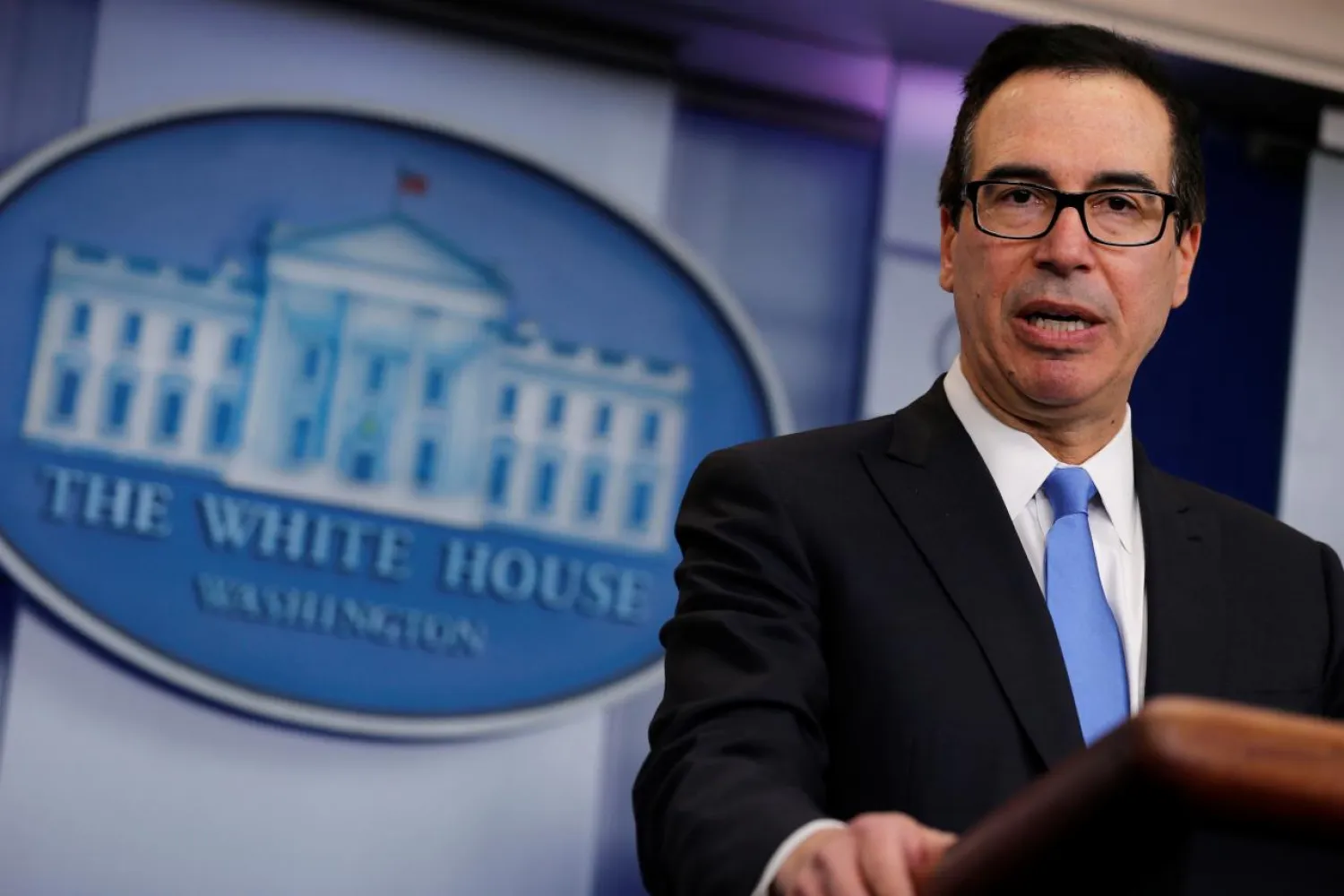
US Treasury Secretary Steven Mnuchin. (Reuters)
TT

US Sanctions Target ‘Hezbollah’ Chief, Deputy, Other Officials and Entities

US Treasury Secretary Steven Mnuchin. (Reuters)

The US Treasury Department announced on Wednesday fresh sanctions on the Iran-backed Lebanese “Hezbollah” party. The sanctions target Secretary General Hassan Nasrallah, his deputy Naim Qassem and other figures and entities.

The sanctions were imposed by the Treasury and seven-member nations of the Terrorist Financing and Targeting Center (TFTC) that is co-chaired by Saudi Arabia and is comprised of Bahrain, Kuwait, Oman, Qatar and the United Arab Emirates (UAE).

The move comes a week after US President Donald Trump announced his country’s withdrawal from the Iran nuclear deal and that he would be re-imposing sanctions on Tehran.

“The TFTC took significant actions to disrupt an Iranian-backed terrorist group by designating the senior leadership of Lebanese ‘Hezbollah’,” said the Treasury in a statement.

The sanctions target “Hezbollah’s” Shura Council, the party’s primary decision-making body.

Besides Nasrallah and Qassem, the sanctions also target Mohammead Yazbeck, Hussein al- Khalil, and Ibrahim al-Amin al-Sayyed for their terrorism links, said the Treasury.

Talal Hamiyah, Ali Youssef Charara, Spectrum Group, Hasan Ebrahimi, Maher Trading, Hashem Safieddine, Adham Tabaja, Al-Inmaa Group, and Al-Inmaa Engineering and Contracting, all of whom were previously designated by the US, were also included in the latest sanctions.

“By targeting ‘Hezbollah’s’ Shura Council, our nations collectively rejected the false distinction between a so-called ‘Political Wing’ and ‘Hezbollah’s’ global terrorist plotting,” said Secretary of the Treasury Steven Mnuchin.

“Under the dictates of the Iranian Revolutionary Guard Corps-Quds Force (IRGC-QF), Secretary General and head of the Shura Council Hassan Nasrallah is prolonging the human suffering in Syria, fueling the violence in Iraq and Yemen, putting the Lebanese state and the Lebanese people at risk, and destabilizing the entire region.”

The Shura Council is “Hezbollah’s” supreme decision-making body responsible for religious, military, and strategic matters and asserts control over administrative, planning, and policy-making authorities

Nasrallah was designated for acting for or on behalf of “Hezbollah”, which he has led since 1992. As the Secretary General and head of the Shura Council, Nasrallah is Hezbollah’s highest-ranking official and exercises direct command over Hezbollah’s military and security apparatus as its supreme commander, including its involvement in the war in Syria.

Yazbeck is one of “Hezbollah’s” original founders. He is the current leader of the Judicial Council and has overseen a military command in central Lebanon that provides logistical and training support to “Hezbollah”. He has supervised training camps and the smuggling of weapons, and hosted experts from Iran’s IRGC to train “Hezbollah” fighters on weapons systems. He has also managed “Hezbollah’s” bank accounts.

Khalil, Nasrallah’s political advisor, was one of several senior “Hezbollah” commanders who shared responsibility for the group’s special operations in Europe.

Sayyed is the head of “Hezbollah’s” Political Council. He was “Hezbollah’s” first official spokesperson and was involved in the formation of “Hezbollah”.
Egyptian Official to Asharq Al-Awsat: Syria Nominates New Ambassador Instead of Al-Ahmad, Approval Under Way

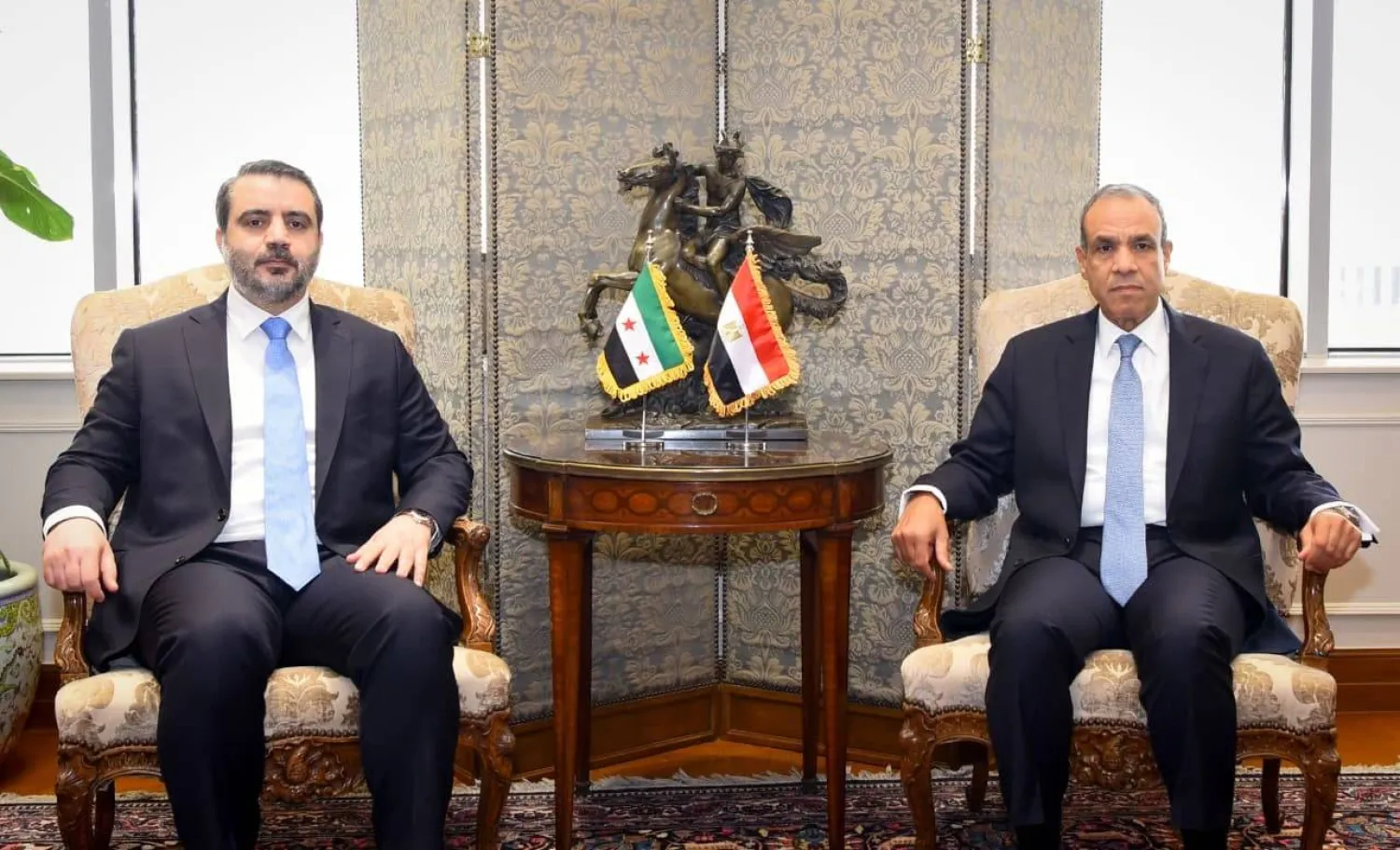
Egyptian Foreign Minister and his Syrian counterpart during a previous meeting in Cairo. (Egyptian Foreign Ministry)
TT

Egyptian Official to Asharq Al-Awsat: Syria Nominates New Ambassador Instead of Al-Ahmad, Approval Under Way

Egyptian Foreign Minister and his Syrian counterpart during a previous meeting in Cairo. (Egyptian Foreign Ministry)

The crisis surrounding Syria's nomination of Mohammad Taha Al-Ahmad as its ambassador to Egypt, first revealed in an Asharq Al-Awsat report published on June 1, appears to be heading toward a resolution. An Egyptian official source told Asharq Al-Awsat that Cairo has received the name of a new nominee from the Syrian side and is in the process of approving him.

Asharq Al-Awsat previously published a widely discussed report on what it described as "Egyptian reservations" that had delayed Cairo's acceptance of several members of the Syrian diplomatic mission. At the time, an informed source told Asharq Al-Awsat that there were objections to some members of the delegation, including Egypt's refusal to approve Syria's nominee for ambassador to Cairo.

The source explained in the June 1 report that the Syrian government had formally nominated Mohammad Taha Al-Ahmad as ambassador to Egypt. While the Egyptian government did not explicitly reject the nomination, it conveyed unofficial messages indicating that it did not consider him an acceptable candidate because of his political background.

Mohammad Taha Al-Ahmad currently serves as director of the Arab Affairs Department at Syria's Ministry of Foreign Affairs and Expatriates. He earned a bachelor's degree in agricultural engineering from the University of Aleppo in 2007, a master's degree in the financial and economic evaluation of agricultural projects from Cairo University in 2012, and a doctorate in agricultural development from the University of Idlib in 2020.

He held several ministerial positions in the Syrian Salvation Government before being appointed to his current position at the Foreign Ministry in May 2025. The following month, he was appointed head of the People's Assembly election committee.

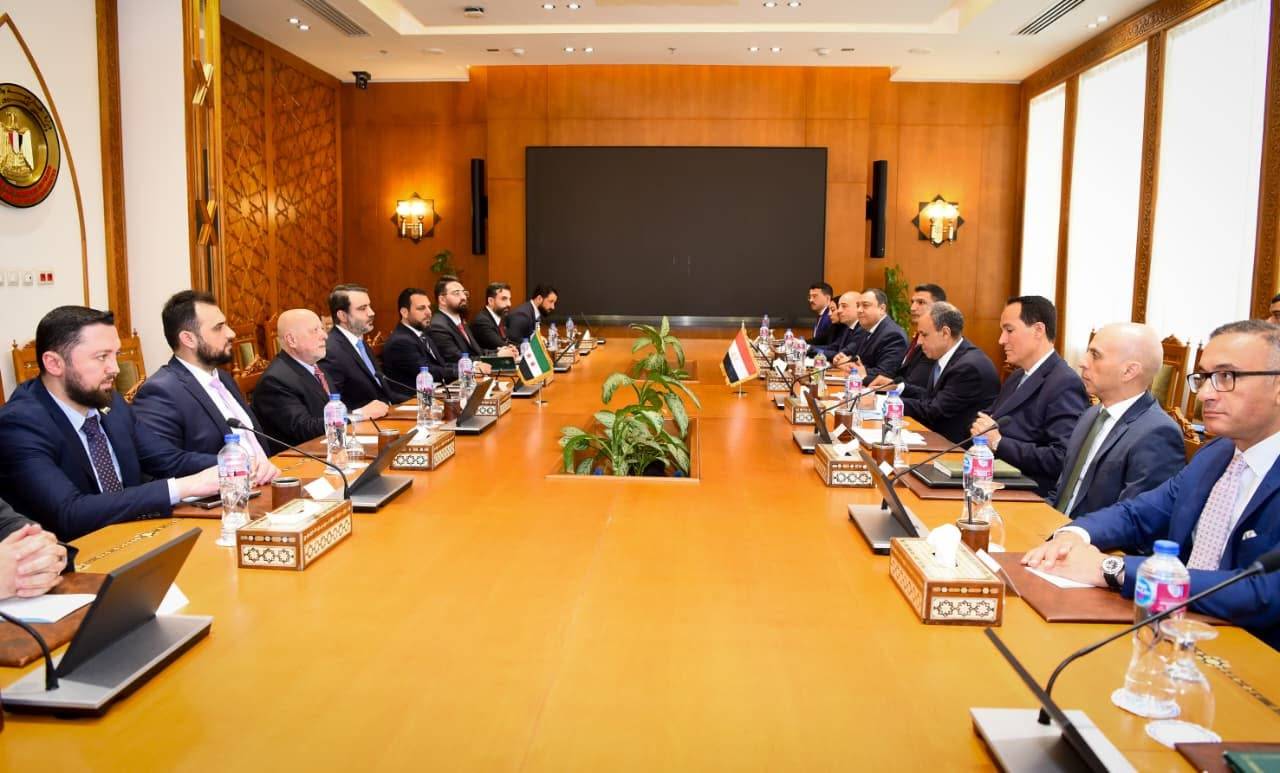
The Syrian foreign minister during talks in Cairo last month. (Egyptian Foreign Ministry)

Another Nominee

An Egyptian official source told Asharq Al-Awsat that "the Syrian government has submitted another nominee to head the Syrian diplomatic mission in Cairo," noting that "the process is moving toward approval of the new nominee by the Egyptian authorities."

The source said that "matters are proceeding normally and positively with the Syrian side," without disclosing the nominee's identity.

Since the fall of Bashar Al-Assad, Egyptian-Syrian relations have been marked by cautious bilateral engagement, driven by Cairo's concerns over the issue of armed groups, before gradually shifting toward economic cooperation.

In late April, Egyptian President Abdel Fattah El-Sisi met Syrian President Ahmed Al-Sharaa on the sidelines of the Arab-European Consultative Summit in Cyprus. Media outlets in both Cairo and Damascus reported at the time that the two presidents held a "cordial discussion" on regional developments and ways to strengthen cooperation.

While the Egyptian source declined to reveal the name of the new nominee to head Syria's diplomatic mission in Cairo, Firas Al-Khalidi, coordinator of the Cairo Platform, a member of Syria's Constitutional Committee and a member of the Syrian Negotiations Commission, said that "the Syrian side has nominated Yahya Diab, a former diplomat who defected from Bashar Al-Assad's regime, as ambassador to Cairo."

Al-Khalidi told Asharq Al-Awsat that "the Egyptian side has accepted Diab's nomination to head the Syrian mission in Cairo."

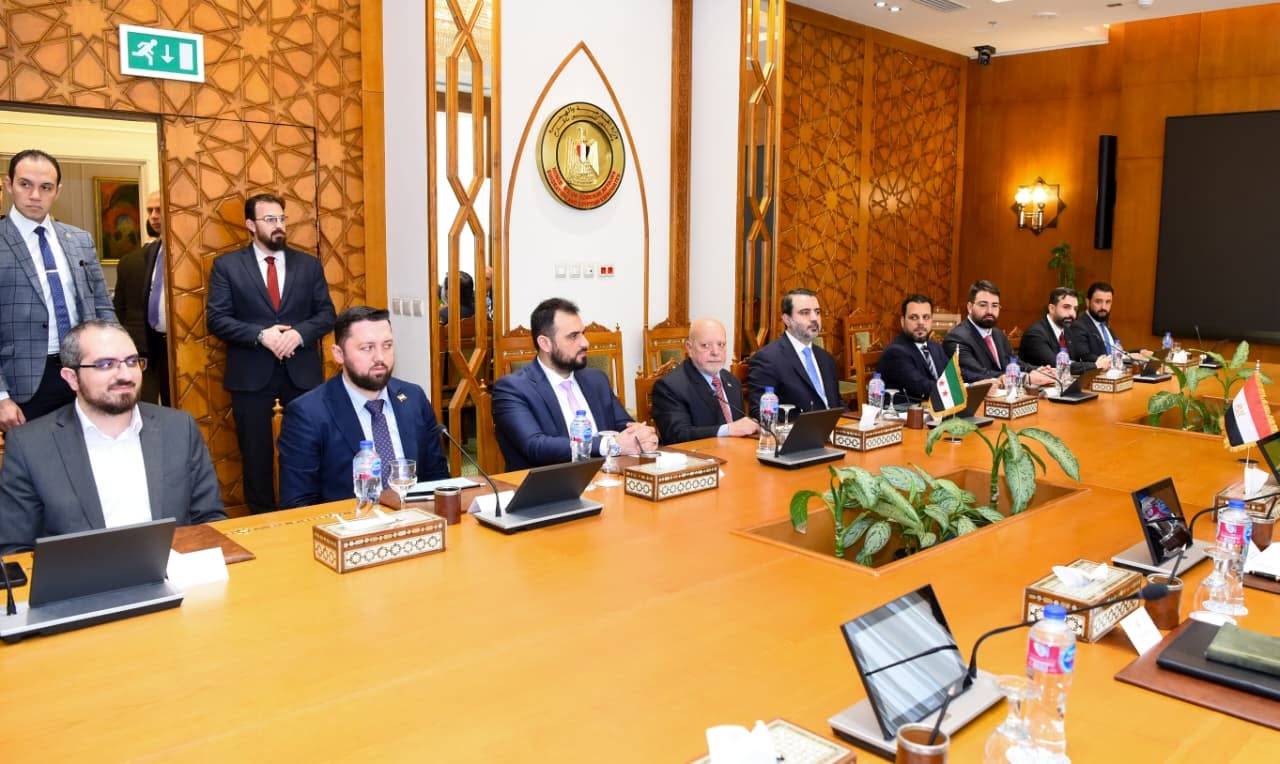
The crisis over Syria's ambassadorial nomination to Cairo appears to be heading toward a resolution. (Egyptian Foreign Ministry)

Cautious Relations

Former Egyptian assistant foreign minister Ambassador Hussein Haridy said that "the Egyptian government has the right to reject any nominee to head a diplomatic mission, or any other diplomat, if it possesses information indicating that the nominee engaged in activities affecting its national security."

Haridy told Asharq Al-Awsat that "the Syrian side publicly announced Mohammad Taha Al-Ahmad's nomination to the embassy in Cairo before obtaining Egypt's approval," describing the move as contrary to established diplomatic practice.

In Haridy's view, "relations between Cairo and Damascus will remain cautious given the background of the current Syrian government."

He said that "the Egyptian side distinguishes between the historic people-to-people relationship between the two countries and its channels of communication with Syria's current government. There remain areas for cooperation between Cairo and Damascus, particularly at the economic level."

In January, Damascus hosted the first Egyptian-Syrian Economic and Investment Forum, with the participation of 26 leaders from Egyptian chambers of commerce and business organizations. The event aimed to build effective partnerships between the two countries' commercial chambers and explore opportunities for cooperation in trade, industry, services, infrastructure and reconstruction.

At the time, the Federation of Egyptian Chambers of Commerce said that the forum sought to create Syrian-Egyptian-European alliances through the Union of Mediterranean Chambers and to promote Syrian exports to Africa through the Federation of African Chambers.


Lebanon Launches Rehabilitation of its Second Airport

An aerial view from the window of a Lebanese Middle East Airlines (MEA) airplane shows smoke rising, after Israeli strikes following an escalation between Hezbollah and Israel, amid the US-Israeli conflict with Iran, in the southern suburbs of Beirut, Lebanon, March 12, 2026. (Reuters)
TT

Lebanon Launches Rehabilitation of its Second Airport

An aerial view from the window of a Lebanese Middle East Airlines (MEA) airplane shows smoke rising, after Israeli strikes following an escalation between Hezbollah and Israel, amid the US-Israeli conflict with Iran, in the southern suburbs of Beirut, Lebanon, March 12, 2026. (Reuters)

Lebanon launched the rehabilitation of its second airport on Saturday, in preparation for an opening within months, at a time when the country faces constant fighting between Hezbollah and Israel.

Lebanon currently has one international airport, in Beirut next to the capital's southern suburbs, a Hezbollah stronghold that has been subjected to heavy Israeli bombardment during successive wars.

The new airport, in the town of Qlayaat in Lebanon's northernmost province of Akkar, near the border with Syria, has been used as a military base by the Lebanese army for decades, according to AFP.

Lebanese Minister of Transport and Public Works Fayez Rasamny inaugurated the airport on Saturday "after more than fifty years of promises, delays and waiting".

"Today we are moving from promise to execution," Rasamny said, adding that the goal is for the airport to be "operational in a few weeks" to serve travellers to Mersin, Istanbul and Dubai, adding there are plans to expand the destinations to Saudi Arabia, Cairo and Athens at a later stage.

Lebanon is also in contact with low-cost airlines, such as Ryanair and Pegasus, he said.

Rehabilitation is due to begin next week and will take at least three months, going through a pilot phase before the airport is put into full service in November 2026, according to local media.

The work is being carried out by the Lebanese company Sky Lounge, which on Saturday posted on its Instagram page a video of a test flight between Beirut airport and Qlayaat airport.

In a speech during the opening ceremony, the company's chairman, Ziad Munla, said, the passenger terminal will be completed "within 90 days after completing the required approvals and licenses".

The airport will be able to handle about 114,000 passengers in its first year, rising to more than 600,000 by its fourth year, he said.

The opening of the airport aims to create jobs in Akkar, one of Lebanon's poorest governorates with a high unemployment rate.

Rene Mouawad Airport, named after a former Lebanese president who was elected in the 1980s, was built by the French army as an airstrip in the 1930s.

It was used for civilian purposes in the 1960s and was bombed by Israel during an earlier war between Israel and Hezbollah in 2006.

Beirut airport has continued to operate despite during the Israel-Hezbollah war that began on March 2, and an earlier war in 2023 and 2024.

Lebanon has been forced to repeatedly pursue international guarantees that Israel will not target Beirut airport, which it has previously accused Hezbollah of using to transport money and weapons.

Lebanese authorities have repeatedly denied the Israeli allegations.


Araghchi Urges Lebanon President to Save Country From 'Real Foe'

FILED - 27 April 2026, Russia, Saint Petersburg: FILE PHOTO - Iranian Foreign Minister Abbas Araghchi arrives for a meeting in Saint Petersburg. Photo: -/Kremlin/dpa
TT

Araghchi Urges Lebanon President to Save Country From 'Real Foe'

FILED - 27 April 2026, Russia, Saint Petersburg: FILE PHOTO - Iranian Foreign Minister Abbas Araghchi arrives for a meeting in Saint Petersburg. Photo: -/Kremlin/dpa

Iranian Foreign Minister Abbas Araghchi on Saturday urged Lebanese President Joseph Aoun to save Lebanon from its "real foe," Israel, a day after Aoun called on Tehran to stop interfering in his country's affairs.

"Based on Mr. Aoun's comments, one would think it's Iran that has occupied one-fifth of Lebanon, displaced one-quarter of its population and is bombing the country on a daily basis," Araghchi wrote on X.

"If Lebanon were a bargaining chip for Iran, we would have reached an agreement long ago. Save Lebanon from your real foe, Mr. President," he added.

Aoun, in an interview broadcast Friday by CNN, called on Iran to stop "interfering" in Lebanon's affairs following the collapse of a new truce announced by Washington between Israel and the Iran-backed Hezbollah movement.

"This is not your country. It is our country, our responsibility, and your role is not to interfere in our affairs," Aoun said.

"It is our people who are being killed, and our homes that are being destroyed," he added.

The Lebanese president has faced opposition from Hezbollah and segments of Lebanese public opinion since the launch of direct negotiations with Israel, the first such talks between the two countries in decades. Lebanon and Israel do not maintain diplomatic relations.

Prime Minister Nawaf Salam also urged Iran to stop using Lebanon as a "card" to improve its negotiating position in talks with the United States.

Tehran has demanded that any agreement with Washington to end the war that began on Feb. 28 with a US-Israeli bombing campaign include a ceasefire on the Lebanese front and the withdrawal of Israeli forces.

The conflict in Lebanon erupted on March 2 after Hezbollah launched rockets at Israel in response to the killing of Iran's Supreme Leader, Ali Khamenei, in the initial US-Israeli strikes on Iran. Israel responded with a broad campaign of air strikes and ground incursions in southern Lebanon.

According to the latest official figures cited by AFP, Israeli strikes on Lebanon have killed more than 3,560 people since the conflict began. On the Israeli side, 27 soldiers and one civilian contractor have been killed in Lebanon.
