



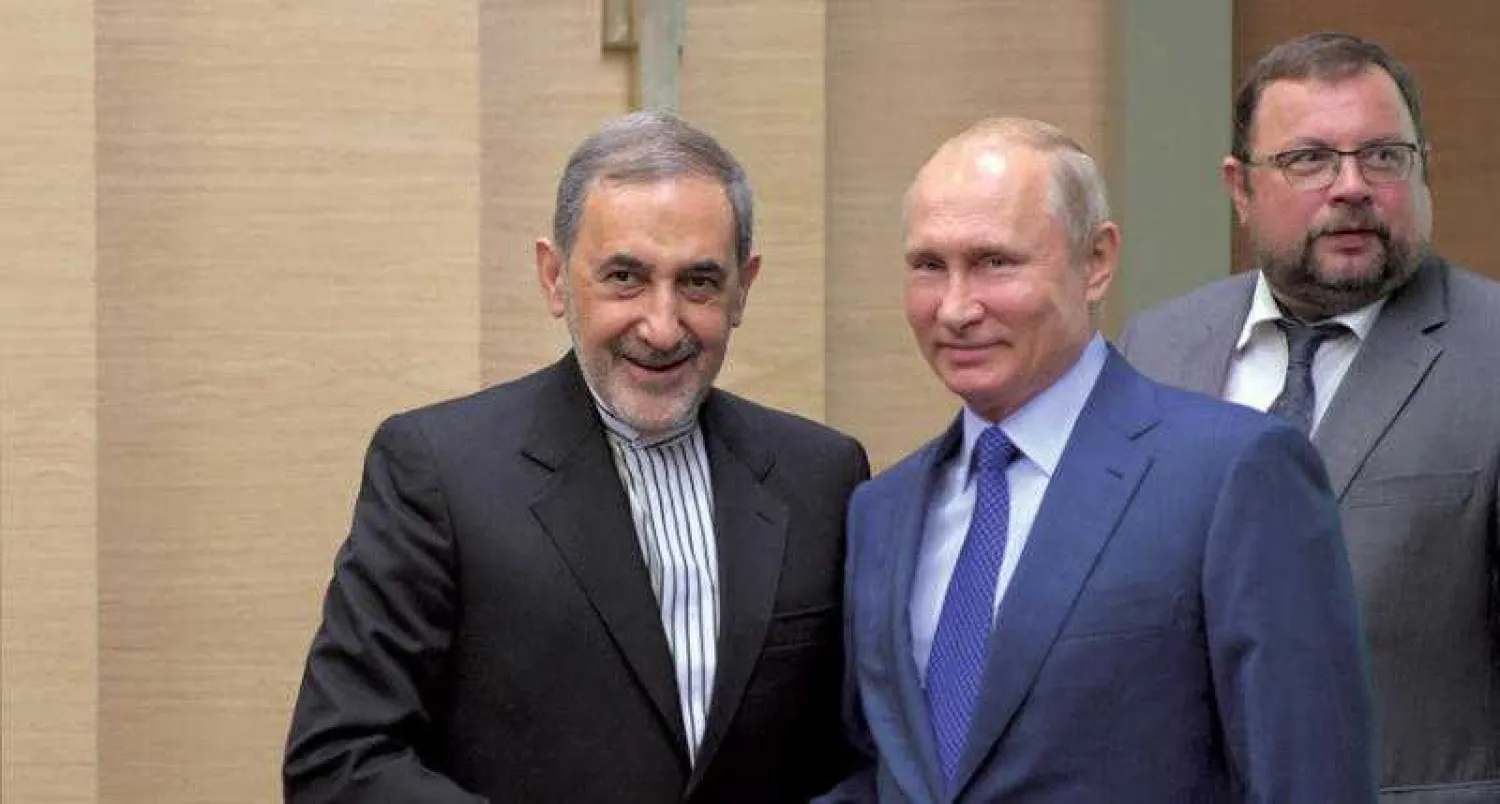

Russian President Vladimir Putin held talks with top Iranian Supreme Leader Advisor Ali Akbar Velayati, who in turn delivered an oral message from Supreme Leader Ali Khamenei and a written letter from President Hassan Rouhani.
A two-hour meeting between the two discussed the future of Iranian-Russian relations, especially the future of oil cooperation as US Economic sanctions close in on Iran.
At the end of the talks, both sides announced consensus to develop bilateral relations and enhance cooperation in various fields.
Russian President Dmitry Peskov's Spokesman said Putin's talks with my country focused “first and foremost” on bilateral relations and mechanisms for boosting cooperation.
The two discussed the regional situation, including Syria, as well as commitment to Iran's nuclear agreement.
Russia’s Kremlin did not give further details on the outcome of the talks, but the Iranian embassy in Moscow announced that Velayati had held a series of meetings after talking to Putin, along with a number of Russian officials in different sectors.
It is worth noting that the focus was mainly on Iranian oil exports in light of the increasing pressure from Washington.
Velayati held long-term discussions with the Russian Energy Minister Alexander Novak.
“Iranian Supreme Leader Ali Khamenei has long regarded relations with Russia as strategic,” Iranian state news agencies quoted Velayati as saying after meeting with Putin.
He said Tehran's current policy with Moscow remained “under Khamenei's leadership.”
More so, both Putin and his counterpart expressed satisfaction with bilateral cooperation between the two countries.
On US sanctions, Velayati quoted Putin as rejecting US sanctions.
The embargo, which is not approved by the Security Council, does not sit well with Putin, and Russia will not follow US suit with concerns to sanctioning Iran’s economy, Velayati added.
The Iranian advisor went on to criticize US President Donald Trump, saying that “the world is under the influence of a person's actions which are in contrast with international laws,” stressing the importance of strengthening Iranian-Russian cooperation under current circumstances.
Velayati also referred to the details of his talks with Putin on the Syrian crisis, denying the existence of differences in regional cooperation between the two countries.
He also praised Russia's support for Iran at the international level, especially in the United Nations, adding that bilateral relations in the defense, political, economic and nuclear fields indicate a long-term cooperation program between the two countries.
Velayati expressed his hope that his visit to Moscow and his talks with the Russian president and officials would be a turning point for strategic relations between the two countries and that Putin would soon visit Tehran.
Velayati represents a wide circle of conservative politicians in Iran who prefer to deepen relations with Russia and China instead of having close ties with European countries, unlike the years-long orientation of Foreign Minister Mohammad Javad Zarif’s foreign policy work.


