Exclusive - Houthis Resort to Yemeni ‘Neighborhood Elders’ to Recruit New Members

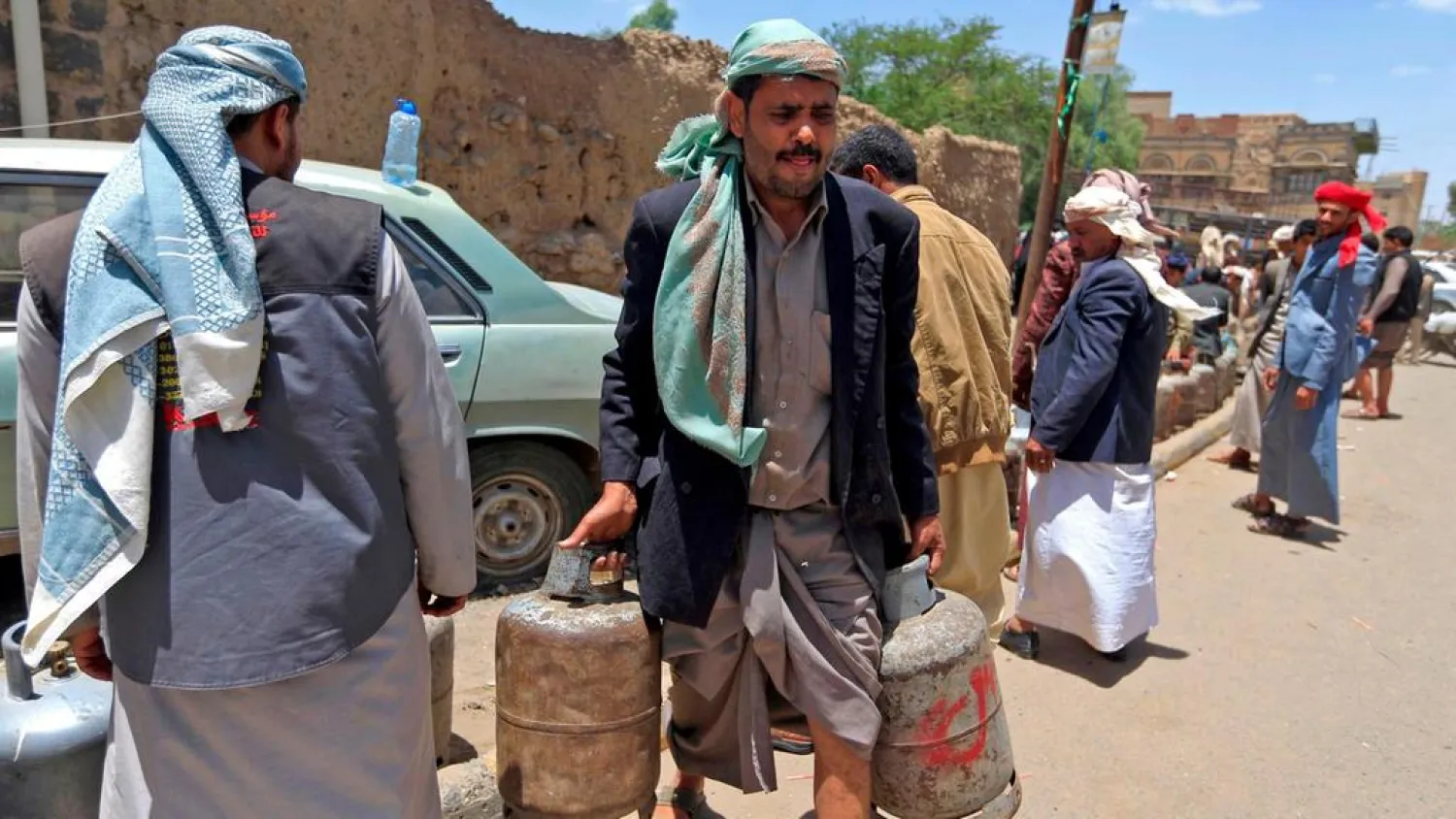
Yemenis fill gas cylinders in the capital Sanaa. (AFP)
TT

Exclusive - Houthis Resort to Yemeni ‘Neighborhood Elders’ to Recruit New Members

Yemenis fill gas cylinders in the capital Sanaa. (AFP)

The Iran-backed Houthi militias in Yemen have resorted in the country’s rural regions to tribal elders to force them to recruit new members to its ranks. In cities, such as Sanaa, they have turned to “neighborhood elders” to force them to achieve this same goal.

A few weeks ago, however, the militias sacked dozens of elders in the capital for allegedly failing to recruit new members and supporters to join the Houthi cause.

Several of these elders spoke to Asharq Al-Awsat of the great pressure they came under from the Houthis to carry out their sectarian and militant agenda. They revealed that the Houthis would promise them high positions, military ranks and weapons in return for their cooperation. They would resort to intimidation and threats if they failed to yield to their orders.

One of the elders, who spoke on condition of anonymity out of fear of reprisals, said that he served as an officer for an interior ministry agency and also acted as an elder for the neighborhood where he resided in northern Sanaa.

He spoke of how a Houthi “supervisor” of the neighborhood had approached him to attend a militia sectarian seminar. The elder declined the invitation, saying he was preoccupied with his official job. The militant, however, insisted that he attend the event and he was ultimately forced, along with other elders, to head to the three-day seminar.

The lecturers informed the elders that they must forget their affiliation to the General People’s Congress and allegiance to its chief, slain former President Ali Abdullah Saleh, he continued. This was a main condition for the elders to join Houthi ranks.

“We were given a Kalashnikov rifle at the end of the cultural seminar, as well as nearly a month’s salary. They then ordered us to make a tally of the number of residents in each neighborhood. Youths who could potentially join Houthi ranks were to be singled out,” revealed the elder.

“We were forced to attend weekly meetings with the Houthi supervisor of the neighborhood to receive new instructions and listen to a new lecture,” he added to Asharq Al-Awsat.

“I, along with several other elders, refused the Houthis’ instructions. We informed the supervisors that it would be difficult to lure in our neighbors, acquaintances and relatives to join the militias deadly agenda,” he stated.

He was consequently fired from his post at the interior ministry as soon as he made his thoughts clear. He was also later removed from his position as neighborhood elder.

Other elders, however, were enticed by the Houthi promises and agreed to join their cause. Some of them have moved up the military ranks and others have been “promoted” to become neighborhood supervisor.

Elders who have pledged allegiance to the Houthis have also taken on the role of spying for the militias to inform them of who among the population supports or opposes them.

The elders added they are forced to cooperate with the Houthi supervisors in order to protect the residents of their neighborhoods from the militias’ oppression. They explained that they often lie to the Houthis about their efforts to recruit new members, claiming that they are promoting the militias’ ideology and agenda, but the population is refusing to join their cause.

They said that making the Houthis believe that they are cooperating with them is better than antagonizing them.


Why Iranian Drones Are Hard to Stop

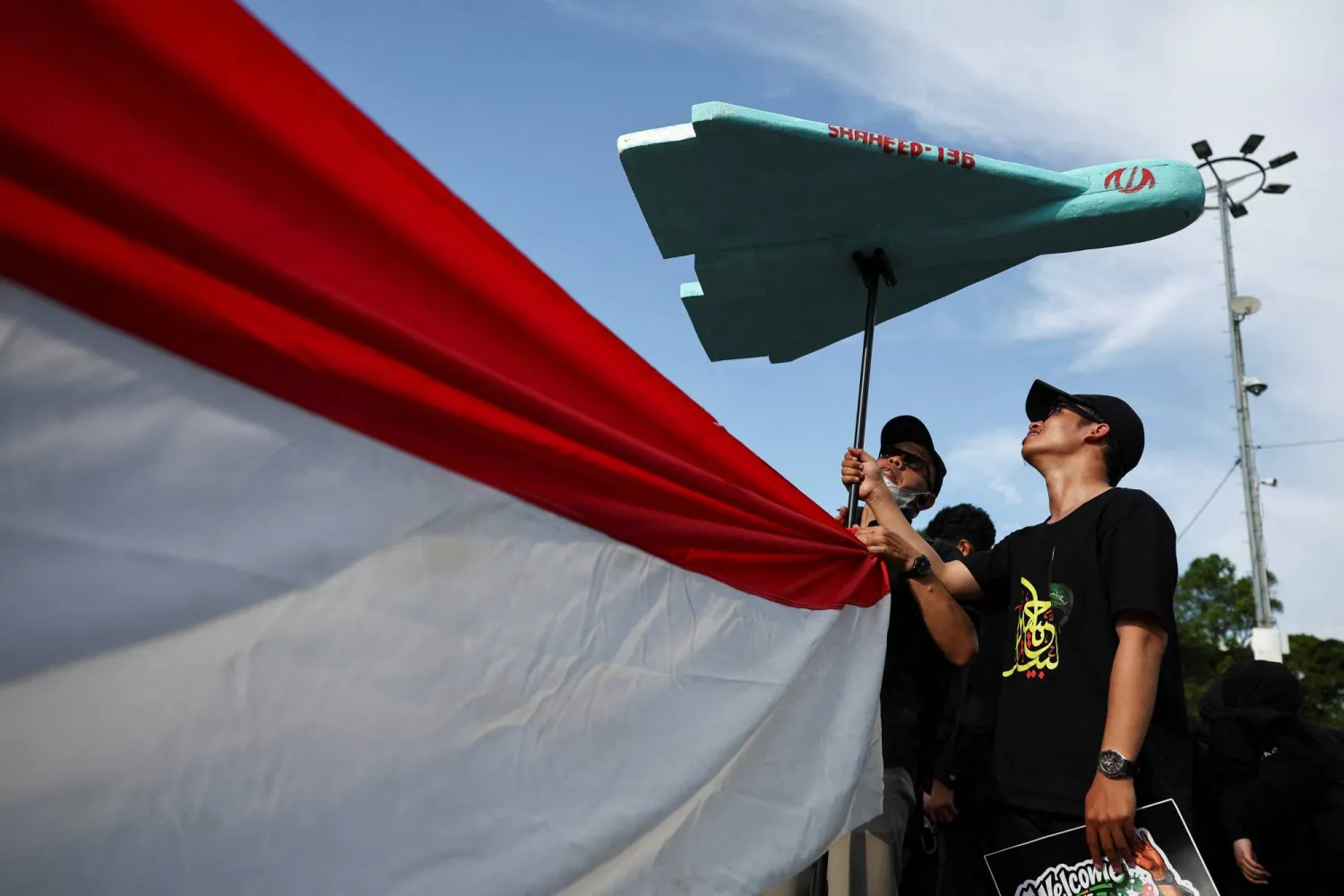
Protesters hold a mockup of Iranian-made drone Shahed-136, during a rally marking al-Quds Day (Jerusalem Day), amid the US-Israeli conflict with Iran, outside the U.S. Embassy in Jakarta, Indonesia, March 13, 2026. (EPA)
TT

Why Iranian Drones Are Hard to Stop

Protesters hold a mockup of Iranian-made drone Shahed-136, during a rally marking al-Quds Day (Jerusalem Day), amid the US-Israeli conflict with Iran, outside the U.S. Embassy in Jakarta, Indonesia, March 13, 2026. (EPA)

Cheap and deadly, Iranian-designed Shahed drones have inflicted major damage in the Middle East war, and have anti-jamming and other capabilities that make them difficult to stop.

- Offline navigation -

Designed to explode on impact, Shahed drones connect to GPS to register their location shortly before or after takeoff, then typically turn off their receivers, said Thomas Withington, a researcher at Britain's Royal United Services Institute (RUSI).

The drones then travel long distances towards their target using gyroscopes that measure their speed, direction and position -- known as an "inertial navigation system".

"GPS is going to get jammed by whatever is protecting the target," Withington told AFP.

"If you look at a map of GPS jamming at the moment in the Middle East, you see that there's a lot of jamming... By not using the GPS, you avoid that."

The drones can then return to GPS just before impact for a more precise strike, or remain offline.

"It's not always necessarily very accurate, but it's as accurate as it needs to be," said Withington.

- Anti-jamming mechanisms -

Russia has been making Shahed-style drones to use in its war in Ukraine.

The US-based Institute for Science and International Security found in 2023 that those drones used "state-of-art antenna interference suppression" to remove enemy jamming signals while preserving the desired GPS signal.

Anti-jamming mechanisms were found in the wreckage of an Iranian-made drone that struck Cyprus in the opening days of the Middle East war, a European industry source told AFP.

"They have put (the Shahed) together using off-the-shelf parts, but it has... many of the capabilities that US military GPS equipment has," Todd Humphreys, a professor of aerospace engineering at the University of Texas at Austin, told AFP.

Defending against them now requires sophisticated electronic warfare equipment.

"The Shaheds have been upgraded," said Ukrainian air force spokesman Yuriy Ignat.

- Stealth materials -

The Shahed is built from "lightweight radar-absorbing materials", such as plastic and fiberglass, a 2023 RUSI paper said.

Their small size and low altitude allow them to slip through aerial defense systems.

- Other positioning systems? -

Some experts think Iran is using multiple positioning systems, making it easier for its drones to dodge jamming.

Serhii Beskrestnov, a technology adviser to the Ukrainian defense ministry, said Iran is using the BeiDou system, a Chinese rival to the US-developed GPS.

And the Russia-made version of Shaheds uses both BeiDou and the Russian equivalent, GLONASS, he said.

Others suspect Iran may be using LORAN, a radio navigation system developed during World War II.

LORAN, which does not require satellites, largely fell out of use when GPS emerged.

But Iran said in 2016 it was reviving the technology, which requires a network of large ground-based transmitters, though experts have not confirmed it is active today.

- Counter-strategies -

Militaries have mainly defended against Shaheds by shooting them down with cannon fire, missiles and interceptor drones, with the United States and Israel also developing lasers.

But jamming can work, as Ukraine has shown, as can "spoofing", which involves hacking into the drone's navigation system to change its destination.

Ukraine used electronic warfare to neutralize 4,652 attack drones from mid-May to mid-July 2025 -- not far off the number it shot down in the same period, 6,041, according to AFP analysis of Ukrainian military data.

Its experts insist that electronic and conventional defenses are often used in tandem against the drones.


How Poland Went from Post-Communist Wreck to One of the World's 20 Biggest Economies

FILE - Newer skyscrapers flank the communist-era Palace of Culture and Science, foreground, in n, Poland, May 25, 2018. (AP Photo/Alik Keplicz, File)
TT

How Poland Went from Post-Communist Wreck to One of the World's 20 Biggest Economies

FILE - Newer skyscrapers flank the communist-era Palace of Culture and Science, foreground, in n, Poland, May 25, 2018. (AP Photo/Alik Keplicz, File)

A generation ago, Poland rationed sugar and flour while its citizens were paid one-tenth what West Germans earned. Today its economy has edged past Switzerland to become the world’s 20th largest with over $1 trillion in annual output.

It’s a historic leap from the post-Communist ruins of 1989-90 to today's European growth champion that economists say has lessons on how to bring prosperity to ordinary people — and that the Trump administration says should be recognized by Poland's presence at a summit of the Group of 20 leading economies later this year.

The transformation is reflected in people like Joanna Kowalska, an engineer from Poznan, a town of half a million people midway between Berlin and Warsaw. She returned home after five years in the US.

“I get asked often if I’m missing something by coming back to Poland, and, to be honest, I feel it’s the other way around,” Kowalska said. “We are ahead of the United States in so many areas.”

Kowalska works at the Poznan Supercomputing and Networking Center, which is developing the first artificial intelligence factory in Poland and integrating it with a quantum computer, one of 10 on the continent financed by a European Union program.

Kowalska worked for Microsoft in the US after graduating from the Poznan University of Technology in a job she saw as a “dream come true.”

But she missed having a “sense of mission," she said.

“Especially when it comes to artificial intelligence, the technology started developing so rapidly in Poland,” Kowalska added. “So it was very tempting to come back.”

Multiple factors in breaking out of poverty

The guest invitation to the G20 summit is mostly symbolic; no guest country has been promoted to full member since the original G20 met at the finance minister level in 1999, and that would take a consensus decision of all the members. Moreover, the original countries were chosen not just by GDP rank, but by their “systemic significance” in the global economy.

But the gesture reflects a statistical truth: In 35 years — a little less than one person's working lifetime — Poland’s per capita gross domestic product rose to $55,340 in 2025, or 85% of the EU average. That's up from $6,730 in 1990, or 38% of the EU average and now roughly equal to Japan’s $52,039, according to International Monetary Fund figures measured in today's dollars and adjusted for Poland’s lower cost of living.

Poland’s economy has grown an average 3.8% a year since joining the EU in 2004, easily beating the European average of 1.8%.

It wasn't simply one factor that helped Poland break out of the poverty trap, says Marcin Piątkowski of Warsaw’s Kozminski University and author of a book on the country’s economic rise.

One of the most important factors was rapidly building a strong institutional framework for business, he said. That included independent courts, an anti-monopoly agency to ensure fair competition, and strong regulation to keep troubled banks from choking off credit.

As a result, the economy wasn’t hijacked by corrupt practices and oligarchs, as happened elsewhere in the post-Communist world.

Poland also benefited from billions of euros in EU aid, both before and after it joined the bloc in 2004 and gained access to its huge single market.

Above all, there was the broad consensus, from across the country's political spectrum, that Poland’s long-term goal was joining the EU.

“Poles knew where they were going,” Piątkowski said. “Poland downloaded the institutions and the rules of the game, and even some cultural norms that the West spent 500 years developing.”

As oppressive as it was, communism contributed by breaking down old social barriers and opening higher education to factory and farmworkers who had no chance before. A post-Communist boom in higher education means half of young people now have degrees.

“Young Poles are, for instance, better educated than young Germans,” Piatkowski said, but earn half what Germans do. That’s “an unbeatable combination” for attracting investors, he said.

An electric bus ride to success Solaris, a company founded in 1996 in Poznan by Krzysztof Olszewski, is one of the leading manufacturers of electric buses in Europe with a market share of around 15%. Its story shows one hallmark of Poland’s success: entrepreneurship, or the willingness to take risks and build something new.

Educated as an engineer under the Communist government, Olszewski opened a car repair shop where he used spare parts from West Germany to fix Polish cars. While most enterprises were nationalized, authorities gave permission to small-scale private workshops like his to operate, according to Katarzyna Szarzec, an economist at the Poznan University of Economics and Business. “These were enclaves of private entrepreneurship," she said.

In 1996, Olszewski opened a subsidiary of the German bus company Neoplan and started producing for the Polish market.

“Poland’s entry to the EU in 2004 gave us credibility and access to a vast, open European market with the free movement of goods, services and people,” said Mateusz Figaszewski, responsible for institutional relations.

Then came a risky decision to start producing electric buses in 2011, a time when few in Europe were experimenting with the technology. Figaszewski said larger companies in the West had more to lose if switching to electric vehicles didn't work out. "It became an opportunity to achieve technological leadership ahead of the market," he said.

An aging population is still a challenge

Challenges still remain for Poland. Due to a low birth rate and an aging society, fewer workers will be able to support retirees. Average wages are lower than the EU average. While small and medium enterprises flourish, few have become global brands.

Poznan Mayor Jacek Jaśkowiak sees domestic innovation as a third wave in Poland’s postsocialist economic development. In the first wave, foreign countries opened factories in Poland in the early 1990s, taking advantage of a skilled local population.

Around the turn of the millennium, he said, Western companies brought more advanced branches, including finance, IT and engineering.

“Now it’s the time to start such sophisticated activities here,” Jaśkowiak says, adding that one of his main priorities is investing in universities.

“There is still much to do when it comes to innovation and technological progress,” added Szarzec, the Poznan economist. “But we keep climbing up on that ladder of added value. We're no longer just a supplier of spare parts.”

Szarzec's students say more needs to be done to reduce urban-rural inequalities, make housing affordable and support young people starting families. They say Poles need to acknowledge that immigrants, such as the millions of Ukrainians who fled the Russian invasion in 2022, contribute to economic development in an aging population.

"Poland has such a dynamic economy, with so many opportunities for development, that of course I am staying," said Kazimierz Falak, 27, one of Szarzec's graduate students. “Poland is promising.”



After Attacks on Iran’s Oil Facilities, Toxic Black Rain Endangers the Public

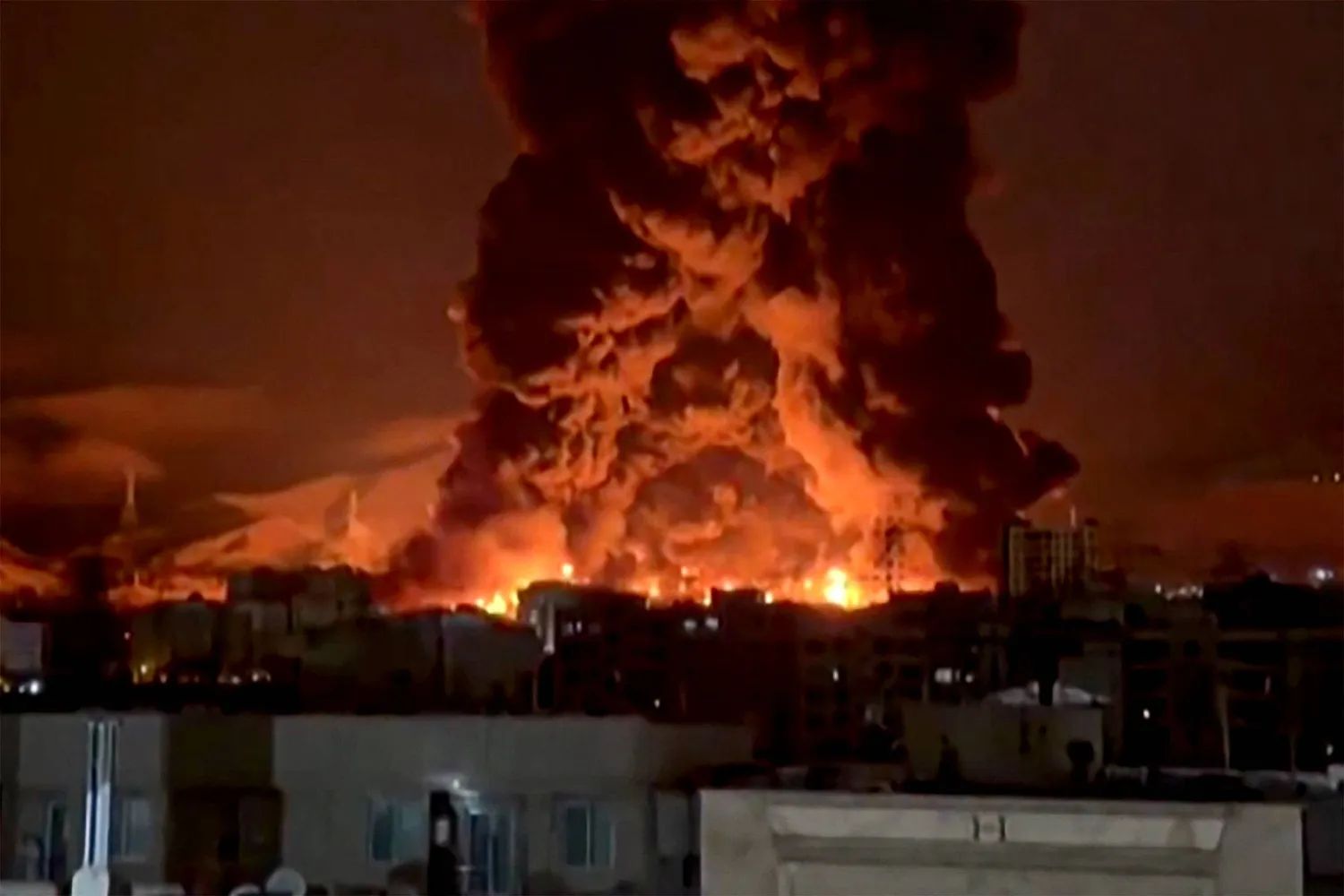
This video grab taken from UGC images posted on social media on March 7 and 8, 2026 shows fire erupting at an oil depot in Iran's capital Tehran. (UGC / AFP)
TT

After Attacks on Iran’s Oil Facilities, Toxic Black Rain Endangers the Public

This video grab taken from UGC images posted on social media on March 7 and 8, 2026 shows fire erupting at an oil depot in Iran's capital Tehran. (UGC / AFP)

Clouds of toxic smoke unleashed into the atmosphere by US-Israeli airstrikes on Iranian oil facilities made a dangerous return to Earth in the form of “black rain,” prompting international health officials to warn of serious risks to the public.

Residents in Tehran complained last week of burning eyes and difficulty breathing when the dark and oily precipitation fell near the Iranian capital after several fuel oil depots and a refinery were struck.

Plumes of dark smoke have also been seen across other parts of the region over two weeks of war, as Iran retaliates against US-Israeli airstrikes by firing drones and missiles at the oil and natural gas facilities of its Gulf neighbors.

Rain washes hazardous chemicals out of the atmosphere in a relatively short period of time, experts said, but people exposed to black rain should take precautions to avoid short- and long-term health risks.

Here's what to know:

What is black rain? It occurs when soot, ash and toxic chemicals combine with water droplets in the atmosphere, then fall back to Earth when it rains. It's common after oil refineries or oil fields catch fire, and also can be caused by wildfires, volcanic eruptions and industrial pollution.

In Iran, microscopic soot formed when hydrocarbons in the fuel oil burned incompletely, experts said. Burning oil also forms compounds called polycyclic aromatic hydrocarbons, or PAHs, as well as toxic gases such as sulfur dioxide and nitrogen oxides, which cause acid rain, said Peter Adams, a civil and environmental engineering professor at Carnegie Mellon University.

What are the health risks of exposure? Microscopic soot, whose particles are about 40 times smaller than the width of a human hair, can lodge deep in the lungs and enter the bloodstream, causing breathing and heart problems that can lead to premature death, experts said. Exposure to PAHs can increase cancer risk.

In Iran, the World Health Organization and the country's health and environmental officials advised people to stay indoors and wear masks. They warned that the rainfall was highly acidic and could burn the skin and cause lung damage.

“We can definitely expect acute health effects from an event like this,” said V. Faye McNeill, a chemical engineering professor at Columbia University who specializes in atmospheric chemistry.

Even regular air pollution events can trigger health problems and lead to more hospitalizations, especially among the elderly, children and people who already had health problems, she said. “But this is a higher level, so there likely are health problems going on right now because of it.”

Some Iranians fear the polluted rain, which also contains heavy metals, could contaminate drinking-water reservoirs and waterways.

How long do the chemicals last in the atmosphere? It usually takes only hours for fuel tanks to burn out. But — as happened in Kuwait during the Gulf War 25 years ago — oil fields can burn for months, said Adams.

For fires that burn out more quickly, most of the soot and chemicals will disperse on the wind and wash out of the atmosphere in about three to seven days, Adams said.

“So if we don’t create more problems, at least what’s in the atmosphere is going to go away,” even if long-term health risks haven't, Adams said.

“But we don’t know what’s going to happen with future strikes and whether other tanks will be struck or whether oil fields will be struck,” he added. “I'm less concerned about longer-term or regional stuff, but it's a real mess for the people in the immediate vicinity.”