Pochettino, Respect, and the ‘Never Kicked a Ball in Your Life’ Theory

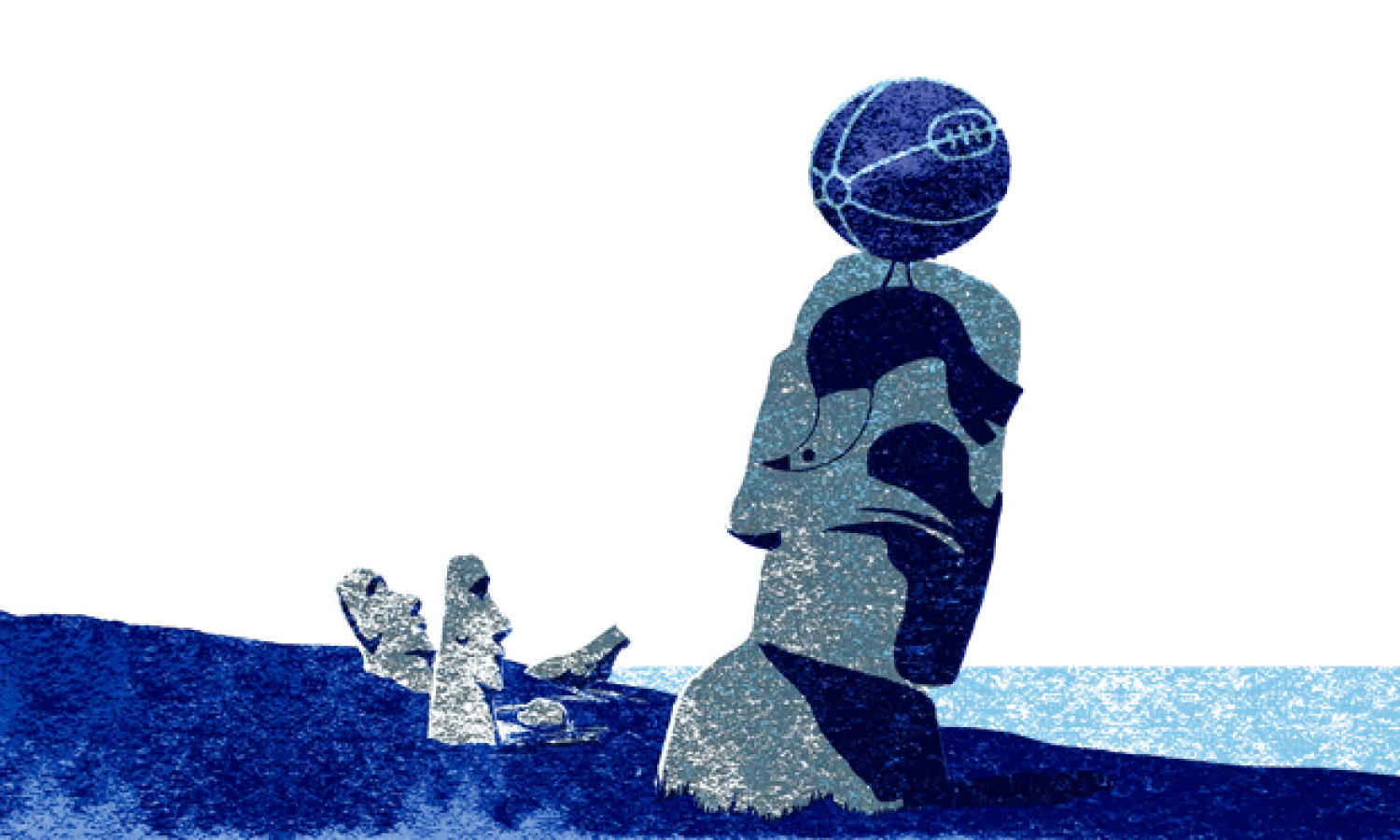
 Everyone loves Mauricio Pochettino, but it has been a trying week for Tottenham and their manager. Illustration: David Humphries
Everyone loves Mauricio Pochettino, but it has been a trying week for Tottenham and their manager. Illustration: David Humphries
TT

Pochettino, Respect, and the ‘Never Kicked a Ball in Your Life’ Theory

 Everyone loves Mauricio Pochettino, but it has been a trying week for Tottenham and their manager. Illustration: David Humphries
Everyone loves Mauricio Pochettino, but it has been a trying week for Tottenham and their manager. Illustration: David Humphries

Deep down, behind the club loyalties, beneath the professional distance, everyone loves Mauricio Pochettino. You can deny it. But search your feelings, you know it to be true. There is just something very likable about Pochettino: the barking laugh, the pouchy dimples, the way he strides around the touchline looking like the world’s most handsome oil rigger.

Plus of course there is his success as a coach, which has come in the most interesting way, as a developer of players, the author of a style of play. Pochettino has been 100% successful in getting Spurs into the Champions League on a restricted budget over the last three years, which has always been the only realistic goal no matter how many times people keep telling him he has to win the League Cup.

As a reporter you want to hear Pochettino speak. You want him to enjoy being in England. You want his views on players and tactics. You want to go for a barbecue at his house afterwards and smoke a cigar while he cooks the steaks in a pair of Wayfarers and a Hawaiian shirt. Later on maybe we can have a game of poker with Diego Simeone and Carlos The Jackal.

So persuasive is the Poch charisma it was tempting to give him a pass when he started talking about “respect” in midweek, with the suggestion he wasn’t given enough of it after Tottenham’s 2-1 defeat by Internazionale. Pochettino had been asked a question about his decision to omit two of his best defenders from a match Spurs lost as a result of bad defending.

It was an excellent question, the sound of someone doing their job well, going into uncomfortable spaces at an uncomfortable moment.

The response – “don’t disrespect the players!” – was un-Poch like. It was even a little José-ish in its tone. “Respect, respect, respect,” Mourinho had barked across the press room a couple of weeks ago in Manchester, standing up and pointing and looking slightly wild in response to what started off as a fairly routine question about playing Ander Herrera in a back three.

This touchiness, the apparent outrage at being questioned, the suggestion that a cat may not in fact look at a king, is increasingly common around football. But the hostility is also something that should be resisted, and that should be questioned in itself.

Who is allowed to have an opinion about all this? English professional football has always had a disdain for the views of those who have not been employed to play English professional football. This notion of disrespect at being asked a few questions, whether by journalists or fans empowered by social media, springs from the same place. How dare you, who live outside this world, to whom this is all interpretation, question my actions.

In philosophy this has been referred to as the “practical man” fallacy, the idea that nothing can exist with any meaning outside immediate physical experience. In football this emerges as the “never kicked a ball in your life” theory.

This states that even the most taciturn, unreflective human with the physical gifts and good fortune to be paid to kick a ball will in every case have a better understanding of all issues around kicking a ball than, say, Brian Glanville, or a club season ticket holder, or the historian Simon Schama.

My favourite recent example of this was history ace Schama’s good natured Twitter “beef” with Alan Shearer during the World Cup. Shearer responded to a minor disagreement over the nature of England’s performance by suggesting that as he, Shearer, had played in similar games 20 years ago his view must be the correct one.

Shearer was joking, riffing on his own spectacular career as an England player. But it was funny in other ways too, because Schama is a historian and academic, disciplines that rely entirely on interpreting experience through evidence and reasoning. Schama’s views on, say, the French revolution or the dissolution of the monasteries are considered valid and illuminating, despite the fact he wasn’t present at these things either, and has never stormed a Bastille in his life.

But when it comes to football, which is happening right now, which you can see, and which isn’t actually that complicated or hard to understand? No way mate. Nobody could ever imagine what football is like. Even after seeing it happen in front of you, having evidence and being intelligent. Now shut it and listen to the thoughts of Danny Mills.

Respect: how much should you really have for anyone? Shearer is right on this. His experience enriches his views. He can use it to tell you interesting things you wouldn’t otherwise have known. But it’s not an exclusive deal. There might also be things that Schama (who’s never shot an Austrian Archduke in his life) or a teenage tactics blogger, or Rene Maric, the 26-year-old assistant manager of Red Bull Salzburg, might be able to tell Shearer.

Similarly Pochettino is right that his intimate insider knowledge of the mental and physical requirements of his players should be respected. But it can also be questioned. There is no need to create an artificial barrier here. Football has always been furious, disrespectful, iconoclastic, hostage to the furies of the crowd. This is the source of its strength, its resilience and its financial good health. So spare us the talk about respect. The day people stop asking questions or shouting from the bleachers, glued instead to their in-house docu-films, or bled dry of doubt or interest by an increasingly set bunch of hierarchies; well, that’s the time to start worrying.

The Guardian Sport


Irish Boxer Lee Reeves Dies at Age 31, Three Months after Dublin Title Fight Injury

Irish boxer Lee Reeves. Reuters
TT

Irish Boxer Lee Reeves Dies at Age 31, Three Months after Dublin Title Fight Injury

Irish boxer Lee Reeves. Reuters

Irish boxer Lee Reeves has died more than three months after being injured during a fight in Dublin, promoter Queensberry said Tuesday. He was 31.

"Everyone at Queensberry is devastated to learn of the passing of Lee Reeves," Queensberry Promotions said in a statement.

Reeves was hospitalized after being knocked out by compatriot Gary Cully in the 10th and final round of their Boxing Union of Ireland Celtic super-lightweight title fight on Aug. 1.

Reeves was carried from the ring on a stretcher after receiving initial treatment.

Queensberry had said after the fight that his condition was critical but stable.

“Lee was an immensely talented boxer, as well as a true role model and inspiration to his community,” the statement added Tuesday, according to The Associated Press. “Our deepest condolences go to Lee’s family, friends and all those who loved him. We ask that their privacy be respected at this incredibly difficult time. Rest in peace, Lee.”


Alonso to Enter Dakar Rally with Loeb and Aston Martin Team

November 5, 2026 Aston Martin's Fernando Alonso during a press conference ahead of the F1 Sao Paulo Grand Prix. (Reuters)
TT

Alonso to Enter Dakar Rally with Loeb and Aston Martin Team

November 5, 2026 Aston Martin's Fernando Alonso during a press conference ahead of the F1 Sao Paulo Grand Prix. (Reuters)

Double Formula One champion Fernando Alonso will compete in next January's Dakar Rally in an Aston Martin Dreadnought entry run by engineering partner Prodrive.

The 45-year-old Spaniard, a 32-time Grand Prix winner and two-time Le Mans 24 Hours winner, will be racing in the annual event for the second time after competing with Toyota in 2020, finishing 13th.

France's nine-time world rally champion Sebastien Loeb and Brazil's reigning world rally-raid champion Lucas Moraes will be his teammates in a three-car entry.

The 49th edition of the Dakar Rally will ‌be held in ‌Morocco from January 9 to 23, with a prologue and first ‌stage ⁠in Portugal, after ⁠being moved from Saudi Arabia due to security concerns.

The 24-round Formula One season is due to start in Bahrain in March after testing in late February.

Alonso, who will again have compatriot and five-time motorcycle Dakar winner Marc Coma as co-driver, is racing in the Las Vegas Grand Prix this weekend. He said he had turned his thoughts to Dakar after deciding to continue in Formula One with Aston Martin.

“In the end, the decision became simple. I wanted to embrace ⁠the challenge completely and take on both Formula One and the ‌Dakar Rally in the same year," he explained in ‌a statement.

"In 2020, Dakar was one of the most challenging and enjoyable experiences of my career. ‌I have enormous respect for this race and the specialists who have mastered it.

"Formula One ‌remains my priority. But I am a racing driver, and challenges like this are why I love competing. I’m looking forward to seeing what we can achieve."

LOEB CHASES FIRST DAKAR WIN

In October, Alonso told reporters at the Singapore Grand Prix that he felt the desert endurance race would be physically ‌incompatible with his Formula One commitments.

Loeb, 52, will also be chasing a first Dakar win after 10 previous attempts that have brought ⁠him 28 stage ⁠wins to date.

“Winning the Dakar is very important to me,” said the Frenchman, who will be partnered by Belgian Fabian Lurquin. “We have come close several times, and the motivation is there to keep working until we achieve it."

The Dreadnought is a digital-only tactical SUV created exclusively for gamers playing "Call of Duty: Modern Warfare 4" that will now be brought into the real world by Prodrive, Aston Martin's partners in endurance GT racing.

The Dakar will be Aston Martin Racing’s debut in the world rally-raid championship.

"Aston Martin's ambition for this program has been clear from the outset: to create a car capable of competing at the front of the world's toughest motorsport event," said Prodrive Chairman David Richards.

"By combining Aston Martin's vision with Prodrive's experience in rallying, endurance racing and Dakar competition, we have built a strong foundation. With an exceptional driver line-up and a highly capable engineering team, we look forward to seeing Dreadnought take on this remarkable challenge."


Owono Does Not Deserve 12-Match Ban Over De Miguel Death, Says Andorra Owner Pique

Equatorial Guinea's goalkeeper #01 Jesus Owono leaves the pitch at half time during the Africa Cup of Nations (CAN) Group E football match between Equatorial Guinea and Algeria at Moulay Hassan Stadium in Rabat on December 31, 2025. (AFP)
TT

Owono Does Not Deserve 12-Match Ban Over De Miguel Death, Says Andorra Owner Pique

Equatorial Guinea's goalkeeper #01 Jesus Owono leaves the pitch at half time during the Africa Cup of Nations (CAN) Group E football match between Equatorial Guinea and Algeria at Moulay Hassan Stadium in Rabat on December 31, 2025. (AFP)

FC Andorra owner Gerard ‌Pique said goalkeeper Jesus Owono did not deserve the 12-match suspension he received following the challenge that led to the death of Tenerife forward Jesus de Miguel.

Owono and De Miguel collided during a Spanish second-tier match on November 2. De Miguel was taken to intensive care and died the following day.

The disciplinary committee of the Spanish football federation (RFEF) banned Owono for violent conduct which resulted in serious ‌injury last week.

"Players, ‌former players, coaches, goalkeepers, everyone has ‌called ⁠it an accident," ⁠Pique said in a video posted on social media late on Monday.

"I truly believe that imposing the maximum sanction on Jesus for this action puts him in a situation he does not deserve, because he is not to blame for all of ⁠this having happened."

Former Barcelona player Pique ‌pointed to the three-match ‌ban handed to Albacete's Jose Corpas for accidentally kicking Sabadell ‌player Quadri Liameed in the head during a ‌recent match in Spain.

"Fortunately Quadri is fine, the consequences in this case were not fatal, and the committee decided to sanction Corpas with three matches," Pique added.

"With ‌all this, my reflection is: what is being sanctioned, the action or the ⁠consequences?"

The RFEF ⁠did not immediately respond to a request for comment outside regular business hours in Spain.

Owono, 25, has withdrawn from Equatorial Guinea's squad for Africa Cup of Nations qualifiers against Zimbabwe this month and Pique said it was unlikely the goalkeeper would return to action as soon as his suspension is up.

"Jesus is going to need far more than 12 matches before he is available and able to compete," he added. "No sanction is going to bring Demi (De Miguel) back to us."