Kevin Beattie Obituary

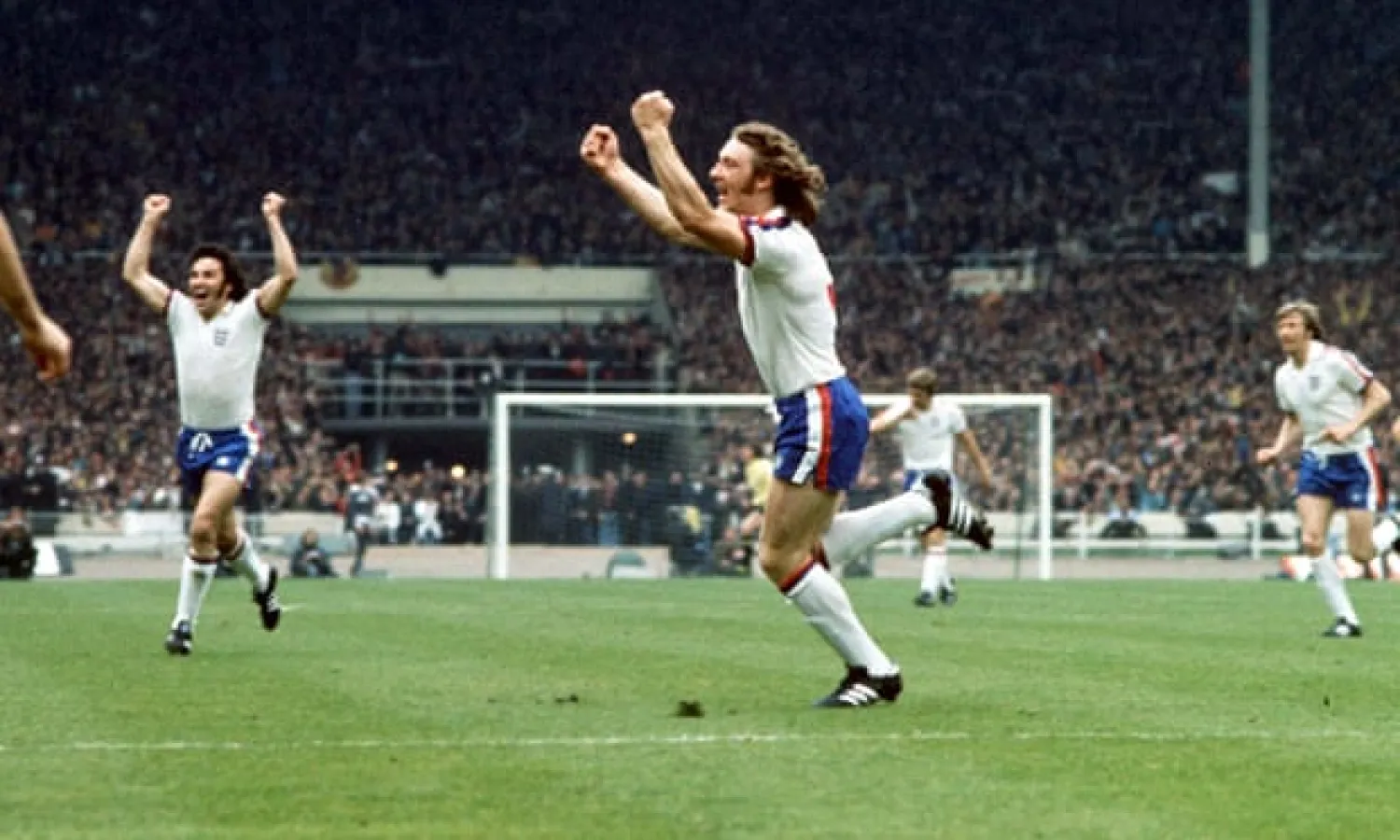
 Kevin Beattie celebrates a goal for England during a 5-1 win against Scotland at Wembley in the British Home Championship, 1975. Photograph: Colorsport/Rex/Shutterstock
Kevin Beattie celebrates a goal for England during a 5-1 win against Scotland at Wembley in the British Home Championship, 1975. Photograph: Colorsport/Rex/Shutterstock
TT

Kevin Beattie Obituary

 Kevin Beattie celebrates a goal for England during a 5-1 win against Scotland at Wembley in the British Home Championship, 1975. Photograph: Colorsport/Rex/Shutterstock
Kevin Beattie celebrates a goal for England during a 5-1 win against Scotland at Wembley in the British Home Championship, 1975. Photograph: Colorsport/Rex/Shutterstock

When Ipswich Town were a footballing power in the late 1970s and early 80s, Kevin Beattie was at the core of their success. A central defender of unusual poise and class, he was the best player in a team that not only won the FA and Uefa cups but gave the great Liverpool side of that era a run for their money in the league.

Beattie, who has died aged 64 of a heart attack, was hailed by Ipswich fans as the club’s greatest ever player. But a greater measure of his standing was the universal respect he generated among his peers, who recognised not just his great technical prowess but the courage, strength and application that went with it. His ability to win the ball and then distribute it with calm precision drew comparisons with Bobby Moore, and of his generation there were few English footballers more highly rated within the game.

Yet given the level of acclaim that came his way, Beattie played a surprisingly small number of games for England – nine in total. Injuries were mostly to blame; he was often forced to withdraw after being selected, and at 28 had to make an early retirement with a longstanding and serious knee problem. What he failed to achieve on the international stage, however, he made up for on the domestic front with Ipswich, in 225 league appearances across a highly successful decade for the side. He remained close to the club for the rest of his life, including for a number of years as a football analyst on BBC Radio Suffolk.

Despite his long affiliation with Ipswich, Beattie was born in Carlisle. His background was a poor one – his father, a coalman, and his mother, a cleaner, had nine children, and his father’s heavy drinking took up much of the household income, often meaning Kevin did not eat for two or three days running. He left St Patrick’s Roman Catholic senior school, where he occasionally played truant because he had no shoes to wear, at 14 to work in factory and warehouse jobs.

Spotted by a scout playing in local leagues, at 15 Beattie was invited to talks with the Liverpool manager Bill Shankly, but when he arrived in the city the club had forgotten to send anyone to meet him, and with no money to get to the ground he returned on the first train home. Shortly afterwards Ipswich jumped in to exploit Liverpool’s missed opportunity and their manager, Bobby Robson, is said to have told his chief scout that he would lose his job if he failed to rendezvous with the youngster. Beattie turned up at the interview wearing his father’s shoes, and when Ipswich signed him as an apprentice in 1970, Robson’s first act was to make sure he was properly shod.

Beattie turned professional in 1971 and the following year made his debut, aged 18, in a 2-1 win against Manchester United. He was the inaugural winner of the Professional Footballers’ Association (PFA) Young Player of the Year award in 1974, and was playing for England – in a 5-0 win against Cyprus – by 1975.

Immensely strong, athletic, and extremely quick over the first 10 yards, Beattie was a superb tackler, could spring impressively high when heading the ball, and had a powerful left-footed shot. “He was quite annoying, really, because everything came so easy for him,” said his Ipswich colleague Roger Osborne. “He was just stronger, fitter and better than anyone else. He didn’t have to try.”In the season before Beattie’s debut, Ipswich were placed 13th in the First Division, but in all but one of the nine campaigns in which he featured, the club finished no worse than sixth, including runners-up to Aston Villa in 1980-81. With Beattie in the side they also won the FA Cup final in 1978 – a 1-0 victory against Arsenal, courtesy of an Osborne goal – and while he did not play in the two legs of the 5-4 Uefa Cup final victory over the Dutch club AZ Alkmaar three years later, he was eventually awarded a medal by Uefa to recognise his contributions earlier in the competition.

He had played in what turned out to be his last match for Ipswich shortly before that final, when he broke his arm in an FA Cup semi-final against Manchester City. By then, years of problems with his knees had already taken their toll, ending his England career in 1977 and increasingly interfering with his club availability. After the fifth in a series of unsuccessful operations in 1981 Beattie was forced to call time with Ipswich at the end of the year.

He tried short-lived comebacks in lower leagues with Colchester United and Middlesbrough during 1982-83, then moved into non-league football in the mid-80s, interspersed with brief periods at three minor teams in Scandinavia.

Despite having received £50,000 from a testimonial match with Ipswich and a fee for acting as Michael Caine’s body double in the football sequences of the 1981 film Escape to Victory, Beattie lived for much of the rest of his life in straitened circumstances. In recent years, however, he had received financial help from the PFA and had put his life on a more even keel, acting as a full-time carer to his wife, Margaret, as her multiple sclerosis worsened.

Affable and down to earth even at the height of his fame, Beattie remained a popular figure in Ipswich, and returned to the public eye through his matchday work on local radio from 2008 onwards. In 2012 he was given a 12-week curfew as punishment for benefit fraud, having failed to declare his modest radio earnings for fear that he would lose income support.

He is survived by Margaret (nee Boldy), whom he married in the early 70s, and by their three daughters, Emma, Sarah and Louise.

The Guardian Sport


Irish Boxer Lee Reeves Dies at Age 31, Three Months after Dublin Title Fight Injury

Irish boxer Lee Reeves. Reuters
TT

Irish Boxer Lee Reeves Dies at Age 31, Three Months after Dublin Title Fight Injury

Irish boxer Lee Reeves. Reuters

Irish boxer Lee Reeves has died more than three months after being injured during a fight in Dublin, promoter Queensberry said Tuesday. He was 31.

"Everyone at Queensberry is devastated to learn of the passing of Lee Reeves," Queensberry Promotions said in a statement.

Reeves was hospitalized after being knocked out by compatriot Gary Cully in the 10th and final round of their Boxing Union of Ireland Celtic super-lightweight title fight on Aug. 1.

Reeves was carried from the ring on a stretcher after receiving initial treatment.

Queensberry had said after the fight that his condition was critical but stable.

“Lee was an immensely talented boxer, as well as a true role model and inspiration to his community,” the statement added Tuesday, according to The Associated Press. “Our deepest condolences go to Lee’s family, friends and all those who loved him. We ask that their privacy be respected at this incredibly difficult time. Rest in peace, Lee.”


Alonso to Enter Dakar Rally with Loeb and Aston Martin Team

November 5, 2026 Aston Martin's Fernando Alonso during a press conference ahead of the F1 Sao Paulo Grand Prix. (Reuters)
TT

Alonso to Enter Dakar Rally with Loeb and Aston Martin Team

November 5, 2026 Aston Martin's Fernando Alonso during a press conference ahead of the F1 Sao Paulo Grand Prix. (Reuters)

Double Formula One champion Fernando Alonso will compete in next January's Dakar Rally in an Aston Martin Dreadnought entry run by engineering partner Prodrive.

The 45-year-old Spaniard, a 32-time Grand Prix winner and two-time Le Mans 24 Hours winner, will be racing in the annual event for the second time after competing with Toyota in 2020, finishing 13th.

France's nine-time world rally champion Sebastien Loeb and Brazil's reigning world rally-raid champion Lucas Moraes will be his teammates in a three-car entry.

The 49th edition of the Dakar Rally will ‌be held in ‌Morocco from January 9 to 23, with a prologue and first ‌stage ⁠in Portugal, after ⁠being moved from Saudi Arabia due to security concerns.

The 24-round Formula One season is due to start in Bahrain in March after testing in late February.

Alonso, who will again have compatriot and five-time motorcycle Dakar winner Marc Coma as co-driver, is racing in the Las Vegas Grand Prix this weekend. He said he had turned his thoughts to Dakar after deciding to continue in Formula One with Aston Martin.

“In the end, the decision became simple. I wanted to embrace ⁠the challenge completely and take on both Formula One and the ‌Dakar Rally in the same year," he explained in ‌a statement.

"In 2020, Dakar was one of the most challenging and enjoyable experiences of my career. ‌I have enormous respect for this race and the specialists who have mastered it.

"Formula One ‌remains my priority. But I am a racing driver, and challenges like this are why I love competing. I’m looking forward to seeing what we can achieve."

LOEB CHASES FIRST DAKAR WIN

In October, Alonso told reporters at the Singapore Grand Prix that he felt the desert endurance race would be physically ‌incompatible with his Formula One commitments.

Loeb, 52, will also be chasing a first Dakar win after 10 previous attempts that have brought ⁠him 28 stage ⁠wins to date.

“Winning the Dakar is very important to me,” said the Frenchman, who will be partnered by Belgian Fabian Lurquin. “We have come close several times, and the motivation is there to keep working until we achieve it."

The Dreadnought is a digital-only tactical SUV created exclusively for gamers playing "Call of Duty: Modern Warfare 4" that will now be brought into the real world by Prodrive, Aston Martin's partners in endurance GT racing.

The Dakar will be Aston Martin Racing’s debut in the world rally-raid championship.

"Aston Martin's ambition for this program has been clear from the outset: to create a car capable of competing at the front of the world's toughest motorsport event," said Prodrive Chairman David Richards.

"By combining Aston Martin's vision with Prodrive's experience in rallying, endurance racing and Dakar competition, we have built a strong foundation. With an exceptional driver line-up and a highly capable engineering team, we look forward to seeing Dreadnought take on this remarkable challenge."


Owono Does Not Deserve 12-Match Ban Over De Miguel Death, Says Andorra Owner Pique

Equatorial Guinea's goalkeeper #01 Jesus Owono leaves the pitch at half time during the Africa Cup of Nations (CAN) Group E football match between Equatorial Guinea and Algeria at Moulay Hassan Stadium in Rabat on December 31, 2025. (AFP)
TT

Owono Does Not Deserve 12-Match Ban Over De Miguel Death, Says Andorra Owner Pique

Equatorial Guinea's goalkeeper #01 Jesus Owono leaves the pitch at half time during the Africa Cup of Nations (CAN) Group E football match between Equatorial Guinea and Algeria at Moulay Hassan Stadium in Rabat on December 31, 2025. (AFP)

FC Andorra owner Gerard ‌Pique said goalkeeper Jesus Owono did not deserve the 12-match suspension he received following the challenge that led to the death of Tenerife forward Jesus de Miguel.

Owono and De Miguel collided during a Spanish second-tier match on November 2. De Miguel was taken to intensive care and died the following day.

The disciplinary committee of the Spanish football federation (RFEF) banned Owono for violent conduct which resulted in serious ‌injury last week.

"Players, ‌former players, coaches, goalkeepers, everyone has ‌called ⁠it an accident," ⁠Pique said in a video posted on social media late on Monday.

"I truly believe that imposing the maximum sanction on Jesus for this action puts him in a situation he does not deserve, because he is not to blame for all of ⁠this having happened."

Former Barcelona player Pique ‌pointed to the three-match ‌ban handed to Albacete's Jose Corpas for accidentally kicking Sabadell ‌player Quadri Liameed in the head during a ‌recent match in Spain.

"Fortunately Quadri is fine, the consequences in this case were not fatal, and the committee decided to sanction Corpas with three matches," Pique added.

"With ‌all this, my reflection is: what is being sanctioned, the action or the ⁠consequences?"

The RFEF ⁠did not immediately respond to a request for comment outside regular business hours in Spain.

Owono, 25, has withdrawn from Equatorial Guinea's squad for Africa Cup of Nations qualifiers against Zimbabwe this month and Pique said it was unlikely the goalkeeper would return to action as soon as his suspension is up.

"Jesus is going to need far more than 12 matches before he is available and able to compete," he added. "No sanction is going to bring Demi (De Miguel) back to us."