


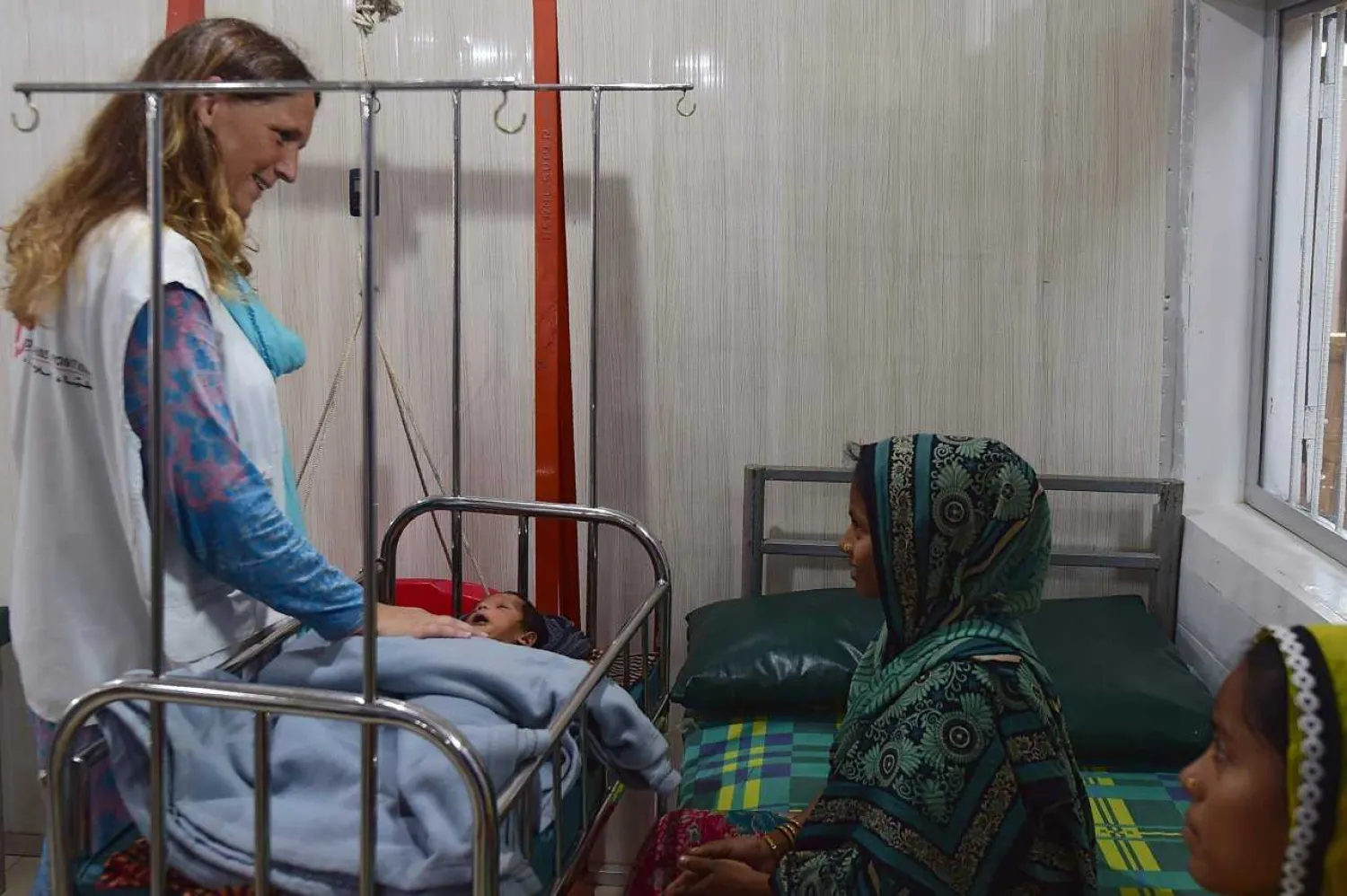

The World's Volunteerism Report 2018, released by The United Nations Volunteers (UNV) program, showed that more people are responding to global crises by volunteering in actions aimed at overcoming the crises' consequences.
The report cited various forms of such work carried out within the framework of formal and informal institutions such as provision of supplies, protection, health services and support for infrastructure including roads, bridges, sewage systems and water supply.
The number of volunteers in the Arab world is estimated at nine million, accounting for 8.2 percent of the world's 109 million full-time volunteers, as if they were paid jobs.
The data in the report revealed a clear discrepancy between the number of volunteers in the official and non-official sectors. In general, the highest number of volunteers was 70 percent for non-official institutions, compared to 30 percent for official institutions.
The rate varied from one geographic region to another. Africa's volunteers were the most preferred for informal institutions by 86 percent, compared to 13 percent for official institutions, followed by Arab volunteers in favor of informal institutions (82 percent vs. 17 percent for official institutions), Europe, Central Asia, Latin America and the Caribbean, Asia and the Pacific, and finally North America.
According to the report, volunteers were mostly from women 57 percent, compared to 43 percent for men, in all the regions. At the level of individual regions, they had the highest participation rate, except in Asia and the Pacific, where men accounted for 50.8 percent versus 49.2 percent for women.
The Director of the UN Regional Office for Volunteers said the figures for the Arab world reveal that the region has a long history of cooperation through volunteerism.
"The report helps gain a deeper understanding of the ways in which people gather to work together in building a future and a resilient region," he said in a press release.
For his part, Dr. Talaat Abdel-Qawi, head of the General Union of NGOs in Egypt, attributed the increase in the participation of Arab citizens in civil work to the transformation of most countries from the socialist system to the free economy. Many citizens were influenced by this shift, which led to an increase in the number of volunteers to provide support.
Abdel-Qawi denied that the economic pressures in some Arab countries may lead to a drop in the number of volunteers, as people would be busy working to provide their needs.
He also told Asharq Al-Awsat: "the opposite is true. More pressures mean more volunteers. Many volunteers in the Arab world are being motivated by the power of good deed and the importance of support."


