


There Are 87 Live Games on British TV This Week. Too Much of a Good Thing?

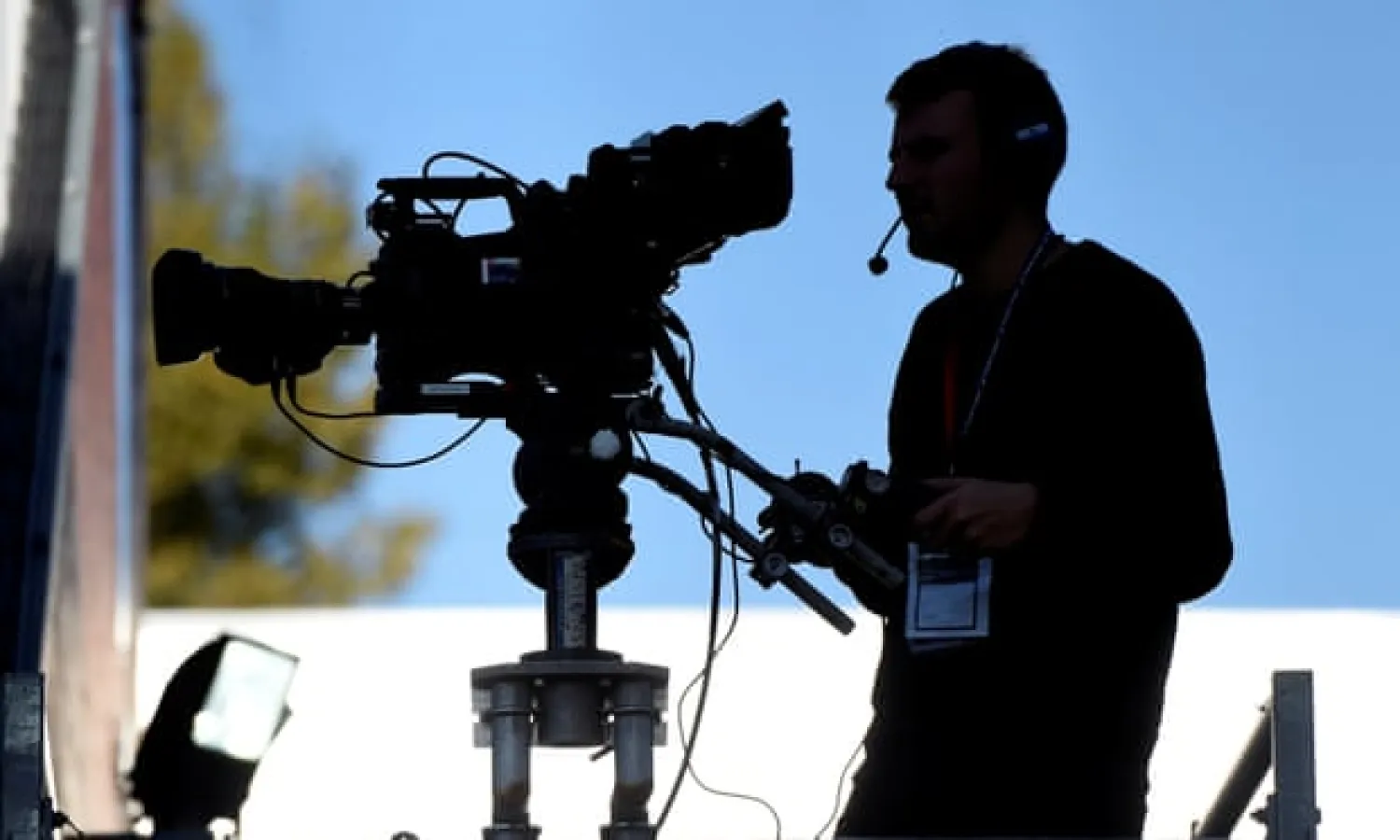
 This week 87 football matches will be legally shown or streamed live in Britain. Photograph: Adam Holt/Action Images via Reuters
This week 87 football matches will be legally shown or streamed live in Britain. Photograph: Adam Holt/Action Images via Reuters
TT

There Are 87 Live Games on British TV This Week. Too Much of a Good Thing?

 This week 87 football matches will be legally shown or streamed live in Britain. Photograph: Adam Holt/Action Images via Reuters
This week 87 football matches will be legally shown or streamed live in Britain. Photograph: Adam Holt/Action Images via Reuters

During the early 1980s, when English football began its slow-shuffle towards showing one live game a week, the Guardian’s venerable correspondent David Lacey warned of the potential consequences. In a column titled “The death threat of live television”, Lacey predicted: “Matches shown on the small screen, warts and all, far from stimulating interest, would be more likely to have the opposite effect,” and suggested: “A televised match would become the complete alternative to paying to watch football and more fans than ever would have reason to stay away.”

Lacey was far from alone. Years before the dawn of the Premier League Brian Clough thought too much live TV would kill football. And, indeed, as far back as 1931 the BBC stopped radio broadcasts of Football League games because of fears they were damaging attendances.

The logic appeared sound enough. Yet when it comes to live football on TV the horse has not merely bolted but is doing cartwheels across multiple continents while sticking up one finger at the doubters. This week an astonishing 87 games will be legally shown or streamed live in Britain – a number that would be higher still if Eleven Sports had not temporarily stopped broadcasting European football games during the 3pm Saturday blackout.

Few expect the blackout, that oasis between 2.45pm and 5pm every Saturday where no live football is allowed to be shown, to stand up to legal scrutiny. Indeed the direction of travel is for viewers to one day be able to watch every game, home and away, without running the gauntlet of dozens of pop-ups on a dodgy internet site. That might sound tremendous for fans, but the Premier League has always been wary – understandably fearing it would lead to a drop in attendances, a decline in atmosphere and less money the next time it hawked its product to broadcasters.

Less discussed are the effects on smaller clubs lower down the English league food chain if there is a broadcasting free-for-all. But compelling new research from three academics – Babatunde Buraimo of the University of Liverpool, and Jake Owen and Rob Simmons of Lancaster University – does not paint a rosy picture.

The academics trawled through 27,000 Football League matches between 2000 and 2018 to answer a simple question: what happens to attendances at Championship, League One and League Two matches when TV is showing a midweek Premier League or Champions League match at the same time?

After controlling for multiple factors, such as teams’ league position at the time of the match and the travelling distance for away fans, they showed that attendances fell across the lower leagues, and particularly below the Championship, when Champions League games were being played. Naturally that varied per season and per league, with League Two bearing the brunt of the fall.

You might think since European football went off terrestrial TV things may have improved. That, however, isn’t the case. Since BT began exclusive coverage of the Champions League, gates for League Two in midweek games have been on average 16% lower than would be expected when European games are played, while for League One it has been 10-15% depending on the club. In the Championship the effect is smaller – 2%-4% – but that is still a painful jolt to any balance sheet.

Incidentally, the effect when live Premier League matches are shown on Tuesday and Wednesday nights is far smaller – 2%-3% – possibly because the most attractive top-flight games tend to be shown on Saturday lunchtimes or Sunday afternoons.

Another potential worry for lower-league clubs is that midweek Championship games are now being shown on the red button, while League One and Two matches are streamed on the EFL’s iFollow service – further increasing the possibility that some fans may stay on their sofa. It is early days, but when the authors compared attendances across 10 Championship, League One and League Two games played on 8 September, for which there were corresponding fixtures in the 2017-18 season, they discovered an average drop of 3.5%.

It would be unwise to infer too much into a small sample given there are many confounding factors, such as timing of games and form and status of the teams involved which would vary between seasons. Yet it is not hard to discern where the winds are blowing. We know that Champions League games affect the gates of lower-league clubs. So, probably, does streaming matches. Lifting the blackout would be another blow. And some clubs’ finances are so parlous it could make insolvency a more likely prospect.

Which is why the academics suggest it might be time to reappraise the “solidarity payments” paid by the Premier League – which are made in recognition of a need to preserve a financially viable professional league structure of 92 teams – to give more help to smaller clubs.

In effect it would be an added form of compensation for the negative consequences inflicted on League One and League Two clubs by Premier League sides playing in the Champions League at the same time as them.As Buraimo points out: “Our research shows the degree of suffering from high-end football. If football is truly a sport where solidarity and the grass roots matters then increasing the level of subsidy further down the pyramid is quite affordable.”

Cynics will say it is asking too much for bigger clubs to dip deeper into their pockets. Altruism is not exactly their forte, after all. But if the broadcasting market does turn into a massive free-for-all, and more fans stay away from lower league stadiums, something will need to be done. Otherwise Lacey’s gloomy prediction could yet come true.

The Guardian Sport


Rodgers Takes Charge of Saudi Team Al-Qadsiah After Departure from Celtic 

Then-Celtic head coach Brendan Rodgers greets supporters after a Europa League soccer match between Red Star and Celtic at Rajko Mitic Stadium in Belgrade, Serbia, Sept. 24, 2025. (AP)
TT

Rodgers Takes Charge of Saudi Team Al-Qadsiah After Departure from Celtic 

Then-Celtic head coach Brendan Rodgers greets supporters after a Europa League soccer match between Red Star and Celtic at Rajko Mitic Stadium in Belgrade, Serbia, Sept. 24, 2025. (AP)

Brendan Rodgers has returned to football as the coach of Saudi Arabian club Al-Qadsiah, six weeks after resigning from Scottish champion Celtic.

Al-Qadsiah, whose squad includes Italian striker Mateo Retegui and former Real Madrid defender Fernandez Nacho, is in fifth place in the Saudi Pro League in its first season after promotion.

Rodgers departed Celtic on Oct. 27 and has opted to continue his managerial career outside Britain for the first time, having previously coached Liverpool, Leicester and Swansea.

In its statement announcing the hiring of Rodgers on Tuesday, Al-Qadsiah described him as a “world-renowned coach” and said his arrival “reflects the club’s ambitious vision and its rapidly growing sporting project.”

Aramco, the state-owned Saudi oil giant, bought Al-Qadsiah in 2023 in a move that has helped to transform the club’s status.

“This is a landmark moment for the club,” Al-Qadsiah chief executive James Bisgrove said. “The caliber of his experience and track record of winning reflects our ambition and long-term vision to establish Al-Qadsiah as one of Asia’s leading clubs.”

Rodgers is coming off winning back-to-back Scottish league titles with Celtic, where he won 11 major trophies across his two spells. He also won the FA Cup with Leicester.

Al-Qadsiah's last two coaches were former Liverpool striker Robbie Fowler and former Spain midfielder Michel.


Portugal to Return to F1 Calendar in 2027 and 2028 

12 July 2025, United Arab Emirates, Abu Dhabi: Red Bull driver Max Verstappen leads into turn one during the Abu Dhabi Grand Prix at the Yas Marina Circuit, Abu Dhabi. (dpa)
TT

Portugal to Return to F1 Calendar in 2027 and 2028 

12 July 2025, United Arab Emirates, Abu Dhabi: Red Bull driver Max Verstappen leads into turn one during the Abu Dhabi Grand Prix at the Yas Marina Circuit, Abu Dhabi. (dpa)

Formula One will return to Portugal's Portimao circuit in 2027 and 2028 after the Dutch Grand Prix at Zandvoort drops off the calendar.

Formula One announced a two-year deal in a statement on Tuesday.

The 4.6-km Algarve International circuit in the country's south last hosted the Portuguese Grand Prix in 2020 and 2021, both seasons impacted by the COVID-19 pandemic with stand-in venues.

In 2020, seven-times world champion Lewis Hamilton took his 92nd career win at Portimao, breaking the record previously held by Michael Schumacher. Hamilton also won in 2021.

"The interest and demand to host a Formula One Grand Prix is the highest that it has ever been," said Formula One chief executive Stefano Domenicali, thanking the Portuguese government and local authorities.

The financial terms of the deal were not announced.

"Hosting the Grand Prix in the Algarve reinforces our regional development strategy, enhancing the value of the territories and creating opportunities for local economies," said Economy Minister Manuel Castro Almeida.

Portugal first hosted a grand prix in Porto in 1958, with subsequent races at Monsanto and Estoril near Lisbon. The late Brazilian great Ayrton Senna took his first grand prix pole and win at the latter circuit in 1985.

Formula One announced last year that Zandvoort, a home race for four-times world champion Max Verstappen, would drop off the calendar after 2026.

The championship already features a record 24 races and Domenicali has spoken of European rounds alternating to allow others to come in.

Belgium's race at Spa-Francorchamps is due to be dropped in 2028 and 2030 as part of a contract extension to 2031 announced last January.


ATP to Introduce New Heat Policy from 2026 Season 

Novak Djokovic of Serbia cools himself with water during the men's singles semifinal match with Valentin Vacherot of Monaco, at the Shanghai Masters tennis tournament at Qizhong Forest Sports City Tennis Center, in Shanghai, China, Saturday, Oct. 11, 2025. (AP)
TT

ATP to Introduce New Heat Policy from 2026 Season 

Novak Djokovic of Serbia cools himself with water during the men's singles semifinal match with Valentin Vacherot of Monaco, at the Shanghai Masters tennis tournament at Qizhong Forest Sports City Tennis Center, in Shanghai, China, Saturday, Oct. 11, 2025. (AP)

The ATP Tour said it will introduce a new heat policy that will come into effect from 2026 after a string of retirements due to soaring temperatures and punishing humidity at the Shanghai Masters earlier this season.

The governing body of men's tennis said the rule, based on the internationally recognized Wet Bulb Globe Temperature (WBGT) index used to measure human heat stress in direct sunlight, had "clear thresholds" for cooling measures and suspension of play.

"The new heat rule provides a structured, medically supported approach to managing extreme heat, with the objective of safeguarding player health," the ATP said on Monday.

It added the rule would also improve conditions for fans, officials, ball persons and tournament staff.

If the WBGT reaches 30.1 C (86.18 F) or higher in the first two sets of a best-of-three-set singles match, a 10-minute cooling break after the second set can be requested by either player and will apply to both competitors.

During breaks, players can hydrate, change clothing, shower and receive coaching under the supervision of ATP medical staff, the governing body added. Play will be suspended when the WBGT goes past 32.2 C.

World number two Jannik Sinner's Shanghai title defense ended in agony in October when the Italian struggled to walk due to cramp in his right thigh before he retired in the deciding set of his third-round clash with Tallon Griekspoor.

At the same event, Novak Djokovic vomited during his encounter with Yannick Hanfmann while Holger Rune was heard asking an official during a medical timeout in his meeting with Ugo Humbert if players had to "die on court" amid the heat and humidity.

The need for a formal ATP heat rule had sprung up in August in Cincinnati when Arthur Rinderknech collapsed on court during a match in sweltering conditions, before handing Felix Auger-Aliassime the victory.

Previously, ATP regulations stated that decisions on the suspension of play due to adverse weather conditions - including extreme heat - lie with an onsite ATP supervisor who coordinates with medical teams at the venue as well as local authorities.

The new rule aligns the ATP with the WTA. The four Grand Slams have also formally implemented the rules that allow for extended breaks and match suspensions.

Several professional sports including football, Formula One and cycling have formal policies to deal with extreme weather.
