


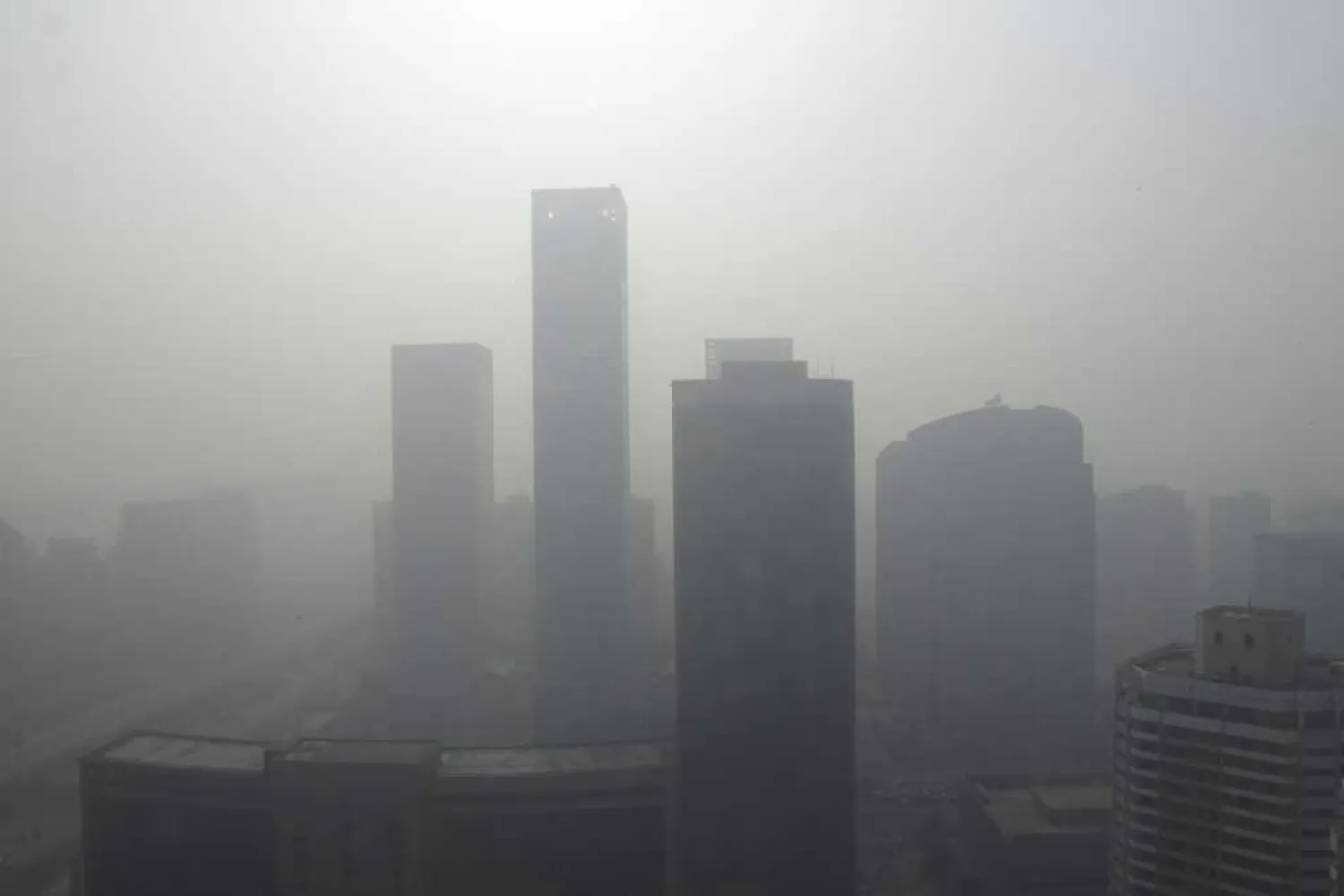

The World Health Organization (WHO) has warned from growing air pollution and its impact on children’s health.
In a 166-page report issued prior to its first conference on health and air pollution held in Geneva, the organization said that over 93 percent of children below 15 years old (1.8 billion child) worldwide breath a severely polluted air, which exposes their health and growth to serious risks.
The report, reviewed by Asharq Al-Awsat, showed that the polluted air causes seven million early deaths yearly, and was the only cause behind the death of 600,000 children in 2016, for suffering from acute respiratory inflammation, which contributed to over $5 trillion losses in the global economy.
The report also highlighted a contrast in the levels and types of pollutants in different regions. The rate of infections caused by the air pollution was higher in low and middle income countries, especially in Africa, southeastern Asia, Eastern Mediterranean, and the Western Pacific.
There are six types of particles including those resulting of buildings' wastes and the lack of trees that prevent the spread of these particles; the dust emitted by the gases of factory chimneys that may contain partially combusted fuel; and the soot composed of the accumulation of carbon particles resulting of the combustion of fuel and organic materials.
Another type of pollutant was remarkably present in the Africa, where people are exposed to high levels of HAP triggered by the widespread use of fuel and polluting technologies in the basic daily needs, such as cooking, heating and lighting.
The report said that global efforts to reduce emissions of these pollutants would lead to benefits for children's health. However, it warned that the persistence of the current situation would expose children, if they managed to stay alive, to many respiratory problems that would imprison them at home for the rest of their lives.


