


When Do Premier League Teams Score their Goals and What Does it Mean?

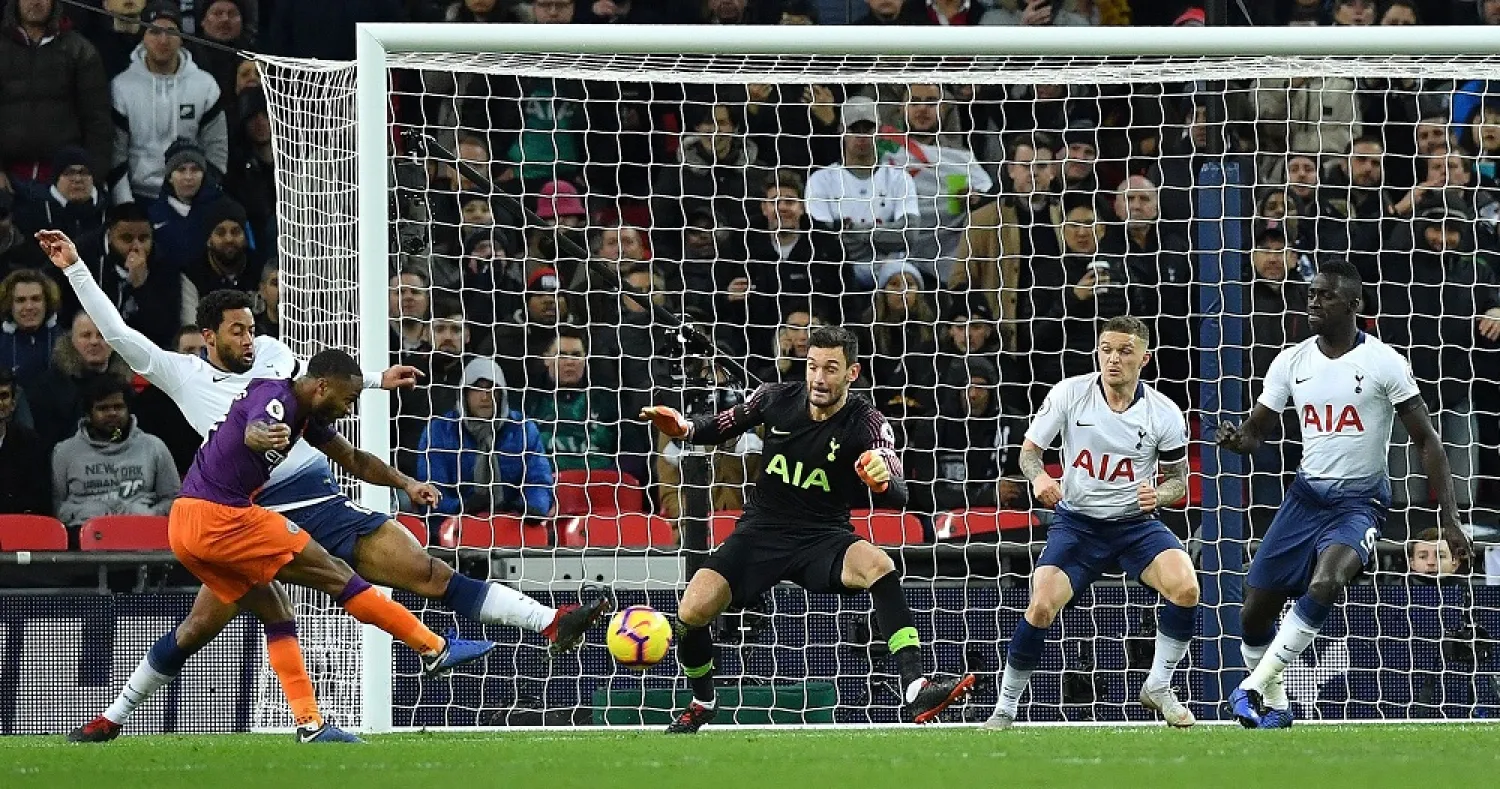
Manchester City's Raheem Sterling shoots on goal against Tottenham during a Premier League match in October. (AFP)
TT

When Do Premier League Teams Score their Goals and What Does it Mean?

Manchester City's Raheem Sterling shoots on goal against Tottenham during a Premier League match in October. (AFP)

We have passed the final international break of the year, the season is a third of the way through, the Premier League table is taking some shape and trends are starting to emerge. With that in mind, we decided to analyze when each team in the league has scored their goals and where they need to improve.

We divided matches into three 30-minute intervals and then worked out which teams were scoring their goals early, which sides were peaking midway through games and which sides were scoring late. A lot of the results are unsurprising but some teams are significantly better in different periods of games – and one team is remarkably consistent.

Slow starters
We begin with the teams that are slow out of the blocks. Perhaps the obvious club that springs to mind in this instance is Manchester United, who have a dismal record within the first 30 minutes of league matches this season. Their goal difference in the first third of matches is -4, which is the same as Huddersfield’s and only better than Wolves, Southampton and Fulham. In fact, Fulham are the only team in the league to have conceded more early goals (Fulham have conceded nine goals in the first 30 minutes compared to Manchester United’s eight).

There was a period when José Mourinho’s team seemed to be stringing together a few comebacks, but their record after the half-hour mark is hardly inspiring. They rank sixth in the league for goal difference in the middle third of matches and just ninth for the final third of games. They did come from behind to beat Newcastle and Bournemouth, but we are not exactly witnessing the rebirth of Fergie Time.

Chelsea have grown into games more than United. Maurizio Sarri’s men have finished matches superbly this season, scoring late against United among many others. Their total of 14 goals in the last 30 minutes of games is the highest in the Premier League – and twice as many goals as Liverpool and Tottenham have scored in the final half-hour.

Leicester have shown the most steady improvement as matches have worn on, starting poorly (ranking 14th for goal difference), settling into the action in the middle third of matches (ninth) and finishing strongly, with a +4 goal difference in the final 30 minutes enough to rank fifth of the 20 teams in the league.

Wolves would also be considerably higher in the league table if they did not start matches so slowly. Nuno Espírito Santo’s side have the second worst goal difference in the division in the first 30 minutes of matches (-6), only for them to spark into life in the next half an hour (+2) and maintain pressure late on (+3).

The team that is improving the most within games, however, is Arsenal. Unai Emery’s side have scored just three goals in the first 30 minutes of their matches this season, a number that soars to 10 in the middle third of games and up to 13 in the final half-hour. If Arsenal could switch on from kick-off, a return to the Champions League would be well within their grasp.

Weak finishers
The teams that finish matches poorly correlate very closely with the standings in the league table. Not one of the top 11 teams in the table has a negative goal difference in the final 30 minutes of matches, whereas all of the bottom nine sides do. Moreover, the severity of each team’s goal difference is almost exactly in line with their place in the table: from Brighton and West Ham (who are 12th and 13th in the league and have a goal difference of -2 for the last 30 minutes), down to Fulham (who are bottom of the table with a goal difference of -11 for the last 30 minutes). There is not much encouragement here for Claudio Ranieri. Fulham are both the league’s slowest starters (-7) and worst finishers (-11); they have conceded more goals in the last half-hour of games than they have scored in the whole campaign.

Crystal Palace, who started the season by beating Fulham but have not won in their last seven matches, are also declining within matches – which is quite remarkable given that they have not scored a single goal within the first half-hour of any of their games this season. They have also kept it tight at the start of matches, with a goal difference of -1 in the first third of games declining to -3 and then -5 as games have gone on.

Liverpool are an interesting case too, though their struggle to finish matches as strongly as they start them has been apparent for some time. Their goal difference of +3 in the final 30 minutes is not bad by any stretch, but it’s a big drop off from the +9 they boast in the middle third of games – and a long way from how Chelsea and Manchester City are finishing games. Jürgen Klopp will need to find a way to bridge this gap if Liverpool are to have any chance of a title tilt. But, in truth, Pep Guardiola’s side are a class apart.

The champions are a picture of relentless consistency, having scored 12 goals in each of the 30-minute brackets assessed, ranking first in the league across all three. They have scored twice as many goals as all but one of the teams in the division in the first 30 minutes and, astonishingly, are yet to concede a goal after the hour-mark. For all of their breathtaking attacking football, City’s defensive resilience when it comes to closing out matches has been a real highlight this season and it is one of the main reasons they are the team to beat once more.

The Guardian Sport


Shakhtar Boss Pays Ukrainian Racer $200,000 After Games Disqualification

Ukrainian President Volodymyr Zelenskiy holds helmet as he meets with a Ukrainian skeleton racer Vladyslav Heraskevych , who was disqualified from the Olympic skeleton competition over his "helmet of remembrance" depicting athletes killed since Russia's invasion and his father and coach, Mykhailo Heraskevych, amid Russia's attack on Ukraine, in Munich, Germany February 13, 2026. (Ukrainian Presidential Press Service/Handout via Reuters)
TT

Shakhtar Boss Pays Ukrainian Racer $200,000 After Games Disqualification

Ukrainian President Volodymyr Zelenskiy holds helmet as he meets with a Ukrainian skeleton racer Vladyslav Heraskevych , who was disqualified from the Olympic skeleton competition over his "helmet of remembrance" depicting athletes killed since Russia's invasion and his father and coach, Mykhailo Heraskevych, amid Russia's attack on Ukraine, in Munich, Germany February 13, 2026. (Ukrainian Presidential Press Service/Handout via Reuters)

The owner of ‌Ukrainian football club Shakhtar Donetsk has donated more than $200,000 to skeleton racer Vladyslav Heraskevych after the athlete was disqualified from the Milano Cortina Winter Games before competing over the use of a helmet depicting Ukrainian athletes killed in the war with Russia, the club said on Tuesday.

The 27-year-old Heraskevych was disqualified last week when the International Bobsleigh and Skeleton Federation jury ruled that imagery on the helmet — depicting athletes killed since Russia invaded Ukraine in 2022 — breached rules on athletes' expression at ‌the Games.

He ‌then lost an appeal at the Court ‌of ⁠Arbitration for Sport hours ⁠before the final two runs of his competition, having missed the first two runs due to his disqualification.

Heraskevych had been allowed to train with the helmet that displayed the faces of 24 dead Ukrainian athletes for several days in Cortina d'Ampezzo where the sliding center is, but the International Olympic Committee then ⁠warned him a day before his competition ‌started that he could not wear ‌it there.

“Vlad Heraskevych was denied the opportunity to compete for victory ‌at the Olympic Games, yet he returns to Ukraine a ‌true winner," Shakhtar President Rinat Akhmetov said in a club statement.

"The respect and pride he has earned among Ukrainians through his actions are the highest reward. At the same time, I want him to ‌have enough energy and resources to continue his sporting career, as well as to fight ⁠for truth, freedom ⁠and the remembrance of those who gave their lives for Ukraine," he said.

The amount is equal to the prize money Ukraine pays athletes who win a gold medal at the Games.

The case dominated headlines early on at the Olympics, with IOC President Kirsty Coventry meeting Heraskevych on Thursday morning at the sliding venue in a failed last-minute attempt to broker a compromise.

The IOC suggested he wear a black armband and display the helmet before and after the race, but said using it in competition breached rules on keeping politics off fields of play. Heraskevych also earned praise from Ukraine President Volodymyr Zelenskiy.


Speed Skating-Italy Clinch Shock Men’s Team Pursuit Gold, Canada Successfully Defend Women’s Title

 Team Italy with Davide Ghiotto, Andrea Giovannini, Michele Malfatti, celebrate winning the gold medal on the podium of the men's team pursuit speed skating race at the 2026 Winter Olympics, in Milan, Italy, Tuesday, Feb. 17, 2026. (AP)
Team Italy with Davide Ghiotto, Andrea Giovannini, Michele Malfatti, celebrate winning the gold medal on the podium of the men's team pursuit speed skating race at the 2026 Winter Olympics, in Milan, Italy, Tuesday, Feb. 17, 2026. (AP)
TT

Speed Skating-Italy Clinch Shock Men’s Team Pursuit Gold, Canada Successfully Defend Women’s Title

 Team Italy with Davide Ghiotto, Andrea Giovannini, Michele Malfatti, celebrate winning the gold medal on the podium of the men's team pursuit speed skating race at the 2026 Winter Olympics, in Milan, Italy, Tuesday, Feb. 17, 2026. (AP)
Team Italy with Davide Ghiotto, Andrea Giovannini, Michele Malfatti, celebrate winning the gold medal on the podium of the men's team pursuit speed skating race at the 2026 Winter Olympics, in Milan, Italy, Tuesday, Feb. 17, 2026. (AP)

An inspired Italy delighted the home crowd with a stunning victory in the Olympic men's team pursuit final as

Canada's Ivanie Blondin, Valerie Maltais and Isabelle Weidemann delivered another seamless performance to beat the Netherlands in the women's event and retain their title ‌on Tuesday.

Italy's ‌men upset the US who ‌arrived ⁠at the Games ⁠as world champions and gold medal favorites.

Spurred on by double Olympic champion Francesca Lollobrigida, the Italian team of Davide Ghiotto, Andrea Giovannini and Michele Malfatti electrified a frenzied arena as they stormed ⁠to a time of three ‌minutes 39.20 seconds - ‌a commanding 4.51 seconds clear of the ‌Americans with China taking bronze.

The roar inside ‌the venue as Italy powered home was thunderous as the crowd rose to their feet, cheering the host nation to one ‌of their most special golds of a highly successful Games.

Canada's women ⁠crossed ⁠the line 0.96 seconds ahead of the Netherlands, stopping the clock at two minutes 55.81 seconds, and

Japan rounded out the women's podium by beating the US in the Final B.

It was only Canada's third gold medal of the Games, following Mikael Kingsbury's win in men's dual moguls and Megan Oldham's victory in women's freeski big air.


Lindsey Vonn Back in US Following Crash in Olympic Downhill 

Milano Cortina 2026 Olympics - Alpine Skiing - Women's Downhill 3rd Official Training - Tofane Alpine Skiing Centre, Belluno, Italy - February 07, 2026. Lindsey Vonn of United States in action during training. (Reuters)
TT

Lindsey Vonn Back in US Following Crash in Olympic Downhill 

Milano Cortina 2026 Olympics - Alpine Skiing - Women's Downhill 3rd Official Training - Tofane Alpine Skiing Centre, Belluno, Italy - February 07, 2026. Lindsey Vonn of United States in action during training. (Reuters)

Lindsey Vonn is back home in the US following a week of treatment at a hospital in Italy after breaking her left leg in the Olympic downhill at the Milan Cortina Games.

“Haven’t stood on my feet in over a week... been in a hospital bed immobile since my race. And although I’m not yet able to stand, being back on home soil feels amazing,” Vonn posted on X with an American flag emoji. “Huge thank you to everyone in Italy for taking good care of me.”

The 41-year-old Vonn suffered a complex tibia fracture that has already been operated on multiple times following her Feb. 8 crash. She has said she'll need more surgery in the US.

Nine days before her fall in Cortina d'Ampezzo, Italy, Vonn ruptured the ACL in her left knee in another crash in Switzerland.

Even before then, all eyes had been on her as the feel-good story heading into the Olympics for her comeback after nearly six years of retirement.
