
Gordon Taylor, Football’s Fattest Cat, Must Go If PFA Is to Modernise

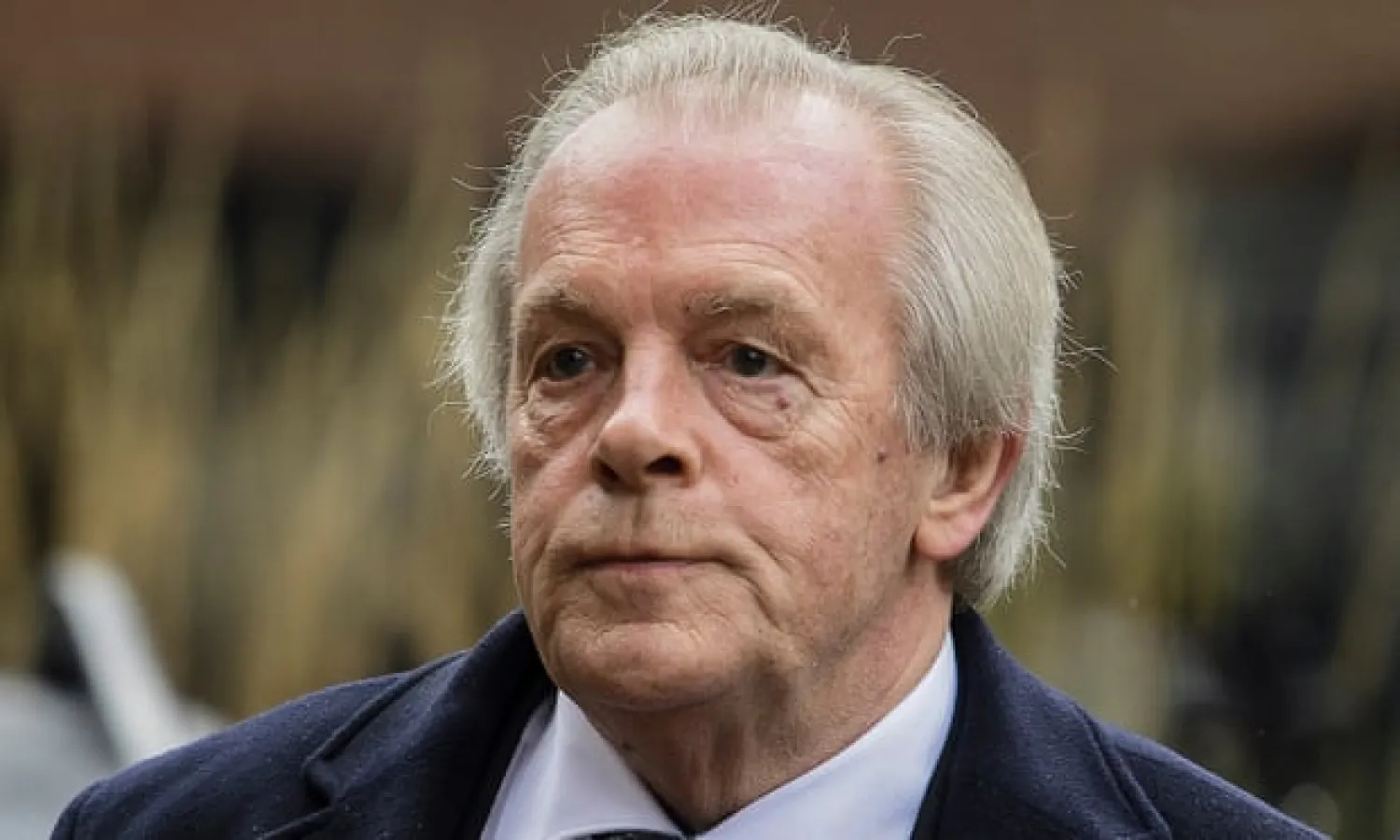
 Gordon Taylor, who has just celebrated his 40th anniversary at the PFA, who became chairman in November 1978 and chief executive three years later. Photograph: Ben Cawthra/REX/Shutterstock
Gordon Taylor, who has just celebrated his 40th anniversary at the PFA, who became chairman in November 1978 and chief executive three years later. Photograph: Ben Cawthra/REX/Shutterstock
TT

Gordon Taylor, Football’s Fattest Cat, Must Go If PFA Is to Modernise

 Gordon Taylor, who has just celebrated his 40th anniversary at the PFA, who became chairman in November 1978 and chief executive three years later. Photograph: Ben Cawthra/REX/Shutterstock
Gordon Taylor, who has just celebrated his 40th anniversary at the PFA, who became chairman in November 1978 and chief executive three years later. Photograph: Ben Cawthra/REX/Shutterstock

What would your reaction be if I were to point out that in the past week Gordon Taylor has quietly passed the 40th anniversary since he took his place at football’s top table and set about the process of transforming himself from a barrel-chested winger at Bury, from the puddles and potholes of the old Third Division, into a life of establishment wealth?

If you could put aside any cynicism, try not to dwell too long on the deficiencies of his organisation and overlook that it is traditionally he, not Richard Scudamore, who is the real Bagpuss of football’s fat-cat culture, it might even be possible to manage some grudging admiration for such a feat of longevity.

When Taylor replaced Derek Dougan as chairman of the Professional Footballers’ Association on 13 November, 1978, the other stories of the time included a strike of bakery workers that had led to bread rationing. Watership Down was at the pictures. A pint of milk cost 11p and the average annual salary was £5,440. Taylor had chestnut hair, a kipper tie and a boy-next-door look. If, without wishing to be too cruel, you lived next door to a boy who turned out to be monotone, divisive, wildly over‑remunerated and puffed up with self-importance.

In fairness to the old boy, nobody could argue that, on a personal level, his professional life has not been a success when Taylor has hived off preposterously large amounts of money for himself, held a position of influence for four decades and been decorated in the 2008 New Year honours list with an OBE that I am reliably assured doesn’t stand for Other Buggers’ Efforts.

Taylor’s first interview as chairman, three years before taking the chief executive role, emphasised his desire to create a better understanding between players, their clubs and referees. He might not have succeeded on that front but he must have done something right to last so long and, though it is a challenge sometimes to remember exactly what that is, he did earn the accolade from the Times in 1985 for being “undoubtedly the most impressive administrator and negotiator in football”. Most heroically, you might recall, when the big television money arrived and he threatened a players’ strike unless his union clawed its way to a decent wedge.

The Premier League duly came up with an offer to settle everything amicably. Gordon’s response, true to form, was that they might have to be a lot more amicable than that.

Out of that, he hasn’t done too badly bearing in mind we live in an age when marvelling, queasily, at the sums he pays himself feels like an annual part of the football calendar. Last year, the PFA’s accounts revealed it was £2.29m. Previously, his earnings multiplied almost three fold, from £1.13m to £3.37m after bonuses. Which is nice work if you can get it: Taylor was not just raking in more than any other trade union boss on the planet, but upwards of Didier Deschamps and Joachim Löw, managers of the last two World Cup‑winning sides.

It is no wonder he has taken exception that Ben Purkiss, the current PFA chairman, has broken ranks by calling for an independent review into how the organisation is run and the possibility, ultimately, of regime change. “Sometimes you have to make a stand for what is right,” Purkiss says. “Football is rapidly evolving, players are rapidly evolving and the PFA needs to evolve, too. Players past, present and future need a PFA for the modern player.” Which is one way of saying the organisation is stuck in a time warp.

Taylor, of course, will see it differently and perhaps we should no longer be surprised by the self‑interest at this end of the sport when the Strange Case of Richard Scudamore’s Golden Handshake has given us another eye-watering glimpse into the football bubble over the last week. The news of Bruce Buck, Chelsea’s chairman, arranging for the Premier League’s chief executive – a friend with whom he goes shooting, we are informed – to receive a £5m farewell gift, comprising £250,000 from each club, was certainly a spectacular low. Though we probably should not be surprised that Taylor was conspicuous by his absence in the stampede to point that out. It must be quite hard, I suspect, lecturing about money when one Premier League chairman has previously accused Taylor of “building a mausoleum of greed” and, lest it be forgotten, the PFA’s leader once signed a hush-hush £700,000 payment from News International for being a victim of phone-hacking, as opposed to exposing a scandal he might have reasonably assumed had affected his members. As the News of the World’s lawyers put it in a letter to the Commons culture, media and sport committee, Taylor’s legal team was operating with the clear instructions he “wanted to be vindicated or made rich”.

If nothing else, he has achieved that last ambition. I do wonder, though, if there is ever a flicker of embarrassment when he considers that his last reported salary was more than four times the amount the PFA paid that year in benevolent grants for the thousands of former professionals it is supposed to represent and look after.

Does the thought occur that the financial distribution can look wildly disproportionate, callous even, when there are so many veterans of the sport hobbling around on arthritic joints or struggling in some cases, through the fog of irreparably damaged minds, to remember the days when they pulled on a football strip? Can Gordon look in the mirror and tell himself, hand on heart, that his priorities have not been badly distorted when most reasonable people might assume the principal purpose of the PFA is to care for the members who have addictions, mental health issues, serious financial difficulties and so on? Is he so brass-necked he can possibly find justification that an organisation with £50m in the bank has, according to Purkiss, spent only £100,000 on its studies into dementia? Or that it was 2002 when the PFA, together with the Football Association, announced a joint 10-year research programme but not until late 2017, unforgivably, that they decided it was time to go through with it properly?

The family of Jeff Astle, one of the men who suffered catastrophic brain trauma from repeatedly heading the ball, has already called for Taylor to resign. Astle was 59 when he died and maybe you caught the BBC Inside Out feature when Dawn, the daughter of the former England and West Bromwich Albion striker, walked out of a meeting at PFA headquarters with the man who should have been offering her, and the sport as a whole, more than watery excuses. Not that the evidence of Taylor’s jumbled priorities is restricted to just the one matter. It intrigues me, for example, that the PFA can fork out nearly £2m for an LS Lowry painting, plus £70,000 every year on a box at Manchester City and goodness knows how much more on a museum’s worth of other football memorabilia, but will donate only £125,000 annually to keep the chronically under-resourced Kick It Out ticking over.

I also wonder if it ever crosses Gordon’s mind that when the Dispatches documentary Soccer’s Foul Play highlighted, in 1997, the monstrous crimes committed by Barry Bennell, as well as flagging up the very significant likelihood of other paedophiles lurking within the sport, that was the point the leader of the PFA should have recognised there was a serious problem, rather than when Andy Woodward came forward, via the Guardian, almost 20 years later.

It has not been easy for the FA, Manchester City and some of the other clubs who are most seriously implicated in football’s sexual-abuse scandal to understand why more was not done at the time, mostly because they are investigating regimes that are long gone. But the PFA and Gordon Taylor don’t have that get-out clause. He was there. He has been full-time at the PFA since 1980 and chief executive since 1981.

Can he understand, therefore, why so many of the victims are looking his way, wondering why the PFA – the players’ union, for heaven’s sake – is guilty of, at best, a startling lack of curiosity? Or why Deborah Davies, the brilliant journalist who put together the documentary for Channel 4, says his apparent inaction – “I wasn’t aware of any serious commitment by Gordon Taylor to investigate” – was particularly shocking given that he had helped to develop a youth training scheme programme throughout the game? “That was the 1980s,” she says, “when so many of those 16-year-olds had endured years of sexual abuse, partly because they felt no one in the professional game would support them if they spoke out.”

As you might expect, the PFA has shifted its priorities, post-Woodward, and been particularly obliging to SAVE, one of the survivors’ groups. But the point remains: how many boys could have been saved if the relevant authorities had acted differently at the time? Some of the letters and other messages that reached the PFA after Dispatches were heartbreaking. And if Clive Sheldon, the QC in charge of the FA’s independent inquiry, makes the same observation, as he undoubtedly should, it feels perfectly reasonable to suggest Taylor should do the decent thing and walk.

Don’t bet on it, though. There is a reason why the Daily Mail’s Charlie Sale described Taylor as “untouchable” recently, surrounded by some loyal allies in an organisation that has the feel sometimes of a personalty cult, dominated by one man. The PFA has some good people among its ranks. It is also desperately in need of modernisation and the bottom line here is perfectly simple: it will never happen until there has been a change at the top.

What puzzles me, more than anything, is the general reaction throughout football when the sport is reminded of Taylor’s elastic principles. The time, for instance, it was reported that the man who backed a “zero-tolerance” policy towards gambling had splurged £4m on 2,000 bets and owed a bookmaker more than £100,000. Or you might remember his efforts to bar the agent Rachel Anderson from his organisation’s annual dinner because he wanted a men-only event; the cack-handed apology after likening Ched Evans to the Hillsborough justice campaigners; the tragicomedy of Reginald D Hunter’s N-word routine at the PFA’s 2013 awards do; and on and on. Every time, the sport seems to roll its eyes, nod knowingly and accept that is the way Gordon Taylor OBE operates. Nobody, until now, seems willing to take him on properly and ask whether it should be better, and what needs to be done about it.

Perhaps that is because he is not an easy man to take on. Purkiss now says he has been informed his eligibility as chairman is under question, on the grounds that the 34-year-old defender is currently a non-contract player at Walsall. It stinks, and once again I am reminded of what Gareth Southgate said about loving the sport but not necessarily liking the industry. Though, strictly speaking, it was William McGregor, founder of the Football League, who made the point first. McGregor was quoted, in 1909, in League Football and the Men Who Made It. “Beware of the clever, sharp men who are creeping into the game,” he said, very astutely.

The Guardian Sport


Sports Investment Forum Allocates Third Day to Women's Empowerment to Promote Sustainable Investment in Women’s Sports

Sports Investment Forum Allocates Third Day to Women's Empowerment to Promote Sustainable Investment in Women’s Sports
TT

Sports Investment Forum Allocates Third Day to Women's Empowerment to Promote Sustainable Investment in Women’s Sports

Sports Investment Forum Allocates Third Day to Women's Empowerment to Promote Sustainable Investment in Women’s Sports

The Sports Investment Forum announced that the third day of its 2026 edition will be dedicated to empowering women in the sports sector, in partnership with Princess Nourah bint Abdulrahman University. The move reflects the forum’s commitment to supporting the objectives of Saudi Vision 2030 and enhancing the role of women in the sports industry and sports investment.

This allocation comes as part of the forum’s program, scheduled to take place from April 20 to 22, at The Ritz-Carlton, Riyadh. The third day will feature a series of strategic sessions and specialized workshops focused on sustainable investment in women’s sports, the empowerment of female leadership, the development of inclusive sports cities, and support for research and studies in women’s sports, SPA reported.

Forum organizers emphasized that the partnership with Princess Nourah bint Abdulrahman University, recognized as the largest women’s university in the world, represents a model of integration between the academic and investment sectors. The partnership contributes to building a sustainable knowledge base that supports the growth of women’s sports and enhances investment opportunities at both local and international levels.

The dedicated day will address several strategic themes, including sustainable investment in women’s leagues and events, boosting scalable business models, empowering female leaders within federations, clubs, and sports institutions, and developing inclusive sports cities that ensure women’s participation in line with the highest international standards. It will also include the launch of research initiatives and academic partnerships to support future policies and strategies for the sector.

This approach aims to transform women’s empowerment in sports from a social framework into a sustainable investment and development pathway that enhances women’s contributions to the sports economy and reinforces Saudi Arabia’s position as a leading regional hub for advancing women’s sports.

The day is expected to attract prominent female leaders, decision-makers, investors, and local and international experts, in addition to the signing of several memoranda of understanding and joint initiatives supporting women’s empowerment in the sports sector.

The Sports Investment Forum reiterated that empowering women is a strategic pillar in developing the national sports ecosystem, contributing to economic growth objectives, enhancing quality of life, and building a more inclusive and sustainable sports community.


Liverpool Boss Slot Says Isak in 'Final Stages of Rehab'

Soccer Football -  FA Cup - Fourth Round - Liverpool v Brighton & Hove Albion - Anfield, Liverpool, Britain - February 14, 2026 Liverpool manager Arne Slot celebrates after the match REUTERS/Phil Noble
Soccer Football - FA Cup - Fourth Round - Liverpool v Brighton & Hove Albion - Anfield, Liverpool, Britain - February 14, 2026 Liverpool manager Arne Slot celebrates after the match REUTERS/Phil Noble
TT

Liverpool Boss Slot Says Isak in 'Final Stages of Rehab'

Soccer Football -  FA Cup - Fourth Round - Liverpool v Brighton & Hove Albion - Anfield, Liverpool, Britain - February 14, 2026 Liverpool manager Arne Slot celebrates after the match REUTERS/Phil Noble
Soccer Football - FA Cup - Fourth Round - Liverpool v Brighton & Hove Albion - Anfield, Liverpool, Britain - February 14, 2026 Liverpool manager Arne Slot celebrates after the match REUTERS/Phil Noble

Liverpool manager Arne Slot said on Thursday he believes striker Alexander Isak is in the "final stages of rehab" and could return by the end of next month to bolster the Reds' push for Champions League qualification.

The British record signing has been sidelined since mid-December when he fractured a bone in his lower leg and needed ankle surgery following a sliding tackle from Tottenham's Micky van de Ven.

His injury came just as 26-year-old Sweden international Isak, who joined Premier League champions Liverpool for £125 million ($169 million) from top-flight rivals Newcastle in September, was finding his form at Anfield with two goals in six matches.

"Alex has been on the pitch, not with his football boots but with his running shoes for the first time this week," Slot told reporters, according to AFP.

"The next step is doing work with the ball, which every player likes most, then the next step is to come into the group and then it takes a while before you're ready to play.

"It will be some time around there, end of March, start of April, where he is hopefully back with the group. That is not to say you are ready to play, let alone start a game.

"But it's nice that rehab goes well; that's a compliment to him and our medical staff.

"I think we all know the moment you go on the pitch it doesn't take three months but these final stages of rehab can also make it change."

Isak is one of five Liverpool first-team players currently sidelined, with only Jeremie Frimpong close to a return.

The right-back has been out since the end of last month with a hamstring injury but is expected to be available for next weekend's visit of West Ham.

Liverpool have had a rare week without a match ahead of Sunday's trip to Nottingham Forest.

"It is nice and useful as the players we are having, nine out of 10 go to the national team so for seven, eight, nine months they hardly have a time off," said Dutch boss Slot, who insisted he had no need of a rest himself.

"It was nice but I did not really need it. Last season I felt I needed it more in this period of time. I am enjoying the work I do here."

Liverpool, after a slow start to their title defense -- are now sixth and within three points of the top four with 12 games to go.

They next play three of the bottom four clubs as they look to get themselves into a Champions League position.

Premier League leaders Arsenal were left just five points clear of second-placed Manchester City after blowing a two-goal lead in a shock 2-2 draw away to rock-bottom Wolves on Wednesday.

Slot, however, said: "We didn't need yesterday to know how difficult it is to win a Premier League game. What has made the Premier League nicer this season than three, four, five, six years ago is it's more competitive."


Familiar Face Returns to Marseille where Habib Beye Takes Charge

(FILES) Rennes' French-Senegalese head coach Habib Beye looks on before the French L1 football match between Le Havre AC (HAC) and Rennes at the Oceane Stadium in Le Havre, Northwestern France, on April 13, 2025. (Photo by Lou BENOIST / AFP)
TT

Familiar Face Returns to Marseille where Habib Beye Takes Charge

(FILES) Rennes' French-Senegalese head coach Habib Beye looks on before the French L1 football match between Le Havre AC (HAC) and Rennes at the Oceane Stadium in Le Havre, Northwestern France, on April 13, 2025. (Photo by Lou BENOIST / AFP)

Marseille is looking to reignite its season with a new coach on board.

The nine-time French champion appointed Habib Beye to replace Roberto De Zerbi following a bad patch of form that saw the club exit the Champions League and drop 12 points behind Ligue 1 leader Lens.

Beye, a former Senegal international who played for Marseille, will be in charge of Friday's trip to Brest.

After leading Red Star to promotion to Ligue 2, Beye spent the last year and a half as the Rennes coach. The club sacked Beye this month.

Key matchups Marseille has failed to win its past three league games, badly damaging its title hopes. The results including a 5-0 mauling at PSG have left fans fuming. The club hopes Beye, a disciplinarian advocating ball possession and a strong attacking identity, will produce a jolt.

Beye's hiring "refocuses us on the challenges we still need to tackle between now and the end of the season,” The Associated Press quoted Marseille owner Frank McCourt as saying.

Since McCourt bought Marseille in 2016, the former powerhouse has failed to find any form of stability in a succession of coaches and crises. It hasn’t won the league title since 2010.

PSG abandoned the top spot to Lens after losing to Rennes 3-1 last week. Luis Enrique's team bounced back with a 3-2 win at Monaco in the first leg of their Champions League playoff and hosts last-placed Metz on Saturday. Lens welcomes Monaco the same day.

Third-placed Lyon, on a stunning 13-match winning run, plays at Strasbourg on Sunday.
Players to watch With the World Cup in his country looming, former Arsenal striker Folarin Balogun is hitting form at the right time. The American forward scored twice inside 18 minutes against PSG and has 10 goals and four assists this season.

At PSG, the man in form is Désiré Doué.

After his team quickly fell behind by two goals against Monaco midweek, Doué came to the rescue to turn things around. The France international was relentless and left his mark on the match after coming on as a replacement for Ousmane Dembélé. He first reduced the deficit, played a role in Achraf Hakimi’s equalizer then netted the winner.
Out of action Dembélé is expected to miss PSG's match against Metz because of an injured left calf.

Off the field PSG was sanctioned with the partial closure of the Auteuil stand for two matches and a 10,000 euros ($11,800) fine by the disciplinary committee of the French league following banners displayed and insults directed by supporters during the match against Marseille on Feb. 8. at the Parc des Princes. There were brief discriminatory chants about Marseille at the start of the game and the referee stopped play for about one minute around the 70th.