Netanyahu to Conduct Imminent Visit to Chad to Normalize Relationshttps://english.aawsat.com/home/article/1481731/netanyahu-conduct-imminent-visit-chad-normalize-relations
Netanyahu to Conduct Imminent Visit to Chad to Normalize Relations
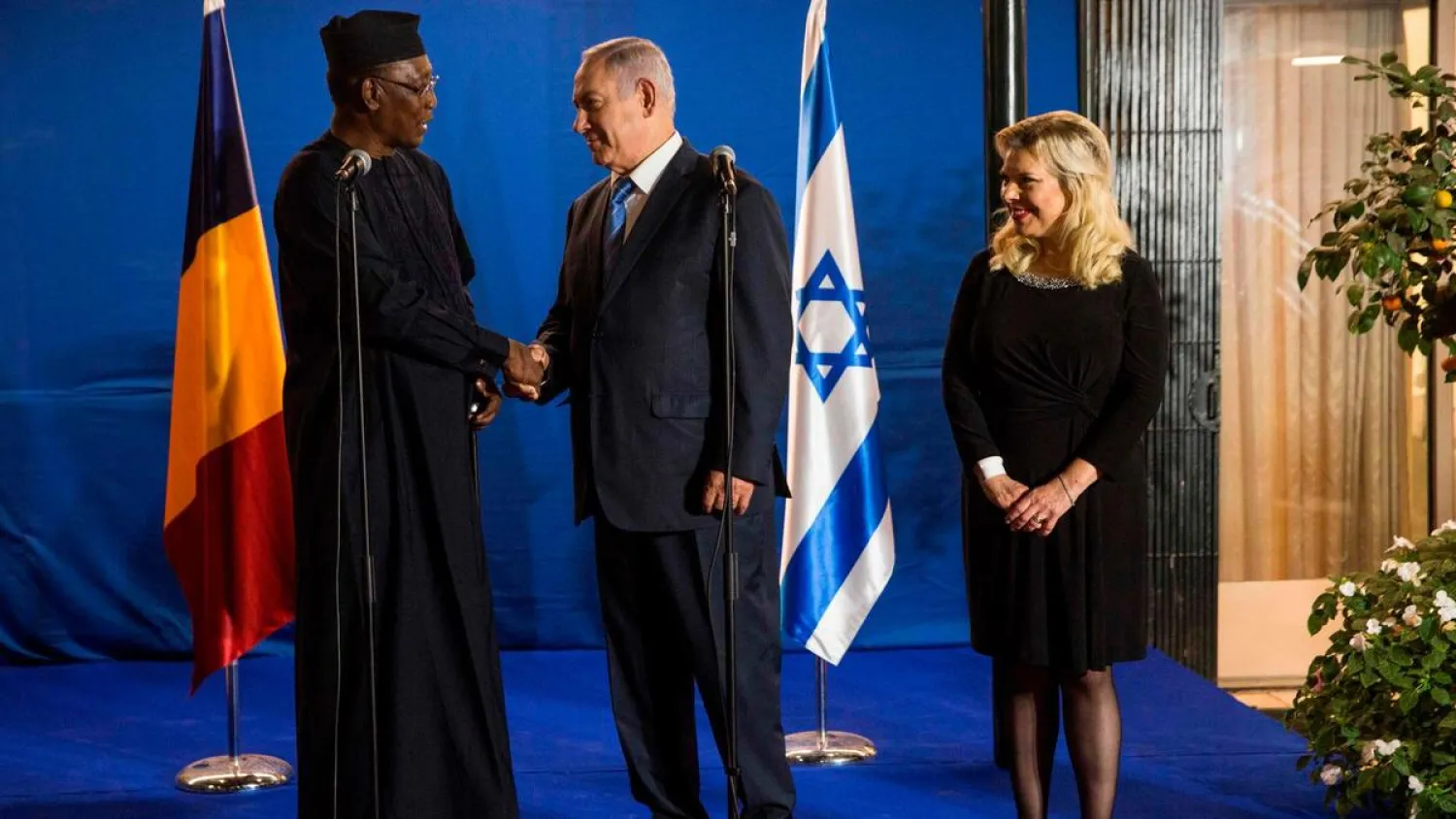
Israeli Prime Minister Benjamin Netanyahu shakes hands with Chadian President Idriss Deby (AFP)
Tel-Aviv, Ramallah - Asharq Al-Awsat
TT
TT
Netanyahu to Conduct Imminent Visit to Chad to Normalize Relations
Israeli Prime Minister Benjamin Netanyahu shakes hands with Chadian President Idriss Deby (AFP)
Israel said on Tuesday it would resume relations with Chad, which were halted in 1972, after Chadian President Idriss Deby made a surprise visit to Jerusalem this week.
Following Deby’s two-day visit, Israel said in a statement published by Reuters that Prime Minister Benjamin Netanyahu would “visit Chad soon and announce, with the Chadian president, the renewal of ties”.
The statement did not mention, however, any specific date for the visit.
Netanyahu and Deby met in Jerusalem and “discussed common threats and the fight against terrorism” as well as cooperation in agriculture, solar energy, water security and health, according to the Israeli premier’s office.
Netanyahu described the resumption of relations with Chad as an example of Israel’s ability to achieve “diplomatic victories” in Africa and the Middle East, despite its conflict with the Palestinians.
Meanwhile, Fatah and Hamas criticized on Tuesday the visit of the Chadian president to Israel. The German News Agency reported that a member of the Fatah Central Committee, Mohammad Ashtiyeh, told the official Palestinian radio that the visit was “an unacceptable move, which increases the Palestinian people’s deception.”
Hamas Spokesman Fawzi Barhoum rejected the “normalization of relations” with Israel, and called for the cessation of these dangerous policies. Barhoum urged the international community to support the Palestinian people and to “maintain the policy of boycotting and isolating the Israeli entity, the biggest threat to the whole region.”
In the same context, the Palestinian Authority is working to hold an emergency meeting of the Arab League and a conference of Islamic countries to discuss the issue of “normalization” with Israel.
Nabil Shaath, adviser to Palestinian President Mahmoud Abbas, told the Israeli newspaper Haaretz: “The leadership is monitoring developments in Israeli diplomatic relations, which contradict the decisions of the Arab League and the Islamic Summit.”
“There is a series of Arab and Islamic resolutions and declarations explicitly stating that there will be no normalization process with Israel without reaching an agreement on the Palestinian issue, on the basis of the Arab Peace Initiative and the resolutions of the international community,” he added.
Asharq Al-Awsat Reveals Contents of Hamas and Factions’ Response to Mediators’ Amendments and Mladenovhttps://english.aawsat.com/arab-world/5268852-asharq-al-awsat-reveals-contents-hamas-and-factions%E2%80%99-response-mediators%E2%80%99
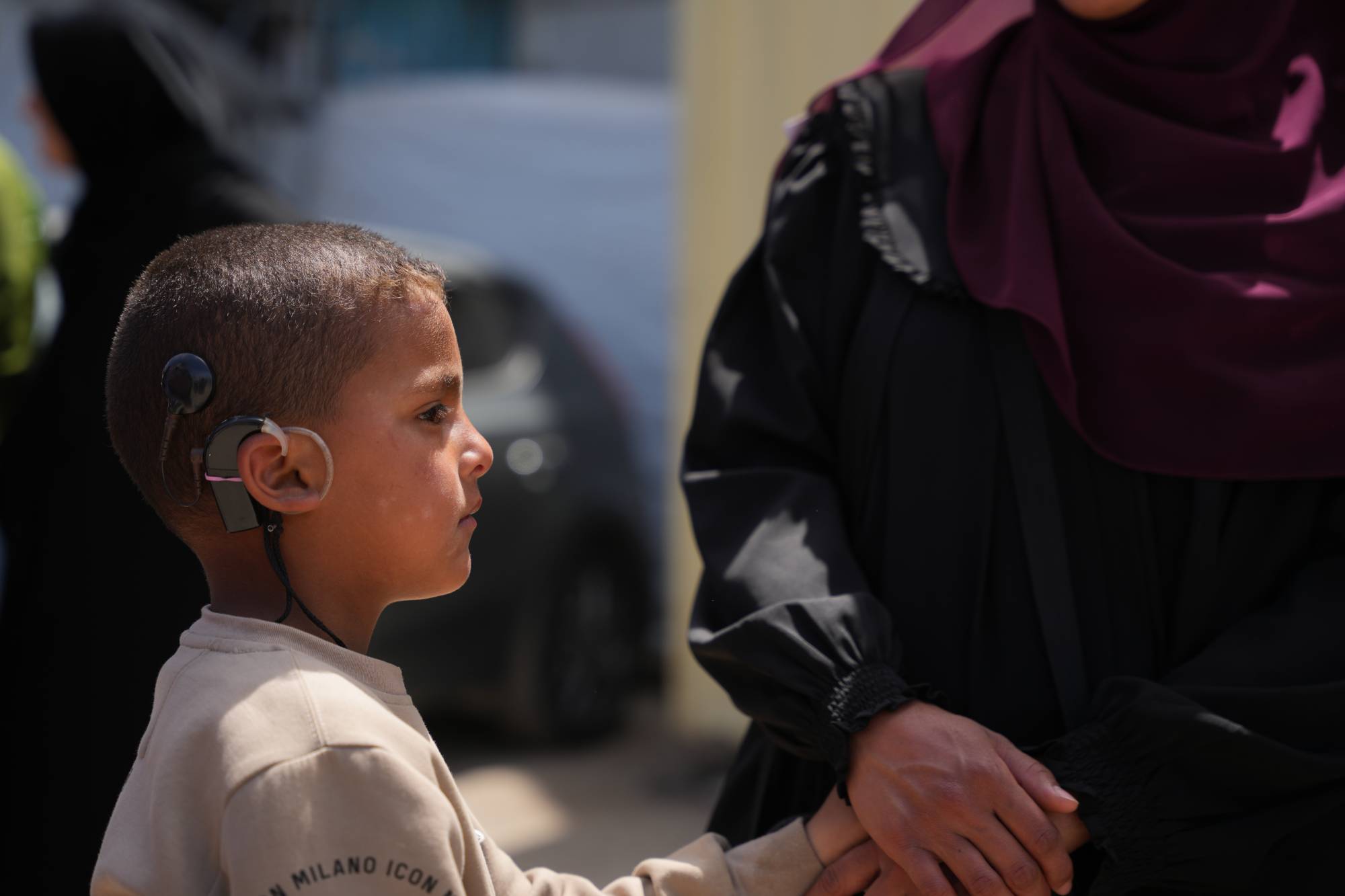
Palestinians take part in a protest against the limited access to medical spare parts and batteries for deaf and hearing-impaired individuals in the Gaza Strip, as they gather in Gaza City, Saturday, May 2, 2026. (AP Photo/Abdel Kareem Hana)
Asharq Al-Awsat Reveals Contents of Hamas and Factions’ Response to Mediators’ Amendments and Mladenov
Palestinians take part in a protest against the limited access to medical spare parts and batteries for deaf and hearing-impaired individuals in the Gaza Strip, as they gather in Gaza City, Saturday, May 2, 2026. (AP Photo/Abdel Kareem Hana)
Hamas and Palestinian factions submitted their response at dawn on Saturday to the mediators and the High Representative for Gaza at the Peace Council, Nickolay Mladenov, regarding the amendments paper presented to the factions, which had previously submitted their initial response to the “roadmap” presented on April 19.
The response by Hamas and the Palestinian factions included amendments to some of the points contained in Mladenov’s paper, which Asharq Al-Awsat had disclosed on Friday. These included acceptance by Hamas and the factions of a text acceptable to all parties within the framework of US President Donald Trump’s plan, commitment to what was agreed in Sharm el-Sheikh in full, and acceptance of the recently presented roadmap as a basis for entering negotiations to reach an agreement quickly.
It also stipulated that the issue of weapons be addressed in accordance with Trump’s plan and UN Security Council Resolution 2803, and that both continue to be implemented in a way that ensures Palestinians obtain self-determination and establish a sovereign state.
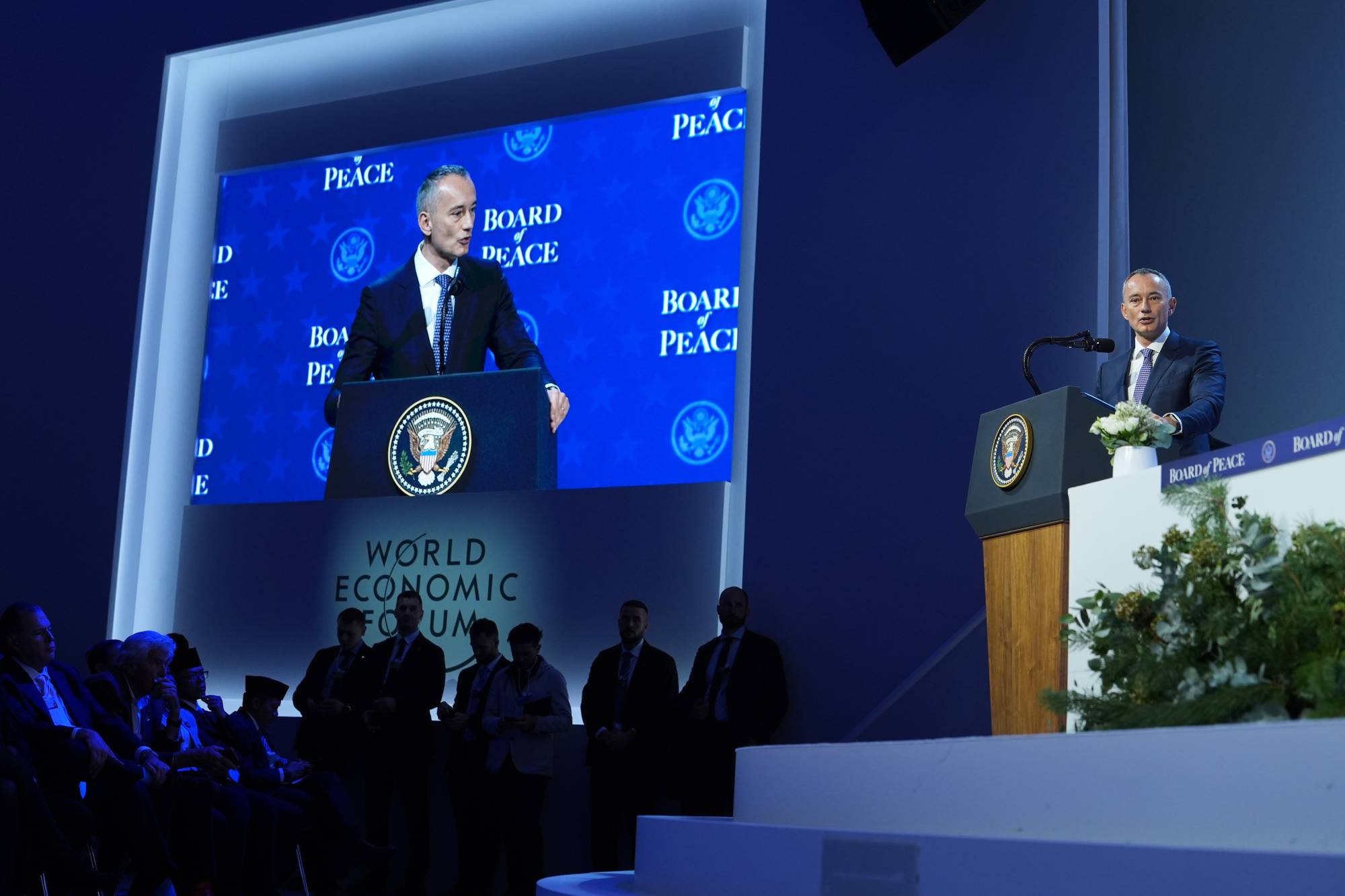
FILE - Board member Nickolay Mladenov speaks after the signing of a Board of Peace charter during the Annual Meeting of the World Economic Forum in Davos, Switzerland, Thursday, Jan. 22, 2026. (AP Photo/Evan Vucci, file)
The response by Hamas and the factions, as revealed by Asharq Al-Awsat, to Mladenov’s amendments expressed appreciation for the mediators’ efforts to reach a text acceptable to all parties within the framework of Trump’s plan, and called for Israel’s full and immediate commitment to the obligations of this text as stipulated in the Sharm el-Sheikh agreement, according to an agreed timetable.
It also included approval of the recently submitted roadmap as a basis for entering serious negotiations on its contents, and its implementation after reaching an acceptable agreement as soon as possible, in a way that ensures a ceasefire between the two sides, an end to the humanitarian crisis in the Gaza Strip, full withdrawal from the Strip, reconstruction, the entry of international forces, addressing the issue of weapons, and transferring governance of the Strip to the national committee with full powers.
It further stressed that the issue of weapons would be handled in connection with the political rights of the Palestinian people, within a national framework, and in the context of establishing the necessary security arrangements as a basis for guaranteeing security for both sides. It added that mediators and all parties should work to achieve the objective stated in Trump’s plan of establishing a sovereign Palestinian state and securing the Palestinian people’s right to self-determination.
A senior Hamas source told Asharq Al-Awsat that the movement submitted this response on behalf of the Palestinian factions after taking into account observations presented by some factions, noting that there are substantive remarks on Mladenov’s amended paper.
The source indicated that Hamas leadership senses a degree of discomfort among the mediators regarding the submitted response after changes were made to it. This was confirmed by another source from a Palestinian faction whose representatives met Egyptian mediators, who expressed surprise at the manner of the response. Two sources from Palestinian factions represented by delegations in Cairo said that Hamas’s response showed divergence from what some factions had proposed.
A Palestinian child participates in a protest against the shortage of medical equipment and hearing aid batteries for deaf and hearing-impaired individuals in Gaza City on Saturday (AP)
According to the sources, some points of contention relate to the factions’ recommendation for immediate and full implementation of the first phase, as set out in the roadmap, paving the way for the administrative committee to assume its role, and establishing a clear timetable to follow up and monitor implementation of the phase’s provisions in a simultaneous and balanced manner between the parties. This was not addressed by Hamas, particularly regarding simultaneity and balance.
The factions’ remarks stressed that the issue of weapons should be addressed within a political horizon for the Palestinian people in the context of ensuring the success of Trump’s plan and the objectives of the roadmap, and that factions should work to complete this track in a way that enables Palestinians to achieve self-determination and establish their independent state in accordance with international legitimacy resolutions.
Asharq Al-Awsat learned that after receiving the Hamas and factions’ response, Mladenov left the Egyptian capital, Cairo. The Hamas delegation may also leave Cairo to participate in completing the election of the head of its political bureau, while contacts and meetings are expected to continue in the coming days.
Conflicting Reports on Two Iraqi Factions Giving Up Their Weaponshttps://english.aawsat.com/arab-world/5268844-conflicting-reports-two-iraqi-factions-giving-their-weapons
Mourners attend the funeral of members of the Iraqi armed group Kataib Hezbollah who were killed in an airstrike that targeted a PMF headquarters on the Syrian border, amid the US-Israel conflict with Iran, in Baghdad, Iraq, March 2, 2026. REUTERS/Thaier Al-Suda
Conflicting Reports on Two Iraqi Factions Giving Up Their Weapons
Mourners attend the funeral of members of the Iraqi armed group Kataib Hezbollah who were killed in an airstrike that targeted a PMF headquarters on the Syrian border, amid the US-Israel conflict with Iran, in Baghdad, Iraq, March 2, 2026. REUTERS/Thaier Al-Suda
Reports have diverged over whether the faction Asaib Ahl al-Haq, led by Qais al-Khazali, and Kataib al-Imam Ali, affiliated with Shibl al-Zaidi, have handed over their weapons to the Popular Mobilization Forces (PMF). The move is seen as a partial response to US conditions calling for disarming factions and placing all arms under the authority of the Iraqi state. However, it may be largely symbolic, while informed sources speak of a “theoretical framework” gaining traction that could eventually allow the factions file to be resolved.
The reports come just days after Coordination Framework forces succeeded in nominating Ali al-Zaidi for prime minister, and President Nizar Amidi tasked him with forming a government. The assignment appears relatively straightforward given the continued US support for Zaidi, as well as a call from President Donald Trump inviting him to visit the White House.
In mid-April, the US Treasury Department designated seven leaders of Iraqi factions responsible for planning, directing, and carrying out attacks against US personnel, facilities, and interests in Iraq, including figures linked to Asa’ib Ahl al-Haq.
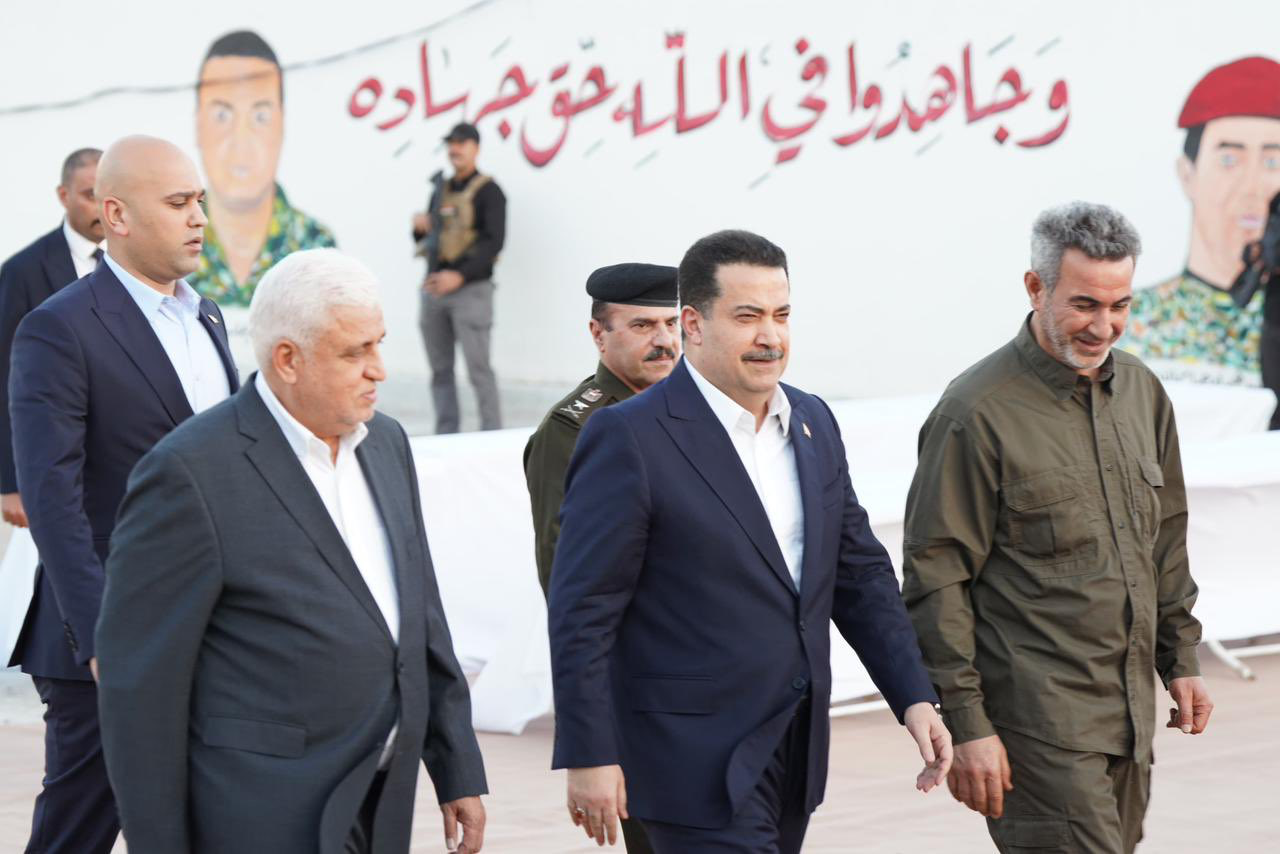
Al-Sudani mediates between the head of the Popular Mobilization Forces, Faleh Al-Fayyad, and his Chief of Staff, Abu Fadak (Government media)
Disarmament
For months, there has been ongoing discussion about the possibility of disarming factions, particularly those with significant weight inside the Coordination Framework, such as Asaib Ahl al-Haq and Kataib al-Imam Ali. This contrasts with repeated rejection from factions such as Harakat al-Nujaba and Kataib Hezbollah.
By end of March, the Services Alliance, which holds around six seats in parliament, announced it was severing ties with Kataib al-Imam Ali, despite Shibl al-Zaidi leading both the alliance and the armed faction. The alliance said it sought to present itself as a “comprehensive national political alliance based on the principle of national partnership, bringing together multiple political forces and currents that collectively bear responsibility for governing the state and serving society,” according to a statement at the time.
Amid the talk of weapons handovers, neither Asaib Ahl al-Haq nor Kataib al-Imam Ali has issued an official statement on the reports. The supposed mechanism of such a transfer is also surrounded by major questions, as it would effectively mean “moving what you hold in your right hand to your left,” according to sources close to the PMF and the factions.
Sources told Asharq Al-Awsat that Asaib Ahl al-Haq has three main brigades within the PMF (41, 42, and 43), deployed in northern Baghdad and Salah al-Din province, while Kataib al-Imam Ali has the 40th Brigade, led by Shibl al-Zaidi. If they were to hand over their weapons to the PMF, they would in practice be transferring them to their own brigades already embedded within the PMF structure.
A theoretical framework
The same sources said they were unaware of any serious move at this stage to disarm the factions or even to carry out the reported transfer to the PMF. Instead, they referred to what could be described as a “theoretical framework” that may later translate into a possible settlement addressing weapons held outside the state.
They suggested that circulating such reports may serve as an early test of the prime minister-designate’s intentions and his responsiveness to US pressure regarding factional arms. It could also be a way to secure ministerial positions in the next government.
The sources added that Asaib Ahl al-Haq, which holds 27 seats in parliament and secured the position of first deputy speaker in the current term, may be genuinely seeking to avoid potential US anger. It is attempting to shed its factional past and aims to obtain ministerial portfolios, as it did in the previous term, but appears unable to convince Washington.
For this reason, the sources believe that a vague announcement of this kind about handing over weapons is insufficient to persuade Washington that the factions are disarming. More substantive steps would likely be required, potentially involving restructuring the PMF and integrating it into the regular armed forces.
Many observers point to the need to restructure leadership within the PMF as a first step toward resolving the issue of factional weapons. They also highlight the need to change key positions within the organization by redeploying some brigades to distant sectors, integrating selected units into the army or federal police, and retiring or sidelining undisciplined commanders.
Israeli Airstrikes on Southern Lebanon Kill 7 Amid Fragile Ceasefirehttps://english.aawsat.com/arab-world/5268784-israeli-airstrikes-southern-lebanon-kill-7-amid-fragile-ceasefire
Smoke rises from the site of an Israeli airstrike that targeted the southern Lebanese village of Mayfadoun in the Nabatieh district on May 2, 2026. (AFP)
TT
TT
Israeli Airstrikes on Southern Lebanon Kill 7 Amid Fragile Ceasefire
Smoke rises from the site of an Israeli airstrike that targeted the southern Lebanese village of Mayfadoun in the Nabatieh district on May 2, 2026. (AFP)
Israeli airstrikes on southern Lebanon kill at least seven people and wounded others on Saturday as hostilities continue between Israel and Hezbollah despite a ceasefire.
The Israeli airstrikes on southern Lebanon Saturday came as Israel’s military issued a new warning for residents of nine southern villages to evacuate.
Israel’s military and Lebanon’s Hezbollah have kept up their attacks despite a ceasefire in place since April 17.
Lebanon’s state-run National News Agency reported an airstrike on a car in the village of Kfar Dajal that killed 2 people, while another hit a home in the village of Lwaizeh killing three. NNA also reported a strike on the village of Shoukin that killed two people.
Israel’s military Arabic-language spokeswoman, Lt. Col. Ella Waweya, posted on X that the Israeli air force carried out about 50 airstrikes over the past 24 hours, saying that they targeted Hezbollah infrastructure and members.
Hezbollah said that it attacked on Saturday Israeli troops who gathered inside a house in the coastal village of Bayed with a drone.
The latest war between Israel and Hezbollah began on March 2, when Hezbollah fired rockets into northern Israel two days after the United States and Israel launched a war on its main backer, Iran. Israel has since carried out hundreds of airstrikes and launched a ground invasion of southern Lebanon, capturing dozens of towns and villages along the border.
Since then Lebanon and Israel have held their first direct talks in more than three decades. The two countries have formally been in a state of war since the founding of the state of Israel in 1948.
A 10-day ceasefire declared in Washington went into effect on April 17. The ceasefire was later extended by three weeks.
لم تشترك بعد
انشئ حساباً خاصاً بك لتحصل على أخبار مخصصة لك ولتتمتع بخاصية حفظ المقالات وتتلقى نشراتنا البريدية المتنوعة