

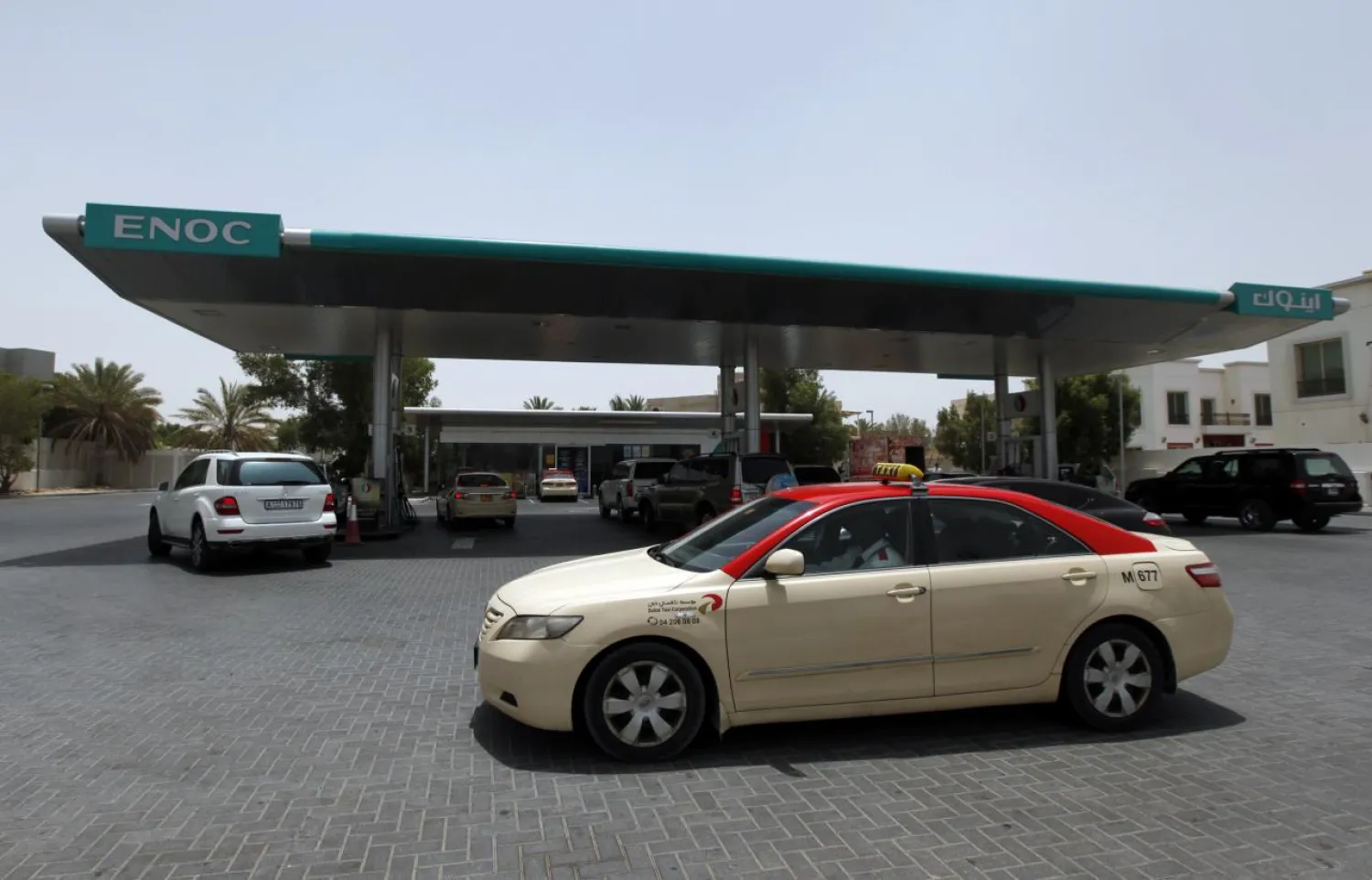

ENOC Plans to Open 45 Fuel Stations in Saudi Arabia in 5 Years

A Dubai Transport taxi drives past as cars queue for petrol at an ENOC fuel station in Dubai, May 12, 2012. (Reuters)
TT

ENOC Plans to Open 45 Fuel Stations in Saudi Arabia in 5 Years

A Dubai Transport taxi drives past as cars queue for petrol at an ENOC fuel station in Dubai, May 12, 2012. (Reuters)

Dubai-based Emirates National Oil Company (ENOC) announced a major expansion strategy in Saudi Arabia as it plans to build 45 new service stations in the Kingdom over the next five years.

This step comes in line with the Ministry of Municipalities and Rural Affairs’ plan, which aims to establish more than 1,200 fuel supply stations in the country.

All 45 ENOC service stations will be strategically built on the Kingdom’s vast network of highways that inter-connect 13 provinces and serve as a major logistics and trade land-corridor, connecting the Kingdom to the rest of the Gulf Cooperation Council and the Middle East region, it said on Monday.

Over the next two years, its plan will focus on building stations in the Central Region, mainly Riyadh and the Eastern Province.

“With Saudi Arabia’s long-term vision to diversify its economy, boost tourism and infrastructure and enhance business and trade, our plan to expand our retail network by over 220 percent in the next five years is aligned with the Saudi Vision 2030,” said ENOC Chief Executive Saif al-Falasi.

Vision 2030 aims to reduce oil dependency, increase privatization and implement the Saudi nationalization project.

“Our 40-year heritage in building and operating best-in-class service stations across the UAE and Saudi Arabia are testament to our ability to build the infrastructure required for a robust network of service stations that will cater to the increased demand for fuel in the Kingdom,” added Falasi.

ENOC will not only ensure extending its retail network to cater to rural parts of the Kingdom but will also provide employment opportunities to Saudi nationals, he further noted.

The group currently operates 14 stations across the Kingdom, and its future service stations will also include ZOOM convenience stores.

Saudi Arabia is considered the largest market in the GCC region, with an area of 2.15 million square kilometers, and its population of over 33 million.

The Kingdom recently announced more than $50 billion worth of deals in the oil, gas and infrastructure sectors.

It made the declaration during the Future of Investment Initiative, which was held in Riyadh in October to boost economic, social and national development in the country.



Gold Retreats as Oil Rises and Inflation Fears Grow

Gold bangles on display at a jewelry shop in Varanasi, India (AFP)
TT

Gold Retreats as Oil Rises and Inflation Fears Grow

Gold bangles on display at a jewelry shop in Varanasi, India (AFP)

Gold prices slipped on Wednesday as escalating tensions in the Middle East continued to stoke inflation concerns, reinforcing expectations of higher US interest rates.

Spot gold fell 0.7% to $4,027.49 per ounce by 0843 GMT. Prices rose over 2% to a session high of $4,100.19 per ounce on Tuesday after soft US inflation data, Reuters reported.
US gold futures for August delivery slid 0.9% to $4,034.00.

Iran's Revolutionary Guard Corps threatened ⁠to close all possible ⁠export corridors benefiting Washington, after Tehran shut the Strait of Hormuz and the US reimposed a naval blockade of Iranian ports. Oil edged higher after closing at a one-month high on Tuesday.

"Higher US crude, gasoline and diesel prices will result in high inflation numbers in ⁠the next print in August, that could keep the tone of some Fed officials on the hawkish side, which is not helping gold," said UBS analyst Giovanni Staunovo.

"In the near-term oil and US gasoline prices will continue to influence gold, as it remains a key driver of US inflation," Staunovo added.

Higher interest rates tend to weigh on gold, as they increase the opportunity cost of holding the non-yielding asset.

Fed Chair Kevin Warsh told ⁠lawmakers ⁠on Tuesday the central bank had "no tolerance for persistently elevated inflation," hinting that the CPI data was not all swell.

Traders are pricing in about a 59% chance of a rate hike in September, according to the CME FedWatch Tool.

Investors now await the US Producer Price Index data due at 1230 GMT today for insights into inflation levels and the monetary policy outlook.

Among other metals, spot silver dipped 0.5% to $58.314 per ounce and platinum gained 0.2% to $1,634.36.

Palladium rose 0.8% to $1,315.05, after gaining 5% in the previous session.


Crude Shipments from Saudi Arabia's Yanbu Port Near Maximum Levels

King Fahd Industrial Port in Yanbu, Saudi Arabia (SPA)
TT

Crude Shipments from Saudi Arabia's Yanbu Port Near Maximum Levels

King Fahd Industrial Port in Yanbu, Saudi Arabia (SPA)

Daily crude loadings at Saudi Arabia's Red Sea port of Yanbu are close to maximum levels this week, according to data and industry sources.

Shipments from Yanbu reached 4.7 million barrels per day around July 13, up from 3.36 million bpd around July 10 and broadly in line with 4.6 million bpd around July 2, ⁠according to Signal Ocean data.

Loadings have averaged above four million bpd since June, compared with 973,000 bpd around the same period 2025, the data showed.

Kpler data also show daily loadings averaging around four million barrels in recent weeks.

Saudi Arabia has relied increasingly on Yanbu to export crude amid disruptions to shipping through the Strait of Hormuz during the US-Iran conflict.


BP Sees Boost from Energy Prices in Second Quarter, Expects Lower Net Debt

An illuminated BP logo is seen at a petrol station in Gateshead, Britain September 23, 2021. (Reuters)
TT

BP Sees Boost from Energy Prices in Second Quarter, Expects Lower Net Debt

An illuminated BP logo is seen at a petrol station in Gateshead, Britain September 23, 2021. (Reuters)

BP expects its oil trading result to be slightly higher in the second quarter after an exceptionally strong first quarter, as it continues to profit from a surge in oil prices caused by the Iran war.

The British major flagged higher oil realizations said stronger prices were expected to add a $1.8 billion to $2.1 billion boost to earnings in its oil production and operations business compared with the first quarter.

In its gas and low carbon energy segment, realizations are expected to add a further $500 million to $700 million, it said on Tuesday.

Gas trading results are expected to be broadly unchanged from the previous quarter.

Global benchmark Brent crude prices hit multi-year highs and averaged around $97 per barrel during the April-to-June quarter, up from around $78 in the first quarter and about $67 a year earlier.

BP said refining margins averaged $29.6 per barrel, versus $16.9 in the first quarter.

The company expects upstream production to fall in the second quarter to between 2.17 million and 2.22 million barrels of oil equivalent per day from around 2.34 million boed in the previous three months, due in part to the effects of the crisis.

BP expects net debt to stand at $22 billion to $23 billion at end-June, down from $25.3 billion at the end of March, with a target to reduce this further to $14 billion to $18 billion by the end of next year.

The company made a $2.9 billion payment to redeem €2.5 billion of perpetual hybrid bonds, leaving it with a total of about $13 billion outstanding. It also paid $1.1 billion in Gulf of Mexico settlement liabilities.

Overall, BP expects net debt, hybrid bonds and Gulf of Mexico settlement liabilities to decrease by around a combined $6.3 billion to $7.3 billion from the previous quarter.

Exploration write-offs are seen totaling around $500 million in the second quarter, primarily related to the sale of its stake in the Bay du Nord project offshore Canada.