

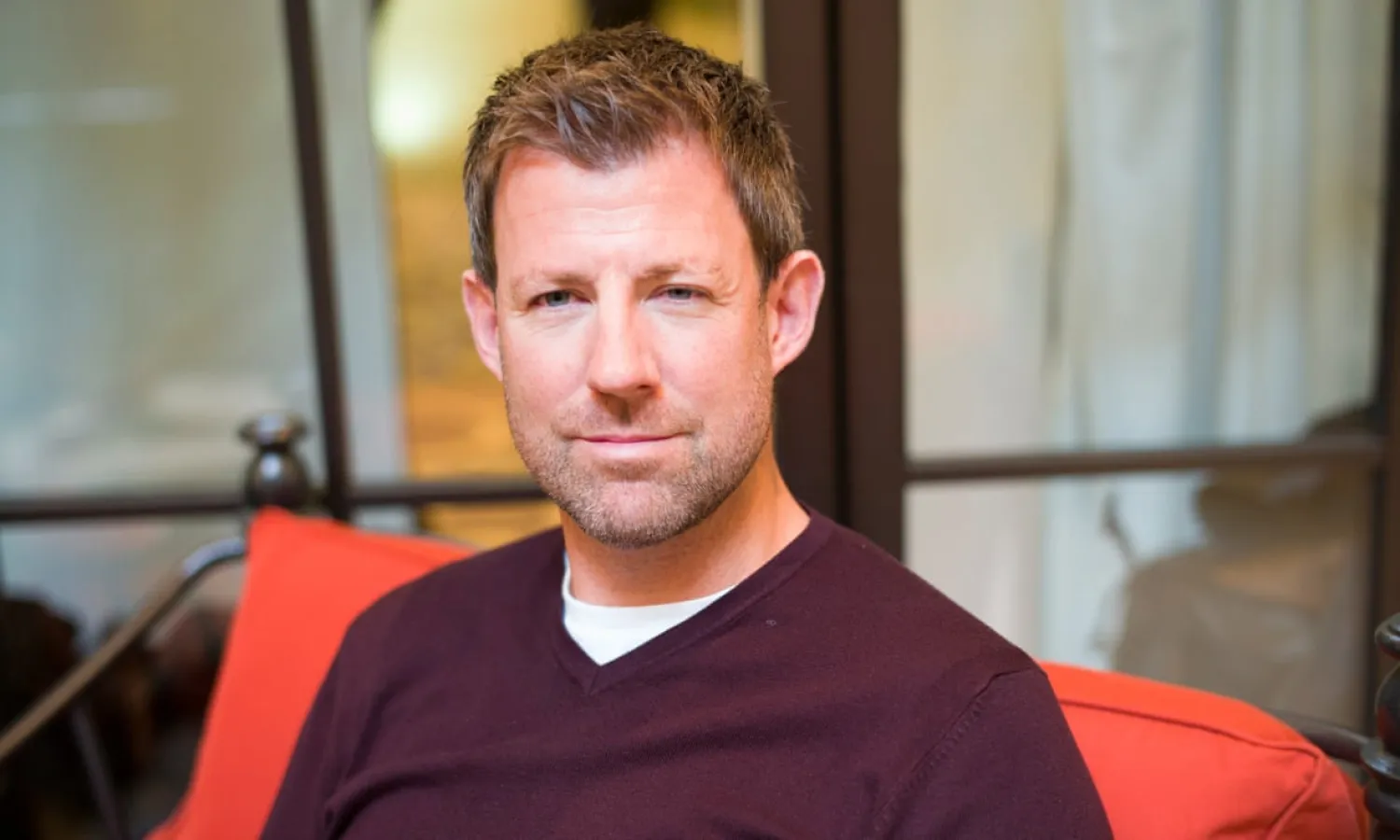

Drewe Broughton: ‘I Can See the Fear in Footballers’ Eyes and Relate to Them

Drewe Broughton believes football coaches need to work through their own issues in order to better help the younger generation. Photograph: Graeme Robertson for the Guardian
TT

Drewe Broughton: ‘I Can See the Fear in Footballers’ Eyes and Relate to Them

Drewe Broughton believes football coaches need to work through their own issues in order to better help the younger generation. Photograph: Graeme Robertson for the Guardian

The first thing Drewe Broughton does is reach for his mobile and scroll down a list of WhatsApp conversations to a message from one of the six young players with whom he works. His client had been asked how he was feeling two days before a televised fixture, with the response scrawled on an A4 pad, photographed and sent back to his mentor. No confidences are betrayed, the identity of the subject never revealed, but the confession offers a glimpse of the darker realities eating away at plenty at the top of the sport.

“Going to training tomorrow for an 11 versus 11 and I’m scared. Will I play Saturday? Will he play the younger lad instead? I’m left of a diamond, I don’t even want to be there … can I do it? Am I shit? I’m weak and vulnerable at the moment. Do I have the strength to get up and go again? I don’t know. The game’s live on Sky and I’m already embarrassed how I might be seen. One of the boys is absolutely flying, and that was me last year. It’s made me even more depressed. The pressure is taking over. I feel anxious all the time. I’m always thinking about the manager’s view of me. Am I shit? Can I play any more? Can I score? Can I even run around? Am I too fat, too one‑dimensional?”

On it goes, a brainstormed chronicle of deep-seated insecurities and asphyxiating fear. Broughton can empathize. The journeyman striker turned performance coach suffered crippling self-doubt through a professional career that encompassed 516 appearances over 17 years, and hears similar testimonies every week from those he counsels, all aged under 23 and contracted to top-flight clubs.

The pressure to progress and fulfill potential is suffocating. Young players are confused as to why they can thrive one week, then be bombed out the next without explanation. They are expected to offer a public show of strength and convince the management they should be picked. The ego is all for show. All the while, the doubts are devouring them.

One, an England Under-21 international, regularly cries himself to sleep. “The more players you talk to, the more you realize feel like that,” says Broughton. “‘How are you feeling?’ ‘I’m shitting myself.’ I can get inside young players and unlock their feelings. But there is too much other noise: the know-it-all agent; the dad who just wants to be involved with his son; the coaches with a million instructions. By the time he goes out there, can you imagine the shit going round his head?

“Clubs are fighting for these kids at six, nine, 12 … why? Because they’re talented. That talent doesn’t go anywhere. What goes is they start to doubt themselves. The spirit, the creativity gets battered out of them. They lose that childlike spontaneity. Martin O’Neill stood me up, at 16, at Norwich after a pre-season friendly , and told senior pros he’d pick me over them. I didn’t really understand what I’d done so well. What a tragedy. I’d just been myself. But life kicks the crap out of you and you stop believing in your instincts.”

He can call upon personal experience. Broughton had scored at 17 on his senior debut for Norwich and would grace the England Under-20s alongside Michael Owen, Jamie Carragher and Danny Murphy, with prolific form earning him a lucrative boot deal with Adidas. Yet within 18 months he was on loan in the Conference having embarked on a nomadic career that would take in brief spells at 22 clubs.

“I was a classic case of 18-to‑21 drop-out, not because I wasn’t good enough. I just never knew how to believe in myself. I was cursed with this drive to win I couldn’t control. I’d put so much pressure on myself, it would overwhelm me. I’d overthink, overtrain, try to be too perfect, stifle all my natural instincts.

“Then, now and again, I would turn my head off. As soon as I did that, I’d stumble on these purple patches. Portsmouth scouted me while I was at Southend in one of those runs. But as soon as I started doing well, that voice was back saying: ‘Tell you what, you could get a move here. Don’t drop it now. You’re going out too much. Stay in. Work.’ And the cycle started again. Pompey came back for a second look a few weeks later and I’d just fallen off the face of the earth, a shadow of the player I’d been.”

Life became about the next game, the next move, the next fix which spiraled into a sex addiction. By the time he sought help from the PFA and was admitted to the Sporting Chance clinic, he was homeless, divorced and broke. The process of self-discovery, charted in his autobiography And Then What?, started in rehab and led him to new roles within the game.

He studied biomechanics, specializing in movement patterns and injury prevention, and set up a business that serviced players like Harry Kane and Craig Bellamy. The 40-year-old maintains a small client list for physical training but his focus has shifted to the emotional side, providing holistic support that players feel uncomfortable accessing at their clubs.

His footballers lean on him. Broughton listens to their issues, analyses their games, lets them express their emotions and tells them home truths aimed at toughening them for a merciless industry. “I can see the fear in their eyes. My demons are as strong as anyone’s, and that’s why I can relate to them. Some of the guys I work with have the potential to be among England’s best but are also one step from being average Championship players. They tread the finest of lines. And they need help to stay on track.”

Changing attitudes, he suggests, lies with adding new disciplines to coaching courses. The FA’s learning model includes a psychological element as one of its four pillars, “but it is only really discussed halfheartedly”. So he points to the 12-step programme, the guiding principles in recovery from addiction and other behavioral problems.

“Step four of that process, compiling a fearless and moral inventory, is what I’d draft into the license,” he says. “It is the most brutal thing I’ve ever done. You have to acknowledge every harm you’ve ever inflicted and why. So flicking the ear of the kid in front of me at school when my self-esteem was low, my dad had left us and I wanted to be the main man. A bully. Or breaking Chris Brass’s jaw at Bury when I was convinced the manager didn’t want me. But the key, the big dog, is listing all your fears. Every time you can remember you’ve ever been scared.”

“There’s no right or wrong to it. You sit in that process for as long as it takes, pouring your guts out. It ends up as a stock inventory of your soul. It’s pretty much what I do with the players I work with: what are you scared of? Write down everything you’re afraid of. It makes you talk about all the things you’d buried.

“Football will never change until coaches look into their deepest, darkest places and work through their own issues. Players go into coaching now without ever addressing the shit they went through in their careers. They’re damaged. They’ve masked their fears, played out their days telling themselves to ‘cope’ so, subconsciously, as coaches they go out and project all the crap they went through.

“One client of mine told me about a manager, who has been out there publicly discussing mental health, tearing into young players before a game, telling them their careers would be over if they played badly. That’s a complete lack of emotional intelligence. So add six months on to the end of the license, working with a therapist, and allow them to look in the mirror and understand themselves.

“Those who do understand – Jürgen Klopp, Pep Guardiola – get more out of their teams. Pep’s exceptional, but isn’t the coaching badge there to create exceptional coaches to develop exceptional players? Players need to feel able to admit something is wrong, and managers have to offer emotional support. These guys are suffering. The game needs to recognize that.”

(The Guardian)


SDRPY Handball Championship Wraps up in Marib, Yemen

The program has supported the youth and sports sector through a wide range of projects and initiatives - SPA
TT

SDRPY Handball Championship Wraps up in Marib, Yemen

The program has supported the youth and sports sector through a wide range of projects and initiatives - SPA

The Saudi Development and Reconstruction Program for Yemen (SDRPY) Handball Championship in Marib Governorate concluded with Al-Watan Club claiming the title after a 27-23 victory over Al-Sadd Club in the finals. Overall, 16 local clubs competed for the championship, SPA reported.

The championship is part of SDRPY’s efforts to support the youth and sports sector and promote sporting activities across governorates.

The program has supported the youth and sports sector through a wide range of projects and initiatives, including rehabilitating sports facilities, constructing stadiums, sponsoring tournaments, and providing technical expertise and knowledge transfer.

The SDRPY has implemented development projects and initiatives across vital sectors, including education, health, water, energy, transportation, agriculture and fisheries, and capacity building to support the Yemeni government and its development programs.


ATP Roundup: Tommy Paul Wins all-American Semi to Reach Houston Final

Mar 25, 2026; Miami Gardens, FL, USA; Tommy Paul of the United States hits a backhand during his match against Arthur Fils of France in the quarter finals of the men’s singles at the Miami Open at Hard Rock Stadium. Mandatory Credit: Mike Frey-Imagn Images - Reuters
TT

ATP Roundup: Tommy Paul Wins all-American Semi to Reach Houston Final

Mar 25, 2026; Miami Gardens, FL, USA; Tommy Paul of the United States hits a backhand during his match against Arthur Fils of France in the quarter finals of the men’s singles at the Miami Open at Hard Rock Stadium. Mandatory Credit: Mike Frey-Imagn Images - Reuters

No. 4 Tommy Paul rallied for his fourth consecutive win over fellow American and second-seeded Frances Tiafoe, 7-5, 4-6, 7-6 (7), on Saturday in the US Men's Clay Court Championship semifinals at Houston.

Paul clinched his first ever ATP clay-court final ​appearance in a grueling 2-hour, 45-minute match that was marred by rain throughout, including a 90-minute ‌delay during the second set. Paul thrived behind 14 aces and no double faults while converting two of five break-point opportunities in the pivotal deciding set.

It was back-and-forth in the final set with Tiafoe notching the first break and Paul breaking him right back in the next ​service. Then the reverse happened with Paul grabbing a break and Tiafoe nabbing it right back a service ​game later. In the deciding tiebreaker, Paul squandered two match points up 6-4 before advancing ⁠by winning two straight points to break a 7-7 tie.

In another semifinal between competitors from the same country, Argentina's Roman ​Andres Burruchaga easily dispatched Thiago Agustin Tirante 6-1, 6-1 to set up a date with Paul. Burruchaga converted 5 of ​8 break opportunities while never facing one. Tirante had 25 unforced errors to Burruchaga's 10, Reuters reported.

Grand Prix Hassan II

Qualifier Marco Trungelliti (ATP No. 117) of Argentina continued his Cinderella run by taking down top-seeded Italian Luciano Darderi 6-4, 7-6 (2) in Marrakech, Morocco.

Trungelliti clinched a spot in the final and ​is the oldest first-time finalist in ATP Tour history at 36. En route to the final, Trungelliti took down the ​fifth, third and first seeds. Trungelliti converted four of six break-point opportunities and capitalized on Darderi's eight double faults to deny the ‌Italian a ⁠repeat championship in the event.

Spain's Rafael Jodar will try to halt Trungelliti's magical run after he took down Argentinian Camilo Ugo Carabelli in straight sets 6-2, 6-1 in just 63 minutes. Jodar was never broken and held a 23-8 advantage in winners. This would also be the first title for Jodar, who at 19 years old, made his tour debut earlier ​this year at the Australian ​Open and is competing in ⁠his first tour-level clay tournament.

Tiriac Open

Qualifier Daniel Merida Aguilar of Spain came back from a set down to upset Hungarian third seed Fabian Marozsan 6-7 (4), 6-3, 6-1 in a semifinal ​match in Bucharest, Romania.

After dropping the first set, Merida Agular knocked home four of his ​six break-point attempts ⁠over the final two sets, finishing with 35 winners. He defended his serve well throughout as he saved 17 of the 18 break points he faced to overcome his 39 unforced errors and reach his first tour-level final.

Seventh-seeded Argentinian Mariano Navone saved ⁠two match ​points to come back and beat eighth-seeded Botic van de Zandschulp of ​the Netherlands 5-7, 7-6 (3), 7-5. Navone capitalized on 65 unforced errors from van de Zandschulp and broke him six times. He hit 82% of his ​first serves and will also be looking for his first tour-level title after losing the 2024 Bucharest championship match.


Schouten to Miss World Cup after Surgery on Cruciate Ligament Injury

Soccer Football - Champions League - PSV Eindhoven v Sporting CP - Philips Stadion, Eindhoven, Netherlands - October 1, 2024 PSV Eindhoven's Jerdy Schouten scores their first goal REUTERS/Piroschka Van De Wouw/File Photo
TT

Schouten to Miss World Cup after Surgery on Cruciate Ligament Injury

Soccer Football - Champions League - PSV Eindhoven v Sporting CP - Philips Stadion, Eindhoven, Netherlands - October 1, 2024 PSV Eindhoven's Jerdy Schouten scores their first goal REUTERS/Piroschka Van De Wouw/File Photo

PSV Eindhoven captain Jerdy Schouten sustained a cruciate ligament injury in the match against Utrecht that required surgery, his club said on Sunday, ruling the Netherlands midfielder out of the World Cup.

Schouten suffered the injury in the second half of Saturday's 4-3 victory when he twisted his knee and the 29-year-old was taken off on a stretcher.

PSV said further examinations on Sunday confirmed the injury which generally takes six to nine months for a full recovery.

"When it happened, I actually felt immediately that something was wrong," Schouten said, Reuters reported.

"You still have a glimmer of hope that it isn't too bad, but unfortunately that turned out not to be the case. The blow is big right now, but I will move on quickly.

"Great things are about to happen for PSV again and I will do everything I can to be involved in everything."

Schouten made 40 appearances for PSV across all competitions this season, including 28 league games as they inch closer to a third straight title.

Having made his international debut in 2022, Schouten has played 17 times for the Netherlands, last playing the full 90 minutes in a friendly draw with Ecuador last week.
