


UAE Dubs 2019 as Year of Tolerance

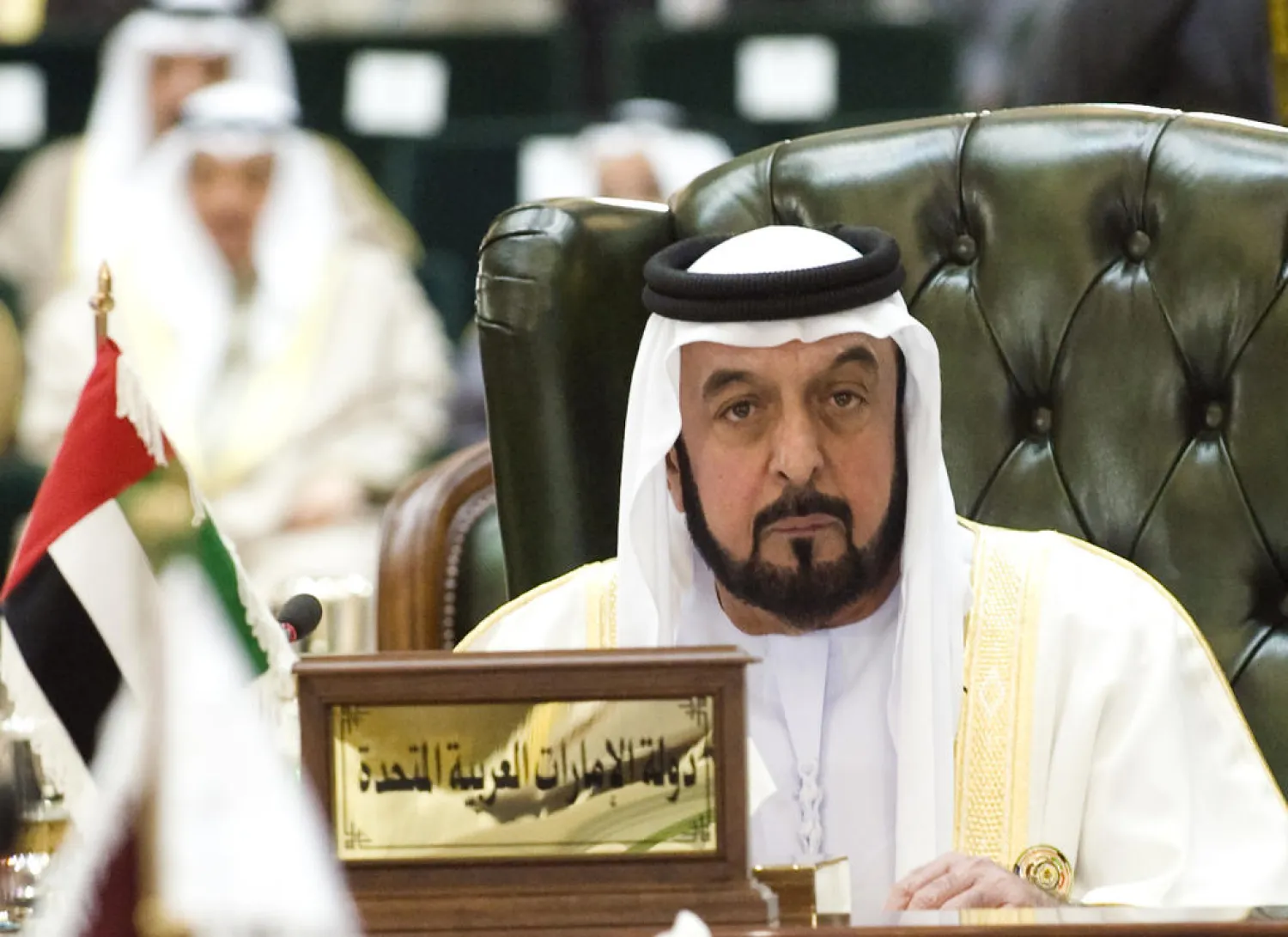
UAE President Sheikh Khalifa bin Zayed Al Nahyan listens to closing remarks during the closing ceremony of the GCC summit in Kuwait December 15, 2009. (Reuters)
TT

UAE Dubs 2019 as Year of Tolerance

UAE President Sheikh Khalifa bin Zayed Al Nahyan listens to closing remarks during the closing ceremony of the GCC summit in Kuwait December 15, 2009. (Reuters)

The United Arab Emirates declared 2019 as the Year of Tolerance after 2017 was the Year of Giving and 2018 was the Year of Zayed, declared President Sheikh Khalifa bin Zayed Al Nahyan on Saturday.

The leader said 2019 would highlight the UAE as a global capital for tolerance, instilling the values of coexistence and peace in local, regional and international communities, state news agency WAM reported.

"Instilling values of tolerance carries on Sheikh Zayed's legacy and teachings," Sheikh Khalifa said, adding that the Year of Tolerance will focus on five main pillars.

The first will be to deepen the values of tolerance and coexistence among cultures and peoples by concentrating on teaching the youth the values of tolerance, while the second seeks to solidify the UAE as the global capital for tolerance.

The third factor will see the UAE enacting multiple cultural programs and contributions to build tolerant communities, while the fourth pillar will focus on legislative and policy-oriented objectives that contribute to mandating cultural and religious tolerance.

The fifth pillar will focus on promoting tolerance and coexistence via targeted media initiatives and projects.

In July 2015, Sheikh Khalifa issued Federal Decree Law No. 02 of 2015 on Combating Discrimination and Hatred, which aims to protect everyone in the UAE and fight discrimination.

In 2016, the UAE Cabinet introduced the first post of the Minister of State for Tolerance and launched the National Tolerance Program.

“We look forward to further contributing towards building societies that believe in the values of tolerance, cohesion and dialogue,” Sheikh Khalifa added.

"Here in the UAE," he said, "the Year of Tolerance will be celebrated as a national effort towards further advancing a decades-long dream of creating a tolerant and cohesive society, open to peoples of varying cultures and religions from around the world. The UAE and Tolerance go hand-in-hand."

“We want government policies that further consolidate tolerance and a deep sense of community, and to spread this values among our youth and future generations,”Sheikh Mohammed bin Rashid Al Maktoum, Vice President, Prime Minister and Ruler of Dubai said.



Muslim World League Affirms Support for Saudi Measures to Preserve Sovereignty

Muslim World League Affirms Support for Saudi Measures to Preserve Sovereignty
TT

Muslim World League Affirms Support for Saudi Measures to Preserve Sovereignty

Muslim World League Affirms Support for Saudi Measures to Preserve Sovereignty

The Muslim World League (MWL) has affirmed its full support for the supplementary statement issued by the Kingdom of Saudi Arabia regarding recent escalatory actions by the Southern Transitional Council in the Hadramout and Al-Mahara governorates.

The league also expressed its support for the statement from the Coalition to Restore Legitimacy in Yemen concerning the unauthorized movement of ships carrying weapons and heavy vehicles from the Port of Fujairah to the Port of Mukalla, SPA reported.

These shipments were reportedly transported without the necessary official permits from the coalition’s Joint Forces Command. The MWL emphasized its unwavering solidarity with the Kingdom and its support for all measures taken to safeguard its national security.

In an official statement released by the General Secretariat, MWL Secretary-General and Organization of Muslim Scholars Chairman Sheikh Dr. Mohammed bin Abdulkarim Al-Issa commended the decisive and wise content of the Saudi statement.

Speaking on behalf of the league’s global assemblies and councils, Al-Issa noted that these measures are vital to ensuring peace, security, and the unity of the Yemeni people under their internationally recognized leadership.

Al-Issa highlighted that the priority remains preserving stability in Yemen and the broader region. He noted that outstanding issues, including the Southern cause, must be resolved through dialogue within established legal and legitimate frameworks.

Furthermore, he warned that supporting illegitimate practices only deepens internal divisions and serves those who do not have Yemen’s best interests at heart. He cautioned that any further steps deviating from the legitimate path would only ignite sedition, the heavy cost of which would be borne by the Yemeni people.

Concluding the statement, Al-Issa called upon all Yemeni parties to prioritize wisdom and the national interest. He urged them to unite under their legitimate leadership to preserve the country's sovereignty, independence, and territorial integrity, paving the way for a secure and prosperous future for Yemen.


President of Yemeni Presidential Leadership Council Nullifies Joint Defense Agreement with UAE

Dr. Rashad Al-Alimi during his interview with Asharq Al-Awsat (Yemeni Presidency)
TT

President of Yemeni Presidential Leadership Council Nullifies Joint Defense Agreement with UAE

Dr. Rashad Al-Alimi during his interview with Asharq Al-Awsat (Yemeni Presidency)

President of the Presidential Leadership Council of the Republic of Yemen Dr. Rashad Mohammed Al-Alimi issued a presidential decree on Tuesday nullifying the joint defense agreement with the United Arab Emirates, based on the Constitution of the Republic of Yemen, the Gulf Cooperation Council Initiative and its implementation mechanism, the decision on the transfer of power, the formation of the Presidential Leadership Council, and the powers granted to it under the constitution, according to the Yemen News Agency (Saba).

Article Two of the decree mandates that all UAE forces and personnel withdraw from Yemeni territory within 24 hours, according to SPA.

Article Three instructs the Homeland Shield forces to assume control of all military camps in Hadramout and Al-Mahara governorates.


Yemeni Government Commends Saudi Historic Stance and Its Leadership of the Coalition to Restore Legitimacy

File photo of the Saudi flag/AAWSAT
TT

Yemeni Government Commends Saudi Historic Stance and Its Leadership of the Coalition to Restore Legitimacy

File photo of the Saudi flag/AAWSAT

The Yemeni government commended the Kingdom of Saudi Arabia's historic and steadfast stances, highlighting its crucial role in ensuring Yemen's security and stability.

The government acknowledged Saudi Arabia's leadership of the Coalition to Restore Legitimacy and its ongoing commitment to protecting civilians, de-escalating tensions, and preventing the eastern governorates from being drawn into conflicts that serve hostile agendas, SPA reported.

In an official statement, the government called on the Southern Transitional Council to withdraw immediately and unconditionally from the governorates of Hadramout and Al-Mahara. It urged the council to hand over all locations and camps to the Homeland Shield Forces and local authorities in these governorates, to adhere to the terms of reference of the transitional phase, and to cease all military or escalatory actions that threaten local security and undermine de-escalation efforts.

The statement, which was reported by the Yemen News Agency (Saba), expressed the government's full support for the decisions made by President of the Presidential Leadership Council of the Republic of Yemen Dr. Rashad Mohammed Al-Alimi, who is also Supreme Commander of the Armed Forces.

This includes declaring a state of emergency across Yemen and taking necessary sovereign measures to protect local security, preserve the unity and sovereignty of the state, and maintain its legal status in light of the dangerous developments in Yemen's eastern governorates.

The government stated: "The declaration of a state of emergency is grounded in the constitution and the references of the transitional phase, based on the recommendations of the National Defense Council.

It is a legitimate constitutional measure necessitated by our national duty to confront armed rebellion, protect civil peace, and prevent a descent into chaos that could undermine state institutions."