Iran's Economic Woes Go beyond Sanctions, Say Analysts

Iran's government faces acute economic challenges as it announces its annual budget. (AFP)
TT

Iran's Economic Woes Go beyond Sanctions, Say Analysts

Iran's government faces acute economic challenges as it announces its annual budget. (AFP)

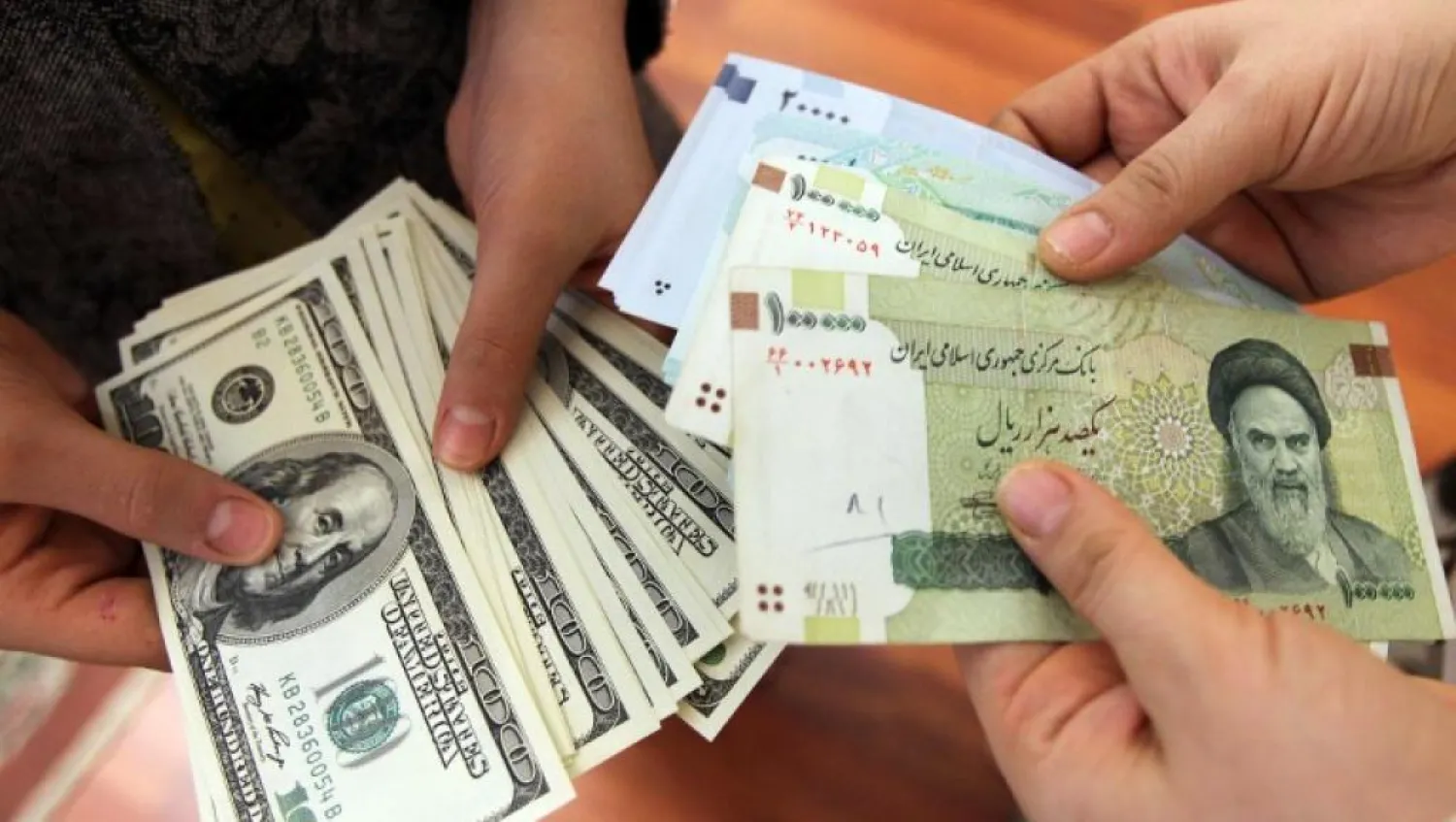
Iran's government faces acute economic challenges as it announces its annual budget, expected on Tuesday, and not all of its problems are the result of US sanctions, said an AFP report Tuesday.

The rial has lost around half its value against the dollar since US President Donald Trump announced he was withdrawing from the 2015 nuclear deal in May and re-imposing sanctions.

That has driven up prices and blocked much of the foreign investment President Hassan Rouhani had hoped to attract, with the International Monetary Fund now predicting the economy will shrink by 3.6 percent next year.

But analysts say many of the country's woes pre-date Trump and the sanctions.

Iran-based economist Mohammad Mahidashti says the banking system is the "biggest problem -- riddled with fictitious assets and non-performing loans".

Banks issued huge loans under Rouhani's predecessor Mahmoud Ahmadinejad with little apparent care for whether they would be repaid, explained AFP.

Parliament's economic commission said in March that half of all these loans -- worth around $27 billion at the time -- turned sour.

Desperately short of funds, banks have tried to attract fresh deposits with interest rates of 30 percent or more.

While providing a much-needed source of liquidity initially, the interest on these deposits has only added to banks' instability.

Rouhani said recently that "unhealthy" banks were being kept afloat by continuously borrowing from the central bank, and the debts of private lenders have doubled in the year to September.

Banks are also saddled with unsellable properties after pumping cash into a construction boom that ran out of steam around 2013.

"We have close to two million empty houses in Iran. There is simply no demand out there," said Narges Darvish, an economics lecturer at Tehran's Alzahra University, according to AFP.

But the government is loath to let banks fail, fearing a public backlash -- especially after the collapse of dodgy credit agencies helped fuel widespread protests a year ago.

The US withdrawal from the nuclear deal fueled a run on the Iranian rial, but was not the only factor behind the currency's weakness.

In September, central bank governor Abdolnasser Hemmati instead blamed "horrific growth in money supply".

Its data shows that the amount of cash flowing around the Iranian economy has increased 24 percent annually for the past four years.

Given that Iran's economy offers few profitable and secure investment opportunities, citizens had already long sought to change rial savings into dollars.

And when rising expectations that the US would re-impose sanctions pressured the rial in earnest in early 2018, the government's reaction was a mess, according to economist Mousa Ghaninezhad.

"They claim they believe in the free market but they have no coherent strategy," he told AFP.

At one point, in April, the government forcibly shut down exchange houses and tried to fix the rate at 42,000 rials per dollar -- which only fueled panic and drove speculators into the black market.

Recognizing its mistake, the government reopened exchange shops and sacked the central bank governor a few months later.

A fierce crackdown was also unleashed on those exploiting the situation, with dozens of traders put on trial and at least three businessmen executed since October.

But the damage has been done. Imports are now vastly more expensive at the same time as sanctions make it harder to move goods into the country.

Prices have been rising as a result -- the cost of food and drink rose 60 percent in the year to November, according to the central bank.

Despite a privatization drive, much of the economy remains in the hands of the state, either directly, or because groups connected to the government or military are the major shareholders.

This has stifled the private sector, which struggles to attract investment and compete for projects, analysts say.

Economist Ehsan Soltani says state-controlled industries like steel and petrochemicals benefit from huge subsidies -- totaling around $40 billion (35 billion euros) a year in fuel and electricity discounts -- but create relatively few jobs and returns.

"These industries are only wanted because of rent and corruption," he told AFP.

Hopes that the nuclear deal would bring a flood of foreign investment to boost the private sector have been dashed by the return of sanctions.

Meanwhile, efforts to bring greater transparency -- notably, new laws against money-laundering -- have been opposed by powerful vested interests, according to Foreign Minister Mohammad Javad Zarif.

"Those places that launder thousands of billions (of rials) are certainly financially capable of spending a few hundred billion on propaganda (against the laws)," Zarif told Khabar Online news agency last month.


Saudi Stocks Rebound 0.9%, Recouping Previous Session's Losses

An investor monitors stock market data on a screen at the Saudi Exchange (Tadawul) in Riyadh (Reuters)
TT

Saudi Stocks Rebound 0.9%, Recouping Previous Session's Losses

An investor monitors stock market data on a screen at the Saudi Exchange (Tadawul) in Riyadh (Reuters)

Saudi stocks closed higher on Monday, recovering some of the losses sustained in the previous session as heavyweight shares strengthened and the banking sector advanced.

The benchmark Tadawul All Share Index (TASI) rose 0.90% to close at 10,106 points, gaining 90 points. Total trading value reached approximately SAR 3.5 billion ($933 million).

The index had fallen 0.8% on Sunday amid selling pressure on heavyweight stocks.

Anaam International Holding Group, Fitaihi Holding Group and Raoom were among the session's top gainers, rising between 7% and 9% to close at SAR 11.93, SAR 2.11 and SAR 72.30, respectively.

On the losing side, Almunajem Foods led the declines, shedding 9.20% to SAR 49.94, followed by Saudi Paper Manufacturing Co., which fell 6.18% to SAR 48.88, and Alamar Foods, which dropped 4.63% to SAR 44.06.

At the sector level, banks led the gains, advancing 1.60%, supported by a 2.06% rise in Bank AlJazira shares, which closed at SAR 10.89.


Tesla to Refund Many Cybertruck Deposits as Demand Exceeds Production, Musk Says

Tesla Cybertruck electric vehicles sit parked in a storage lot in San Diego, California on April 11, 2025. (AFP)
TT

Tesla to Refund Many Cybertruck Deposits as Demand Exceeds Production, Musk Says

Tesla Cybertruck electric vehicles sit parked in a storage lot in San Diego, California on April 11, 2025. (AFP)

Tesla will have to refund Cybertruck deposits for many customers as orders far exceed production capacity, CEO Elon Musk said, following last week's announcement that the electric vehicle maker is winding down the pickup truck's production at its Texas factory.

"We will try ‌to make ‌as many as ‌possible ⁠before shutting down the ⁠line in about 8 months, but will have to return deposits for a lot of people," the billionaire said in a post on X on Monday.

The comments ⁠come after Musk said ‌Tesla would ‌add an extra production shift to fulfill outstanding ‌Cybertruck orders before dismantling the production ‌line next year to expand output of its Cybercab robotaxi.

The production winddown is slated for mid-2027, Musk announced on ‌Friday, with the resources being redirected to the Cybercab, a vehicle ⁠central ⁠to the automaker's autonomous-driving ambitions.

Tesla began delivering the Cybertruck in late 2023, but demand has fallen far short of Musk's expectations. US sales fell 48% to 20,237 units last year, according to Kelley Blue Book, well below Musk's earlier projection that annual Cybertruck sales could reach 250,000 vehicles.


China Extends Suspension of New Rare Earth Controls Until January

A mining machine is seen at the Bayan Obo mine containing rare earth minerals, in Inner Mongolia, China July 16, 2011. (Reuters)
TT

China Extends Suspension of New Rare Earth Controls Until January

A mining machine is seen at the Bayan Obo mine containing rare earth minerals, in Inner Mongolia, China July 16, 2011. (Reuters)

China on Monday announced a two-month extension of export-control waivers due to expire this month, preserving part of a wide-ranging deal struck after a summit between Presidents Xi Jinping and Donald Trump.

China introduced export controls on certain rare earths ‌in April 2025, ‌only to expand ‌them ⁠further in October ⁠of that year, dramatically widening their scope and also adding new controls on certain diamonds with industrial applications and lithium battery technology.

The measures were then ⁠paused for one year last ‌November after ‌a summit in South Korea ‌between Xi and Trump.

The Ministry of ‌Commerce said in a short statement on Monday that the pause would be extended for two months ‌until January 10. It gave no other details.

The extension ⁠is ⁠part of a broader suspension of trade countermeasures and tariffs announced by China on Monday as it negotiates with Washington over an enduring trade deal.

Trump is set to travel to Shenzhen in southern China later this month for an APEC leaders summit, where he is expected to meet with Xi.