


Morocco's Economy Set to Grow 2.9% in 2019

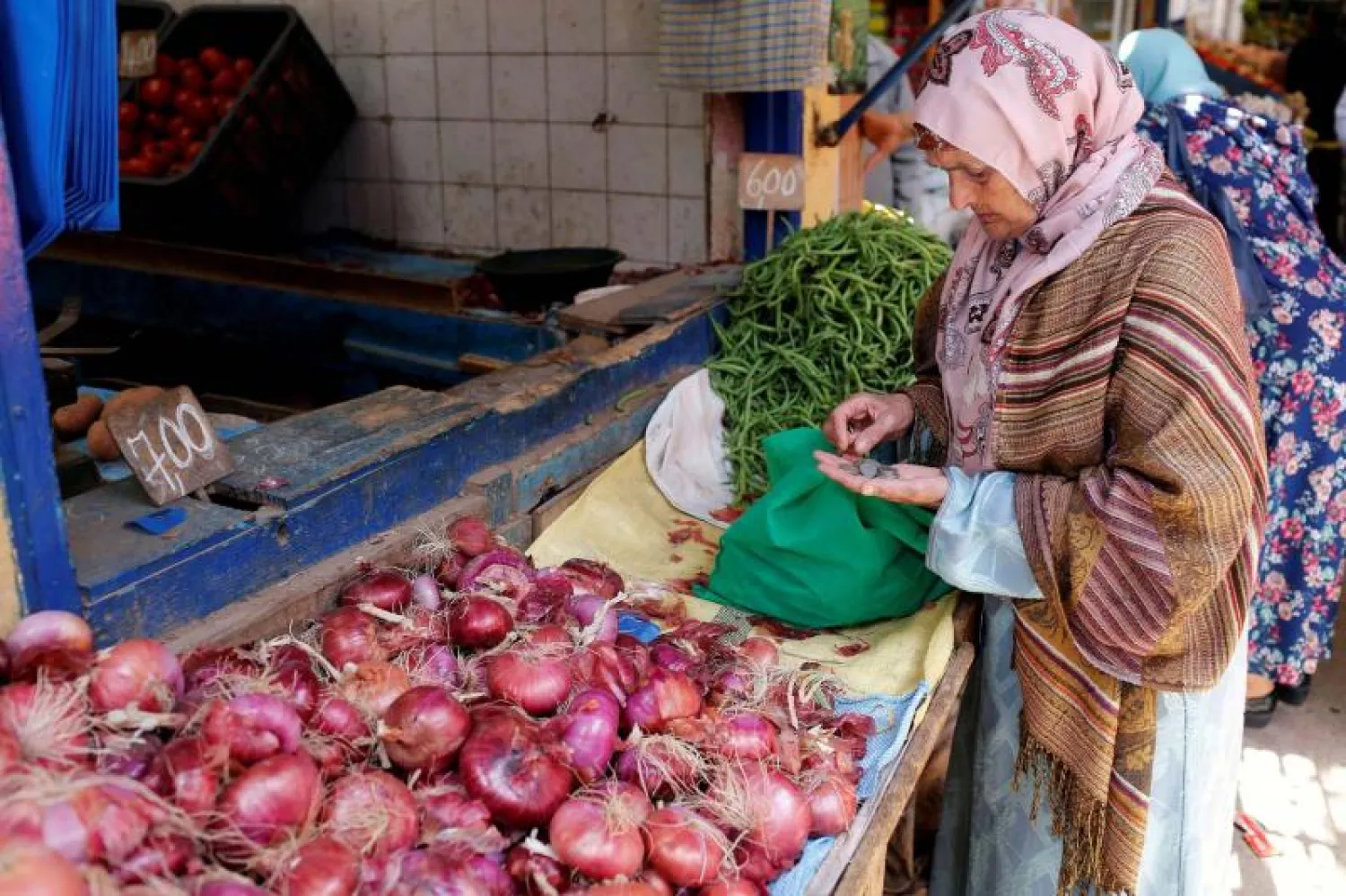
A Moroccan woman counts change at a vegetable market in Casablanca. (Reuters)
TT

Morocco's Economy Set to Grow 2.9% in 2019

A Moroccan woman counts change at a vegetable market in Casablanca. (Reuters)

Morocco's economy is expected to grow by 2.9 percent in 2019 – inflation eased to 1.2 percent in 2019 from 1.7 percent last year.

Planning Agency Chief Ahmed Lahlimi Alami said Wednesday in Casablanca that the growth of the Moroccan economy in 2019 will benefit from the internal demand while the foreign demand contribution remains negative with slight progress.

He added that the internal demand will drop from 3.6 percent in 2018 to 3.4 percent to 2019 due to a slump of the growth in forming fixed capital from 3.2 percent in 2018 to 2.6 percent in 2019 – further, the household final consumption would increase 3.5 percent in 2019 instead of 3.4 percent in 2018.

Alami continued that Moroccan exports are forecast to rise 5.9 percent in 2019 instead of 4.9 percent in 2018, at a time when imports’ are expected to grow around 6.2 percent in 2019 instead of 6.4 percent in 2018.

He called on the government to maintain investment effort that Morocco witnessed in the past years, noting that it rose to approximately 33 percent of the GDP.

Growing debts in Morocco result from the increasing gap between national saving and investment, Alami added. Investment reached 32 percent of the GDP while saving rate didn’t exceed 28 percent. This compelled Morocco to rely on debts to fund the shortage.

Companies represent 50 percent of national savings, households 35 percent and migrants 12 percent. Regarding households, he clarified that their contribution in national savings is linked to income. The Moroccan household income level is weak and is slowing down in which its growth average dropped from 6.1 percent between 2004-2012 to 3.5 percent between 2012-2017.



Saudi E-Commerce Hits Record Monthly Sales over SAR30.7 Billion in October

A view of Riyadh, Saudi Arabia. (SPA file)
TT

Saudi E-Commerce Hits Record Monthly Sales over SAR30.7 Billion in October

A view of Riyadh, Saudi Arabia. (SPA file)

E-commerce sales in Saudi Arabia via "mada" cards soared to an all-time monthly high in October 2025, surpassing SAR30.7 billion.

The surge in sales represents a 68% year-on-year increase, totaling about SAR12.4 billion more than the SAR18.3 billion recorded in October 2024, according to the Saudi Central Bank (SAMA) statistical bulletin on Wednesday.

E-commerce sales for the third quarter (Q3) of 2025 hit SAR88.3 billion, up 15.2% from the previous quarter, representing an increase of about SAR11.6 billion over the SAR76.6 billion recorded in Q2.

On a monthly basis, e-commerce sales in October rose 6%, gaining approximately SAR1.6 billion over September’s total of SAR29.1 billion.

From January to October, "mada" data showed e-commerce sales grew 47.3%, rising by around SAR9.9 billion over the SAR20.9 billion recorded in January.

These figures cover transactions made via "mada" cards on e-commerce websites, apps, and digital wallets, and do not include credit-card payments.


Jeddah's King Abdulaziz Airport Launches First Direct Flight to Moscow

The expansion supports Jeddah Airports Company’s goal of broadening travel options and increasing air traffic revenue, leveraging the Kingdom's strategic location. (SPA)
TT

Jeddah's King Abdulaziz Airport Launches First Direct Flight to Moscow

The expansion supports Jeddah Airports Company’s goal of broadening travel options and increasing air traffic revenue, leveraging the Kingdom's strategic location. (SPA)

Jeddah's King Abdulaziz International Airport (KAIA) celebrated the launch of its first direct flynas flight to Moscow, operating three weekly flights between Jeddah and Vnukovo International Airport.

This initiative, in partnership with the Saudi Tourism Authority and the Air Connectivity Program, boosts air links between Saudi Arabia and Russia.

It marks KAIA's third direct Russian destination, following Makhachkala and Mineralnye Vody, which were inaugurated earlier this month by Azimuth Airlines.

The expansion supports Jeddah Airports Company’s goal of broadening travel options and increasing air traffic revenue, leveraging the Kingdom's strategic location.


China Widens Foreign Investment Incentive List to Stem Falling Inflows

People visit a shopping center in Beijing on December 20, 2025. (AFP)
TT

China Widens Foreign Investment Incentive List to Stem Falling Inflows

People visit a shopping center in Beijing on December 20, 2025. (AFP)

China on Wednesday listed more sectors eligible for foreign investment incentives, from tax breaks to preferential ​land use, in its latest effort to stem a prolonged decline in overseas capital inflows.

Under the 2025 edition of the catalogue of industries for encouraging foreign investment, China added more than 200 and revised about 300, with a ‌focus on ‌advanced manufacturing, modern services and ‌green ⁠and ​high-tech ‌sectors, the list jointly issued by the National Development and Reform Commission and the commerce ministry showed.

The new catalogue, which takes effect on February 1, 2026, replaces the 2022 version and continues a policy framework ⁠that offers foreign-invested enterprises tariff exemptions on imported equipment, preferential ‌land pricing, reduced corporate income ‍tax rates in ‍designated regions and tax credits for reinvestment ‍of profits.

The catalogue also extends incentives to central and western regions, as well as the northeast and Hainan, as Beijing seeks to attract ​more foreign investment into less developed areas.

China has in recent months ⁠taken a raft of measures to boost foreign investment, including pilot programs in Beijing, Shanghai and other regions to expand market access in services such as telecoms, healthcare and education, amid trade tensions with the United States.

Foreign direct investment in China totaled 693.2 billion yuan ($98.84 billion) from January to November this year, down 7.5% from the ‌same period last year, data from the commerce ministry showed.