

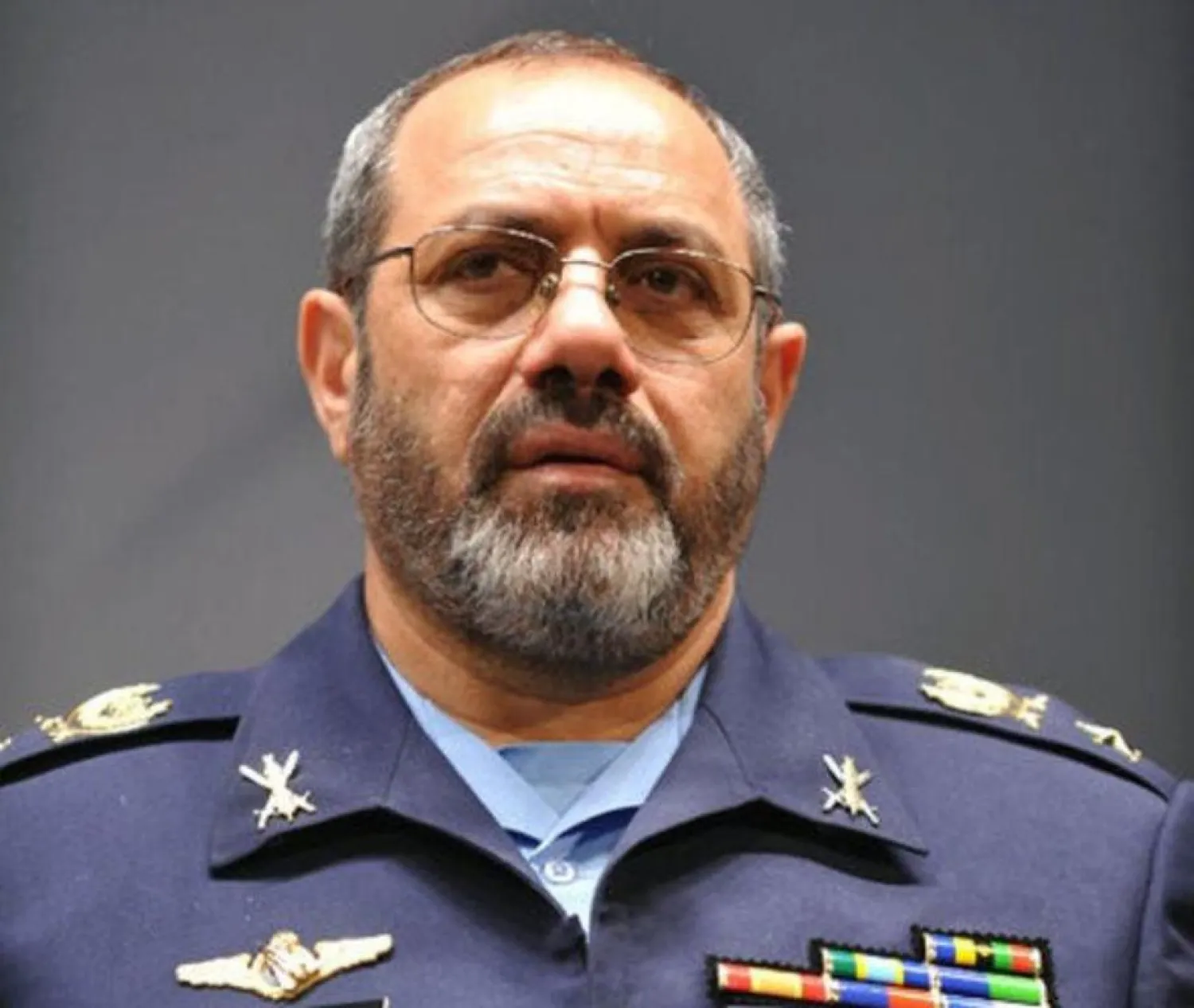

Head of Iranian Air Force Vows to ‘Eliminate’ Israel

Commander of Iranian Army Air Force Brigadier General Aziz Nasirzadeh, IRNA
TT

Head of Iranian Air Force Vows to ‘Eliminate’ Israel

Commander of Iranian Army Air Force Brigadier General Aziz Nasirzadeh, IRNA

The head of Iran’s air force, Brigadier General Aziz Nasirzadeh, has warned that Tehran is ready to “confront” and “eliminate” Israel. The commander of the Islamic Republic of Iran Air Force (IRIAF) issued a provocative statement to the Young Journalist Club news agency, according Iranian media.

“The young people in the air force are fully ready and impatient to confront the Zionist regime and eliminate it from the Earth,” he said. “Our future generations are learning required know-how for the promised day to destroy Israel,” he added. His fighting words come after Israel launched air raids on Iranian targets inside Syria.

He stressed that Iran’s high level of military preparedness has deterred the country’s enemies from attacking the cleric-led country.

Nasirzadeh’s remarks came in contrast to recent statements made by Iranian Foreign Minister Mohammad Javad Zarif to the French weekly, Le Point, in which he denied Iranian officials calling for the annihilation of Israel.

Zarif’s comments stoked hatred among Iran’s Revolutionary Guard media and the country’s ultra-conservatives.

More so, the head of the elite Revolutionary Guards Major General Mohammad Ali Jafari said Iran will keep military forces in Syria.

Israeli Prime Minister Benjamin Netanyahu said Israeli forces would continue to attack Iranians in Syria and warned them “to get out of there fast, because we will continue with our resolute policy”.

Rebuffing the threats, Jafari was quoted as saying by the semi-official ISNA news agency that “the Islamic Republic of Iran will keep all its military and revolutionary advisers and its weapons in Syria.” Jafari called Netanyahu’s threats “a joke”, and warned that the Israeli government “was playing with (a) lion’s tail.”

The Israeli-Iranian escalation coincides with the deepening of Iranian fears of a military strike against Iran, especially after the US administration's call for a summit on the Middle East aimed at ensuring that Iran is deterred as a regional threat.



Netanyahu Says Israel Supports Trump's Iran Naval Blockade

FILE PHOTO: A map showing the Strait of Hormuz is seen in this illustration taken March 23, 2026. REUTERS/Dado Ruvic/Illustration/File Photo
TT

Netanyahu Says Israel Supports Trump's Iran Naval Blockade

FILE PHOTO: A map showing the Strait of Hormuz is seen in this illustration taken March 23, 2026. REUTERS/Dado Ruvic/Illustration/File Photo

Prime Minister Benjamin Netanyahu said Monday that Israel supports US President Donald Trump's decision to impose a naval blockade on Iran, adding that his government is in full coordination with Washington on the matter.

"Iran violated the rules (of the peace talks in Pakistan), President Trump decided to impose a naval blockade," Netanyahu said at a cabinet meeting, according to a video statement released by his office, AFP reported.

"We, of course, support this firm position, and we are in constant coordination with the United States."

The US military said it would begin a blockade of all Iranian ports on Monday after weekend talks with Tehran ended without a deal.

Trump had announced on social media that he would blockade the strategic Strait of Hormuz trade route that he has been demanding Tehran fully re-open, after Vice President JD Vance left the failed negotiations with an Iranian delegation in Islamabad.

The US military said the blockade would begin at 1400 GMT, and apply to all ships leaving or seeking to dock at Iranian ports on either side of the key waterway.

Netanyahu said Tehran had violated the terms of the talks to begin with, saying Vance had briefed him after the negotiations ended in Islamabad.

"The breakdown came from the American side, which could not tolerate Iran's blatant violation of the terms for entering negotiations," Netanyahu told the cabinet.

"The agreement was that there would be a ceasefire, and that the Iranians would immediately open the strait. They did not do so. The Americans could not accept this."

Netanyahu also said Vance had told him the "central issue" for Trump was the removal of all enriched uranium from Iran and "ensuring that there is no further enrichment in the years ahead -- even decades ahead -- no enrichment within Iran".

"That is their focus, and of course it is important to us as well," Netanyahu added.


Iran in Touch with India on Ships Passage through Strait of Hormuz, Iranian Envoy Says

A vessel at the Strait of Hormuz, off the coast of Oman’s Musandam province, April 12, 2026. REUTERS
TT

Iran in Touch with India on Ships Passage through Strait of Hormuz, Iranian Envoy Says

A vessel at the Strait of Hormuz, off the coast of Oman’s Musandam province, April 12, 2026. REUTERS

Iran has "good contact" with the Indian government on passage of the South Asian nation's ships through the Strait of Hormuz and wants to help New Delhi, Iranian Ambassador to India Mohammad Fathali said on Monday.

The US-Israeli war on Iran, which began in February, has restricted shipping through the key route - a conduit for 40% of India's crude imports - impacting trade and squeezing oil supplies.

This came as ⁠the US Central Command said in a note to seafarers seen by Reuters on ⁠Monday that US military will enforce a blockade ​in Gulf of Oman and Arabian Sea east of the Strait of Hormuz and it will ‌apply to ‌all ​vessel ‌traffic regardless ⁠of ​flag.

The advanced note ‌said ‌the blockade ​would ‌come into effect at ‌1400 GMT on Monday.

"Any vessel entering or departing the blockaded ‌area without authorization is subject to interception, ⁠diversion, ⁠and capture," the note said.

"The blockade will not impede neutral transit passage through the Strait of Hormuz to or from non-Iranian destinations." 


Russia Offers to Take in Iran's Enriched Uranium

FILE - This satellite image provided by Vantor shows the Natanz nuclear complex in Iran on March 7, 2026, with no new damage seen at the facility or the tunnels. (Satellite image ©2026 Vantor via AP, file)
TT

Russia Offers to Take in Iran's Enriched Uranium

FILE - This satellite image provided by Vantor shows the Natanz nuclear complex in Iran on March 7, 2026, with no new damage seen at the facility or the tunnels. (Satellite image ©2026 Vantor via AP, file)

Russia is ready to take in Iran's enriched uranium as part of a future peace deal with the United States, the Kremlin said on Monday.

Failed talks between Iran and the United States over the weekend dashed hopes of a swift deal to permanently end the war that has killed thousands and thrown the global economy into turmoil since it began in late February.

Russia, which possesses the world's largest stockpile of nuclear weapons, has repeatedly offered to host Iran's enriched uranium as part of any peace deal.

"This proposal was voiced by President (Vladimir) Putin in contacts with both the United States and regional states. The offer still stands, but has not been acted upon," the Kremlin's spokesman Dmitry Peskov told reporters on Monday in response to a question by AFP.

The Kremlin also criticized Trump's threat to blockade the Strait of Hormuz, a key waterway that has been at a standstill since the US and Israel began striking Iran in late February.

"Such actions will likely continue to negatively impact the international market," Peskov said.