


Netanyahu to Head to India for More than $3.5 Billion Arms Deal

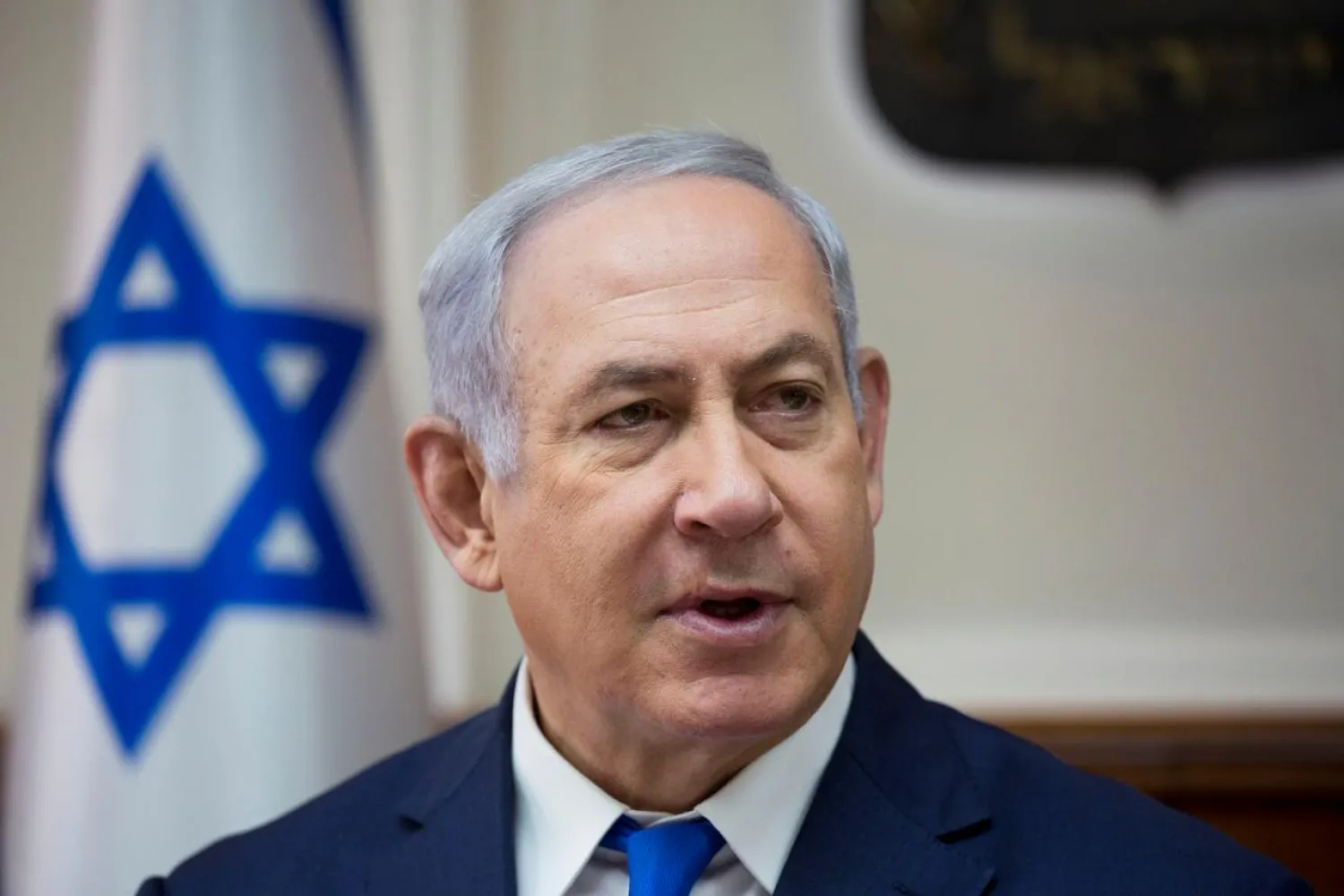
Israeli Prime Minister Benjamin Netanyahu chairs the weekly cabinet meeting at his office in Jerusalem November 7, 2017. REUTERS/Ariel Schalit/Pool
TT

Netanyahu to Head to India for More than $3.5 Billion Arms Deal

Israeli Prime Minister Benjamin Netanyahu chairs the weekly cabinet meeting at his office in Jerusalem November 7, 2017. REUTERS/Ariel Schalit/Pool

Israeli Prime Minister Benjamin Netanyahu is expected to visit New Delhi next week for talks with his Indian counterpart Narendra Modi on huge arms deals worth more than 3.5 billion dollars.

The deals include India’s purchase of two more “Phalcon” airborne warning and control system (AWAC) worth 800 million dollars and Spike anti-tank guided missiles worth 500 million dollars.

Israel is also expected to sell India radars, drones and unmanned fighter jets, informed political sources in Tel Aviv said.

The offices of Netanyahu and Modi are in close contact to agree on the details of the Israeli PM’s visit.

Israeli officials, including an adviser to Netanyahu, have conducted several visits to India in the past week to set the stage for the deals he is expected to strike with his Indian counterpart.

Israeli military industries are highly enthusiastic about the planned deals, which are expected to strengthen relations between the two countries.

But the Israeli opposition has huge reservations on Netanyahu’s trip, saying he is seeking to consolidate his position ahead of the elections.



Russia Releases Video Footage to Challenge Kyiv Over Alleged Attack

A Russian service member stands next to the remains of a drone, which, according to the Russian Defense Ministry, was downed during the repelling of an alleged Ukrainian attack on the Russian presidential residence in the Novgorod Region, in an unknown location in Russia, in this still image from a video released December 31, 2025. (Russian Defense Ministry/Handout via Reuters)
TT

Russia Releases Video Footage to Challenge Kyiv Over Alleged Attack

A Russian service member stands next to the remains of a drone, which, according to the Russian Defense Ministry, was downed during the repelling of an alleged Ukrainian attack on the Russian presidential residence in the Novgorod Region, in an unknown location in Russia, in this still image from a video released December 31, 2025. (Russian Defense Ministry/Handout via Reuters)

Russia's defense ministry released video footage on Wednesday of what it said was a downed drone at a briefing intended to show Ukraine tried this week to attack a presidential residence and challenge Kyiv's denials that such an attack took place. 

Kyiv says Moscow has produced no evidence to support its allegations and that Russia invented the alleged attack to block progress at talks on ‌ending the war ‌in Ukraine. Officials in several ‌Western ⁠countries have ‌cast doubt on Russia's version of events and questioned whether there was any attack. 

Video footage released by Russia's defense ministry showed a senior officer, Major-General Alexander Romanenkov, setting out details of how Moscow says it believes Ukraine attacked one of President Vladimir Putin's residences in ⁠the Novgorod region. 

Romanenkov said 91 drones had been launched from Ukraine's Sumy ‌and Chernihiv regions in a "thoroughly ‍planned" attack that he said ‍was thwarted by Russian air defenses, caused ‍no damage and injured no one. 

The video released by the ministry included footage of a Russian serviceman standing next to fragments of a device which he said was a downed Ukrainian Chaklun-V drone carrying a 6-kg explosive device which had not detonated. 

The ministry did ⁠not explain how it knew what the device's target was. 

Speaking to Reuters, Ukrainian Foreign Ministry spokesperson Heorhii Tykhyi said the footage was "laughable" and that Kyiv was "absolutely confident that no such attack took place". 

Reuters could not confirm the location and the date of the footage showing fragments of a destroyed device. The model of the destroyed device could not be immediately verified. 

Other footage featured a man, identified as Igor Bolshakov from a ‌village in the Novgorod region, saying he had heard air defense rockets in action. 


China Slams Countries That Criticized Taiwan Drills as 'Irresponsible'

A screen broadcasting news about military drills conducted by China around Taiwan is seen on a street in Beijing, China, 30 December 2025. (EPA)
TT

China Slams Countries That Criticized Taiwan Drills as 'Irresponsible'

A screen broadcasting news about military drills conducted by China around Taiwan is seen on a street in Beijing, China, 30 December 2025. (EPA)

Beijing slammed on Wednesday countries including Japan and Australia for their "irresponsible" criticism of China's military drills in waters around Taiwan.

China launched missiles and deployed dozens of fighter jets, navy ships and coastguard vessels around the island on Monday and Tuesday in live-fire drills.

There has been a chorus of international criticism of China's drills, including from Japan, Australia and European countries.

Japan said Wednesday that China's exercises "increase tensions" across the Taiwan Strait, while Australia's foreign ministry condemned the "destabilizing" military drills.

The European Union on Tuesday said the military activity "endangers international peace and stability".

Beijing on Wednesday hit back at the remarks.

"These countries and institutions are turning a blind eye to the separatist forces in Taiwan attempting to achieve independence through military means," foreign ministry spokesman Lin Jian told reporters at a news briefing.

"Yet, they are making irresponsible criticisms of China's necessary and just actions to defend its national sovereignty and territorial integrity, distorting facts and confusing right and wrong, which is utterly hypocritical."

Lin said Beijing appreciated countries such as Russia, Pakistan and Venezuela expressing their support for China.

"We want to reiterate China's unwavering resolve for safeguarding national sovereignty, security and territorial integrity," he added.

"Any egregious provocative act that crosses the line on the Taiwan issue will be met with a firm counter from China."


Iran Appoints New Central Bank Governor After Record Currency Fall and Mass Protests

A person walks past a sign at a currency exchange, as the value of the Iranian rial drops, in Tehran, Iran, December 30, 2025. Majid Asgaripour/WANA (West Asia News Agency) via Reuters
TT

Iran Appoints New Central Bank Governor After Record Currency Fall and Mass Protests

A person walks past a sign at a currency exchange, as the value of the Iranian rial drops, in Tehran, Iran, December 30, 2025. Majid Asgaripour/WANA (West Asia News Agency) via Reuters

Iran on Wednesday appointed a new governor to the central bank after the former one resigned following a record currency fall against the US dollar that sparked large protests.

The plummeting of the rial, Iran's currency, sparked the largest protests in the country in three years, with rallies that began Sunday and continued until Tuesday.

A report by the official IRNA news agency said President Masoud Pezeshkian’s Cabinet appointed Abdolnasser Hemmati, a former economics minister, as new governor of the Central Bank of Iran. He replaces Mohammad Reza Farzin, who resigned on Monday.

Experts say a 40% inflation rate led to public discontent. The US dollar traded at 1.38 million rials on Wednesday, compared to 430,000 when Farzin took office in 2022.

Many traders and shopkeepers closed their businesses and took to the streets of Tehran and other cities to protest.

The new governor's agenda will included a focus on controlling inflation and strengthening the currency, as well as addressing the mismanagement of banks, the government’s spokeswoman Fatemeh Mohajerani wrote on X.

Hemmati, 68, previously served as minister of economic and financial affairs under Pezeshkian.

In March parliament dismissed Hemmati for alleged mismanagement and accusations his policies hurt the strength of Iran’s rial against hard currencies.

A combination of the currency's rapid depreciation and inflationary pressure has pushed up the prices of food and other daily necessities, adding to strain on household budgets already under pressure due to Western sanctions on Iran over its nuclear program.

Inflation is expected to worsen with a gasoline price change introduced in recent weeks.

Iran’s currency was trading at 32,000 rials to the dollar at the time of the 2015 nuclear accord that lifted international sanctions in exchange for tight controls on Iran’s nuclear program. That deal unraveled after President Donald Trump unilaterally withdrew the United States from it in 2018, during his first term.