


PA Accuses Israel of Uprooting Palestinians in Masafer Yatta

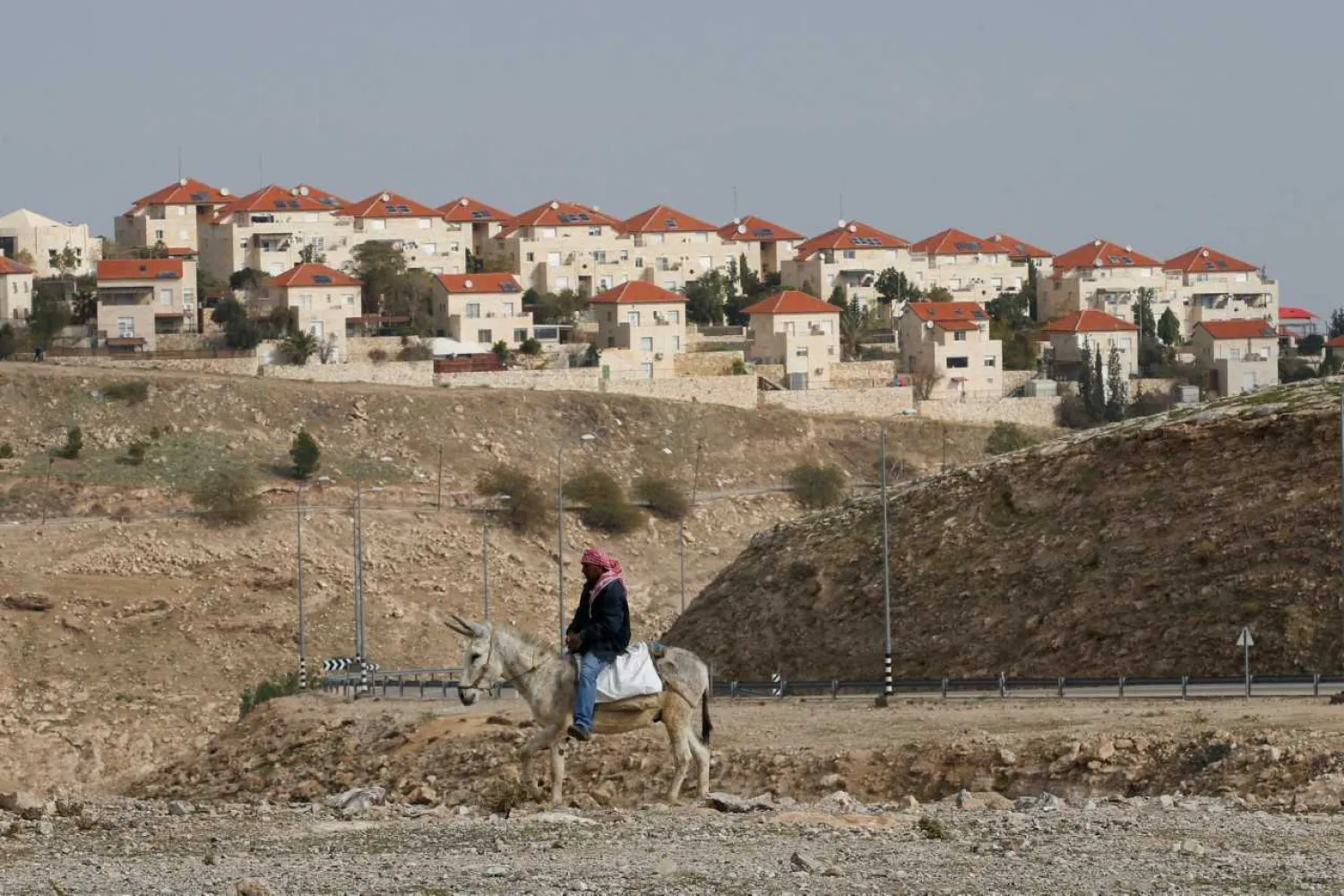
A Palestinian man rides a donkey near the Israeli settlement of Maale Edumim, in the occupied West Bank, December 28, 2016. REUTERS/Baz Ratner/File photo
TT

PA Accuses Israel of Uprooting Palestinians in Masafer Yatta

A Palestinian man rides a donkey near the Israeli settlement of Maale Edumim, in the occupied West Bank, December 28, 2016. REUTERS/Baz Ratner/File photo

The Palestinian Authority has accused the Israeli government of ramping up its campaign to uproot the Palestinians from their lands and houses in Masafer Yatta in southern West Bank ahead of building new settlements.

The Palestinian Ministry of Foreign Affairs and Expatriates (MOFA) said that “the occupation forces cut off water supply lines feeding 17 communities in the region, where an estimated 1,500 Palestinians reside.”

MOFA denounced the “ongoing ethnic cleansing” for the sake of seizing the land and exploiting it for economic, housing and settlement purposes.

Head of Twaneh village council Mohammed Rebii said that Israeli forces have cut off water supplies to 17 communities in Masafer Yatta. He added that the measures come in the context of targeting citizens and their steadfastness in those areas, in an attempt to force them out of their homes, which would allow Israel to expand settlements.

Meanwhile, Oxfam, the Norwegian Refugee Council (NRC) and Save the Children have warned that hundreds of civilians, including children, will see their safety put at risk by the withdrawal of international observers deployed in the city of Hebron (TIPH).

Save the Children Regional Director Jeremy Stoner said: “Palestinian children attending schools near Israeli settler communities in Hebron have experienced threats and violence from settlers for years. The role of the TIPH and other international observers has been very important in reducing confrontations and ensuring children's safety and access to education.”

Stoner continued: “Just last week, we visited one of the schools in Hebron, and the headmistress told Save the Children that staff and students felt exposed and vulnerable without international observers accompanying the children.”

In one of the most vulnerable schools in Hebron, Qurtoba school, the military checkpoint to the institution has recently been reinforced with a guard tower and an electronic gate. This has completely severed the school area from the neighborhood of Beit Hadassa. Parents are not allowed to enter the school premises. Without international observers, the children and teachers will be directly exposed to any potential violence from settlers who live in the area.

Oxfam Country Director Chris Eijkemans said: “This move will exacerbate an already volatile situation and increase impunity for human rights abuses.”

NRC Deputy Regional Director Maureen Magee said: “Short of dismantling the system of closures, restrictions, and checkpoints affecting Palestinians in Hebron, the Israeli government is responsible for ensuring the unhindered passage of civilians, including students and school staff, through checkpoints on their way to and from schools."

“Israel must ensure that schools are protected, safe places for children. We see from our work in Hebron’s schools how children are traumatized by harassment and violence. Left unchecked, this will leave long-lasting scars,” she added.


Houthis Threaten ‘Gradual Escalation’ after Fourth Attack on Israel

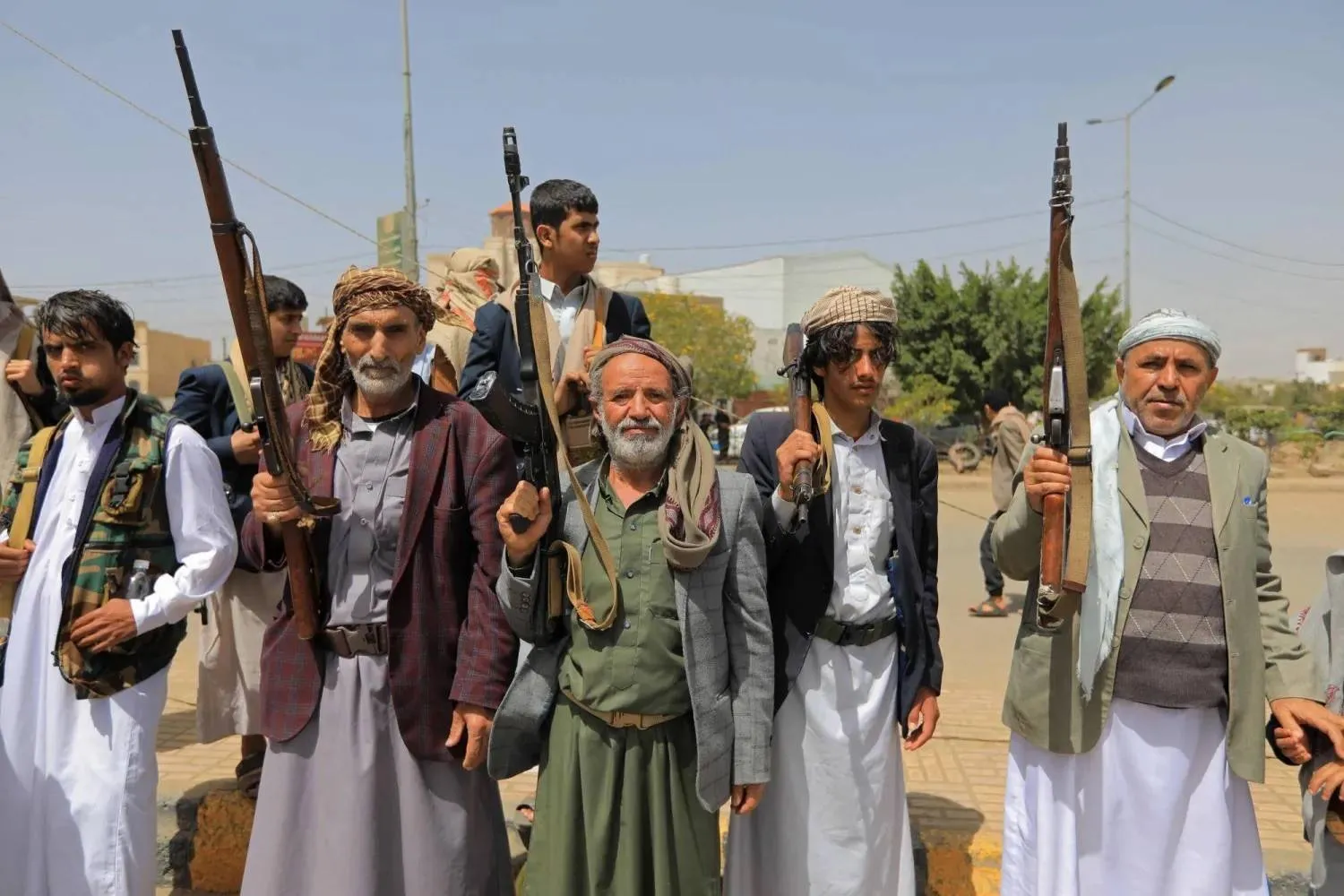
Houthi gunmen during a rally in Sanaa called by their leader (AFP) 
TT

Houthis Threaten ‘Gradual Escalation’ after Fourth Attack on Israel

Houthi gunmen during a rally in Sanaa called by their leader (AFP) 

Yemen’s Houthi group has threatened “gradual escalation” after claiming a fourth attack on Israel, about a week after entering the war alongside Iran as part of the Tehran-led “axis of resistance.”

The move comes as Yemen’s internationally recognized government steps up rhetoric, saying a decisive battle to retake the state from Houthi control is nearing. Israel, for its part, said it is consulting Washington on how to respond to the Houthi attacks, despite their limited impact compared with sustained fire from Iran and Hezbollah.

In a televised statement late Thursday, Houthi military spokesman Yahya Saree said the group launched “a salvo of ballistic missiles” at “vital Israeli targets in the occupied Jaffa area.” He claimed the operation was carried out in coordination with Iran and Hezbollah and had “successfully achieved its objectives.”

The Houthis said their intervention in what they described as a “major and exceptional battle” would be incremental, adding they would adjust their actions depending on “the enemy’s escalation or de-escalation.”

The latest strike marks the fourth since the group announced direct involvement in the regional confrontation, underscoring growing coordination among Iran-backed actors, including Hezbollah and armed Iraqi factions.

Limited effect

The Houthis had claimed a third attack a day earlier. The Israeli military said it intercepted a missile launched from Yemen “without casualties or damage,” adding early detection allowed it to neutralize the threat.

Analysts say such attacks are unlikely to do more than stretch Israel’s air defenses, already under pressure from multiple fronts, including Iran and Hezbollah.

In his first appearance since announcing the escalation, Houthi leader Abdul Malik al-Houthi said the group had shifted from political and media backing of Iran to “direct operational engagement.”

He framed the attacks as part of “joint operations of the axis of resistance,” describing the confrontation as “a duty that transcends geographical borders.” He also defended joining the war, saying neutrality “is not an option,” despite growing concern inside Yemen over the economic and security risks.

Al-Houthi urged supporters to maintain weekly pro-Iran rallies and step up mobilization, including sending school students to summer camps—long used by the group for recruitment.

Government signals offensive

Tareq Saleh, a member of Yemen’s Presidential Leadership Council, said “the battle to end the Houthi coup is approaching,” adding national forces would act “as one team.”

State media reported his remarks during a visit to forces on Yemen’s west coast, where he praised troops as “a safety valve for the republic,” signaling confidence in their ability to regain the initiative.

Saleh also pointed to the regional dimension, saying Iranian actions against Gulf states and Jordan show Tehran’s project is “destructive” and “has never truly been directed at Israel.”

Rejecting Houthi claims, he said the group “pretends to confront Israel” while using that narrative to justify violence against Yemenis, noting the conflict with the Houthis dates back to 2004, well before current regional tensions.


Fire Reported at Foreign Oil Companies' Storage Facilities in Iraq after Drone Strike

Members of Iraq's Hashed al-Shaabi forces stand guard during a pro-Iran rally in Tahrir Square in Baghdad on April 2, 2026.  (Photo by AHMAD AL-RUBAYE / AFP)
Members of Iraq's Hashed al-Shaabi forces stand guard during a pro-Iran rally in Tahrir Square in Baghdad on April 2, 2026. (Photo by AHMAD AL-RUBAYE / AFP)
TT

Fire Reported at Foreign Oil Companies' Storage Facilities in Iraq after Drone Strike

Members of Iraq's Hashed al-Shaabi forces stand guard during a pro-Iran rally in Tahrir Square in Baghdad on April 2, 2026.  (Photo by AHMAD AL-RUBAYE / AFP)
Members of Iraq's Hashed al-Shaabi forces stand guard during a pro-Iran rally in Tahrir Square in Baghdad on April 2, 2026. (Photo by AHMAD AL-RUBAYE / AFP)

A fire broke out ‌early ‌on Saturday at ‌storage ⁠facilities belonging to ⁠foreign ⁠oil ‌companies ‌west of Iraq's ‌Basra after ‌a ‌drone strike, security ⁠sources told Reuters.


Israeli Forces Encircle Bint Jbeil in South Lebanon

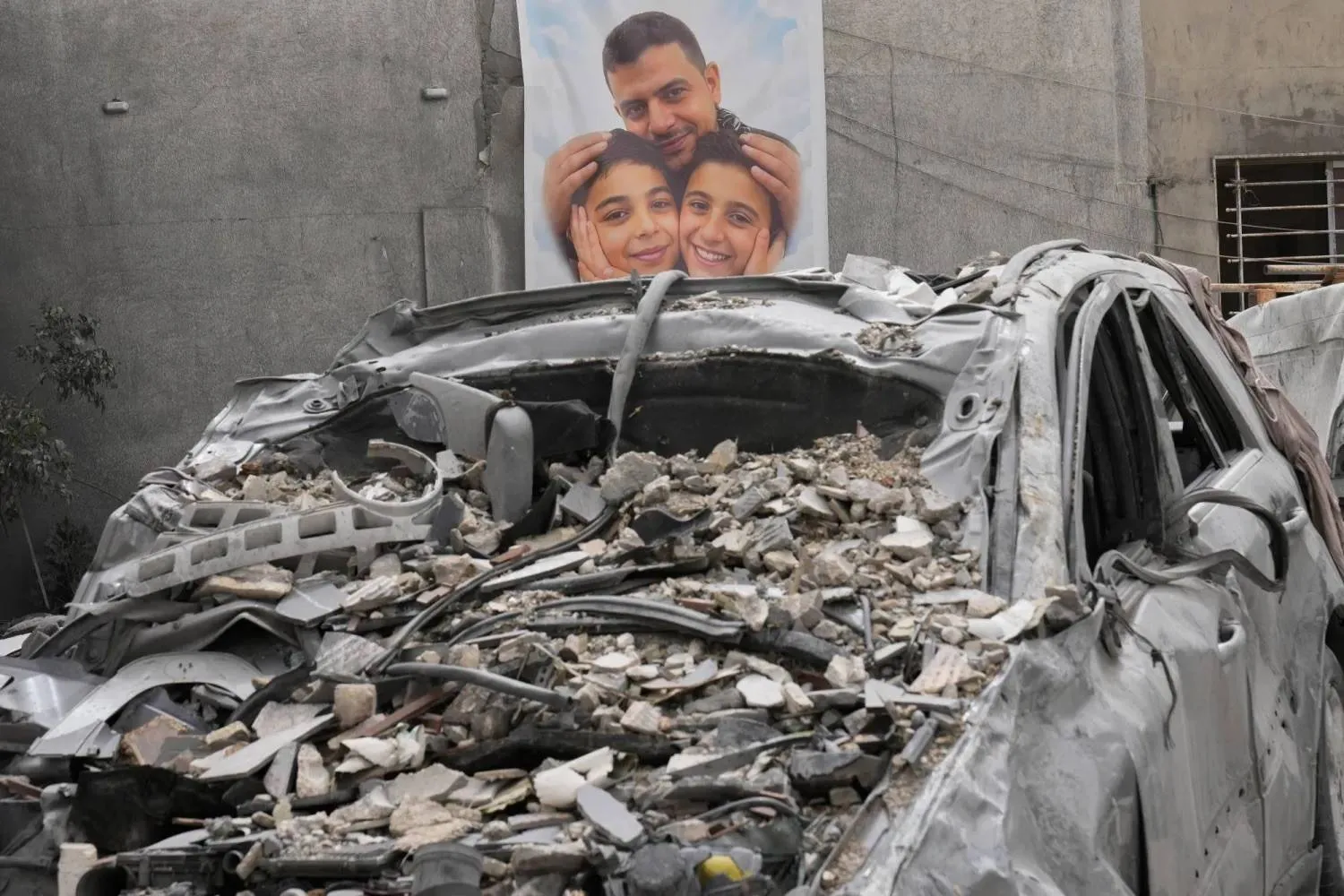
A poster of a man and two children killed in an Israeli air strike that targeted their home in south Lebanon (AP) 
TT

Israeli Forces Encircle Bint Jbeil in South Lebanon

A poster of a man and two children killed in an Israeli air strike that targeted their home in south Lebanon (AP) 

Military developments are accelerating in south Lebanon as Israel steps up pressure through a mix of strikes, evacuation warnings and what analysts describe as a strategy of isolating border towns, with Bint Jbeil emerging as a primary focus.

The Israeli army on Friday warned residents on the northern outskirts of the nearby town of Ain Ebel to move further inside, in what appeared to be an effort to regroup civilians within designated areas.

Attention has centered on Bint Jbeil, where Israel appears to be avoiding a direct ground assault.

Retired Brigadier General Said Kozah told Asharq Al-Awsat that Israeli forces were “relying on a tactic of full encirclement rather than advancing directly into the town”.

He said troops were tightening a cordon along several axes — from Aitaroun and Aainata to the east and south, from Aita al-Shaab toward the outskirts of Haddatha in the north, and potentially from Ain Ebel in the west — effectively isolating Bint Jbeil on all sides.

Kozah noted that the evacuation of Salah Ghandour Hospital in the Saf al-Hawa area, a key junction linking the town to surrounding areas, pointed to an Israeli push to control supply and movement routes.

He added that Israel typically avoids combat in densely built areas due to the high cost, suggesting it may instead rely on heavy bombardment before any ground incursion.

“Bint Jbeil, with its prepared defenses, could become a costly war of attrition,” he stated, adding that a large-scale assault appeared unlikely in the immediate term.

Instead, he said, the likely scenario was continued encirclement, disruption of supply lines and clashes on the outskirts unless battlefield conditions shift.

Alongside developments in the south, Israel expanded pressure to Beirut’s southern suburbs.

Israeli army spokesman Avichay Adraee renewed warnings Friday, urging residents of Haret Hreik, Ghobeiry, Laylaki, Hadath, Burj al-Barajneh, Tahwitat al-Ghadir and Shiyah to evacuate immediately.

In the western Bekaa, Israel struck a bridge linking Sohmor and Mashghara over the Litani River after issuing prior warnings and calling on residents to move north of the Zahrani River.

An Israeli drone later struck worshippers leaving a mosque in Sohmor, killing two people and wounding 11 others, in a sign that strikes were extending to civilian gatherings.

Air strikes resumed on Beirut’s southern suburbs after two days of relative calm, while heavy bombardment continued across the south.

A house between Kafra and Srifa near a center run by the Islamic Health Authority was hit, burning an ambulance without causing injuries.

Strikes also hit Srifa, Braachit, Jouaiya, Borj Qalaouiyeh, Debaal, Ramadiyeh, Bustan, Yohmor al-Shaqif and Shaaitiyeh, with casualties reported, including among Syrians.

Additional strikes targeted Debbine and Srifa in the Tyre district, while intermittent artillery fire hit the outskirts of Haris and Kafra.

Drones were reported flying intensively over Hermel, the northern Bekaa, Beirut, Mount Lebanon and the southern suburbs as part of broad surveillance operations.

At dawn, Apache helicopters fired on the coastline from Bayyada to Mansouri, coinciding with clashes on the ground. Hezbollah fighters were reported to have attacked Israeli forces advancing toward the coastal road near Bayyada.

Overnight strikes hit Bint Jbeil, Hanine, Kounine and Tayri, while eastern Brachit came under artillery fire. Israeli forces also blew up remaining houses in Aita al-Shaab, with explosions heard as far as Tyre.

Separately, Lebanon’s National News Agency said three Indonesian soldiers serving with a UN peacekeeping unit were wounded at their base in Adaisseh by a shell, with the source under investigation.

Hezbollah said it fired rockets toward northern Israel, targeting Kiryat Shmona, troop positions at Honin barracks and military sites in Safed, as well as Metula and Kfar Yuval.

The group also said it detonated an explosive device against Israeli forces in Bayyada, causing casualties that required helicopter evacuation before the area was later shelled.