Brendan Rodgers Rebuilt his Reputation at Celtic, but Still Has Plenty to Prove

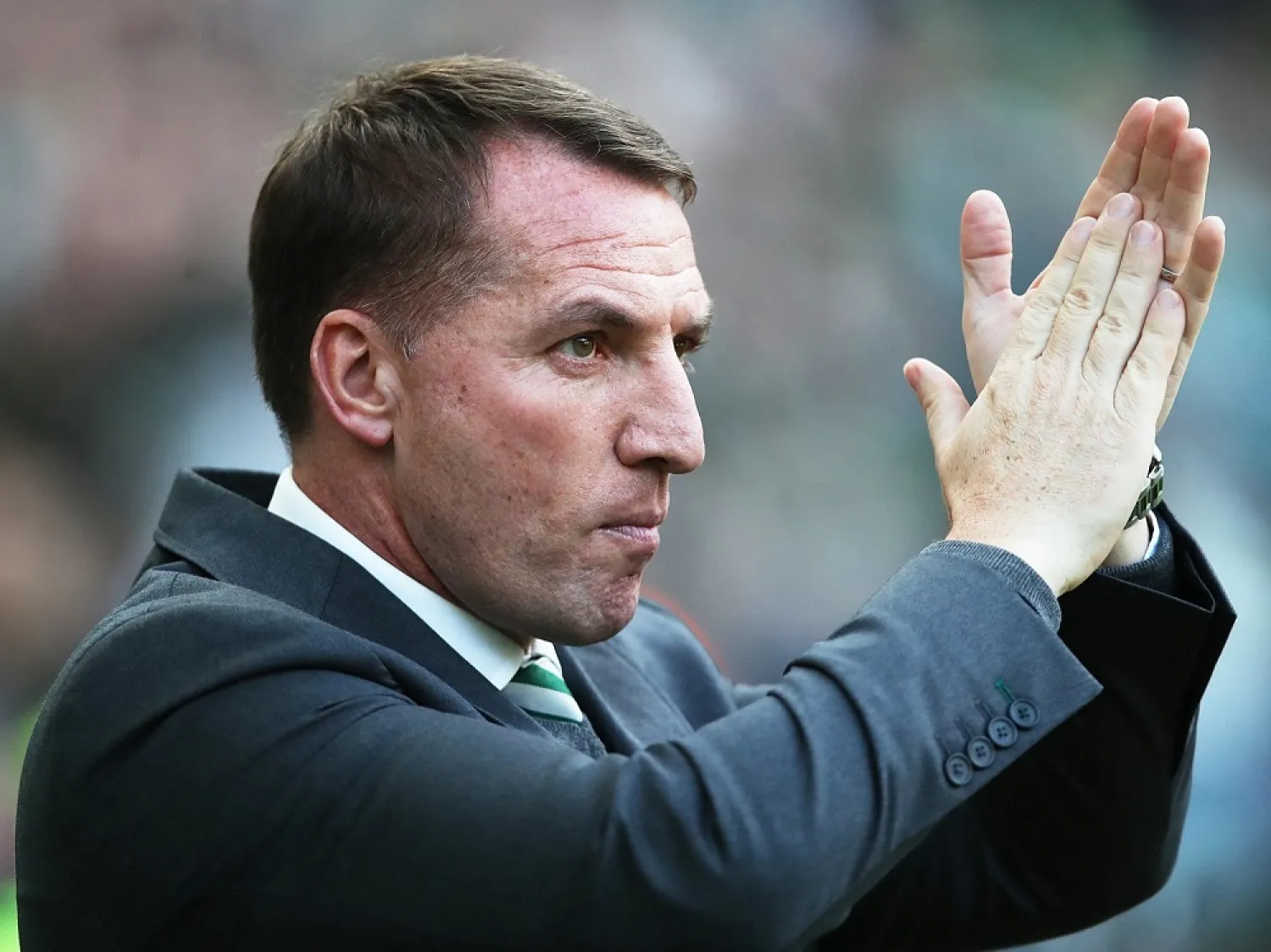
Leicester City’s new manager Brendan Rodgers. (Getty Images)
TT

Brendan Rodgers Rebuilt his Reputation at Celtic, but Still Has Plenty to Prove

Leicester City’s new manager Brendan Rodgers. (Getty Images)

At least Brendan Rodgers is consistent. On exiting Celtic, thereby causing uproar among an element of the club’s support, the 46-year-old managed to retain sentiment from his arrival in Glasgow in May 2016. And with a straight face, at that.

“From the moment I walked into Celtic Park I have been living my dream and, together with the players, staff and supporters, we have been on an amazing journey, which I will never forget,” Rodgers said.

Whether any manager would opt to end a “dream” 14 games from a third clean sweep of domestic trophies is open to debate. In part, this points to a theme obvious from last season onwards; glory in Scotland was not enough to hold the attention of Rodgers, not least when a return to the Premier League became a viable option. Leicester’s interest in the former Liverpool manager had lasted for months.

In Scotland, there has already been an underplaying of how decent a job Rodgers has walked – or run – into. It had been obvious he could not swap Celtic for anything higher up the Premier League ladder. Leicester were a perfect fit.

That Rodgers placed such stock in Celtic being “his” club means the upset felt by the Scottish champions’ fans is understandable. It also undermines the hero worship afforded to Rodgers, plus the flawed sense that Celtic’s pursuit of 10 titles in succession has a wider resonance than even their own executive believes. The reality is that those in far more competitive environments in Scotland shrug shoulders at recurring success by the biggest club there. Rodgers, whose biggest pre-Celtic achievement was play-off success with Swansea in 2011, absolutely reveled in the adulation and delivery of seven trophies.

His talent will have been enhanced by presiding over a club where the demand to win every game far outstrips that of Leicester, just as managing a team who commonly enjoy vast chunks of possession brings its own distinct challenges. And believe it or not; it is possible to be a poor manager of Celtic; see Tony Mowbray.

That Rodgers implemented a relentless approach to domestic football is beyond dispute. That he oversaw the development of talent – Callum McGregor, James Forrest, Kieran Tierney and Ryan Christie the most obvious examples – represents his key Celtic success. Early this season, with Celtic struggling, Rodgers called a meeting during which he asked players to anonymously list key thoughts regarding every one of their teammates.

Each individual was later issued with the detail as applicable to them; Celtic’s form was to improve, in what provides a nod towards Rodgers’ management skill. Believe it or not, it was not always all about him.

A deeper story had played out by then. Rodgers’ disquiet with the Celtic board regarding what he viewed as the failure to adequately back him in the summer transfer window disrupted relationships to a point from which they could never fully recover. Dermot Desmond, Celtic’s key shareholder, places such faith in the chief executive, Peter Lawwell, that Rodgers had no scope to win the battle, never mind a war.

In reply to Rodgers’ unrest, his paymasters could readily point towards a string of poor forays into the transfer market as costing Celtic millions. During Rodgers’ tenure, Celtic’s staff costs rocketed to close to £60m per year; 30 times some of their domestic opponents. It would be no shock to see that spending curtailed now. Lee Congerton, hired and vehemently defended by Rodgers, has presided over an inauspicious recruitment run.

A fiscal gulf – no fault of Celtic’s, of course – did not halt wild celebration as Scottish success continued. Rodgers rather enjoyed being the big fish in a small pond, where he would not think twice of offering advice to other clubs or delivering powerpoint presentations to out-of-work coaches. Yet there had been sufficient indication, even a year ago, that the Scottish scene – which Rodgers began to refer to as “up here” – was not stimulating enough for a manager who regards himself as being in the top tier.

Against this backdrop, Rodgers’ failure to make proper inroads in European competition was strange. It also undermined what he could produce against Hamilton or St. Johnstone, where annual wage bills equated to Rodgers’ own salary. From 22 European ties “proper”, Rodgers mustered only five wins. Whereas Neil Lennon and Gordon Strachan – twice – took Celtic to the last 16 of the Champions League, Rodgers found himself generally helpless against serious opposition.

A myth soon developed in respect of this – happily enhanced by Rodgers – whereby his dreamy, free-flowing football came at the cost of effective pragmatism. In truth, this Celtic team continually conceded dreadful goals in Europe, a scenario not intrinsically linked to systems or style of play at all. They did not attack with vigor. Defeat to AEK Athens at the qualifying phase of this season’s Champions League represented a dire result; the Greeks did not take a point from subsequent group games.

In almost three years, Rodgers did not source a formidable central defensive pairing for Celtic, as will require attention this summer. His beholding to Scott Brown was routinely exposed outside Scotland’s goldfish bowl. A failure to properly trust in Celtic’s academy players, the best in Scotland by a distance, meant an over-reliance on expensive loan deals.

Rodgers has points to prove back in the Premier League. That is partly on account of the wounding circumstances by which he left Liverpool but also, whisper it, owing to shortcomings illustrated in Glasgow. Rodgers was very good for Celtic but it would be an error to deny the reverse is also true. The club have no serious cause to mourn his loss.

The Guardian Sport


Irish Boxer Lee Reeves Dies at Age 31, Three Months after Dublin Title Fight Injury

Irish boxer Lee Reeves. Reuters
TT

Irish Boxer Lee Reeves Dies at Age 31, Three Months after Dublin Title Fight Injury

Irish boxer Lee Reeves. Reuters

Irish boxer Lee Reeves has died more than three months after being injured during a fight in Dublin, promoter Queensberry said Tuesday. He was 31.

"Everyone at Queensberry is devastated to learn of the passing of Lee Reeves," Queensberry Promotions said in a statement.

Reeves was hospitalized after being knocked out by compatriot Gary Cully in the 10th and final round of their Boxing Union of Ireland Celtic super-lightweight title fight on Aug. 1.

Reeves was carried from the ring on a stretcher after receiving initial treatment.

Queensberry had said after the fight that his condition was critical but stable.

“Lee was an immensely talented boxer, as well as a true role model and inspiration to his community,” the statement added Tuesday, according to The Associated Press. “Our deepest condolences go to Lee’s family, friends and all those who loved him. We ask that their privacy be respected at this incredibly difficult time. Rest in peace, Lee.”


Alonso to Enter Dakar Rally with Loeb and Aston Martin Team

November 5, 2026 Aston Martin's Fernando Alonso during a press conference ahead of the F1 Sao Paulo Grand Prix. (Reuters)
TT

Alonso to Enter Dakar Rally with Loeb and Aston Martin Team

November 5, 2026 Aston Martin's Fernando Alonso during a press conference ahead of the F1 Sao Paulo Grand Prix. (Reuters)

Double Formula One champion Fernando Alonso will compete in next January's Dakar Rally in an Aston Martin Dreadnought entry run by engineering partner Prodrive.

The 45-year-old Spaniard, a 32-time Grand Prix winner and two-time Le Mans 24 Hours winner, will be racing in the annual event for the second time after competing with Toyota in 2020, finishing 13th.

France's nine-time world rally champion Sebastien Loeb and Brazil's reigning world rally-raid champion Lucas Moraes will be his teammates in a three-car entry.

The 49th edition of the Dakar Rally will ‌be held in ‌Morocco from January 9 to 23, with a prologue and first ‌stage ⁠in Portugal, after ⁠being moved from Saudi Arabia due to security concerns.

The 24-round Formula One season is due to start in Bahrain in March after testing in late February.

Alonso, who will again have compatriot and five-time motorcycle Dakar winner Marc Coma as co-driver, is racing in the Las Vegas Grand Prix this weekend. He said he had turned his thoughts to Dakar after deciding to continue in Formula One with Aston Martin.

“In the end, the decision became simple. I wanted to embrace ⁠the challenge completely and take on both Formula One and the ‌Dakar Rally in the same year," he explained in ‌a statement.

"In 2020, Dakar was one of the most challenging and enjoyable experiences of my career. ‌I have enormous respect for this race and the specialists who have mastered it.

"Formula One ‌remains my priority. But I am a racing driver, and challenges like this are why I love competing. I’m looking forward to seeing what we can achieve."

LOEB CHASES FIRST DAKAR WIN

In October, Alonso told reporters at the Singapore Grand Prix that he felt the desert endurance race would be physically ‌incompatible with his Formula One commitments.

Loeb, 52, will also be chasing a first Dakar win after 10 previous attempts that have brought ⁠him 28 stage ⁠wins to date.

“Winning the Dakar is very important to me,” said the Frenchman, who will be partnered by Belgian Fabian Lurquin. “We have come close several times, and the motivation is there to keep working until we achieve it."

The Dreadnought is a digital-only tactical SUV created exclusively for gamers playing "Call of Duty: Modern Warfare 4" that will now be brought into the real world by Prodrive, Aston Martin's partners in endurance GT racing.

The Dakar will be Aston Martin Racing’s debut in the world rally-raid championship.

"Aston Martin's ambition for this program has been clear from the outset: to create a car capable of competing at the front of the world's toughest motorsport event," said Prodrive Chairman David Richards.

"By combining Aston Martin's vision with Prodrive's experience in rallying, endurance racing and Dakar competition, we have built a strong foundation. With an exceptional driver line-up and a highly capable engineering team, we look forward to seeing Dreadnought take on this remarkable challenge."


Owono Does Not Deserve 12-Match Ban Over De Miguel Death, Says Andorra Owner Pique

Equatorial Guinea's goalkeeper #01 Jesus Owono leaves the pitch at half time during the Africa Cup of Nations (CAN) Group E football match between Equatorial Guinea and Algeria at Moulay Hassan Stadium in Rabat on December 31, 2025. (AFP)
TT

Owono Does Not Deserve 12-Match Ban Over De Miguel Death, Says Andorra Owner Pique

Equatorial Guinea's goalkeeper #01 Jesus Owono leaves the pitch at half time during the Africa Cup of Nations (CAN) Group E football match between Equatorial Guinea and Algeria at Moulay Hassan Stadium in Rabat on December 31, 2025. (AFP)

FC Andorra owner Gerard ‌Pique said goalkeeper Jesus Owono did not deserve the 12-match suspension he received following the challenge that led to the death of Tenerife forward Jesus de Miguel.

Owono and De Miguel collided during a Spanish second-tier match on November 2. De Miguel was taken to intensive care and died the following day.

The disciplinary committee of the Spanish football federation (RFEF) banned Owono for violent conduct which resulted in serious ‌injury last week.

"Players, ‌former players, coaches, goalkeepers, everyone has ‌called ⁠it an accident," ⁠Pique said in a video posted on social media late on Monday.

"I truly believe that imposing the maximum sanction on Jesus for this action puts him in a situation he does not deserve, because he is not to blame for all of ⁠this having happened."

Former Barcelona player Pique ‌pointed to the three-match ‌ban handed to Albacete's Jose Corpas for accidentally kicking Sabadell ‌player Quadri Liameed in the head during a ‌recent match in Spain.

"Fortunately Quadri is fine, the consequences in this case were not fatal, and the committee decided to sanction Corpas with three matches," Pique added.

"With ‌all this, my reflection is: what is being sanctioned, the action or the ⁠consequences?"

The RFEF ⁠did not immediately respond to a request for comment outside regular business hours in Spain.

Owono, 25, has withdrawn from Equatorial Guinea's squad for Africa Cup of Nations qualifiers against Zimbabwe this month and Pique said it was unlikely the goalkeeper would return to action as soon as his suspension is up.

"Jesus is going to need far more than 12 matches before he is available and able to compete," he added. "No sanction is going to bring Demi (De Miguel) back to us."