

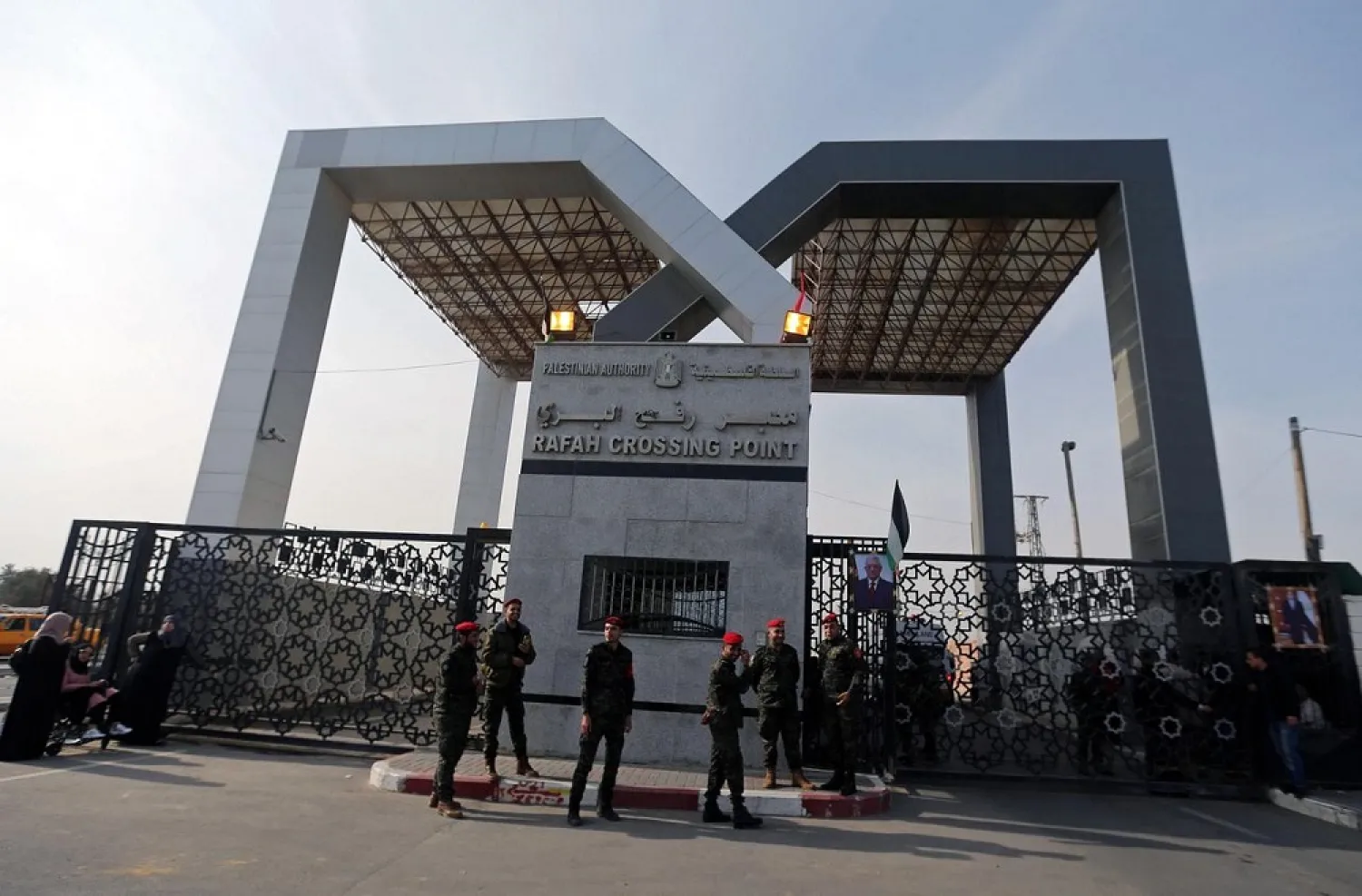

Tax Hikes, Increased Cost of Living behind Gaza Demonstrations

The gate of the Rafah border crossing is seen in Rafah, in the southern Gaza Strip November 18, 2017. (Reuters)
TT

Tax Hikes, Increased Cost of Living behind Gaza Demonstrations

The gate of the Rafah border crossing is seen in Rafah, in the southern Gaza Strip November 18, 2017. (Reuters)

For the first time ever, Hamas’ control over the Gaza Strip is being tested by sweeping public protests driven by economically struggling civilians that are fed up with hardship under the Palestinian movement’s 12-year rule.

In recent years, Hamas has seen organized but small protests against its tackling of the electricity crisis and believed that it would face same-scale demonstrations after hiking tax rates and inflating consumer prices. However, with the poorest parts of the Strip experiencing tragic food insecurity, Hamas’ move to collect more taxes was met with fierce dissent.

Hamas was driven to raise taxes after a drop in financial support from allies, such as sanctioned Iran and the outlawed Muslim Brotherhood, and the collapse of its smuggling tunnels along the border with Egypt.

When Hamas raised taxes about three months ago, it pushed up the price of about 400 imported products by 20 percent.

On February 22, Hamas imposed new taxes on traders, who in turn upped the prices of various commodities amid a stifling deterioration of the Gaza economy.

Hamas' move came after the movement seized control of the Kerem Shalom and the Rafah border crossings after the Palestinian Authority withdrew its civil servants.

Failing to raise sufficient funding for its movement, Hamas ended up stuck in a dire financial crisis that forced many institutions to close in the Strip. Hamas’ money squeeze pushed it to widen the tax brackets filled by merchants in the Strip.

The movement had suffered more from shortages after a recent row over the transfer of Qatari funds to its civil employees amid a faltering truce deal with Israel.

Various statistics indicate that more than 50 percent of the population in Gaza is living in poverty, with more than 65 percent experiencing food insecurity.

Ailed by high unemployment and economic fallout, Gazan youth demonstrated against Hamas’ policy for squeezing from the poor to fill up on its shortcomings.



Iraq PM Keen on Attracting US Investments after Reining in Armed Factions

Members of the Saraya al-Salam faction cheer during a ceremony marking the start of the process of handing over their weapons to Iraqi state forces in Samarra, north of Baghdad, Iraq, Thursday, June 4, 2026. (AP)
TT

Iraq PM Keen on Attracting US Investments after Reining in Armed Factions

Members of the Saraya al-Salam faction cheer during a ceremony marking the start of the process of handing over their weapons to Iraqi state forces in Samarra, north of Baghdad, Iraq, Thursday, June 4, 2026. (AP)

Iraqi Prime Minister Ali al-Zaidi is preparing for a trip to the United State at President Donald Trump’s invitation. It will be his first since taking office as his government presses ahead with efforts to bring armed factions under state control.

The parliament approved al-Zaidi’s government on May 14, leaving nine cabinet positions vacant because of political disagreements and reported US objections to the appointment of some representatives of armed groups that hold parliamentary seats.

Officials pledged to fill the vacant seats after the Eid al-Adha holiday, which ended almost two weeks ago, but the impasse remains.

Despite the absence of defense and interior ministers, al-Zaidi’s administration has moved forward with a sensitive disarmament campaign targeting several armed factions.

The Saraya al-Salam, affiliated with influential Shiite cleric Moqtada al-Sadr, voluntarily handed over their weapons to the government last week. Political observers viewed the move as both a challenge to other armed factions that have yet to disarm and a significant show of support for al-Zaidi’s government.

Al-Zaidi has made state monopoly over weapons the centerpiece of his program. Backed by unusually strong public support from Trump shortly after winning parliamentary confidence, he has stressed that ending the influence of the factions is essential to reshaping Iraq’s economy and attracting foreign investment.

Speaking about his trip, al-Zaidi said he intends to visit Washington soon.

The US president previously congratulated him by phone after he was formally tasked with forming a government and extended an invitation to the White House. At the time, the two leaders discussed strategic relations between Iraq and the United States, opportunities to expand cooperation, and joint efforts to promote regional stability.

Although no date has been announced for the visit, Washington appears keen to support the Iraqi government’s efforts, particularly its campaign to ensure that weapons remain exclusively in state hands. The process has proceeded relatively smoothly despite objections from Iran-aligned factions, such as Kataib Hezbollah and the al-Nujaba movement.

In a further sign of US engagement, Trump recently reappointed Tom Barrack, his envoy to Syria, to serve as his representative in Iraq as well.

For al-Zaidi, however, security reforms are only the first step. Iraq’s economy remains heavily dependent on oil revenues and has faced mounting pressure, particularly following disruptions linked to the Strait of Hormuz.

During a meeting Saturday with business leaders, members of the Private Sector Development Council and Iraq’s Economic Council and executives from private banks, the PM emphasized that the private sector would play a central role in the government’s reform agenda.

He pledged an “open-door policy” toward business proposals and promised to combat corruption and extortion.

“We have an upcoming official visit to the United States,” al-Zaidi said. “We will take a number of business leaders with us to expand opportunities for mutual investment and partnership.”

He also announced plans for a development fund supported by a $10 billion contribution from the Central Bank of Iraq, with shares to be offered to Iraqi citizens at the official exchange rate.


Talks Begin in Cairo on Advancing Gaza Ceasefire

A boy sits on an armchair amid the rubble of a building near the site of an Israeli airstrike in Khan Yunis, southern Gaza Strip, on June 7, 2026. (Photo by Bashar Taleb / AFP)
TT

Talks Begin in Cairo on Advancing Gaza Ceasefire

A boy sits on an armchair amid the rubble of a building near the site of an Israeli airstrike in Khan Yunis, southern Gaza Strip, on June 7, 2026. (Photo by Bashar Taleb / AFP)

Talks on advancing the fragile Gaza ceasefire have begun in Cairo between mediators and Palestinian factions, a Palestinian source familiar with the meeting told AFP.

The discussions, which started Sunday and are set to resume Monday, come as violence continues to plague the territory despite the truce in place since October.

The talks bring together mediators Egypt, Qatar and Türkiye, along with representatives of several Palestinian factions, as efforts continue to push forward negotiations on the second phase of the ceasefire agreement between Israel and Hamas.

According to the source, mediators were due to meet a Hamas delegation before midday on Monday, followed by a wider meeting including all participating factions.

Egypt's state-linked Al-Qahera News channel said Sunday's talks focused on "the proposed roadmap for completing the implementation of the agreement.”

"It was held in a positive atmosphere," the channel reported, adding that there was agreement on the need to continue implementing US President Donald Trump's plan.

The talks come amid rising regional tensions, after Israel and Iran traded fire on Monday, in a serious test of another fragile truce and a potential threat to hopes for a deal to end the wider Middle East war.

Despite the Gaza truce technically in effect since October, daily violence has rocked the territory, over half of which is under Israeli military control in defiance of the ceasefire's terms.

Israel has killed at least 936 people since the ceasefire began, according to Gaza's health ministry, which operates under Hamas authority and whose figures are considered reliable by the UN.

Both Hamas and Israel accuse each other of violating the truce.

The first phase of the ceasefire involved the release of the last Israeli hostages held by Hamas in exchange for Palestinians detained by Israel.

A transition to the second phase, which was supposed to involve Hamas's disarmament and a gradual withdrawal of the Israeli military, has been stalled for months.

The question of Gaza's post-war governance also remains one of the main sticking points in negotiations on implementing the provisions of phase two.

Israel rejects any return of Hamas to power, but also rejects a direct takeover by the Ramallah-based Palestinian Authority at this stage.

Hamas, meanwhile, demands the establishment of a Palestinian administration before considering handing over part of its arsenal -- a key stipulation for the second phase, along with Israel's withdrawal.


Houthis Attack Israel, Declare Ban on Israeli Shipping in Red Sea

A Houthi soldier mans a machine gun mounted on a vehicle while on patrol in Sanaa, Yemen, 04 June 2026. EPA/YAHYA ARHAB
TT

Houthis Attack Israel, Declare Ban on Israeli Shipping in Red Sea

A Houthi soldier mans a machine gun mounted on a vehicle while on patrol in Sanaa, Yemen, 04 June 2026. EPA/YAHYA ARHAB

Yemen's Houthi militias announced a missile attack on Israel on Monday and declared a ban on Israeli shipping in the Red Sea, raising the specter of a return to major disruption on the key route.

"We declare a complete and total ban on Israeli maritime navigation in the Red Sea," said a statement from the Houthis' armed forces, which also confirmed the first missile attack on Israel since early April.

The announcement was made after Israel and Iran traded fire on Monday.

The new attacks, including a strike on an Iranian petrochemical complex, came hours after US President Donald Trump called on Israel to refrain from retaliating against Tehran's missiles.