


Saudi Airlines' Deals Revive Competition Locally, Regionally

A Saudia, also known as Saudi Arabian Airlines, plane lands at Rafik al-Hariri airport in Beirut, Lebanon June 29, 2017. REUTERS/Jamal Saidi
TT

Saudi Airlines' Deals Revive Competition Locally, Regionally

A Saudia, also known as Saudi Arabian Airlines, plane lands at Rafik al-Hariri airport in Beirut, Lebanon June 29, 2017. REUTERS/Jamal Saidi

The world’s largest aviation companies are taking part in the 53rd International Paris Air Show at Le Bourget Airport near Paris, in which Gulf aviation companies also participate as competitors through major deals. Saudi aviation companies are also in the spotlight being backed by government plans which allow them to keep pace with the Kingdom’s vision and achieve progress at air transport level.

While US giant Boeing has been suffering after the grounding of its MAX 737 aircraft in March following two deadly crashes in Indonesia and Ethiopia, France’s giant Airbus is expected to increase its sales.

Saudi Arabian Airlines (Saudia), the Kingdom's national airline, said it ordered 65 A320neo-type aircraft from Airbus, worth more than $7.4 billion, giving an early push to the European manufacturer at the Show.

The Saudi airline plans to boost its A320neo fleet to up to 100 aircraft from 35 now. The deal includes 15 aircraft of the new A321 XLR type, capable of flying up to 8,700 kilometers (5,400 miles).

In addition to the aircraft order, the agreement included coordinating and enhancing means of cooperation to support Saudi Arabia's local content in aerospace, aeronautical engineering and aviation, strengthening local technical capabilities, training human resources and creating jobs in the sector.

Director General of Saudia Saleh bin Nasser al-Jasser said that another new deal will be announced over the coming few months, including the purchase of modern, wide-bodied aircraft to implement further development and expansion plans both locally and internationally.

In January 2017, Flynas, the national Saudi carrier and leading low cost airline in the Middle East, announced adding 120, A320 Neo aircraft, to its fleet. The SR32 billion deal was considered the second largest of its kind in the Middle East.

It also signed a $8.6 billion worth deal to buy 80 Airbus A320neo narrow body jets, including the upgrade of an earlier order. The agreement includes purchasing options for a further 40 A320neo jets.

As Saudi Vision 2030 stresses transferring the Kingdom into a global logistics hub by providing competitive logistics services, several transport companies were established in Saudi Arabia.

“Saudi Arabia is a pioneer in the field of aviation and civil aviation industry at the regional and international levels," Abdulhamid Aba al-Arri, an expert in civil aviation, told Asharq Al-Awsat.

He explained Saudi Arabia’s significance on the civil aviation’s map by issuing effective legislation at the international level as part of the International Civil Aviation Organization (ICAO).



Stocks Drop, Oil Rises after Trump Iran Threat

Donald Trump has deployed warships, fighter jets and other military hardware to the Middle East as he puts pressure on Iran. Hannah Tross / US NAVY/AFP
TT

Stocks Drop, Oil Rises after Trump Iran Threat

Donald Trump has deployed warships, fighter jets and other military hardware to the Middle East as he puts pressure on Iran. Hannah Tross / US NAVY/AFP

Most Asia equities fell and oil prices rose on Friday after Donald Trump ratcheted up Middle East tensions by hinting at possible military strikes on Iran if it did not make a "meaningful deal" in nuclear talks.

The remarks fanned geopolitical concerns and cast a pall over a tentative rebound in markets following an AI-fueled sell-off this month.

Traders are also looking ahead to the release of US data later in the day that will provide a fresh snapshot of the world's top economy, said AFP.

A slew of forecast-beating figures over the past few days have lifted optimism about the outlook but tempered expectations for more interest rate cuts.

The US president told the inaugural meeting of the "Board of Peace", his initiative to secure stability in Gaza, that Tehran should make a deal.

"It's proven to be over the years not easy to make a meaningful deal with Iran. We have to make a meaningful deal otherwise bad things happen," he said, as he deployed warships, fighter jets and other military hardware to the region.

He warned that Washington "may have to take it a step further" without any agreement, adding: "You're going to be finding out over the next probably 10 days."

Israeli Prime Minister Benjamin Netanyahu earlier warned: "If the ayatollahs make a mistake and attack us, they will receive a response they cannot even imagine."

The threats come days after the United States and Iran held a second round of Omani-mediated talks in Geneva as Washington looks to prevent the country from getting a nuclear bomb, which Tehran says it is not pursuing.

The prospect of a conflict in the crude-rich Middle East has sent oil prices surging this week, and they extended the gains Friday to sit at their highest levels since June.

Equity traders were also spooked.

Hong Kong fell as it reopened from a three-day break, while Tokyo, Sydney, Wellington and Bangkok were also down. However, Seoul continued to rally to a fresh record thanks to more tech buying, with Singapore, Manila and Mumbai also up.

City Index market analyst Matt Simpson said a strike was not certain.

"At its core, this looks like pressure and leverage rather than a prelude to invasion," he wrote.

"The US is pairing military readiness with stalled nuclear negotiations, signaling it has credible strike options if talks fail. That doesn't automatically translate into boots on the ground or a regime-change campaign.

"While military assets dominate headlines, diplomacy is still in motion. The fact talks are continuing at all suggests both sides are still probing for a diplomatic off-ramp before tensions harden further."

Shares in Jakarta slipped even after Trump and Indonesian President Prabowo Subianto reached a trade deal after months of wrangling.

The accord sets a 19 percent tariff on Indonesian goods entering the United States. The Southeast Asian country had been threatened with a potential 32 percent levy before the pact.

Jakarta also agreed to $33 billion in purchases of US energy commodities, agricultural products and aviation-related goods, including Boeing aircraft.


Third ‘Mirkaz AlBalad AlAmeen Platform’ to Open in Makkah on Sunday 

A street in the holy city of Makkah is decorated with Ramadan lights. (SPA)
TT

Third ‘Mirkaz AlBalad AlAmeen Platform’ to Open in Makkah on Sunday 

A street in the holy city of Makkah is decorated with Ramadan lights. (SPA)

The third edition of the “Mirkaz ABalad AlAmeen”, a leading platform for exchanging opportunities in Makkah, will kick off on Sunday, under the theme “Makkah Inspires the World.”

The platform, organized by the Holy Makkah Municipality, will feature 15 exceptional Ramadan evenings focused on dialogue, knowledge exchange, and cross-sector engagement.

Makkah Mayor Musad Aldaood said the platform redefines development from Makkah, where faith meets inspiration and values are transformed into a comprehensive civilizational experience.

He noted that the initiative reflects the ambitions of Saudi Vision 2030 and showcases Makkah to the world as a living model of creativity, leadership, and innovation.

The upcoming edition will host more than 65 speakers, including executive leaders and decision-makers from across all three sectors, alongside futurists, entrepreneurs, and leading voices in culture and inspiration from artists, writers, media professionals, and innovators.

The program targets 12 key sectors: technology and digital transformation, financial investment, communications and media, real estate development, transport and logistics, banking services, youth and sports, tourism and culture, hospitality and catering, Hajj and Umrah, the third sector, and healthcare.


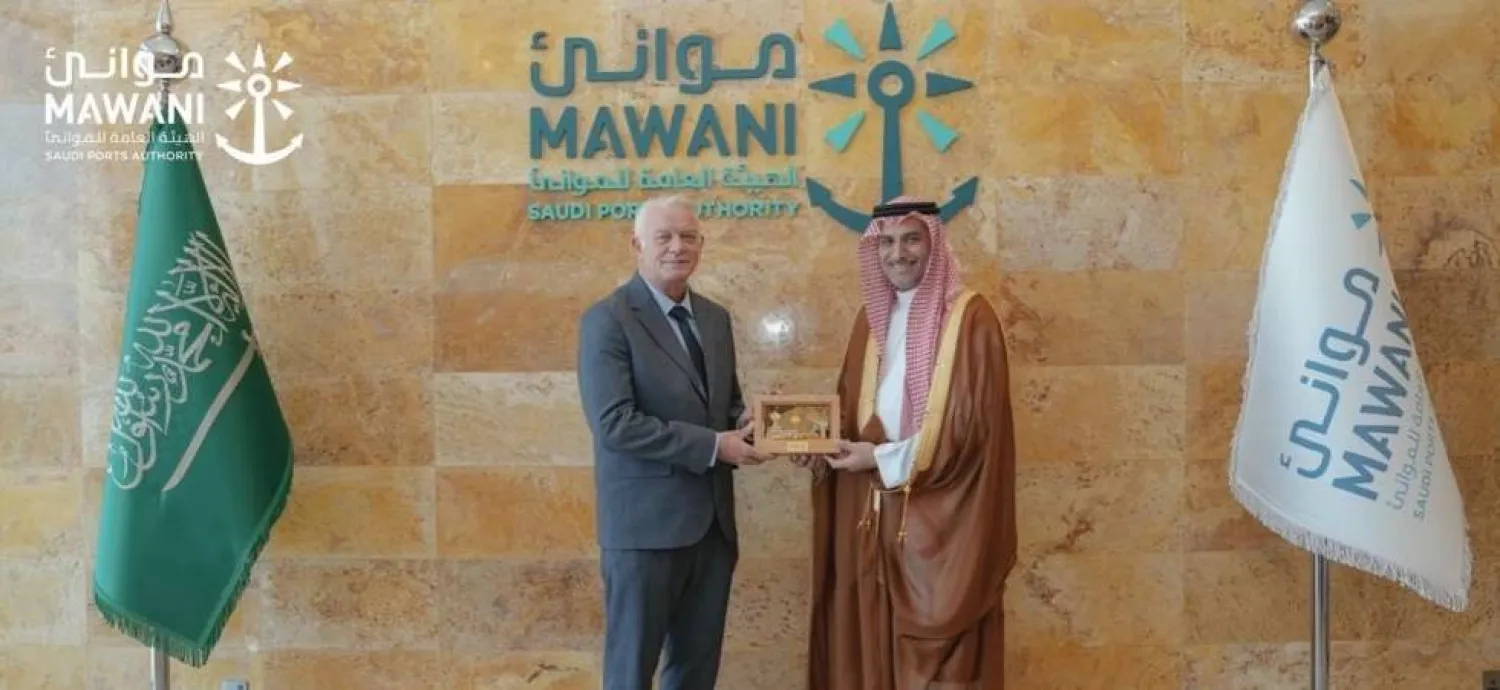
Saudi Arabia’s Mawani Grants Unified License to Global Shipping Line 

The initiative is part of Mawani's ongoing efforts to develop the maritime business environment, enable international companies to invest in the Saudi market, and increase competitiveness within the maritime sector. (Mawani)
TT

Saudi Arabia’s Mawani Grants Unified License to Global Shipping Line 

The initiative is part of Mawani's ongoing efforts to develop the maritime business environment, enable international companies to invest in the Saudi market, and increase competitiveness within the maritime sector. (Mawani)

The Saudi Ports Authority (Mawani) granted on Thursday a unified license to international shipping line Global Shipping Line (PIL), officially recognizing it as an authorized foreign investor to operate maritime agencies in the Kingdom's ports, reported the Saudi Press Agency.

The license is issued in accordance with the regulations outlined in the Maritime Agency Services, reflecting Mawani's commitment to boosting the efficiency of the maritime sector and improving the quality of operational services provided at ports.

It aims to attract global expertise and facilitate knowledge transfer within the Kingdom, aligning with international best practices in the maritime transport industry.

The initiative is part of Mawani's ongoing efforts to develop the maritime business environment, enable international companies to invest in the Saudi market, and increase competitiveness within the maritime sector.

PIL, which operates from its regional headquarters in Riyadh, manages operations in 29 countries.

The move strengthens the Kingdom's position as a crucial logistics hub, in line with the National Transport and Logistics Strategy, while attracting more international shipping lines. It reinforces Saudi Arabia's role as a key link among three continents.