Facebook Dodged a Bullet From the F.T.C. It Faces Many More

Facebook is the subject of investigations and inquiries by regulators and lawmakers in Washington, Europe and in countries including Canada.CreditCreditStephen Lam/Reuters
TT

Facebook Dodged a Bullet From the F.T.C. It Faces Many More

Facebook is the subject of investigations and inquiries by regulators and lawmakers in Washington, Europe and in countries including Canada.CreditCreditStephen Lam/Reuters

After Facebook was hit on Friday with a fine of around $5 billion for privacy violations, critics immediately said it escaped largely unscathed: The settlement neither bruised its bottom line nor severely restricted its ability to collect people’s data.

Yet even if the Silicon Valley company dodged that bullet, its pain was just beginning.

Regulators and lawmakers in Washington, Europe and in countries including Canada have already begun multiple investigations and proposing new restrictions against Facebook that will probably embroil it in policy debates and legal wrangling for years to come. And in some of these places, the authorities are increasingly coordinating to form a more united front against the company.

In the United States, the potential for a federal antitrust investigation looms, several state attorneys general have initiated investigations of the company, and members of Congress are considering a federal privacy law and other restrictions. Not to mention that President Trump has turned up the heat on Facebook and other tech behemoths, including on Friday when he said that the platforms were “dishonest” and “crooked” and that “something is going to be done.”

That momentum will be on display this coming week on Capitol Hill. On Tuesday, the House Judiciary subcommittee on antitrust plans to hold a hearing featuring executives from Facebook, Apple, Amazon and Google about the power of the firms. That same day, the Senate Banking Committee is scheduled to hear from David Marcus, a top Facebook executive, on the company’s new Libra cryptocurrency project, which lawmakers have criticized and questioned.

In Europe, Facebook faces sanctions for breaking the region’s strict privacy laws, and the European Commission is in the early stages of an antitrust investigation against the company. In Britain, where a parliamentary report this year labeled Facebook “digital gangsters,” officials are writing new competition and social media laws, and regulators have started a broad antitrust inquiry targeted at Facebook and Google. France is also considering new penalties against the social network if hate speech and other harmful content is not removed within 24 hours.

And Australia, Japan, India, New Zealand and Singapore are either considering or have passed new rules against big internet platforms. Since 2016, at least 43 countries have passed or introduced regulations targeting social media and the spread of misinformation, according to Oxford University researchers.

“The debate has shifted,” said Tommaso Valletti, a professor at Imperial College Business School and the chief economist for the European Commission’s antitrust division. “The right question is not whether to intervene, but what kind of intervention do we need.”

For Facebook, these global fights could sting more than the F.T.C. decision and its $5 billion fine. While that amount would be a record penalty by the federal government against a technology company, it represents just a fraction of Facebook’s $56 billion in annual revenue. And while the F.T.C. also moved to increase oversight of how Facebook handles user data, none of the conditions in the settlement would impose strict limits on the company’s ability to collect and share data with third parties.

Yet governments and regulators can still potentially force the social media company to change how it conducts business through new laws and restrictions — a damaging outcome that Microsoft and other large companies have faced in the past. Already, Facebook has put huge amounts of time and resources into pushing back against tougher privacy, antitrust and hate speech rules, even as it has publicly expressed openness toward more regulation.

Facebook said in a statement on Saturday that, “by updating the rules for the internet, we can preserve what’s best about it.” The company added, “We want to work with governments and policymakers to design the sort of smart regulation that fosters competition, encourages innovation and protects consumers.”

Facebook is the centerpiece of a broader reckoning facing the tech industry, with governments beginning to collaborate in their response. The European Commission has shared information with the F.T.C. and the Justice Department about its past investigations into Google. And this spring, Ireland’s top privacy regulator, who has been investigating Facebook and Google, met with officials in Washington.

In May, an annual meeting of antitrust regulators from around the world turned into a four-day strategy session focused on the tech industry. Joseph Simons, the head of the F.T.C., and Makan Delrahim, the assistant attorney general overseeing antitrust at the Justice Department, were among those who attended the event in Colombia.

“It’s good news that the U.S. agencies are diving into this discussion,” said Andreas Mundt, Germany’s top antitrust enforcer, who helped organize the meeting and in February issued one of the first antitrust rulings against Facebook. “It’s clear these are companies that are active worldwide and thus a worldwide approach is not a bad idea.”

Mr. Mundt and other regulators believe that actions against Facebook and its industry peers must go beyond fines. Instead, many authorities want to force structural changes to how the businesses operate — like their collection of data and sale of digital advertising.

After the F.T.C. decision, Facebook’s next sanctions are expected to come from Europe, where the authorities have traditionally been more assertive against the tech industry than American regulators.

Ireland’s data-protection office has 11 investigations underway against Facebook for violations of European privacy law, the General Data Protection Regulation, or G.D.P.R. (Ireland has jurisdiction over Facebook under the privacy law because the company’s European headquarters is in Dublin.) At least two verdicts against the company are likely in the coming months.

“Facebook has powers that were previously poorly understood,” Helen Dixon, head of the Irish data commission, said in an interview. She declined to comment on specific Facebook cases, but said, “It’s up to us as regulators to enforce where we see accountability hasn’t been demonstrated.”

France is debating a sweeping new law that would require Facebook and other large internet platforms to prevent the spread of hate speech and other harmful content or risk fines. Germany has already enacted a similar law. In Britain, a similar measure is under consideration, as well as tougher competition rules that would create a new digital regulator and potentially require Facebook to make some of its data available to competitors.

Some academics and free speech advocates have raised concerns that in a rush to limit Facebook’s power, governments are drafting policies with unintended consequences. Human rights groups were alarmed by proposals in Singapore and India to give the government new powers to censor content on social media.

“They are all very reactionary,” said Samantha Bradshaw, a doctoral student and researcher at the Oxford Internet Institute who has been tracking government actions against Facebook and others. “I haven’t seen any proposals that really get to these systemic-level challenges about the algorithms, the data collection, and the privacy.”

What specific policies Facebook will accept remains unclear. In many places, the company has fought back against the regulatory and legal onslaught.

Ms. Dixon of the Irish data commission said Facebook has tried to stall her investigations by raising questions and challenges. The social network is “asking constantly for extensions,” she said. “There have been quite a few testy exchanges. Once you have a law with a very big stick” that can be used “against a very big company, they are going to seek to protect their interests at every turn.”

In Germany, Facebook is appealing an antitrust ruling that would prevent it from sharing data with its other apps, such as Instagram and WhatsApp, as well as websites that use the “like” and “share” buttons. It is simultaneously fighting elements of the French and British proposals regarding hate speech, saying they place too much responsibility on the company to judge what is acceptable online content.

Facebook and other tech giants also oppose a European Union proposal to toughen privacy rules for communications platforms like WhatsApp and Messenger.

In Australia, lobbyists were dispatched to battle antitrust proposals intended to limit Facebook and Google’s market power. And Canadian authorities are taking Facebook to court after the company refused to change its data-collection practices.

“They have softened their message toward the public, but ultimately they are trying to avoid as much binding regulation on them as possible,” said Margarida Silva, a researcher with Corporate Europe Observatory, a group that tracks lobbying in Europe.

The New York Times


Gulf Railway Enters Implementation Phase, Targets 2030 Completion

Members of the GCC Transport and Communications Ministers Committee pose for an official photo in Manama (GCC). 
TT

Gulf Railway Enters Implementation Phase, Targets 2030 Completion

Members of the GCC Transport and Communications Ministers Committee pose for an official photo in Manama (GCC). 

Gulf Cooperation Council (GCC) countries signed an agreement in Manama on Sunday to advance a 2,117-kilometer railway linking all six member states by 2030, as shipping disruptions in the Strait of Hormuz underscore the need to diversify trade and supply routes.

The agreement establishes a common framework for building and operating the network and integrating national transport systems, amid regional tensions that have disrupted cargo movements, raised shipping and insurance costs, and highlighted the importance of alternative routes.

The Gulf railway is intended to strengthen regional logistics rather than replace maritime transport, which remains essential to Gulf and international trade.

The signing ceremony was held under the patronage and in the presence of Bahrain’s Crown Prince and Prime Minister Prince Salman bin Hamad Al Khalifa, with GCC transport ministers and Secretary-General Jasem Mohamed Albudaiwi attending.

The planned network will connect Kuwait, Saudi Arabia, Bahrain, Qatar, the United Arab Emirates and Oman, with full operations targeted for December 2030.

The agreement sets out member states’ obligations, coordination mechanisms, technical and operational standards, and safety requirements to ensure compatibility with national railway systems.

Bahrain’s Minister of Transportation and Telecommunications, Dr. Sheikh Abdulla bin Ahmed Al Khalifa, told Asharq Al-Awsat that each country would finance and implement the section within its territory.

He explained that GCC states had not signed prior agreements with international partners to finance or execute the project, although global companies could provide expertise and technical and technological services according to national requirements.

Project 55.9% Complete

Albudaiwi announced that the Gulf railway project had reached 55.9% completion, describing the agreement as a framework governing member states’ commitment, implementation procedures and the timetable for bringing the network into service.

While full operations are scheduled for December 2030, cross-border connections between neighboring countries could open individually once the necessary infrastructure and operational requirements are met.

This would allow completed sections to enter service progressively rather than waiting for the entire 2,117-kilometer network to be finished.

Projections indicate that the railway will carry approximately 6 million passengers and 200 million tons of freight in 2030, rising to more than 8 million passengers and 271 million tons by 2045.

Passenger trains are expected to reach speeds of 200 kilometers per hour, while freight services will operate at 80 to 120 kilometers per hour.

The network will connect economic and industrial centers, ports and logistics hubs across the Gulf, facilitating trade and the movement of passengers and goods while creating investment and employment opportunities in transport and related services.

National Financing and Potential Partnerships

Earlier estimates put the cost of the project’s core infrastructure at between $15.4 billion and $16 billion.

The Bahraini minister explained that these figures were under review because of rising costs for construction materials, services and building works. No revised estimate for the overall project has been announced.

Although each country will fund its own section, private-sector participation remains possible in certain components, subject to economic and financial feasibility studies.

The minister added that potential partnerships would depend on the requirements of individual sections, with no single financing or implementation model envisaged for the entire network.

Bahrain’s connection to the Gulf railway depends on the proposed King Hamad Causeway, which would link the island kingdom to Saudi Arabia through a railway alongside a road connection.

The project would connect Bahrain’s international passenger terminal with the Saudi railway network, providing a direct link to the wider GCC system.

Bahrain currently relies on the King Fahd Causeway for road transport to Saudi Arabia. Studies and procedures concerning the proposed King Hamad Causeway, including its railway component, remain underway as part of efforts to complete the cross-border connection.

Shipping Disruptions Highlight Logistics Challenges

The agreement has taken on added significance following recent disruptions to regional shipping, particularly reduced vessel traffic at Bahrain’s Khalifa bin Salman Port, which has increased reliance on road transport and alternative ports in neighboring countries.

Albudaiwi praised Saudi Arabia, the UAE and Oman for their cooperation during the period of Iranian attacks, citing logistical facilities, coordination and alternative cargo routes that helped maintain supply chains to other GCC countries.

He stressed the need for greater integration among transport systems, more diversified supply routes and stronger preparedness and coordination to manage future crises.

The GCC’s transport and storage sector recorded real growth of 5.7% in 2025, making it one of the fastest-growing non-oil economic activities, he noted.

At the 19th consultative meeting of the GCC Supreme Council in Jeddah on April 28, 2026, Gulf leaders called for a study on strengthening logistics integration among member states as part of broader efforts to develop transport networks and diversify trade and supply routes.

Rail and Maritime Transport to Work Together

Despite the renewed focus on rail connectivity amid shipping disruptions, the project is designed to complement maritime transport rather than compete with it.

Rail services could move goods from ports to industrial centers and domestic markets while providing additional distribution routes between GCC countries. Ships would continue to carry the bulk of international freight over long distances.

Integrating the railway into wider international logistics corridors would require further studies, agreements and coordination among governments and relevant authorities, beyond completing the rail infrastructure within the GCC.

The network is also expected to stimulate intra-Gulf trade, improve connections between production and consumption centers, and attract investment in transportation, logistics and related industries.

Additional employment opportunities are anticipated in construction, operations, maintenance and supporting services.

From a 2009 Proposal to Regional Implementation

The Gulf railway initiative dates to December 2009, when the GCC Supreme Council approved plans for a network connecting member states to facilitate trade, improve mobility for citizens and residents, and strengthen regional economic integration.

In December 2021, the council approved the establishment of the GCC Railways Authority to coordinate national efforts, monitor connectivity and operational requirements, and provide an institutional framework for cooperation.

Implementation has since progressed across member states, with completion exceeding 50% by May 2026.


Saudi Gold Refinery Obtains 10 Gold Exploration Licenses in Tanzania

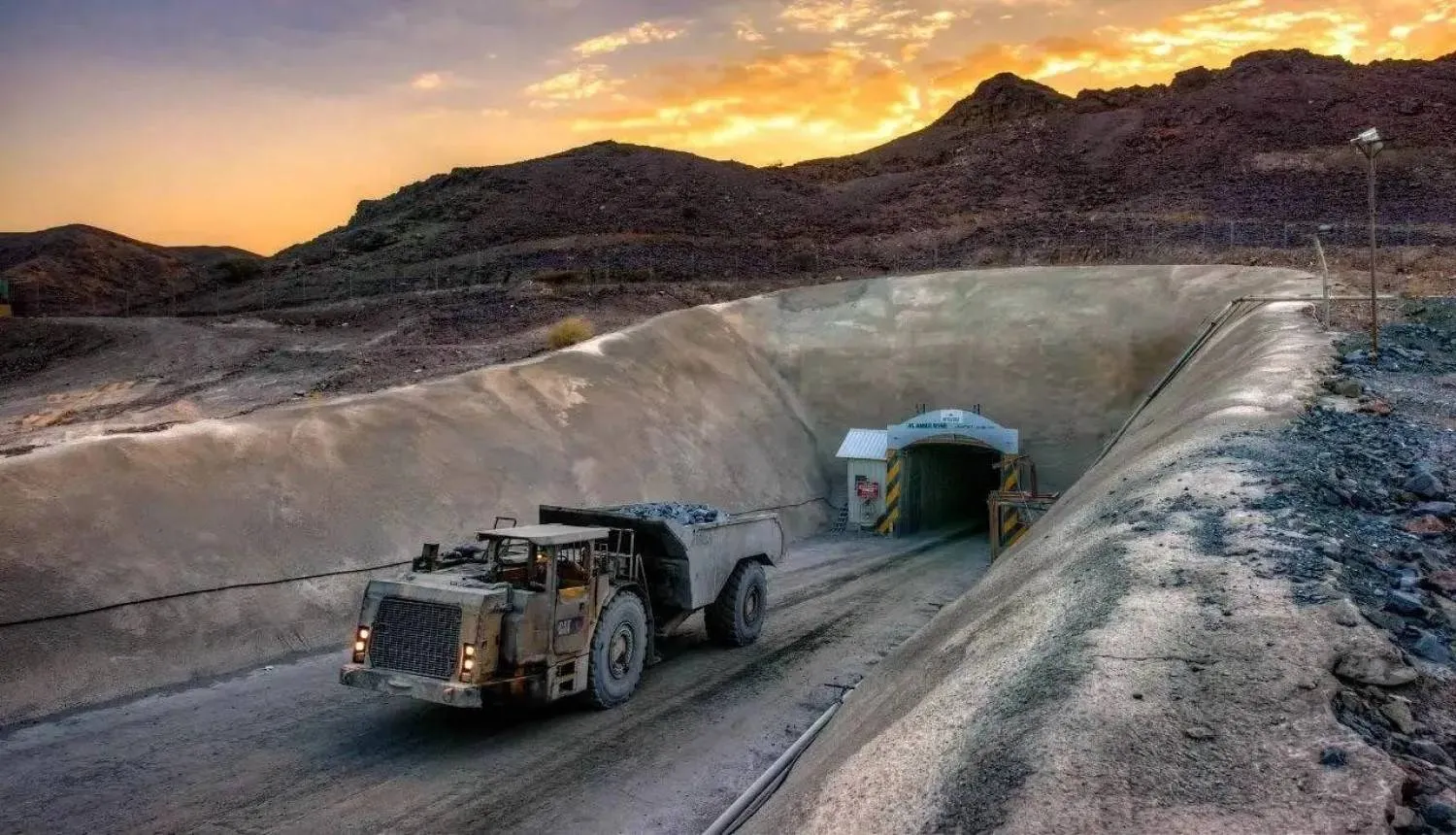
A gold mine in Saudi Arabia (SPA) 
TT

Saudi Gold Refinery Obtains 10 Gold Exploration Licenses in Tanzania

A gold mine in Saudi Arabia (SPA) 

Saudi Gold Refinery Company (SGR) announced Sunday it has secured 10 licenses to explore gold in the Republic of Tanzania, covering a total area of nearly 1,000 square kilometers, in a move aimed at expanding the company’s mining operations outside the Kingdom.

The company said it has allocated an initial investment of $10 million to carry out exploration activities, within an ambitious plan to gradually increase total investments to $100 million. These investments will support the development, establishment, and operation of gold mines, with commercial production targeted to commence by 2030.

The announcement follows a visit to Tanzania by Faisal Suliman Al-Othaim, Deputy Chairman of the Board of Directors at SGR.

According to the company, this milestone is supported by the Ministry of Investment and the Saudi Embassy in Tanzania, highlighting the importance of strengthening Saudi investments abroad and creating new opportunities for national companies in the global mining industry.

SGR continues to advance its global expansion strategy through its international investment arm, UGM Tanzania co, which oversees its operations and investment activities in Tanzania and Ethiopia.

The company also maintains ongoing projects and business activities in Egypt and the Sultanate of Oman, while actively exploring opportunities in additional markets to further expand its global footprint and create sustainable value across the mining sector.

In the Saudi market, the company plans to develop six to ten mines before 2030, at an average rate of two mines per year. These plans are supported by the Ministry of Industry and Mineral Resources, the Saudi Industrial Development Fund, financial institutions and other relevant authorities and stakeholders.


Oil Falls as Trump Says New Iran Attacks ‘Unlikely’

A worker walks past oil pipes at a refinery in Wuhan, Hubei province March 23, 2012. (Reuters)
TT

Oil Falls as Trump Says New Iran Attacks ‘Unlikely’

A worker walks past oil pipes at a refinery in Wuhan, Hubei province March 23, 2012. (Reuters)

Oil prices fell at Monday's open after US President Donald Trump said he was highly unlikely to order new Iran attacks while talks to end the conflict make progress, despite both nations' reports of attacks on ships in or near the Strait of Hormuz.

Brent was down 84 cents, or 0.85%, to $97.48 a barrel by 0138 GMT, while West Texas Intermediate fell 32 cents, or 0.35%, to $90.51 a barrel.

The fall reversed minor gains made on Friday’s settlement as the market assessed the possibility of further US ‌strikes on Iran, ‌although Brent fell 17% last week, the ‌steepest ⁠weekly drop since the ⁠start of the COVID pandemic and the biggest in absolute terms, according to LSEG data dating back to 1988.

"It depends on whether or not they sign a very strong agreement," Trump told CNN in a phone interview. "The answer is, highly unlikely it's going to be necessary."

Trump had hinted at renewing attacks on Iran after ⁠last week's US midterm elections, but there has ‌been no sign of a large-scale ‌US military operation. Iran has said it would respond by striking US and ‌Israeli targets.

Tim Waterer, chief analyst at KCM Trade, called ‌Trump's comments "more measured" but said "the market is still waiting to see whether the midterms have produced a lasting shift in Trump’s approach to the conflict, or whether this is just another temporary change in tone."

Oil is headed ‌for a glut again as recovering Middle Eastern oil flows, rising production from other countries and ⁠weak demand have ⁠pushed global supply above consumption, JPMorgan said in a report on Friday, estimating a surplus of 1.1 million barrels per day in September, widening to 1.4 million bpd in October.

On Sunday, Iraq reached an understanding with the US to allow Iraqi oil exports through the Strait of Hormuz via a shipping lane near Oman, Foreign Minister Fuad Hussein said in an interview with Al Jazeera.

He said Iraq's losses from the Iran war and disruptions to oil exports had reached $60 billion.