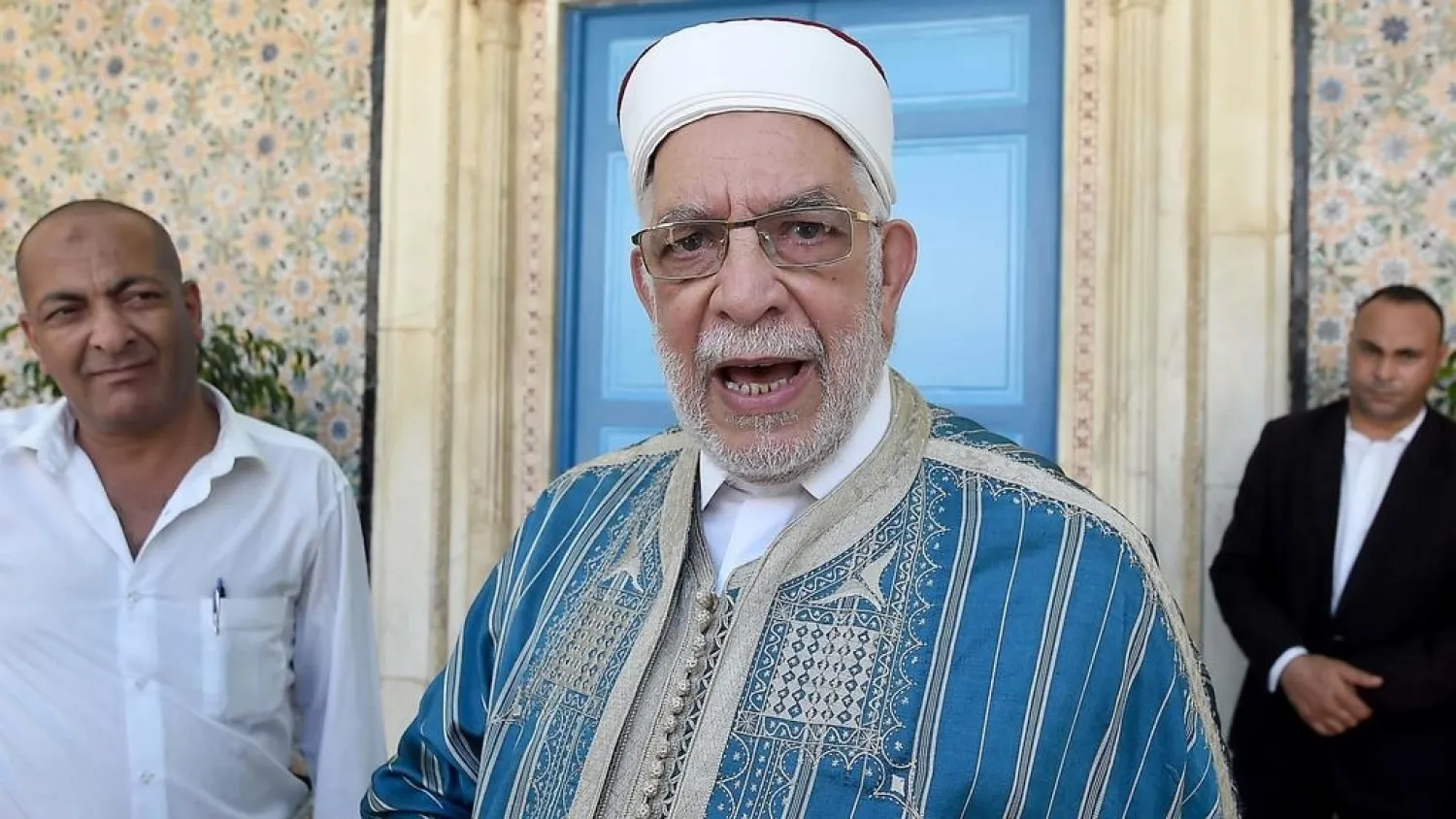

Tunisia’s biggest political party Ennahda named on Tuesday its Vice President Abdel Fattah Mourou as a candidate for the upcoming presidential elections.
Mourou, 71, a lawyer, will run in elections due to be held two months early on September 15 following the death of president Beji Caid Essebsi last month.
On Wednesday, Defense Minister Abdelkarim Zbidi submitted his candidacy as an independent and said he would resign from government.
Zbidi, 69, who has the support of secular parties including Nidaa Tounes and Afek Tounes, is likely to emerge as one of the frontrunners in the election.
Zbidi, a technocrat and medical doctor by training, is considered by many to be above the party politics and infighting that has held back badly-needed economic reforms in Tunisia in recent years.
Prime Minister Youssef Chahed will also stand, his Tahaya Tounes party said last week, making him another likely frontrunners to succeed Essebsi.
Other candidates who have announced their intention to run include former Prime Minister Hamadi Jebali, liberal former Prime Minister Mehdi Jomaa and Moncef Marzouki, who served as interim president for three years after President Zine El Abidine Ben Ali was toppled.
Zbidi served as defense minister after Ben Ali was overthrown until March 2013, when he quit a cabinet led by Ennahda. In 2017, Chahed re-appointed Zbidi as defense minister.
Jebali and Marzouki are two of three members of a government alliance, “troika”, that ruled Tunisia after the 2011 elections that marked the beginning of the political transition in the country.
Marzouki, 47, said he has received the backing of the Tounes Okhra coalition, which includes the alliance between the Al-Irada party, Wafa Movement and independent politicians.
A rights activist and opponent of Ben Ali, Marzouki served as interim president between 2011 and 2013.
Essebsi was chosen in the first democratic presidential election in 2014.
One of Ennahda’s most moderate leaders, Mourou has long demanded reforms to the party to make it more open and to distance it from the Muslim Brotherhood in other Arab countries.
Critics say Mourou is two-faced, however, and holds contradictory positions on the role of the Islam in society.
“Mourou is a highly regarded figure in Tunisia, he is able to unite Tunisians and to find consensus between rivals. This is what Tunisia needs now,” Imed Khmiri, a senior Ennahda official, told Reuters.
Mourou is currently acting speaker of parliament after former speaker Mohamed Ennaceur became interim president.
Tunisia’s president mainly has authority over foreign and defense policy, governing alongside a prime minister chosen by parliament who has authority over domestic affairs.
Twenty-six candidates have so far submitted their nominations. The deadline for submissions is Friday. Electoral campaigns will kick off on September 2 and end on September 13.
The Independent High Authority for Elections is set to announce the final list of presidential candidates on August 31.