Experts: Suez Canal $3.6 Billion in Due Certificates to Remain in Banks

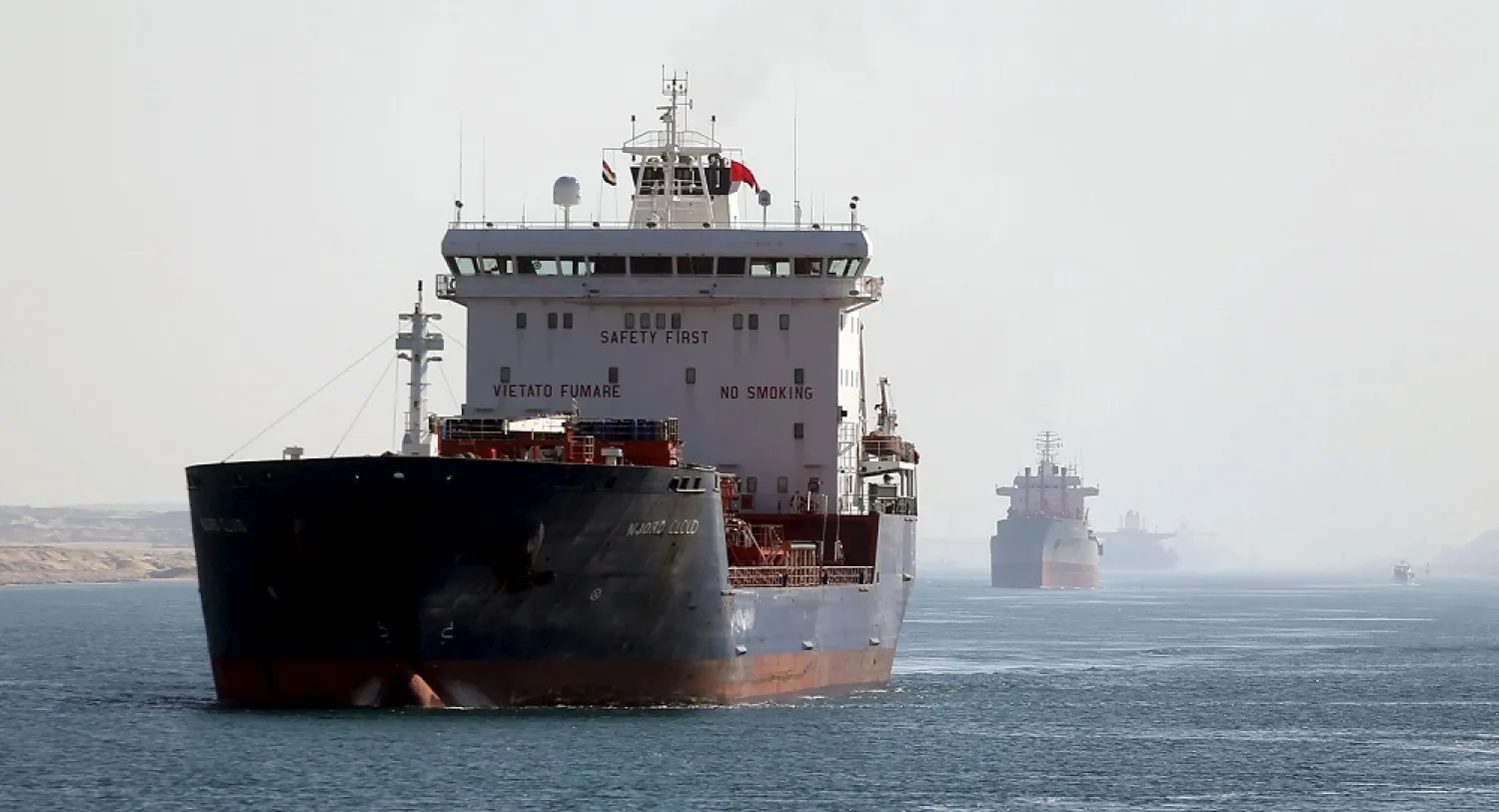
A cargo ship passes through the New Suez Canal in Ismailia, Egypt, January 17, 2016. (Reuters)
TT

Experts: Suez Canal $3.6 Billion in Due Certificates to Remain in Banks

A cargo ship passes through the New Suez Canal in Ismailia, Egypt, January 17, 2016. (Reuters)

Analysts and bankers said that most of the Suez Canal certificates of deposits due on September 4 will not be withdrawn from banks after their due date. They will instead be reinvested in new certificates because the certificate holders are wary of taking risks.

In 2014, the Suez Canal Authority made more than EGP60 billion (USD3.61 billion) from issuing investment certificates for Egyptians for five years with a revenue of 12 percent end of 2016 to around 15.5 percent.

The revenue was invested in building the new Suez Canal and a number of tunnels.

Back then, Egypt permitted the purchase of investment certificates for Egyptians only by individuals, companies and authorities, such as funds.

Mona Mostafa, director of trading at Arabeya Online, told Reuters that 80 percent of due certificates in September would be linked to new certificates because most of the subscribers of Suez Canal certificates are clients of banks and not adventurous investors.

Egypt announced in August 2014 plans to set up the new Suez Canal in addition to the current canal under a project worth several billions of American dollars. The project aims to expand trade along the fastest route of navigation between Europe and Asia.

Egyptian officials hope the new canal would push annual revenues to USD13.5 billion by 2023 from more than USD5 billion.

The Suez Canal was inaugurated in 1869, and its length is around 160 km. It is the shortest maritime route between Asia and Europe. The canal is Egypt’s largest income source of hard currency alongside tourism, gas and oil exports and workers’ transfers from abroad.

Further, Suez Canal revenues reached USD5.7 billion in 2018, rising from USD5.3 billion in 2017.


OPEC Secretary General: Oil Demand to Remain Robust, No Change to Estimates

OPEC Secretary General Haitham Al Ghais attends the St. Petersburg International Economic Forum (SPIEF) in Saint Petersburg on June 4, 2026. (Photo by Olga MALTSEVA / AFP)
TT

OPEC Secretary General: Oil Demand to Remain Robust, No Change to Estimates

OPEC Secretary General Haitham Al Ghais attends the St. Petersburg International Economic Forum (SPIEF) in Saint Petersburg on June 4, 2026. (Photo by Olga MALTSEVA / AFP)

OPEC expects robust oil demand growth and is not changing its estimates, Secretary General Haitham Al Ghais said on Thursday at the St. Petersburg International Economic Forum, despite the Middle East conflict and closure of the ⁠Strait of Hormuz.

"Despite ⁠all the commentary out there that oil demand is declining, we have not registered signs of that yet," ⁠Reuters quoted Al Ghais as saying.

"We still see robust demand growth at 1.2 million barrels a day for this year," he said.

He also said that investments in the oil industry should not be affected by "one-off events" that happen ⁠anywhere ⁠in the world.

"We need to invest well ahead of time to be prepared for the demand that we see in the future," he said.


Egypt Plans to List More State-owned Companies, Replace In-kind Subsidies with Cash

Headquarters of the Central Bank of Egypt in downtown Cairo (Asharq Al-Awsat)
TT

Egypt Plans to List More State-owned Companies, Replace In-kind Subsidies with Cash

Headquarters of the Central Bank of Egypt in downtown Cairo (Asharq Al-Awsat)

Egypt aims to list four to five state-owned companies on the Cairo stock exchange before the end of the year as part of its state asset sales strategy, Prime Minister Mostafa Madbouly said on Thursday.

The government also plans to shift from in-kind subsidies to cash subsidies during the coming financial year, as part of efforts to improve the targeting of social support, Madbouly said at a press conference, Reuters reported.

It does not aim to reduce the monetary value of subsidies but rather ensure they reach those entitled to receive them, he added.

More than 60 million people receive subsidised essential commodities through state-run outlets, while at least 10 million others benefit from subsidised bread.


St. Petersburg Forum Brings Together Energy Leaders to Discuss Hormuz Security, Future of Global Markets

Venue of the St. Petersburg International Economic Forum (the Forum)
TT

St. Petersburg Forum Brings Together Energy Leaders to Discuss Hormuz Security, Future of Global Markets

Venue of the St. Petersburg International Economic Forum (the Forum)

Global energy markets will turn their attention on Friday to the St. Petersburg International Economic Forum, where a high-level panel discussion titled “Global Energy Systems: How Is the World’s Energy Sector Responding to Challenges and Risks?” will take place.

The 29th edition of the forum, being held this year under the theme “Shared Values: The Foundation of Growth in a Multipolar World,” opened on Wednesday. Saudi Arabia is participating as the forum’s principal guest of honor as the two countries mark 100 years of diplomatic relations.

Saudi government entities, national institutions and leading companies are taking part in the forum, including the ministries of energy, industry, transport, environment and investment, with the aim of strengthening cooperation and showcasing the goals and achievements of Vision 2030 in economic diversification and attracting high-quality investment.

The St. Petersburg International Economic Forum, established in 1997, is Russia’s leading economic conference and attracts more than 10,000 participants annually.

The energy session carries exceptional significance given its timing, coming after five months of escalating disruptions to supply routes and rising oil prices. It also falls within the main theme of the forum’s 2026 edition, “The Global Economy: Between Confrontation and Cooperation.”

The session will bring together senior decision-makers from across the global energy industry, led by Saudi Energy Minister Prince Abdulaziz bin Salman, Secretary General of the Organization of the Petroleum Exporting Countries (OPEC) Haitham Al Ghais, Russian Deputy Prime Minister Alexander Novak, and Chief Executive Officer of the Russian Direct Investment Fund Kirill Dmitriev. Also participating are Egyptian Petroleum Minister Karim Badawi, Serbian Energy Minister Dubravka Djedovic, and Secretary General of the Gas Exporting Countries Forum Philip Mshelbila.

According to the session agenda, discussions will focus on a series of strategic questions arising from the new reality facing global energy markets. Foremost among them is the impact of the current Middle East conflict on global oil and gas markets, and what current and future measures could reduce reliance on transporting energy resources through the Strait of Hormuz amid security tensions that have caused tangible shifts in traditional maritime shipping routes.

The session will also examine the strategy that major oil and gas producers should adopt under these circumstances and how the economic impact of OPEC+ measures should be assessed.

Participants will discuss the strategies that major oil and gas producers should pursue amid a complex environment shaped by six years of overlapping crises, beginning with the COVID-19 pandemic, continuing through Western sanctions imposed on Moscow, and extending to current military conflicts and their direct impact on international trade and the global economy. Discussions will also include an assessment of the economic impact of OPEC+ decisions and consideration of the alliance’s future plans.

The strategic dialogue comes ahead of a crucial oil-policy marathon on Sunday, when a series of meetings will begin with the OPEC’s conference, followed by the 66th meeting of the Joint Ministerial Monitoring Committee, which oversees compliance levels, coordination and current compensation plans for countries that previously exceeded their production quotas. The 41st ministerial meeting of OPEC and OPEC+ will also be held.

Sources familiar with the oil sector said OPEC+ is likely to approve an additional gradual increase in its production targets for July, in a move aimed at demonstrating the group’s ability to return to a “normal production path.”

The alliance has already increased production quotas by about 600,000 barrels per day between April and June.